Schnapper: Extreme democracy and democratic extremists

Dominique Schnapper is the director of studies at the School for Advanced Studies in the Social Sciences (EHESS) (retired) and a former member of the French Constitutional Council. This is a translation of Schnapper’s articleExtrême et extrémistes de la démocratie” published in April 2019 on the Telos website.

The Gilets Jaunes movement fights under the banner of “real” democracy and it risks contributing to the destruction of the only democratic regime that has ever existed, namely representative democracy.

Democracy always had two dimensions: a democratic one and an aristocratic one. Democratic because the rulers submit to elections by the ruled and are rewarded or punished through the vote.

The dream of direct democracy

The aristocratic dimension was always a source of disagreement. The dream of direct or total democracy has accompanied the history of democracy. But it is today all the more present in the idea that entrusting decision making to others is contradictory to the conception of the sovereign democratic individual doing things himself, and being the source of all legitimacy and competence. He brings his own legitimacy. He feels fully qualified to express himself directly by himself without the intervention of a representative.

Democrats like neither mediation nor distinctions. Every type of distinction – and in particular the distinction between voters and elected – every hierarchy is perceived as discriminatory. The elites are easily denounced as responsible for all our failures. For there the ideas of direct democracy and ideas inspired by direct democracy regain their power. Protesting activists become actors of a “counter-democracy” [Pierre Rosanvallon, La contre démocratie, 2006], they speak about the foundational principles of democracy and the liberation from electoral rhythm in order to exercise daily surveillance on the actions of the rulers.
Continue reading

Étienne Chouard: Public decision-making from the perspective of the common good, Part 1

Background about this essay and its table of contents can be found here.

What follows is a comparison of elections and sortition. The essay is divided into two parts. In part I, elections and sortition are compared in terms of general principles. In part II, they are compared in terms of different possible applications.

Part I. A comparison of the general strengths and weaknesses of elections and allotment of representatives

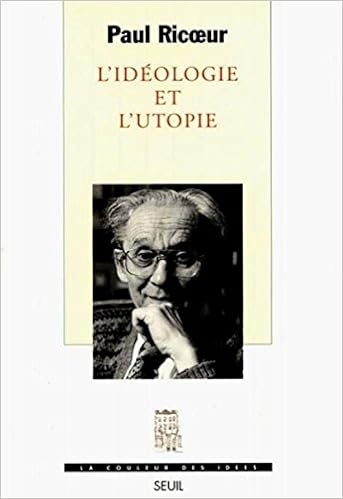
Let us start by a general comparison of elections and sortition in democracy, taking Paul Ricœur’s definition of democracy as our starting point:

A democracy is a society which recognizes itself to be divided, that is, containing conflicts of interests, and which has committed itself to endow each citizen with an equal part of the expression of these conflicts, of their analysis and of the deliberation of those conflicts with a view of arriving at a resolution.

That is, the definition of the common good is by construction relative, variable, debatable, conflicting, and therefore political. It rests fundamentally on the question of sovereignty: who is the legitimate communal decision maker? Who weighs the needs of the social body? Who decides? Who evaluates the decisions? The people themselves or their representatives? Do we even need representatives?

And if the scale of our societies indeed necessitates appointing representatives, what type of representatives? Because the word “representative” is ambiguous: are they the masters or the servants of the common good?

And above all, who is the legitimate decision maker regarding basic rules, the meta-rules?
Continue reading

Étienne Chouard: Public decision-making from the perspective of the common good: Breaking out of the electoral trap

What follows is the table of contents of a 2016 essay by Étienne Chouard, which Chouard describes as “my most recent methodical comparison between election and sortition”. I will publish my translation to English of the essay in several parts. The original French version is here.

Public decision-making from the perspective of the common good: Breaking out of the electoral trap
A comparison between election and allotment of representatives
Étienne Chouard, 2016
(Original in French, translation to English by Yoram Gat, 2020.)

Part I. A comparison of the general strengths and weaknesses of elections and allotment of representatives

  • (i) Elections infantilize, and in this way paralyze, the voters. They discourage thinking and defending the common good (whereas sortition does not)
    • 1. By definition, elections are aristocratic, whereas sortition is democratic
    • 2. By definition, elections are an abdication, a renunciation of the exercising of one’s sovereignty oneself, it is delegation, it is the renunciation of legislation, whereas sortition is the assertion of sovereignty
    • 3. Elections infantilize, strip of responsibility, dissuade from doing what is right, and distance the people from politics and the common good, whereas sortition encourages, and promotes responsibility for, doing the right thing
  • Continue reading

Sortition for selecting civilian police control boards

In an undated proposal by Max Rameau from the an organization called “Pan-African Community Action” the author writes:

A Model: The Civilian Police Control Board
The primary institution for the exercise of Community Control over Police is the Civilian Police Control Board (CPCB).

The CPCB must be comprised entirely of civilian adult human beings- not corporations or human representatives of corporations- residing in the police district. To be explicit, residing means living in, not owning property in, without regard to citizenship status or criminal history.

While some envision an elected board, we propose something entirely different: a board selected entirely at random among residents of the policing district.

There are two (2) main constraints to an elected board. First, elections in the US are thoroughly corrupted by influences of corporate finance on one side and two party electoral politics on the other. Even if multiple communities were to win control over their police, it is not difficult to imagine that after one or two election cycles, your local CPCB would be a corporate board brought to you by [ insert name of powerful corporation here ]. For this board to shift power, instead of becoming another institution to maintain power, it must break through the limitations of electoral corruption.

Second, even elections with minimal levels of corporate or party influence, still occur in a social context. In this social context, elected officials are disproportionately white, male and wealthy- the exact population with the highest level of support for the police. We must devise democratic systems that encourage active participation from those least likely to engage, not those most likely to benefit.

Sortition- government by random selection- is the best way to ensure that everyone has an equal opportunity to exercise power. The rich and poor, straight and gay, male and female, white and Black all have an equal shot at making decisions through random selection. If we believe that democracy is for everyone, then random selection of officials is the best way to ensure each person can exercise power.
Continue reading

An interview with a member of the French Citizen Climate Convention

In January, Le Télégramme interviewed Denis Boucher, a member of the French Citizen Climate Convention:

How is the convention organized?

We are 150 citizens of all ages and walks of life, including some who are younger than 18 and others who live in overseas France. There is great diversity and I believe that we represent French society quite well. We gather one weekend each month for a session of three days. We work around five themes dealing with the objective of reaching a 40% reduction in greenhouse gas emissions by 2030: food, transportation, housing, consumption, and production. I am part of the housing theme. The allocation to themes was by sortition – that is the principle of the convention. We reject expertise from the outset and it is normal citizens who express themselves, whoever they may be. It is an altogether original organization which really embodies direct democracy. It is a little like the citizens of Ancient Greece would discuss the issues of the city in the agora.

Where are you now in the process?

We are in the fourth session and we just finished the latest weekend of work. After 4 months during which we heard numerous speakers and understood the climate and the objectives we are now entering into the thick of it. We are going to propose measures that will become bills of legislature, decrees or constitutional amendments. That is not going to be easy!
Continue reading

Comments by members of the French Citizen Climate Convention

Thomas Baïetto of Franceinfo has talked to 9 members of the French Citizen Climate Convention and reports their comments about their work.

Sylvain, a 45 year old Parisian marketing manager, says that before he was allotted he used to be “a cynical Parisian” rahter than an environmental activist. He does not hide his enthusiasm about this assembly of “citizen superheros, somewhere between Jaurès and Léon Blum” and about its complex mission.

“I was skeptical at first. I was thinking that these 150 people, if there were as ignorant as I am , that is going to be difficult,” says Grégoire, 31 year old from Caen. The first months of work, spread over a several weekend sessions in Paris, have convinced him that there is a possibility of formulating proposals that are “strong, powerful and acceptable by the population.”

Continue reading

Mellier-Wilson: More on the Convention Citoyenne pour le Climat

Claire Mellier-Wilson, “Systems Change and Participation Practitioner”, has a lengthy and informative article about the French Citizen Climate Convention, with details about its origins, its organization, proceedings and schedule and the people and bodies involved.

One rather interesting detail is as follows:

Themes and group work

Alongside plenary discussions where all 150 citizens stay together, the Convention members are also working in groups.

The 150 citizens have been split into five groups of 30 people covering five themes: ‘Se deplacer’ transport, ‘Se nourir’ food, ‘Consommer’ consumption, ‘Travailler et produire’ work and production, ‘Se loger’ housing. The selection of the citizens in each group was done by lot in order to prevent people from choosing their preferred subjects and this introducing an element of bias into the process.

A cross-cutting group, called ‘escouade’ was created after the second session in November 2019, at the request of the citizens, in order to look at overarching topics relevant to all five themes such as: the financing of measures, communication, engagement, education and training, constitutional reform, energy production and consumption, protection of the natural environment and biodiversity. An overview of the transverse topics can be found in the summary of session 3. However, it emerged that this cross-cutting group, based on the self-selection principle (rather than selection by lot) presented issues of legitimacy and had process implications, as it did run in parallel with the other five groups, and in effect was preventing people from being fully engaged with their original topic. Also, due to the subjects covered in the escouade (i.e. constitutional reform, finances etc.), it created tensions around the perceived more strategic nature of that group. As a result, the Governance Committee decided to suspend the escouade. Going forward, the topics from the escouade will be dealt with via different mechanisms as announced by Thierry Pech, Co-chair of the Convention, at the end of Session 4.

Sortition in the New Yorker, again

For the second time in less than a year, sortition is mentioned in the New Yorker. Last time, it was merely an off-handed comment. This time, sortition is front and center. Nathan Heller’s article is built around an interview with Hélène Landemore. Alexander Guerrero also gets quoted.

Landemore’s ideal is participative, but she seems to be working with a rather loose concept for her proposals:

What distinguishes Landemore’s ideal from other lottocratic models, such as Guerrero’s, is the breadth of her funnel: the goal is to involve as much of the public organically in as many decisions as possible. Her open-democratic process also builds in crowdsourced feedback loops and occasional referendums (direct public votes on choices) so that people who aren’t currently governing don’t feel shut out.

As evidence that open democracy can work in large[…,] culturally diverse societies, Landemore points to France’s Great National Debate—a vast undertaking involving a vibrant online forum, twenty-one citizens’ assemblies, and more than ten thousand public meetings, held in the wake of the gilets jaunes protests, in 2019—and, this year, to the country’s Citizens’ Convention on Climate Change.

Continue reading

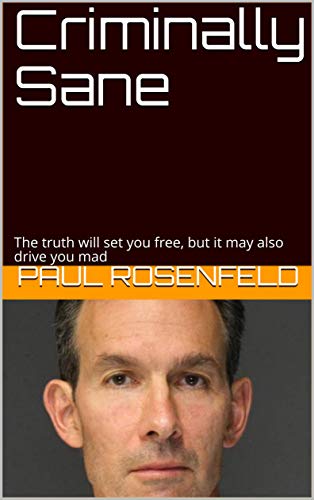
Paul Rosenfeld: Criminally Sane

Paul Rosenfeld, a sortition activist who had been jailed for actions related to his activism, has written a book which is a combination of a memoir and a political manifesto. I find that Rosenfeld writes very eloquently. The manifesto part is also available at sortitionnow.org.

In his autobiographical snippet on amazon.com, Rosenfeld writes:

I guess we all have our issues. I imagine I have the power to save the world and that my book, “Criminally Sane”, will somehow facilitate said miracle. Excluding this glaring pathology I guess I’m otherwise reasonably normal. I have a long suffering spouse, two adorable poodles and a modest home in the suburbs of NY. If you wish to diagnose me fully you need to read my book, this memoir will tell you everything you could possibly want to know and then some. When you’re finished maybe you can even talk me down from my delusion.

Trust and the competition delusion: A new frontier for political and economic reform

The Griffith Review has just published a substantial essay of mine that I’ve been working on for some time. It begins with some basic economic ideas, but broadens out to much wider political matters – comprehending our interest in sortition. I reproduce the introductory section below after which you’ll have to hightail it to their website to finish. But it would be good to see you back here for comments which aren’t provided for on the Griffith Review website.

Designing institutions to force (or nudge) entirely self-interested individuals to achieve better outcomes has been the major goal posited by policy analysts for governments to accomplish for much of the past half century. Extensive empirical research leads me to argue that instead, a core goal of public policy should be to facilitate the development of institutions that bring out the best in humans.

Elinor Ostrom, Nobel Lecture, 2009

SINCE ADAM SMITH, economists have marvelled at competition’s capacity to improve our world – not by fostering virtue, but by harnessing the opposing self-interest of buyer and seller in a market. As Smith himself famously suggested, instead of trusting his wellbeing as a consumer to the benevolence of the butcher, baker or brewer, he’d rather rely on their regard for their own interests in competing for his custom.

There’s a lively debate today about how to inject greater competition into Australia’s notoriously oligopolistic industries – like finance, retail, fuel, energy and telecommunications – not to mention our new global digital overlords like Facebook and Google. And there’s a more ideologically charged debate about whether competition will drive better or worse outcomes in sectors where non-market values are important – like health, education and social services.

Having offered some thoughts on those issues elsewhere, in this essay I discuss something more fundamental and, because of that, widely overlooked. We’re falling for the ‘competition delusion’ by which I mean this: In our embrace of private competition as a goal, we mostly pass over a prior issue – which is the terms on which that competition takes place. That’s undermining trust in a remarkably wide range of institutions in our economic and public life.
Continue reading