Troesoyer on the Let’s Make Them Pay podcast (part 3)

Parts 1 and 2 are here and here.

5. Corruption (22:40). Bennet asks how sortition prevents the influence of money. Troesoyer says that sortition makes it easier to prevent corruption. In his argument he refers to two factors: term length and avoiding the electoral need to raise campaign money. Term length is important, Troesoyer says, because decision makers working together for a long period of time are able to develop trust between themselves. This allows them to collaborate among themselves and with other long-term actors, and thus to collude on corrupt enterprises. Campaign finance is a fertile ground which fosters corrupt collusion. Actors can promise help in terms of campaign funds in exchange for promotion of their interests. They can also make threats to support competitors in retaliation for non-cooperation.

But neither of these factors make for a convincing advantage of sortition over elections. Electoral systems can be, and often are, set up so that campaigns are highly regulated and publicly financed, greatly reducing the ability of campaign funds to inflence outcomes. The fundamental reason that elected officials serve narrow interests is not a direct quid-pro-quo but rather that the elected officials have a world-view in which the narrow interests are legitimate and should be served. Granted, campaign funds can be a corrupting factor but that can be fixed. The problem is that fixing that does not fix the fundamental problem with elections.
Continue reading

Troesoyer on the Let’s Make Them Pay podcast (part 2)

This continues my review of Ian Troesoyer’s discussion of sortition with Scott Bennet, host of the Let’s Make Them Pay podcast. Part 1 is here.

3. Values and interests vs. epistemic limitations (0:13:15). Troesoyer is concerned about “class bias” in elected government. To demonstrate it, he brings up a favorite example of Terry Bouricius. A body full of landlords would make different decisions than a body in which renters are represented. This is obvious and uncontroversial. But what is the mechanism behind this effect? The straightforward mechanism refers to values and interests. Landlords promote the values and interests of landlords, renters promote the values and interests of renters. Yet, Treosoyer presents this as a matter of “bias” or “limited perspectives”. According to this telling, the landlords are “trying to do their best”. They are very much open to representing the values and interests of the renters, but due to their limited perspective they are unaware of how things look like from the renters’ perspective and thus ignore their values and interests. Bennet goes as far as saying that just there being one or two renters in a body full of landlords would “make such a difference”. (Treosoyer agrees, but not too enthusiastically, if I am not mistaken.)

Leaning heavily on the supposed epistemic difficulties of the elected decision makers in arriving at “good decisions” is a standard trope of “deliberative democrats”. (A typical example of this tendency is Alex Guerrero’s book Lottocracy.) The epistemic effect may (or may not) exist, but emphasizing it and de-emphasizing the effect of the conflict of values and interests is unjustified. Presumably the appeal of this tendency is that it sounds less crass and confrontational, and avoids presenting the electoral elite and its allies as outright exploiters. Instead it presents them as well-meaning simpletons. The well-meaning landlords, for example, despite their openness to renters’ perspectives, have never had the idea of calling a few renters to appear before their body to express those perspectives.
Continue reading

Troesoyer on the Let’s Make Them Pay podcast (part 1)

Ian Troesoyer, a sortition activist, has recently been a guest on the Let’s Make Them Pay podcast, where he had an hour long conversation with the host, Scott Bennett. Both participants in the conversation are unapologetic supports of sortition and the presentation of the idea is very good. For those who are either completely or fairly unfamiliar with the idea of sortition, it is a good resource for hearing it discussed and examined.

As I did with one of Troesoyer’s posts on his substack, I’ll go over some points that I believe can be improved in the argumentation. Again, I am offering this as constructive criticism. I pick up the points in the chronological order in which they appear in the video, and since this turns out to be a bit long, it is posted in installments.

1. Stratified sampling (mentioned at 0:02:30 and again at 0:27:20). This is not dwelled upon in the conversation, but the mere mention of stratification is problematic. It may be that some like the the jargon because it gives the discussion a scientific ring. But the use of jargon introduces a suspicion that something untoward is at hand. In the case of the standard current sortitionist practice – what goes under the name of “citizen assemblies” – such a suspicion would be completely justified. In current practice, what is being called “stratified sampling” is a method to cover for the fact that as the process is currently arranged, a large majority of people refuse to take up offered seats. In order to try and obscure this inconvenient fact, and in order to obscure the fact that, as can be expected, refusal rates are correlated with various obvious social characteristics, the body’s makeup is adjusted in various ways so that certain statistical characteristics of the body match those of the population (e.g., the body is set up so that 50% of the members of the body are be men and 50% are women, even if more women refused to take up seats than man did). This makes the resulting body’s make up appear superficially as if it was created by sampling where no rejection of offered seats occured.
Continue reading

Spectacles embraces sortition

Spectacles is a popular YouTube channel with hundreds of thousands of subscribers. Spectacles has recently posted two videos promoting sortition – Why Lottery Elections are Actually Genius, and The Ancient Invention That Solves Corruption. The first of those is unfortunately paywalled, but the second is freely available. It is a pretty well-done video, although as is typical of the genre it is contains a hodge-podge of points with some of them being better than others. The video has amassed over 80,000 views, over 7,000 thumbs-up’s and over 1,000 comments. Many of the commenters seem supportive of the idea.

Athenian democratic institutions: a very short introduction

I’m grateful to Yoram Gat for making me a contributor to this website, which has a lot of good stuff about allotment. [ Editor’s note: Welcome, James! I previously linked to James’s very interesting work several years ago here, and much more recently here. -YG ]

One of the things Yoram suggested I might do here is assemble all my introductory Twitter threads on classical Athens’ main democratic institutions. Not all of these institutions involved sortition, but most did, and readers may want to get an overview of how the sortitive institutions functioned alongside other democratic institutions that depended on voting.

Before I share the Twitter threads, though, readers who are completely new to this topic might want to check out this ten-minute video in which I provide an overview of Athens’ Assembly, Council of Five Hundred, popular courts, and city officials, as well as of the curious practice of ostracism.

Now that we’ve had the broad overview of all these institutions, let’s go into more detail, starting with the most powerful of Athens’ democratic institutions, the Assembly:

Next, the second-most powerful institution, and our first allotted one: the Council of Five Hundred.

Next up are the popular courts, staffed by allotted juries:
Continue reading

The ancients would laugh

Excerpts from an article on the CBC website.

Athens: Birth of Democracy, a documentary from The Nature of Things, follows host Anthony Morgan as he investigates the origins of democracy in ancient Athens, how it functioned and what this political experiment may have to teach us today.

Standing at the Leokoreion — a recently excavated open-air temple built in the centre of ancient Athens — archaeologist John Camp shows Morgan the exact spot where the spark of the Western world’s first democratic government is believed to have ignited.

Camp, former director of the American School of Classical Studies at Athens, points to an inscription that reveals it was here, in 514 BC, where one of Athens’s two ruling tyrants, Hipparchus, was assassinated.
Continue reading

Sortition on TED-Ed

An animated video named “Could lotteries replace elections?” on the popular channel TED-Ed has amassed almost 100,000 views since it was published a few days ago. The video makes many familiar and incoherent arguments for and against “lottocracy”, with Alex Guerrero, Cristina Lafont and Nadia Urbinati mentioned by name.

Toward the end, the video does come surprisingly close to making the fundamental point that democracy should be about building “institutions that serve everyone and address real problems”. (Unsurprisingly, this is immediately followed by a cliché about it being “up to us to keep experimenting until we find a system that achieves those ideals”.)

Sortition in 2025

Equality-by-Lot’s traditional yearly review post. For previous editions look up each year’s December posts.

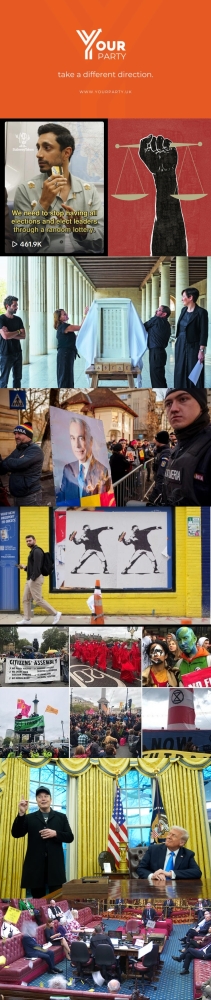
The most important sortition-related development of the year was undoubtedly the decision by YourParty in the UK to allot the delegates to it founding conference. This decision created an intense discussion around sortition, a discussion that was unprecendented certainly in the UK specifically, probably in the entire Anglosphere, and possibly even in the modern world.

Many activists were horrified to find that sortition stripped them of their standard privilege associated with their established organizing and willingness to invest time and resources. The claims that the whole setup was a way for the organizers to control the process were substantiated by the setup’s details: Thousands of allotted delegates gathered into a hall for a two-day event, inevitably forcing them into the position of passive audience, eliminating any possibility of setting the agenda for the conference. Interestingly, one of the decisions adopted was a rather vague commitment to allotting some of the delegates of future YourParty conferences.

Another notable event was the posting on YouTube and TikTok of a “Subway Take” by the Academy Award winning actor Riz Ahmed in which he proposed to “stop having all elections and elect leaders through a random lottery”. On YouTube the post has now been viewed over 2.5 million times and garnered almost 200,000 likes.

Within the standard academic sortition mud stirring, one proposal stood out: using sortition to create democratic investor assemblies for controlling corporations.

Finally, the electoralist crisis in the West continues to unfold. An opposition candidate who unexpectedly won the first round of presidential elections in Romania was disqualified and the leader of the French Right was barred from participating in upcoming elections after being found guilty of illegal management of party finances.

The Shared Center: Awakening our Better Angels

It’s finally out!

Today, I’m releasing the first three of what will be a series of 20 short videos.  Two years in the making, they seek to present a book’s worth of ideas, but in a more accessible and contemporary format. 

I’m hoping you’ll consider helping me get the word out!

The videos explore two related ideas:

1.   Elections represent the people. So do lotteries – as used in juries.

  • Elections build polarisation and culture-war into our politics. They frame politics as a contest, rather than open dialogue or even genuine persuasion.
  • Juries frame politics as dialogue and solving problems in ways most of us can live with.
  • We already have them in our judicial branch. We must build them into our political decision-making – as Michigan has begun to with its Independent Citizens’ Redistricting Commission and Belgium has with standing citizen assemblies and parliamentary committees involving citizens chosen by lottery.

2.   Open competition – for political office or promotion within organisations – centres leadership around self-interest. 

  • Leaving other human capabilities and virtues unrewarded – listening to, involving and considering others.
  • The alternative is ‘bottom-up meritocracy’. It delivered widely celebrated stability and competence to Venice’s republic for five hundred years and governs Wikipedia today.

More on the website here. And the full playlist of the videos as they’re released is here.

Riz Ahmed’s subway take

“Subway Takes” is a popular media series operated by Kareem Rahma with channels on TikTok, YouTube, Instagram and X, each with hundreds of thousands of subscribers. In each short video Rahma interviews a person, often a celebrity of sorts, and the interviewee lays out their “take”: an idea that they present as unusual and important. In a recent episode, Rahma interviews Riz Ahmed, a fairly known actor, whose take is

We need to stop having all elections and elect leaders through a random lottery!!