Many people in the world, yes, they go and vote and choose their government, but their material conditions are not being improved. And in the end, people want to live a better life.
Borrell followed this admission in the inefficacy of elections in achieving the most fundamental political goals with the following bromide:
We have to explain what are the links between political freedom and a better life. […] Our fight is to try to explain that democracy, freedom, political freedom is not something that can be exchanged by economic prosperity or social cohesion. Both things have to go together.
Borrell, however, fails to explain what those supposed links between elections and prosperity are. In fact, as he admits, in reality those links do not exist. It is Borrell himself who tells his audience that “many people” vote without having their conditions improved and that the Chinese system provides prosperity without elections. Moreover, despite Borrell’s assertions to the contrary, the situation of having elections on the one hand and stagnation or deterioration of the quality of life of the average person on the other hand is the norm in the West as well, and indeed worldwide. Thus Borrell’s unreflective faith in the links between elections and prosperity is due purely to his own blindness and to him belonging to an insular elite whose status is justified by the electoralist ideology.
The proponents of “deliberative democracy” have spent decades dredging a this-but-that argumentative quagmire that has yielded nothing of either theoretical or practical value for democracy. One of the prolific underlying springs of sticky material for the quagmire has been the inherent contradiction between two dicta of “deliberative democracy”: mass participation and deliberation. It is very straightforward that masses cannot deliberate. Meaningful deliberation can occur in groups of at most a few hundreds of people (and even at this scale all-to-all deliberation could occur only under very favorable conditions).
Thus, “deliberative democracy” professionals can develop entire careers stirring, pouring and piling the sands of participation and deliberation without ever managing (or, it could be argued, without ever trying) to build any solid structure. Those of us who would suggestthat both mass participation and deliberation are at best tools for good outcomes, rather than sacrosanct goals, are severely chastised for looking for illegitimate “shortcuts”.
Technology is one of the implements that have been routinely used to stir those sticky sands. Over and over again we have been promised that new information technology would allow democracy to go where it has never gone before. Mass education, remote participation, virtual mass discussions, crowd-sourced documents – these and many other unprecedented tools of democracy would be enabled by innovative technology. The fact that such promises go back to the advent of the radio (and probably much farther back) never discourages the prophets of mass participation from promising that the next technological innovation would be the one that would usher in democratic utopia where millions of voices would be heard by millions of people who all make meaningful – equally meaningful – contributions to decision making.
[Podcat co-host Will] Menaker has said that Chapo is meant to be in “marked contrast to the utterly humorless and bloodless path that leads many people with liberal or leftist proclivities into the trap of living in constant fear of offending some group that you’re not a part of, up to and including the ruling class.”
Sortition (mispronounced as “sortion”) made a brief appearance in episode #662 of the podcast, “The Queen” (about 46 minutes and 30 seconds into the show). Sortition is offered as part of a reform of the U.S. political system in which voting is used to select limited-tenure monarchs among celebrities, while “governing is actually carried out by permanent bureaucracies overseen by a rotating cast of essentially jury duty citizens”. The proposer did not indicate the rotation period of the “national service” but noted that, for that period, service would be considered as a full time job and would be paid accordingly.
It turns out that a polling company called Morning Consult runs frequent opinion polls in 22 countries measuring the approval ratings of the top elected officials in those countries.
The polls reveal that as of the first week of October 2022, among the 22 officials rated only 6 have positive net rating (approval minus disapproval). Another interesting finding is that the two most highly rated officials are non-Western: India’s Modi, who is often portrayed in the West as being a proto-authoritarian, or at least as a nasty populist, and Mexico’s López Obrador.
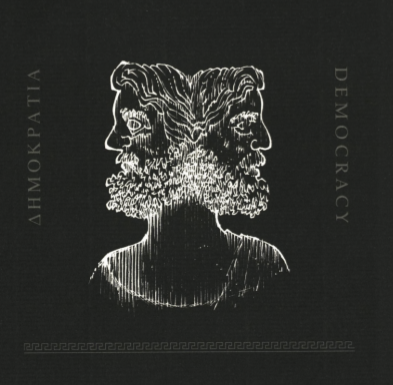
In a recent article Dr. Polyvia Parara made reference to a 2005 book by Mogens Herman Hansen, The Tradition of Ancient Greek Democracy and its Importance for Modern Democracy. It turns out this book is available online.
As always, Hansen is a very useful source of information about democracy in the ancient Greek world. In this book, Hansen focuses less on ancient Greece and more on the connections between ancient Greek democracy and “modern democracy”. Hansen rightly points out that, contrary to what some would have us believe (he cites and quotes Hannah Arendt), there is very little evidence for either institutional or ideological continuity between the two periods.
Hansen focuses first on the ideology.
The classical example that inspired the American and French revolutionaries as well as the English radicals was Rome rather than Greece. Thus, the Founding Fathers who met in Philadelphia in 1787, did not set up a Council of the Areopagos, but a Senate, that, eventually, met on the Capitol. And the French constitution of 1799, designed by Sieyès, had no board of strategoi but a triumvirate of consuls.
The very useful Dutch sortition-focused blog Tegen Verkiezingenreports about a new bachelor’s thesis at Leiden university in the Netherlands titled “Lottery as a democratic instrument?”. The thesis was written by Max Van Duijn, who is the leader of a local political party in the Katwijk municipality named DURF. DURF, which is the biggest party in the municipal council, advocates the application of sortition at the municipal level.
Tegen Verkiezingen provides the following translation of an excerpt from the thesis:
In essence ‘representative democracy’ is not democratic. It’s something fundamentally different. It would be more justified to label it ‘elective aristocracy’. In that sense the contrast between classical and representative democracy is a false one. In fact what we’re talking about is a contrast between democracy (sortition) and aristocracy (elections).
Dr. Polyvia Parara teaches Classics and Modern Greek Studies at the University of Maryland College Park. In a recent article in the English edition of the Greek newspaper Kathimerini, Parara argues that modern Western-system states, conventionally known as “democracies”, are in fact a distortion of the original meaning of democracy, since they do not implement “Isopoliteia” – political equality.
Compared to the original meaning of democracy, it is deduced that modern western societies constitute liberal parliamentary republics protecting individual freedoms and granting rights. They are governed by elected representatives, professional politicians that draw legitimacy by the popular vote. Yet, the citizenry remains limited in the private sphere, not constituting a governing body.
Update: demnext.org now has a video of the launch event. There is also a link to an article by Hélène Landemore and Claudia Chwalisz offering sortition as an alternative to the way that the failed Chilean constitutional proposal was generated (and a tweet-thread with a summary in English.)
DemocracyNext is a new organization featuring a “Who’s Who” of the sortition circles. DemocracyNext‘s press release announcing its launch is here. Some excerpts:
DemocracyNext, a new non-profit, non-partisan research and action institute, which announces its foundation this International Democracy Day, 15 September 2022 – aims to actively help this new democratic paradigm take shape and take hold.
“We believe that another democratic future is possible. We want to design and build new institutions where citizens can hold real decision making power,” said Claudia Chwalisz, chief executive of DemocracyNext. “Our point of departure is that the current electoral system is broken beyond repair. An entirely new framework must be based on full participation, citizen representation by lot, and real deliberation.” Continue reading →
Below is the Introduction to a Master’s thesis by G.J. Booij, submitted in 2021 at the Tilburg School of Humanities and Digital Sciences of Tilburg University, the Netherlands, titled “Sortition as the Solution: How randomly sampled citizen assemblies can complement the Dutch democracy”. Booij was advised by Prof. Michael Vlerick, author of the 2020 paper “Towards Global Cooperation: The Case for a Deliberative Global Citizens’ Assembly”.
During World War II, Winston Churchill famously stated that “Democracy is the worst form of government, except for all the others.”. Not only does this indicate that, at least in Churchill’s eyes, the current governmental form is flawed, but also that, remarkably, Churchill sees democracy as being synonymous to the elective representative democracy that was present during his life. If this kind of democracy would indeed be the best way to govern a nation, it is logical that many countries have stuck with it. However, if it is actually flawed, as he also claims, it may be wise to investigate alternative forms of government.
In this thesis, I will do just this by investigating alternative (democratic) governmental systems, since democracy is in fact not synonymous to the elective representative democracy that is still present in many Western countries. In particular, I will scrutinize the democratic system of sortition (democracy through citizen assemblies drawn by lot) and I will argue that this system should be used as a complement to the system currently in play in the Netherlands. By doing this, I will build on existing literature regarding sortition (Fishkin, 2011; van Reybrouck, 2016) by presenting a comparative perspective of several (democratic) systems, focusing specifically on the Dutch context. This kind of critical evaluation of the governmental status quo and democratic renewal is now more important than ever, since political trust dropped drastically over the past years – 70% of the Dutch population has indicated they do not have faith in politics (Erasmus University Rotterdam, 2021; NOS, 2021a). Continue reading →
The planet is burning. The Intergovernmental Panel on Climate Change’s warnings about the consequences of rising temperatures are becoming increasingly dire. And Russia’s invasion of Ukraine has set off a race in Europe and elsewhere to achieve energy independence through rapid transformations of the economy.
With decarbonization becoming such an urgent priority, it is tempting to consider political shortcuts. Why not try enlightened despotism or “epistocracy” (rule by experts), picking the best climate scientists and engineers and empowering them to make the decisions for us? Why not embrace the Chinese method of forcing through sweeping changes and swatting away any misguided resistance from below?
This opening has at least three standard features of Western elite political discourse. First, it puts climate change front and center – a problem that is widely recognized in elite circles not only as an issue that should be at the top of the governance agenda, but also one where the elite, duly concerned about the upcoming catastrophe, find themselves at the forefront of moral thought, desperately trying to lead a reluctant, obtuse public. The single issue of climate change is the only issue that matters in the article and other issues, issues that affect the public at large but are of no concern to the elite (most urgently recently, for example, the rising costs of energy, but many perennial issues as well), are considered only to the extent that they bear on the issue of climate change. Continue reading →


 Josep Borrell is the High Representative of the EU for Foreign Affairs and Security Policy, i.e., he is the EU’s foreign secretary. In a recent speech to the EU ambassadors, Borrell said the following [video]:
 The proponents of “deliberative democracy” have spent decades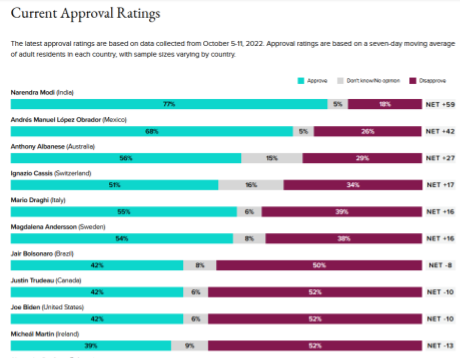
 The very useful Dutch sortition-focused blog Tegen Verkiezingen
  Dr. Polyvia Parara teaches Classics and Modern Greek Studies at the University of Maryland College Park. In

 Adam Cronkright
 Ali
Ali Ahmed R. Teleb
 avanderven
 avergne
 Alex Kovner
 azakaras
 Brett Hennig
 campbellwallace
 Simon Threlkeld
 Nick Coccoma
 codyhipskind
 Common Lot Sortitionist
 Conall Boyle
 constitutionalism
 davidschecter
 graytmatter
 gtridimas
 H.J. Hofkirchner
 Hanspeter Rosenlechner
 James Kierstead
 John Burnheim
 jgarry20151
 Jochen Krattenmacher
 johnedwardtaylor
 johnhuang865
 Jonathan Crock
 keithsutherland
 Jacob Richter
 kkoreilly
 lukewhito
 SimonPek
 Nathan El
 Nicholas Gruen
 Owen Shaffer
 Patrick Chalmers
 Paul Gölz
 peterstone
 Pierre-Etienne Vandamme
 pronfeld
 Emil
Emil rcaze
rcaze richwbrown
 Roger Knights
 roslynfuller
 Pierre-Etienne Vandamme
 shaharavin
 tbouricius
 Ted Wachtel
 Joshua Laferriere
 theodorestathis
 towardsautonomyblog
 Wayne Liebman
 Yoram Gat
 Oliver Milne
 Equality by lot