In an undated proposal by Max Rameau from the an organization called “Pan-African Community Action” the author writes:
A Model: The Civilian Police Control Board
The primary institution for the exercise of Community Control over Police is the Civilian Police Control Board (CPCB).
The CPCB must be comprised entirely of civilian adult human beings- not corporations or human representatives of corporations- residing in the police district. To be explicit, residing means living in, not owning property in, without regard to citizenship status or criminal history.
While some envision an elected board, we propose something entirely different: a board selected entirely at random among residents of the policing district.
There are two (2) main constraints to an elected board. First, elections in the US are thoroughly corrupted by influences of corporate finance on one side and two party electoral politics on the other. Even if multiple communities were to win control over their police, it is not difficult to imagine that after one or two election cycles, your local CPCB would be a corporate board brought to you by [ insert name of powerful corporation here ]. For this board to shift power, instead of becoming another institution to maintain power, it must break through the limitations of electoral corruption.
Second, even elections with minimal levels of corporate or party influence, still occur in a social context. In this social context, elected officials are disproportionately white, male and wealthy- the exact population with the highest level of support for the police. We must devise democratic systems that encourage active participation from those least likely to engage, not those most likely to benefit.
Sortition- government by random selection- is the best way to ensure that everyone has an equal opportunity to exercise power. The rich and poor, straight and gay, male and female, white and Black all have an equal shot at making decisions through random selection. If we believe that democracy is for everyone, then random selection of officials is the best way to ensure each person can exercise power. Continue reading →
We are 150 citizens of all ages and walks of life, including some who are younger than 18 and others who live in overseas France. There is great diversity and I believe that we represent French society quite well. We gather one weekend each month for a session of three days. We work around five themes dealing with the objective of reaching a 40% reduction in greenhouse gas emissions by 2030: food, transportation, housing, consumption, and production. I am part of the housing theme. The allocation to themes was by sortition – that is the principle of the convention. We reject expertise from the outset and it is normal citizens who express themselves, whoever they may be. It is an altogether original organization which really embodies direct democracy. It is a little like the citizens of Ancient Greece would discuss the issues of the city in the agora.
Where are you now in the process?
We are in the fourth session and we just finished the latest weekend of work. After 4 months during which we heard numerous speakers and understood the climate and the objectives we are now entering into the thick of it. We are going to propose measures that will become bills of legislature, decrees or constitutional amendments. That is not going to be easy! Continue reading →
Thomas Baïetto of Franceinfo has talked to 9 members of the French Citizen Climate Convention and reports their comments about their work.
Sylvain, a 45 year old Parisian marketing manager, says that before he was allotted he used to be “a cynical Parisian” rahter than an environmental activist. He does not hide his enthusiasm about this assembly of “citizen superheros, somewhere between Jaurès and Léon Blum” and about its complex mission.
“I was skeptical at first. I was thinking that these 150 people, if there were as ignorant as I am , that is going to be difficult,” says Grégoire, 31 year old from Caen. The first months of work, spread over a several weekend sessions in Paris, have convinced him that there is a possibility of formulating proposals that are “strong, powerful and acceptable by the population.”
Claire Mellier-Wilson, “Systems Change and Participation Practitioner”, has a lengthy and informative article about the French Citizen Climate Convention, with details about its origins, its organization, proceedings and schedule and the people and bodies involved.
One rather interesting detail is as follows:
Themes and group work
Alongside plenary discussions where all 150 citizens stay together, the Convention members are also working in groups.
The 150 citizens have been split into five groups of 30 people covering five themes: ‘Se deplacer’ transport, ‘Se nourir’ food, ‘Consommer’ consumption, ‘Travailler et produire’ work and production, ‘Se loger’ housing. The selection of the citizens in each group was done by lot in order to prevent people from choosing their preferred subjects and this introducing an element of bias into the process.
A cross-cutting group, called ‘escouade’ was created after the second session in November 2019, at the request of the citizens, in order to look at overarching topics relevant to all five themes such as: the financing of measures, communication, engagement, education and training, constitutional reform, energy production and consumption, protection of the natural environment and biodiversity. An overview of the transverse topics can be found in the summary of session 3. However, it emerged that this cross-cutting group, based on the self-selection principle (rather than selection by lot) presented issues of legitimacy and had process implications, as it did run in parallel with the other five groups, and in effect was preventing people from being fully engaged with their original topic. Also, due to the subjects covered in the escouade (i.e. constitutional reform, finances etc.), it created tensions around the perceived more strategic nature of that group. As a result, the Governance Committee decided to suspend the escouade. Going forward, the topics from the escouade will be dealt with via different mechanisms as announced by Thierry Pech, Co-chair of the Convention, at the end of Session 4.
For the second time in less than a year, sortition is mentioned in the New Yorker. Last time, it was merely an off-handed comment. This time, sortition is front and center. Nathan Heller’s article is built around an interview with Hélène Landemore. Alexander Guerrero also gets quoted.
Landemore’s ideal is participative, but she seems to be working with a rather loose concept for her proposals:
What distinguishes Landemore’s ideal from other lottocratic models, such as Guerrero’s, is the breadth of her funnel: the goal is to involve as much of the public organically in as many decisions as possible. Her open-democratic process also builds in crowdsourced feedback loops and occasional referendums (direct public votes on choices) so that people who aren’t currently governing don’t feel shut out.
As evidence that open democracy can work in large[…,] culturally diverse societies, Landemore points to France’s Great National Debate—a vast undertaking involving a vibrant online forum, twenty-one citizens’ assemblies, and more than ten thousand public meetings, held in the wake of the gilets jaunes protests, in 2019—and, this year, to the country’s Citizens’ Convention on Climate Change.
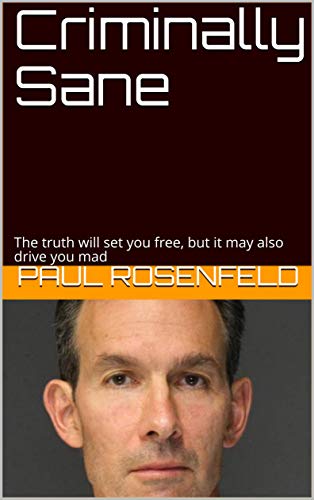
Paul Rosenfeld, a sortition activist who had been jailed for actions related to his activism, has written a book which is a combination of a memoir and a political manifesto. I find that Rosenfeld writes very eloquently. The manifesto part is also available at sortitionnow.org.
In his autobiographical snippet on amazon.com, Rosenfeld writes:
I guess we all have our issues. I imagine I have the power to save the world and that my book, “Criminally Sane”, will somehow facilitate said miracle. Excluding this glaring pathology I guess I’m otherwise reasonably normal. I have a long suffering spouse, two adorable poodles and a modest home in the suburbs of NY. If you wish to diagnose me fully you need to read my book, this memoir will tell you everything you could possibly want to know and then some. When you’re finished maybe you can even talk me down from my delusion.
A new book, The Routledge Handbook of Contemporary European Social Movements, has a chapter by Jorge Costa Delgado and José Luis Moreno Pestaña named “Democracy and sortition: Reasons for using randomness”. The authors summarize their chapter as follows:
The use of sortition accompanies the renewal of debates on democracy. In this chapter, following a brief overview of a few general traits pertaining to the political use of sortition, we will study its fundamental contributions on three levels. First of all, we will analyze how random selection can contribute to renewing the debate about the knowledge necessary to participate politically. For that we will develop four logical possibilities following the discussion between Socrates and Protagoras in Plato’s homonymous dialogue, and, subsequently, they will be exemplified through the debate regarding sortition in the Spanish political party Podemos as context for reference. Secondly, we will address the problem of sortition and its double potential to motivate participation and demotivate unwanted behaviour and profiles. In this case, illustrative examples will be taken stemming from the authors’ own ethnographic experience. Lastly, it will be argued that sortition serves to produce a particular moral content within political participation, based on the idea that politics are a civic virtue, essential to the development of human capabilities, that must be stimulated and distributed en masse. This perspective contrasts with logics deeply rooted in activist environments that, often hinder the declared objectives of those who are members of them, specially the alternation, when we think of political participation, between the ideology of the gift and the professional one.
Ordinary people from across the UK – potentially including climate deniers – will take part in the first ever citizens’ climate assembly this weekend.
Mirroring the model adopted in France by Emmanuel Macron, 110 people from all walks of life will begin deliberations on Saturday to come up with a plan to tackle global heating and meet the government’s target of net-zero emissions by 2050.
The assembly was selected to be a representative sample of the population after a mailout to 30,000 people chosen at random. About 2,000 people responded saying they wanted to be considered for the assembly, and the 110 members were picked by computer.
They come from all age brackets and their selection reflects a 2019 Ipsos Mori poll of how concerned the general population is by climate change, where responses ranged from not at all to very concerned. Of the assembly members, three people are not at all concerned, 16 not very concerned, 36 fairly concerned, 54 very concerned, and one did not know, organisers said. Continue reading →
Adam Postans and Matty Edwards report in The Bristol Cable (January 15, 2020):
Experiment in democracy, as council to pilot citizens’ assemblies
Bristolians could be gathered to make decisions on issues such as the climate crisis.
One of the biggest shake-ups in years in how decisions are taken on the major issues in Bristol has been approved with the introduction of citizens’ assemblies.
It came as the city council’s ruling Labour group threw its weight behind the Green Party’s idea, with backing from the Lib Dems.
But the Tories voted against it amid fears it would become “consultation on steroids” and add an unnecessary new layer of bureaucracy when, they say, the power of the mayor should instead be returned to councillors.
Read more
Residents will be chosen at random, like jury service for the assemblies and be paid to spend time hearing from experts on complex issues, including the climate emergency, before making decisions which could be binding on Bristol City Council.
Labour said it “radically strengthened” the Greens’ motion by assigning between £5million and £10million from the council’s capital budget to the “deliberative democracy” proposals, including giving communities more power over spending decisions in their areas.
But Tory group leader Cllr Mark Weston said: “We are going to end up with consultation on steroids. You will have opinions expressed from the centre of the city, all having the same view, and suburbs won’t have their say.”


 In January, Le Télégramme



 Adam Postans and Matty Edwards report in The Bristol Cable (January 15, 2020):
 Adam Cronkright
 Ali
Ali Ahmed R. Teleb
 avanderven
 avergne
 Alex Kovner
 azakaras
 Brett Hennig
 campbellwallace
 Simon Threlkeld
 Nick Coccoma
 codyhipskind
 Common Lot Sortitionist
 Conall Boyle
 constitutionalism
 davidschecter
 graytmatter
 gtridimas
 H.J. Hofkirchner
 Hanspeter Rosenlechner
 James Kierstead
 John Burnheim
 jgarry20151
 Jochen Krattenmacher
 johnedwardtaylor
 johnhuang865
 Jonathan Crock
 keithsutherland
 Jacob Richter
 kkoreilly
 lukewhito
 SimonPek
 Nathan El
 Nicholas Gruen
 Owen Shaffer
 Patrick Chalmers
 Paul Gölz
 peterstone
 Pierre-Etienne Vandamme
 pronfeld
 Emil
Emil rcaze
rcaze richwbrown
 Roger Knights
 roslynfuller
 Pierre-Etienne Vandamme
 shaharavin
 tbouricius
 Ted Wachtel
 Joshua Laferriere
 theodorestathis
 towardsautonomyblog
 Wayne Liebman
 Yoram Gat
 Oliver Milne
 Equality by lot