
Suzuki: The solution we need is a system where politicians are drawn from a hat

Canadian scientist and environmentalist David Suzuki has given up on the electoral system and proposes to replace it with a sortition-based system. Some excerpts from an interview with the National Observer:

Q: Trudeau’s called the pipelines a “trade off” for the national carbon plan. Earlier this month, he was in Nanaimo saying we can both build Kinder Morgan and hit the Paris targets.

DS: That’s such a lot of bullshit! this is just political doublespeak: ‘We’ve got to keep burning more oil, more fossil fuels, in order to meet our reduction targets.’ What are you talking about? That’s such a crock of shit!

Q: So how can citizens hold our democratic leaders accountable?

DS: I was asked to give a talk to the Senate last year on the 150th anniversary of Canada. What I said is, ‘We elect people to run government, but their problem is they only look to the next election.’ They can’t look down and say, ‘Jesus, we have to spend $50 billion a year for the next fifteen years to deal with climate change,’ because they know someone else will take credit for it. They won’t be in office then. So that kind of view is not in their thinking.

So I said, ‘You guys are the Senate. You’re not elected. You’re appointed for life! You’re the ones to think of sober second thought, and think in terms of one generation, two generations from now. You’re the guys who should be doing that.’

They didn’t do a goddamn thing. But I really think that would be a huge opportunity, if we’ve got that bicameral system.
Continue reading

The programmable voter, or, elections are not what they used to be

Mark Zuckerberg was hauled in front of Congress to answer for the “Cambridge Analytica scandal”. In the hearing he remorsefully promised that his top priority is now “making sure no one interferes in the various 2018 elections around the world”.

At face value this is a meaningless (and somewhat self-important) promise – there is nothing to distinguish “interference” from plain old campaign propaganda. And indeed at some level the whole spectacle was nothing more than a show – nothing concrete can be expected to be gained or lost. Presumably Facebook will make some changes to the way information (or misinformation) flows through its servers and the result will be that some pieces information (or misinformation) will be amplified and others suppressed. But, of course, Facebook already processes information in some way and this existing way also inevitably discriminates between pieces of information. What Facebook does or will do with the information it handles is completely up this private, unaccountable, opaque organization, motivated by its business and political interests, and there is thus little reason to expect any fairness or equality in the way it handles information. Thus no substantive change can be expected.
Continue reading

Robin Cohen: Beating the Cambridge Analyticas

Robin Cohen, Senior Research Fellow at Kellogg College and Emeritus Professor of Development Studies at the University of Oxford, writes in OpenDemocracy about his concerns following the “Cambridge Analytica” scandal:

We are now all aware of how our electoral systems have been manipulated by harvesting our digital footprints and preferences. Targeted messages, images and false information are then deployed to support or denigrate particular candidates, with no verification and no disclosure of the source of the posts.

We need to change the game to outsmart the Cambridge Analyticas. The best way to do this is vastly to increase the pool of candidates, then select our representatives by lot. This is technically known at sortition, or demarchy.

The system has many advantages, but in this context it would make digital electoral fraud uneconomic and, indeed, pointless. Allocation of offices by lot now gets an increasingly respectful hearing from political theorists [See, for example, Peter Stone ‘Sortition, voting, and democratic equality’, Critical Review of International Social and Political Philosophy, 19 (3), 2016, 339-56, DOI: 10.1080/13698230.2016.1144858]. There is even a Sortition Foundation set up to promote the idea worldwide.

Here are just some of the advantages:

  • Corrupt, power-hungry or narcissistic politicians will be stopped in their tracks.
  • A public service ethic will be enhanced.
  • As the pool of talent will be massively enlarged there is a good chance that we will get better public servants compared with those who are self-selected or supported by special interest groups.
  • Party loyalties will be diminished, limiting block votes (whipping) and encouraging individual judgement.
  • Given random selection, our representatives will be more representative of the population. There will be no need for women-only shortlists or positive discrimination to include hitherto excluded minorities.

There are two obvious objections to sortition. First, unsuitable people might be drawn by lot. Second, it is generally acknowledged in the literature that the system works best in small communities or assemblies. How damaging are these objections?
Continue reading

A bold new trust-building project called a Community Solutions Panel

From the Byron Shire Council website:

Community Solutions Panel
What infrastructure spending should we prioritise, and how should we fund these priorities if the rates alone are not enough?

This is the question that Byron Council will put to a randomly selected group of 28 people as part of a bold new trust-building project called a Community Solutions Panel.

Council has chosen to work with the newDemocracy Foundation to see if a community deliberation can be designed which delivers an informed voice of everyday people.
Continue reading

Democracy between sortition and elections

A debate titled “Democracy between sortition and elections” is planned to take place in Namur, Belgium later this month.
In a context where dissatisfaction with the political system is widely shared, the selection of members of legislative assemblies via sortition seems promising in the sense that it allows exchange of citizens’ opinions outside of any framework of careerist political interest. Presentations by Sébastien Laoureux (professor at the Philosophy and Letters department of the University of Namur) and by Philippe Mahoux (surgeon and honorary senator) will be the opportunity to evaluate the link between democracy and elections before exploring new avenues which current democracy can take.

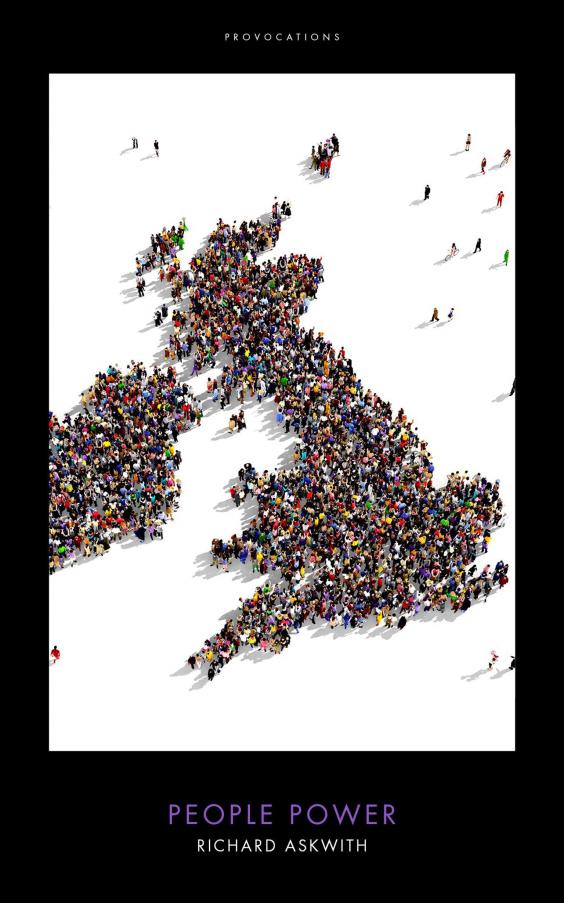
Richard Askwith: People Power

Richard Askwith, a former executive editor of The Independent, has a new book out:

People Power: If we want to defend our democracy we must expel the Lords and replace them with the people

In his new book, ‘People Power’, Richard Askwith makes the case for abolishing the House of Lords and replacing it with a citizens chamber of 400 people to bridge the gap between ‘us’ and ‘them’

[…]

Here’s how [to reform Parliament]. We start in the obvious place, at the least democratic, southern end of the Palace of Westminster. We expel the occupants. And we give the House of Lords to the people.

We cannot put everyone in the chamber; nor can we sensibly put everything to referendum. What we could do, though, is create a People’s Chamber, whose 400 members, randomly conscripted from the electoral roll as jurors, would be a small, representative sample of the population as a whole.

The details are negotiable. Here’s one hypothetical version. Everyone eligible to vote is also eligible for selection by lot to serve in the chamber for a fixed term of, say, four years. Service is compulsory, well-paid and prestigious. The People’s Peers can wear ermine and, if they want, use titles; the financial rewards are comparable to a sizeable lottery win.
Continue reading

Bouniol: The idea of a Citizens Chamber gains ground

Béatrice Bouniol has been showing some interest in sortition in her stories at La Croix. Last November, on the occasion of the publishing of a new book on the subject of “The Citizens Assembly of the Future”, Bouniol had the following story.

The idea of a Citizens Chamber gains ground

During COP 23, the Foundation for Nature and Man calls on France to make a democratic innovation by establishing a Citizen Assembly for the Future. Facing a crisis of representation, a citizens’ third chamber, an idea which has been discussed for about twenty years, gains ground.

On July 3rd, 2017, speaking in front of Congress, Emmanuel Macron proposed the transformation of the Social and Environmental Economy Council (CESE) into a Chamber of the Future, “a forum of our Republic” aimed at becoming “the crossroad of public deliberation”. Dominique Bourg, president of the scientific council of the Foundation for Nature and Man – created by Nicolas Hulot – having advocated the creation of such a chamber since 2011, was thus pleased at the proposal, but expressed his worry on the pages of La Croix that it could be a mere “rebranding – certainly necessary but far below what is desired.” The programmatic essay that appears today under his direction (Inventing the 21st Century Democracy: The Citizen Assembly of the Future. [Inventer la démocratie du XXIe siècle. L’Assemblée citoyenne du futur, Les Liens qui libèrent/Fondation pour la Nature et l’homme, 2017]) aims therefore to remind the President of the Republic of the conditions required for creating a Citizen Assembly for the Future.


The hall of the Social and Environmental Economy Council, at Iena Square, Paris.

In order to go beyond a feel-good formula, the establishment of a third parliament chamber must rest on an effort of democratic creativity, required by an unprecedented situation. At the age of the anthropocene (a new geological period defined by the impact of humans on their environment), reported by a group of researchers, it is necessary to systematically take into consideration of the impact of laws on the long term, that is, of their influence on the large scale physical and biological evolution of the planet.
Continue reading

Official records lacking in EMA location allotment

Corriere dela Sera writes:

Doubts emerge over EMA ballot and “burnt” voting slips

Various aspects of assignment to Netherlands of EMA headquarters still unclear, also due to lack of official records regarding draw by lot

The assignment of the European Medicines Agency (EMA) to Amsterdam by lot – to the detriment of Milan – was made official at the EU General Affairs Council on 20 November. But it has now emerged that there is no documentary evidence to reassure European citizens everything was done correctly and according to the rules; the procedure displayed unprecedented anomalies and levels of secrecy, culminating in selection by lot. The representatives of Italy and the Netherlands were not even called to supervise the proceedings at close hand. “Even in children’s tournaments the referee allows the two team captains to watch the toss of the coin …”, commented one ambassador present on the day.

No checks
The ballot papers of the three rounds of voting by the ministers were immediately burned, and the speed with which the draw was performed made any checks either before or after impossible. Above all, on 20 November there was an attempt to shroud everything in the utmost secrecy, with not even the draw method made public. Moreover, since last week the EU Council has continued to refuse to give the Corriere any information on how the voting and count took place, let alone on the lot drawing procedure. We have been able to reconstruct what happened thanks to informal interviews with ministers and ambassadors present, who set greater importance on the value of transparency than on being sworn to secrecy.

Sortition in the Bulletin of the Institute of Mathematical Statistics

The Bulletin of the Institute of Mathematical Statistics has published a column of mine that deals with the historical and theoretical connections between democracy and statistical sampling:

Democracy and statistical sampling

For about 2,500 years, statistical sampling was closely linked with democracy. “Selection by lot is natural to democracy, as that by choice [i.e., elections] is to aristocracy,” asserted Aristotle in the 4th century BC, following his own first-hand experience at Athens and the conventional wisdom of his time. Montesquieu concurred in the first half of the 18th century. It was only in the last 200 years, as democracy displaced aristocracy as the legitimate organizing principle of politics, that sortition—the delegation of power by statistical sampling—had to be air-brushed out of history and political science. […]

As part of the attempt to dismiss sampling as a political device it is sometimes claimed today that its use in Athens was motivated by the superstition that randomization allowed the gods to make the selection. However, the historical record indicates that the main motivation behind the practice was the law of large numbers. It was expected that sortition would produce a group that would mirror the population in important respects. This was often stated as an expectation of resemblance between the population and the sample in terms of wealth and social status (i.e., that most members would be poor commoners) but it was taken for granted that these characteristics would be correlated with certain interests and beliefs.

Continue reading

equalitybylot.com

equalitybylot.wordpress.com is now available also as equalitybylot.com – and both are supposed to be ads-free.

Thanks, Adam Cronkright, for taking the initiative on this!