Lotteries instead of point-scores on exams: A great quote from Peter Stone

A story in the Irish Times (25th Feb 2021). This is a paywalled link. The full text of the article appears below.

The Leaving Cert is not fair. Why not just replace it with a lottery?
Joe Humphreys
Unthinkable: We can no longer plead ignorance of the inner workings of our State exams

‘I think recognizing the wider role luck plays in society is very important,’ says TCD political scientist Peter Stone.

The Leaving Cert has had an untouchable status in Irish life. It may be a brutal memory test but it is our brutal memory test – a rite of passage nearly as old as the State itself.

In the past 12 months, however, the bonnet has been lifted on this national treasure and we can no longer plead ignorance of its inner workings. The attempt to manufacture a distribution of grades under pandemic conditions equivalent to those produced by the annual exams has spotlighted long-running questions of fairness.

As a test of ability, the Leaving Cert is fair in the narrow sense that a bobsleigh race between Jamaica and Norway is fair. Contestants do not start with the same advantages, and the format – which lends itself to a parallel grinds industry – gives an extra edge to students from better-off families.

However, there’s a second matter of fairness surrounding the appropriateness of using the Leaving Cert to determine who gets what college places. This must be considered against the backdrop of stark figures showing that, on average, a third-level graduate earns much more over her or his lifetime than a worker who doesn’t have a degree – at least €100,000 more, according to one conservative estimate.
Continue reading

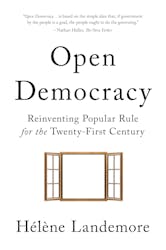
Landemore: Open Democracy, part 3

The crisis of representative democracy

Landemore again goes to the heart of matters when she states at the beginning of chapter 2:

My main point in this chapter will be to trace a certain understanding of the “crisis” of contemporary democracy not so much to contingent external factors (though they obviously play a role) but, rather, to the more fundamental democratic flaws in representative democracy’s original design. The main problem, I will argue, is that representative democracy was designed on the basis of electoral premises that prevent even its best, most democratized contemporary versions from reaching the full potential of genuine “popular rule”, that is, a rule that empowers all equally.

Due to these democratic flaws

the cognitive dissonance between the reality of the regimes we live in and the democratic expectations people attach to them can only grow over time.

Too often the crisis of confidence in electoralist regimes is attributed to a plethora of circumstances that are supposedly incidental, non-inherent to the regime itself: everything from globalization to technological change to polarization to Putin. In contrast, Landemore’s agenda is refreshingly clear and principled. While accepting that at least some of those phenomena have their effects, she does not see these are being root causes but, to they extent they are influential factors, as being symptoms of the root causes that are inherent to the electoralist system (p. 32).

It is unfortunate that this clarity is attenuated again by the mandatory gesturing toward propriety. First, why would Landemore write about a design that “fails to empower all equally” because it is based upon “mistaken premises” if by her own account the electoralist design had explicit anti-democratic objectives? Implying that the founders were incompetent democratically minded law-givers is somehow more acceptable, it seems, than maintaining consistency with the previous analysis and inferring that the founders quite competently designed an impressively successful anti-democratic system.
Continue reading

Landemore: Open Democracy, part 2

“Open”

Revisiting briefly the matter of the title of the book: In Part 1 I objected to Landemore’s choice of the term “open democracy” to describe her ideal for government. In short, I find that the word “open” is essentially meaningless and I suspect that the reason for using it as a modifier is that doing so allows to apply the word “democracy” (as in “closed democracy”) to the existing Western eletions-based regimes. On page 15 of the book, Landemore herself notes that the term is already used and abused in politics – as when it refers to transparency. Landemore also makes the connotation of open-source software explicit and claims that there is a likeness between “open democracy” and open source software because “in a democracy the law should be something to which all have access and on which all can make an impact. Everyone should be able to write and claim authorship over the law”. Again, this is too vague to be useful. It is certainly not true at all that open-source software is democratic in any meaningful sense. For one thing, open source is often financed and controlled de-facto by powerful interests. In fact, if anything an analogy may be drawn between open-source software and the “closed” electoral system where a superficial, formal equality is a mask for inherent systemic inequality.

Technology, direct democracy

Too often political reform advocates have a laissez faire “it’s all good” attitude and they embrace any proposal that is making the rounds. Having an “open mind” may sound like a good idea, but in fact not examining proposals critically is recipe for dissipating energy and missing rare opportunities for change. Landemore does not make this mistake. Despite the invocation of the open-source connotation, Landemore explains that her book is not about democracy through technology. This is good. The barriers to democracy are not technological and focusing on technological solutions is therefore a distraction. Another thing Landemore is explicitly not offering is the “antiquated and largely impractical ideal of direct democracy” (p. 17) – a system where mass participation is a central feature. Her reasoning will be laid out in chapter 3 of the book, so it remains to be seen how convincingly it is argued that this is not the right way forward. But argumentation aside, the conclusion is the right one in my opinion. Rejecting mass participation is therefore an important step in clearing the ground for better ideas.

What is an elite?

On page 18 Landemore has an important clarification of the term “elites”. She writes:
Continue reading

Landemore: Open Democracy, part 1

I have recently started reading Hélène Landemore’s book Open Democracy (2020, Princeton University Press). Having gone through the first two chapters, I find the book very useful and I highly recommend it. Despite its somewhat clichéd title, and despite the occasional bow toward the self-serving traditional Western theory of democracy, Landemore is in fact offering (it seems so far, I should say) a rather radical critique of the status quo and does not shy away from throwing some heavy punches at theorists who in one way or another defend oligarchical ideologies. In fact, Landemore presents – even if intermittently and obliquely – a thoroughgoing critique of the elections-based system that is not only better argued than, say, that of Van Reybrouck, but also more radical than his. I can’t think of a comparable book from a mainstream US political scientist. (Maybe Dahl’s A Preface to Political Theory?) The fact that Landemore, now at Yale, is originally French, may be playing a significant role.

Here is a first installment of my comments. I hope to have quite a few more posts discussing Open Demcoracy.

“Open Democracy”

To start: the title, “Open Democracy”. This does not bode well. Is there such a thing as a “closed democracy”? Is this making an implied assertion that our current system is a closed democracy, while we should be aiming at an open democracy? The term “open” has the odor of a buzzword (as in “open source”) – a feel good term which like “democracy” itself, or “people power”, could really mean anything.

On page 2 (I am reading the electronic version, so page numbers are approximate), when discussing what are supposedly historical examples of democracies, Landemore gives what seems like a definition of “open democracy”: a situation where “in theory”, any member of the political community “could access the center of power and participate in the various stages of decision-making. Citizens could literally walk into the public space to be given a chance to speak and be heard”. This is contrasted with the modern situation where “many have the feeling” of being “left out of the most important centers of political power, while the political personnel form an elite that is separate from them”.
Continue reading

Some Problems of Citizens’ Assemblies

Academia.edu have recently launched Academia Letters, a peer-reviewed journal consisting of short articles that are distributed to a wide audience, and Alex Kovner and I were invited to contribute to the first edition. The Academia Letters article is here (along with the reviewers’ comments). It was edited down rather severely, the advantage being that, according to the analytics, most people who received the notification actually read it, the intention being to introduce new work to a broader audience than the usual recipients. A fuller version is available on Alex’s blog: Part 1 and Part 2. We’re currently working on a new Superminority article to directly address the problem at the heart of the US and other deeply polarized political systems — where half the electorate are effectively disenfranchised — that led to the attack on Capitol Hill.

Covid Treatment Lottery

“For patients with similar prognosis, who cannot be separated in other ways, a random allocation, such as a lottery, may be used”, says the protocol.

So says a Report in the Daily Telegraph (UK) of 5th January by Paul Nuki titled “Covid ‘lottery’: Doctors draw up triage protocol in the event treatment has to be rationed” (Telegraph usually paywalled, but this seems open-access)

It refers to a paper in J Medical Ethics “Development of a structured process for fair allocation of critical care resources in the setting of insufficient capacity: a discussion paper” also accessible f.o.c.

This is circulating in NHS hospitals as a proposed protocol.

The protocol – drafted by medical, legal and palliative care specialists at the Royal United Hospital Bath NHS Trust – is the most sophisticated attempt yet to devise an ethical system for rationing care in the event that there are insufficient resources to treat everyone.

Now this is exciting! But it is not new. Right from the start of organ transplantation (1960s) such moralistic contentions were weighed up.

In Seattle the so-called ‘God committee’ was set up to make these difficult choices (reported in Calabresi & Bobbit (1978) Tragic Choices). The committee eventually found that it was too agonising to make these choices, and passed the task back to the medical practitioners. In the end it was felt that only medical  factors should be taken into account. Even if no overt rules on social merit were in place, we should not be surprised if the doctor, genuinely uncertain on medical grounds,  was to pick the ‘nicer’ of the two patients.

A secret lottery?

Elster (1989) in his masterly ‘Solomonic Choices’ gives the example of child custody cases, where the judge is frequently unable (in his own mind) to give a clear-cut decision. Yet decide he must, so he goes ahead, dressing up the verdict with trappings of rationality.

This, claims Elster, satisfies both parties, the winner praising the wisdom of the judge, the loser cursing his bias. No doubt a similar process might go on when a medical doctor decides, even if partly randomly and in secret, between her two patients: So long as both patients believe that their case is decided clinically by an expert, then both winner and loser may find it acceptable.

The doctor herself may even be a bit cognitively dissonant—convincing herself that she is doing the right thing for the right reason, exercising judgement based on intuition  rather than validated knowledge. This form of fudging may be acceptable all round, but it is fraught with dangers.

If fakery is suspected, patients rapidly lose their trust in their professionals. Unwitting discrimination seems inevitable. True expertise will fail to develop unless its limits are acknowledged.

Against a lottery is Greely (1977) who suggests that if recipients can argue about any allocation, they feel more satisfied. Anand was also interested in what is called ‘voice’—that one of the reasons a coin-toss was thought to be unfair is that it deprived customers of a say in the decision.

In favour of a visible act of coin-tossing Calabresi & Bobbit explain that it draws attention to the fact that resources are limited. Edgeworth (1888) suggested another benefit would be that the public, seeing a random drawing take place, would be alerted to the ‘aleatory nature’ of the decision. Bureaucrats might not like having such attention focussed on this shortage of resources and their uncertain knowledge.

[This was part of my 2006 thesis Who Gets The Prize. It can be viewed in full on my website www.conallboyle.com]

Wang Shaoguang and Yves Sintomer on sortition

A 2019 hour-long discussion on sortition at Shandong University with Wang Shaoguang and Yves Sintomer was recently published by its moderator, Daniel A. Bell.

This is a rather wide ranging discussion, and its lack of focus is somewhat of a flaw, in my opinion. Ideas on various matters are expressed. Many of those are well-hashed ideas, and the discussants are content to simply repeat them rather than examine them critically.

One idea that I think is relatively novel is briefly offered by Sintomer toward the end when Bell asks for proposals for applying sortition:

I would give the power to citizen juries randomly selected to judge politicians, when they are accused of misbehavior. Because I don’t trust other politicians to do this, as in Brazil or in the USA, where the impeachment is voted by the Congress. I think it’s a bad setting. And I don’t trust judges for judging politicians. Because judges are a very specific, professional body, and very often, a highly conservative body. I trust more randomly selected citizens to judge politicians when they are accused of misbehavior.

Senior: The tyranny of the credentialed

Jennifer Senior writes in the New York Times:

95 Percent of Representatives Have a Degree. Look Where That’s Got Us.

All these credentials haven’t led to better results.

Over the last few decades, Congress has diversified in important ways. It has gotten less white, less male, less straight — all positive developments. But as I was staring at one of the many recent Senate hearings, filled with the usual magisterial blustering and self-important yada yada, it dawned on me that there’s a way that Congress has moved in a wrong direction, and become quite brazenly unrepresentative.

No, it’s not that the place seethes with millionaires, though there’s that problem too.

It’s that members of Congress are credentialed out the wazoo. An astonishing number have a small kite of extra initials fluttering after their names.

According to the Congressional Research Service, more than one third of the House and more than half the Senate have law degrees. Roughly a fifth of senators and representatives have their master’s. Four senators and 21 House members have M.D.s, and an identical number in each body (four, 21) have some kind of doctoral degree, whether it’s a Ph.D., a D.Phil., an Ed.D., or a D. Min.

But perhaps most fundamentally, 95 percent of today’s House members and 100 percent of the Senate’s have a bachelor’s degree or higher. Yet just a bit more than one-third of Americans do.

“This means that the credentialed few govern the uncredentialed many,” writes the political philosopher Michael J. Sandel in “The Tyranny of Merit,” published this fall.
Continue reading

Galland and Schnapper: Citizen conventions and representative democracy, Part 2/2

The second part of an article in Telos by Olivier Galland, sociologist at the CNRS, and Dominique Schnapper, researcher at the EHESS and an honorary member of the Constitutional Council. The first part is here.

2. The choice of those of those responsible for the organization of the discussions, for informing the people convened by selecting the “experts”, for helping them to form an opinion, for writing and disseminating the conclusions must meet specific conditions as well. Who will select the people in those roles and what will be their legitimacy for making choices which may guide the conclusions of the deliberations? On this issue, it is important to distinguish clearly, when organizing the deliberations, between testimonies of scientific experts and those of other actors – activists, representatives of the state, trade unionists and business people. A distinction must be made consistently and meticulously between objective data – even if it is controversial – and opinions or beliefs which are a matter of ideological or political convictions or personal or group interests. Such a distinction is necessary so that the members of the conventions would be able to form judgement which is as informed as possible, especially in an era where mistrust of science has increased dangerously.

The members of this type of conventions can make political choices, but when they do so, they must be fully aware of the reasons for their choices and of their full implications. It is also necessary to shield them from pressure and influence that they may be subject to by activists and lobbies outside the convention. The experience of the CCC seems to show that risk is very real. A trial jury must be protected from outside influences in order to make its judgement impartial, but how can “a citizen convention” be protected against pressures originating from activists and interest groups?

3. However, the most decisive is the definition of these “conventions”, which are unmentioned by the constitutional texts and the democratic tradition: except for their makeup and their function, what is their purview, what is their legitimacy?
Continue reading

Galland and Schnapper: Citizen conventions and representative democracy, Part 1

Olivier Galland, sociologist at the CNRS, and Dominique Schnapper, researcher at the EHESS and an honorary member of the Constitutional Council, write in Telos.

Parliamentary institutions are the only legitimate institutions for enacting legislation and for government oversight. Under what conditions could those institutions be complemented by the involvement in the public space of groups of citizens which would work for a period of time in order to come to know in an informed and open-minded way the dimensions of a political problem and which would publish the results of their deliberations?

This question is part of a general ambition for some form of democratization to which the institutions of the Republic are responding poorly at the moment. Dominique Rousseau advocates a “continuous democracy” while Rosanvallon advocates for a “counter-democracy”. But neither of them poses the problem in a way that appears to us just or practicable.

It may be accepted that low turnout rates are an indicator of the weakening of the legitimacy of the parliament and of government, or, put differently, that we are experiencing a crisis of representation. It is thus not out of the question to reflect on forms of citizen consultation which would inform the public discussion between elections. These would share the space that is now left solely to the media, to social networks and to unaccountable citizens who are not particularly informed and who make their opinion known, for example, wherever information is transmitted or even through the device of opinion polls.
Continue reading