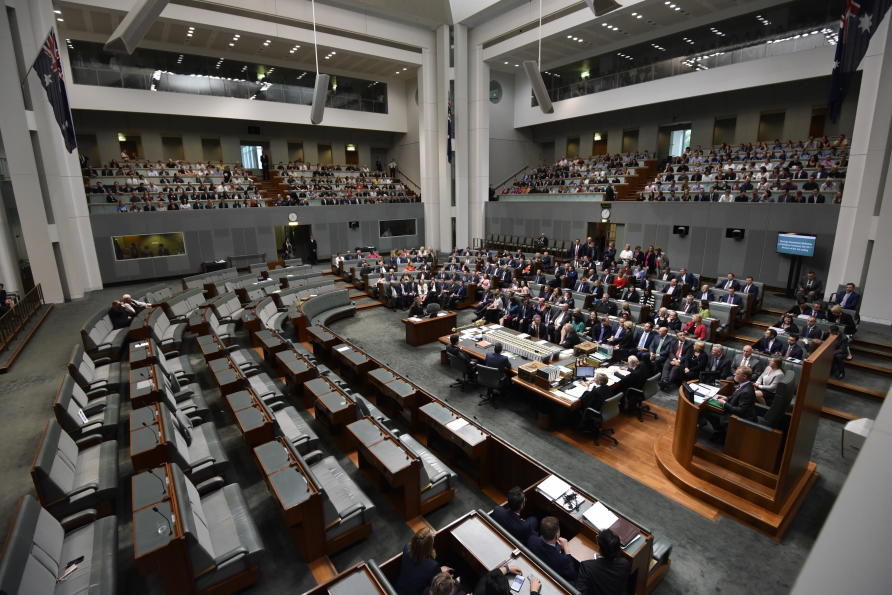
Delanoi: Sortition does not replace elections, it complements them

Simon Blin interviews Gil Delanoi in the Liberation. Original in French.

Gil Delanoi, a researcher at Sciences-Po, a sortition expert, promotes this procedure as a fundamental improvement of the democratic system, provided that it is used in an ad-hoc fashion. [Editor’s note: This sub-headline seems to be a misrepresentation of Delanoi’s position – see below. – YG.]

Gil Delannoi, professor at Sciences-Po and researcher at Cevipof, has just published a new book Sortition: how should it be used? (Sciences-Po Press). According to him, this procedure, if it is well-established, could improve the representation of the diversity of the electorate.

How can sortition cure the malaise of democratic representation and participation?

As opposed to voting, sortition does not aggregate voices but rather subsamples people from a group in order to delegate a task to them, whether a deliberative, an advisory or a decision-making task. From this perspective, sortition complements voting because it allows breaking out of the legislative logic where only representatives make the law and are concerned with it and where the administration applies it. This way, sortition does not replace elections but completes them. It is certainly possible to combine the two processes.

What form should it take?

Sortition is adaptable. There are at least as many ways to allot as there are to vote. It all depends on the objective that is sought. Sortition can be mandatory or volutary. In the first case it is a duty, in the other it is a right. The size of the sample is also very important. If the allotment aims to construct a mirror of the population, it is preferable to have a large number of people involved in order to create a detailed picture. That said, even if we allot a few people, we already a sample that is more representative than that of a simple vote, particularly in terms of age, gender and profession. We may need allotments of size 10,000 or 1,000 people. Logically, the larger the number the more accurate is the representation. In the case of court juries, where sortition is regularly used in France, it is evident that the group must be able to really have a discussion. Here the optimal size is on the order of 10 to 50 people. The larger the sample, the more difficult this is.
Continue reading

The Principle of Rotation

Let me share part of the section called “The Principle of Sortition” in E. S. Staveley’s 1972 book, Greek and Roman Voting and Elections. In spite of its title, the section might better have been titled, “The principle of rotation,” since Staveley argues that rotation in Athens was “more fundamental by far” than sortition. I am not an academic, and I would be interested in hearing what the reception was for Staveley’s thesis among his colleagues. Only a few reviews of the book are available to me, and they seem to have been written by specialists in Roman rather than Greek politics. He seems to be shooting across their bow. Was anybody listening?

It certainly stands to reason mathematically that the more posts are available only once in a lifetime, and the shorter their term limit, the more rotation would become the operating principle. This would set up what the Romans later would call a Cursus Honorum, a career trajectory where the average Athenian would gain active experience in every aspect of local governance, from finance to foreign policy. Unlike the Cursus Honorum, though, the order or life stage in which the citizen held a position mattered less than variety of exposure to various workshops in what Pericles called the “school of Athens.”
Continue reading

Legislature by Lot: Transformative Designs for Deliberative Governance

[This is repost from https://www.bretthennig.com/legislature_by_lot_published]

Legislature by LotLegislature by Lot: Transformative Designs for Deliberative Governance has just been published by Verso a few days ago. I contributed a chapter, “Who Needs Elections? Accountability, Equality, and Legitimacy Under Sortition” that questions the premise of the opening chapter of the book: that sortition should only accompany an elected chamber.

However, even as I’m excited by the publication of this new book, I’m thinking today about Erik Olin Wright, who conceived of the “Real Utopias” series and brought so many challenging and brilliant insights to this and his many other works, but sadly passed away recently. It was another book in this series, Deepening Democracy, which he co-edited as well, that started me down the path I’m now on. It was such an honour to meet him and get to know him – and to sing “Bella Ciao” together with him at his house a few short years ago.

Sortition at the 2019 ECPR General Conference

The 2019 ECPR General Conference will be held at the University of Wrocław, Poland in September. It will feature hundreds of panels and thousands of papers. One of those papers will deal with sortition:

Sortition as a Finalite Politique for EU Democracy
Paweł Glogowski, University of Wrocław

Abstract: The issue of democratic deficit in the European Union has been present in the academic and political debate for many years now. The first natural reaction to that complex and multilevel problem was to strengthen democracy known as a representative system. The cure was supposed to come primarily through better representation of citizens’ in the European Parliament. As we know, this has not helped the EU in solving the issue. In fact, together with the dynamic increase of EP powers, the voters turn out in European elections has dropped. In consequence, the Union proposed to fight the democratic deficit with participatory democracy, and such innovative tool like European Citizens’ Initiative. Seven years of experience show that this instruments has also failed to empower and engage EU citizens. Hence, this article will try to answer the question whether deliberative democracy is the last chance to solve the issue of EU’s democratic deficit. The author will examine the pros and cons of sortition on a transnational level, and if this kind of democratic innovation has any chance to heal democracy in the European Union.

McKay: Combining mini publics and multi stage popular votes

The section ‘Combining mini publics and multi stage popular votes’ in Spencer McKay’s new paper ‘Building a better referendum’ presents an interesting overview of several systems where the referendum is combined with mini publics.

Pairing a multi-stage popular vote with a mini-public – a process I refer to as an iterated popular vote (IPV) – may aid in bridging the gap between micro-deliberation and macro-participation. The IPV is an attempt at institutional design inspired by the notion of “designed coupling,” which seeks to “find the optimal strength of linkages between different parts of a deliberative system” (Hendriks, 2016, p. 55).

Invitation and call for posters: International conference Direct Democracy v. Populism, Geneva, 17-18 May 2019

On Friday and Saturday, May 17th-18th, 2019, the university of Geneva will hold a conference on the theme of “Direct Democracy v. Populism”.

On Friday evening there will be a public meeting in French, while an academic conference in English will be held on Saturday. The program: PDF.

Registration for the workshop is free but places are limited for catering purposes. If you would like to register please contact, before 2 May 2019, alexander.geisler@unige.ch.

Call for Posters: You currently work (or have worked or are planning to work…) on a project on direct democracy, democratic theory, democratic innovations, sortition or populism? Send us your
poster proposal by 15 April. Accepted authors will be notified by 17 April. Submissions and further information: nenad.stojanovic@unige.ch.

A call for papers: The return of sortition to politics

A call for papers has been issued for a colloquium in Lyon, France titled “Le retour du tirage au sort en politique: État des lieux et prospectives critiques entre sciences politiques et philosophie” (The return of sortition to politics: the lay of the land and critical perspectives between political science and philosophy).

The colloquium is organized by MAAD (Mutations et Approches Actuelles de la Démocratie) at the ENS in Lyon and will take place on October 10th and 11th, 2019. The call for papers mentions that, in addition to French, submissions in English and Spanish would be accepted as well.

The call for papers has a useful bibliography which contains a number of interesting recent sortition-related academic publications.

Umbers: Against Lottocracy

“Against Lottocracy” (PDF) is a 2018 paper by Lachlan Montgomery Umbers from the department of philosophy at the University of Western Australia.

Abstract

Dissatisfaction with democratic institutions has run high in recent years. Perhaps as a result, political theorists have begun to turn their attention to possible alternative modes of political decision-making. Many of the most interesting among these involve reliance on lotteries in one way or another – as a means of distributing the franchise, selecting representatives, or making social choices. Advocates of these ‘lottocratic’ systems contend that they retain the egalitarian appeal of democracy, while promising improved political outcomes. The aim of this article is to defend democracy (or, at least, universal suffrage and majority rule) against the challenge posed by these proposals. I argue, firstly, that lottocratic systems necessarily involve the establishment of objectionable social and political inequalities in a way that democracies do not. Secondly, I raise a number of doubts with respect to the purported instrumental benefits of these proposals.

The paper is an attempt to formulate a reasoned (negative) response to proposals for instituting sortition-based government as a substitute to elections-based government, and specifically (as its name indicates) to Alexander Guerrero’s proposals. By doing so, the paper represents a significant step forward in the Anglophone academic discussion of sortition. In English-speaking academia proposals for setting up “citizen juries” – i.e., allotted, one-time, limited-purview decision making or (more often) advisory bodies – are discussed at length. So far, however, proposals for setting up sortition-based government were either ignored or summarily dismissed (“Nobody is going to support replacing Congress or Parliament with a randomly selected assembly,” as Helen Landemore put it). As it turns out, Umbers argues for the same reformist academic position. Umbers, however, does break some new ground by devoting his energies to making a detailed argument rather than simply taking sortition-based government off the table at the outset.
Continue reading

Lottocracy among 5 ideas to upgrade democracy

NJ.com presents “5 ideas to upgrade democracy” by 5 “of America’s leading political philosophers”. One of those is Alexander Guerrero, professor of philosophy at Rutgers University-New Brunswick’s School of Arts and Science, who offers the readers his ‘lottocracy‘:

Maybe America’s problem stems not from the fact that we aren’t picking the right people, but from the fact that we aren’t picking them in the right way.

Maybe — bear with me here — we should get rid of elections. I believe that you — that each of us — has something to offer, and that we can find ways to work together.

I propose we use a new system that uses random selection, rather than elections, to select political representatives.

I call it lottocracy.

For it to work, we must agree that having an elected, generalist legislature has run its course.

We should instead have randomly-chosen citizens selected to serve on single-issue legislatures, each covering specific areas such as immigration, transportation, education, agriculture and so on.

Each of the proposals was evaluated by 3 political scholars from Rutgers’ Eagleton Institute of Politics: Ashley Koning, Elizabeth C. Matto and John Weingart. Here is what they wrote about lottocracy:

Why won’t this work?
Continue reading

A first article is published by BIRDS

Bard Institute for the Revival of Democracy through Sortition (BIRDS) was recently founded by Jonas Kunz and Hans Kern.

Kunz and Kern have now published a lengthy article in which they offer sortition as a tool for taking action on climate change:

Sortition: The Key to Globally Coordinated Climate Change Action?

Climate change by human industry (anthropogenic warming) has been known to scientists at the highest levels within the U.S. government, at least since 1979. That year, the ‘Charney Report’ — Carbon Dioxide and Climate: A Scientific Assessment — presented the research of nine atmospheric, meteorological and oceanographic scientists convened at Woods Hole Institute, to the National Research Council. The introduction to this report by Werner E. Suomi pronounces: “If carbon dioxide continues to increase, the study group finds no reason to doubt that climate changes will result and no reason to believe that these changes will be negligible. The conclusions of prior studies have been generally reaffirmed. …[“]

[Natheniel Rich writes in a New York Times article:] “in the decade that ran from 1979 to 1989, we had an excellent opportunity to solve the climate crisis. The world’s major powers came within several signatures of endorsing a binding, global framework to reduce carbon emissions.” To arrive at a clear understanding of what went wrong, we must first do away with the common misconception that big industry is and always has been the main culprit. In fact, as the article reveals, the oil industry was the first, to take due diligence measures, on the dangers of climate change and was preparing to adapt to policy changes. The policy changes, however, never came. Resistance did not come from the outside, it came from within the political structures themselves.

Continue reading