Sortition can do it all

This post is a rebuttal to the conclusion of Keith Sutherland’s 2013 paper “What sortition can and cannot do”, whereby sortition is deemed inappropriate for the “advocacy role” of representative legislature owing to alleged improper representation.

Since posters here address each other with their first names and especially since I will likely be chatting with him soon, I will refer to Keith Sutherland as Keith despite having never chatted with him yet and despite that going against the convention of referring to scholars one is discussing by their last names.

I have seen that there is a long standing feud of sorts between Keith and Yoram, and I find it appropriate to mention this here given that what seems to be at the origin of the conflict is precisely largely their differing views on the extent to which sortition should pervade the selection of policymakers compounded by a more general disagreement on political ideology according to a fairly standard left-right antagonism. I have no dog in this fight nor a particular affinity to either’s position whether on sortition or on political ideology more generally as far as I can tell, appearing to hold an intermediate position in both respects. As such though I am posting on Yoram’s site against Keith, this should not be construed as an attack by “team Yoram” against “team Keith”, as further evidenced by the fact that I had never communicated with Yoram until a few days ago when a renewed focus on sortition led me to make a few comments on his site. I imagine that Keith has heard all my arguments here before, and that most others have too, but since I couldn’t find a similar post on the topic I figured it would at least be useful to have a post dedicated to it. I am presuming that readers are familiar with the paper and the concepts it discusses and so I am not reintroducing them here.

Continue reading

Adam Grant endorses randomly selected officials

In an excruciating piece in the NYT (unpaywalled version), business guru Adam Grant endorses sortition, but in a risible form in which one randomly selects officials, rather than has a body of randomly selected people. This is all based on a psych experiment that showed that leaders chosen at random do better than those chosen by the group apparently.

Eliminate voting, and candidates with dark triad traits would be less likely than they are now to rise to the top. Of course, there’s also a risk that a lottery would deprive us of the chance to select a leader with distinctive skills. At this point, that’s a risk I’m willing to take. As lucky as America was to have Lincoln at the helm, it’s more important to limit our exposure to bad character than to roll the dice on the hopes of finding the best.

Besides, if Lincoln were alive now, it’s hard to imagine that he’d even put his top hat in the ring.  … A lottery would give a fair shot to people who aren’t tall enough or male enough to win. It would also open the door to people who aren’t connected or wealthy enough to run. Our broken campaign finance system lets the rich and powerful buy their way into races while preventing people without money or influence from getting on the ballot. They’re probably better candidates: Research suggests that on average, people who grow up in low-income families tend to be more effective leaders and less likely to cheat — they’re less prone to narcissism and entitlement.
Continue reading

The American Academy of Arts and Sciences recommends citizen assemblies

In 2020 the American Academy of Arts and Sciences published the report of its Commission on the Practice of Democratic Citizenship.
The report is a useful example of how the liberal U.S. establishment views the state of the political system and for the kind of ideas it generates for institutional reforms. A set of self-appointed reformers, highly credentialed by the establishment, functions as the tribunes of the people. The report is ostensibly based on “listening sessions” held with various groups in the U.S., but of course the entire exercise is controlled from beginning to end by elite actors and it is completely up to the commission members to select the makeup of the groups “listened to” and to channel their “input” into the a set of recommendations. In fact, regarding the makeup of the groups in the “listening sessions”, the report specifically asserts that “[t]he intent of this strategy was not to collect a statistically representative sample, but to cast a wide net and surface the personal experiences, frustrations, and acts of engagement of a diverse array of Americans”.

The Commission on the Practice of Democratic Citizenship was established in the spring of 2018 at the initiative of then Academy President Jonathan Fanton and Stephen D. Bechtel, Jr., Chair of the S. D. Bechtel, Jr. Foundation. Mr. Bechtel challenged the Academy to consider what it means to be a good citizen in the twenty-first century, and to ask how all of us might obtain the values, knowledge, and skills to become still better citizens. Since 1780, projects that work to bolster American citizens’ understanding of and engagement with the institutions of their government have been a hallmark of the Academy’s work.

The background for the commission’s work is a grim picture of disintegration of social cohesion and distrust in institutions. As is standard practice, the real-world causes of this situation are left unclear. Abstract economic issues like inequality and mobility are mentioned, and it is asserted (citing Gilens and Page) that “[c]ongressional priorities, studies have shown, now align with the preferences of the most affluent”. However, real-life, specific outcomes of those “congressional priorities”, such as food insecurity, lack of medical care, indebtedness, declining life spans, or incarceration rates are not discussed.
Continue reading

Rancière: The scandal of sortition

The second chapter of Jacques Rancière’s Hatred of Democracy (2005), “Politics, or the Lost Shepherd”, contains a fairly long discussion of sortition and its relation to democracy. The following paragraph is from page 41 of the English translation:

The scandal [of sortition] is simply the following: among the titles for governing there is one that breaks the chain, a title that refutes itself: the [Plato’s] seventh title is the absence of title. Such is the most profound trouble signified by the word democracy. It’s not a question here of a great howling animal, a proud ass, or an individual pursuing pleasure for his or her own sake. Rather is it clearly apparent that these images are ways of concealing the heart of the problem. Democracy is not the whim of children, slaves, or animals. It is the whim of a god, that of chance, which is of such a nature that it is ruined as a principle of legitimacy. Democratic excess does not have anything to do with a supposed consumptive madness. It is simply the dissolving of any standard by which nature could give its law to communitarian artifice via the relations of authority that structure the social body. The scandal lies in the disjoining of entitlements to govern from any analogy to those that order social relations, from any analogy between human convention and the order of nature. It is the scandal of a superiority based on no other title than the very absence of superiority.

This is somewhat reminiscent of the “blind break” argument for sortition (by eliminating all reasons for selection, bad reasons are eliminated as well). Later on, for example, Rancière emphasizes the fact that when using sortition seeking power is not a prerequisite to attaining it. But the tone here is quite different. The emphasis is on rejecting traditional or “natural” reasons, reasons that dominate social relations throughout, reasons that justify the elevated status of established elites. It is the rejection of those traditional reasons that scandalizes those elites, as well as many among the masses who have internalized the justness or naturalness of those “distinctions”.

Larry Bartels wants democratic theory to focus on elites

Larry Bartels is an American political scientist. In 2016 he published, together with Christopher Achen, the book Democracy for Realists: Why Elections Do Not Produce Responsive Government, in which the authors argued that voters can’t really tell what’s good for themselves. One possible takeaway from this argument could have been that elections are not a democratic mechanism. A recent interview with Bartels, on the occasion of the publication of a new book of his, indicates that he draws a very different conclusion. Bartels gives up on the people altogether (“they are what they are”) and wants to focus democratic theory on the behavior of elites.

I think what we need is a theory of democracy that has some real understanding of, on one hand, the inevitable power and leeway of political elites and, on the other hand, the goals they should strive to achieve when they exercise that power. Much of our thinking about democracy is very focused on ordinary citizens and what they should or shouldn’t be doing in their role in the process.

I’ve come increasingly to think that that’s a futile exercise. Ordinary people are pretty much what they are. We have a pretty good sense of how they behave. There are a lot of commonalities in their behavior across political systems with different cultures and different institutions. In all those places, regardless of the role of citizens, it’s the political leaders who really call the shots. So what we need is a better understanding of what democratic leadership entails, and how institutions can be made not to ensure, but at least to increase the probability that leaders will govern in enlightened ways, and on behalf of the interests of ordinary citizens.

Bartels ends on an overtly aristocratic note, where, perhaps taking a page from the Chinese, he wants to cultivate better elites. But at the same time he is overtly pessimistic and warns his audience that we should not expect too much from democracy.

[W]hat would a better system of democracy look like? I don’t have the answer to that. I do have the sense that we tend to focus too much on trying to avoid every conceivable threat to democracy and to imagine that if only we got the system and the rules right, that the system would operate happily in perpetuity. I think in reality there’s a huge gray area between democracy and autocracy, and lots of different dimensions in which democracies perform better or worse. Maybe the sense that a lot of people in the U.S. and elsewhere have now that we’re in a period of crisis is a belated recognition that democracy in all times and places is partial and risky and chancy.

[W]hat we really have to focus on is how we can socialize leaders to want the right things, and constrain them to avoid the worst excesses of misuse of power in political systems.

Rangoni, Bedock, and Talukder: MPs’ discourses on deliberative mini-publics

A 2021 paper in Acta Politica by Sacha Rangoni, Camille Bedock, David Talukder analyzes interviews made with French-speaking Belgian politicians on the subject of policy making citizen bodies (which they call Deliberative Minipublics, or DMPs). A large majority among the interviewees is in favor of consultative citizen bodies, either allotted or self-selected, a minority is in favor of bodies with binding decision making powers, and a small minority (all men, it turns out) is against both.

More competent thus more legitimate? MPs’ discourses on deliberative mini-publics

Abstract: MPs face a dilemma when it comes to deliberative mini-publics (DMPs): in a context of distrust they may see it as an opportunity to re-legitimize themselves and solve complex policy issues. But it could also challenge the quasi-monopoly they used to have on political decisions and undermine the role of the Parliament and the primacy of elections. The article is founded on 91 face-to-face interviews with French-speaking Belgian MPs sitting in federal or regional parliaments. First, we describe the profile of supporters of DMPs. We then identify three ideal-typical discourses: the power-sharing discourse, the consultative discourse, and the elitist discourse. The contribution of this article is twofold. First, it analyzes the argumentative frames used by MPs to assess deliberative mini-publics using a large number of interviews. Second, it demonstrates that their discourses depend on their evaluation of ordinary citizens’ competence to participate and on their resulting vision of representation. Political actors mainly perceive DMPs as power-sharing instruments that would alter their elected position and the legitimacy of the election.

Table 2 in the paper summarizes the positions associated with the three types discourse regarding allotted bodies:
Continue reading

Psychologizing the electoralist phenomenon

Steve Taylor, a Senior Lecturer in Psychology at Leeds Beckett University wrote a piece in The Conversation offering his explanation for trouble with the electorlist system. Taylor writes:

The ancient Greeks practised direct democracy. It literally was “people power”. And they took measures specifically to ensure that ruthless, narcissistic people were unable to dominate politics.

Recent political events show that we have a great deal to learn from the Athenians. Arguably, a key problem in modern times is that we aren’t stringent enough about the people we allow to become politicians.

There’s a great deal of research showing that people with negative personality traits, such as narcissism, ruthlessness, amorality or a lack of empathy and conscience, are attracted to high-status roles, including politics.

In a representative democracy, therefore, the people who put themselves forward as representatives include a sizeable proportion of people with disordered personalities – people who crave power because of their malevolent traits.
Continue reading

Fung and Lessig: How AI Could Take Over Elections

An article in Scientific American by Archon Fung and Lawrence Lessig presents a parallel approach to my research on democracy and artificial intelligence. Citizens’ assemblies are a good way to fix this, by solving emotionally charged issues prior to an election. Even better, nested assemblies could replace much of the election process.

Sen. Josh Hawley asked OpenAI CEO Sam Altman this question in a May 16, 2023, U.S. Senate hearing on artificial intelligence. Altman replied that he was indeed concerned that some people might use language models to manipulate, persuade and engage in one-on-one interactions with voters.

Here’s the scenario Altman might have envisioned/had in mind: Imagine that soon, political technologists develop a machine called Clogger – a political campaign in a black box. Clogger relentlessly pursues just one objective: to maximize the chances that its candidate – the campaign that buys the services of Clogger Inc. – prevails in an election.

As a political scientist and a legal scholar who study the intersection of technology and democracy, we believe that something like Clogger could use automation to dramatically increase the scale and potentially the effectiveness of behavior manipulation and microtargeting techniques that political campaigns have used since the early 2000s. Just as advertisers use your browsing and social media history to individually target commercial and political ads now, Clogger would pay attention to you – and hundreds of millions of other voters – individually.

Malkin on Greek allotment

Irad Malkin is a prominent Israeli classicist. He has already been mentioned twice on Equality by Lot, when in 2013 and 2014 he penned op-ed pieces advocating for the use of sortition as a tool of democracy. It seems that lottery and its role in Ancient Greek society has become Malkin’s main focus of research over the last few years. The product of this research is a forthcoming book called “Greeks Drawing Lots: from Egalitarianism to Democracy”.

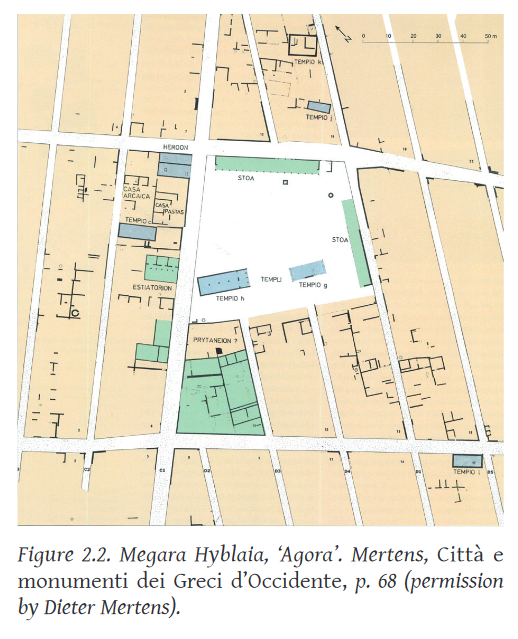
A first taste of Malkin’s research is already available in the form of a chapter in a book published last year edited by Sofia Greaves and Andrew Wallace-Hadrill and titled “Rome and the Colonial City: Rethinking the Grid”. The chapter written by Malkin is called “Reflections on egalitarianism and the foundation of Greek poleis“. It opens as follows:

When Greeks founded new settlements, they were facing the question of how to distribute plots of land to individual settlers. The main reason individuals joined a new foundation was to get such a plot of land (klêros), regardless of other reasons for colonisation. Back home, two brothers would need to share a klêros through partible inheritance by lot. However, if one brother stayed and another left for a new settlement abroad, both would have ended up, each, with a viable klêros. In and of itself, a klêros provides a basis for livelihood and a mutually recognised share of political and military power within the community. Practices of Greek colonisation are parallel to the Greek practice of ‘partible inheritance by lot’, since the same general principles and structures apply to both when it comes to land distribution: equality before the chance of the lottery, and, when possible, equality (sometimes equitability) of the size of the klêros.

From this we learn, if I understand correctly, that (like the English word “lot”?!) the word “klêros”, as in the randomizing machine “klêroterion”, meant in the first place a piece of fertile land, and the use of this word for randomization is derived from the custom of using the lottery for the distribution of such lands.

Malkin’s main thesis appears to be that the lottery was an embodiment of an egalitarian ideology. This ideology was especially influential in newly established colonies was in competition with oligarchization trends in more established settlements. It is this ideology that eventually, over the course of hundreds of years, developed into the Greek democracy.
Continue reading

Conley: Let’s Randomize America!

Nicholas Coccoma wrote to point out a recent article by Dalton Conley, professor of sociology at Princeton University, in The New Yorker. The rather lengthy article revolves around randomness in public policy. It starts with the story of the introduction of the draft lottery in the US, then moves on to a proposal (a rather unconvincing one, it seems to me) for handling economic inequality using randomization, and finishes off with sortition and with a general call for using randomization to achieve a fairer society.

For three decades, through three wars, the U.S. military draft was directed by Lewis B. Hershey, a general in the Army. Hershey established the first local draft board in 1941; eventually, there would be four thousand of them. […] The boards, which adjudicated claims for reclassification or deferment on a case-by-case basis, had a distinct character. They were disproportionately white, white-collar, and elderly. According to analyses conducted in the nineteen-sixties, draft boards more often granted deferments to privileged young men, and poor Americans of color made up a disproportionate share of draftees. […] In 1966, President Lyndon B. Johnson convened a group of experts to study draft reform. They recommended a drastic overhaul to centralize the process, and argued, controversially, for randomizing it. What was needed, they wrote, was a lottery to decide who should fight, in which the “order of call” was “impartially and randomly determined.”

Many people did not find this idea appealing. Detractors argued that haphazardly drafting young men, some of whom were training for critical civilian positions, would be inefficient at best and destructive at worst. Merriam Trytten, a physicist by training, who was the president of the Scientific Manpower Commission—a nonpartisan group set up by the American Association for the Advancement of Science to advise the government on issues of scientific personnel—said that, under such a system, “scientific effort in the United States will pay a substantial penalty.” […] A Gallup poll conducted in 1966 found that only thirty-two per cent of Americans favored a lottery system.
Continue reading