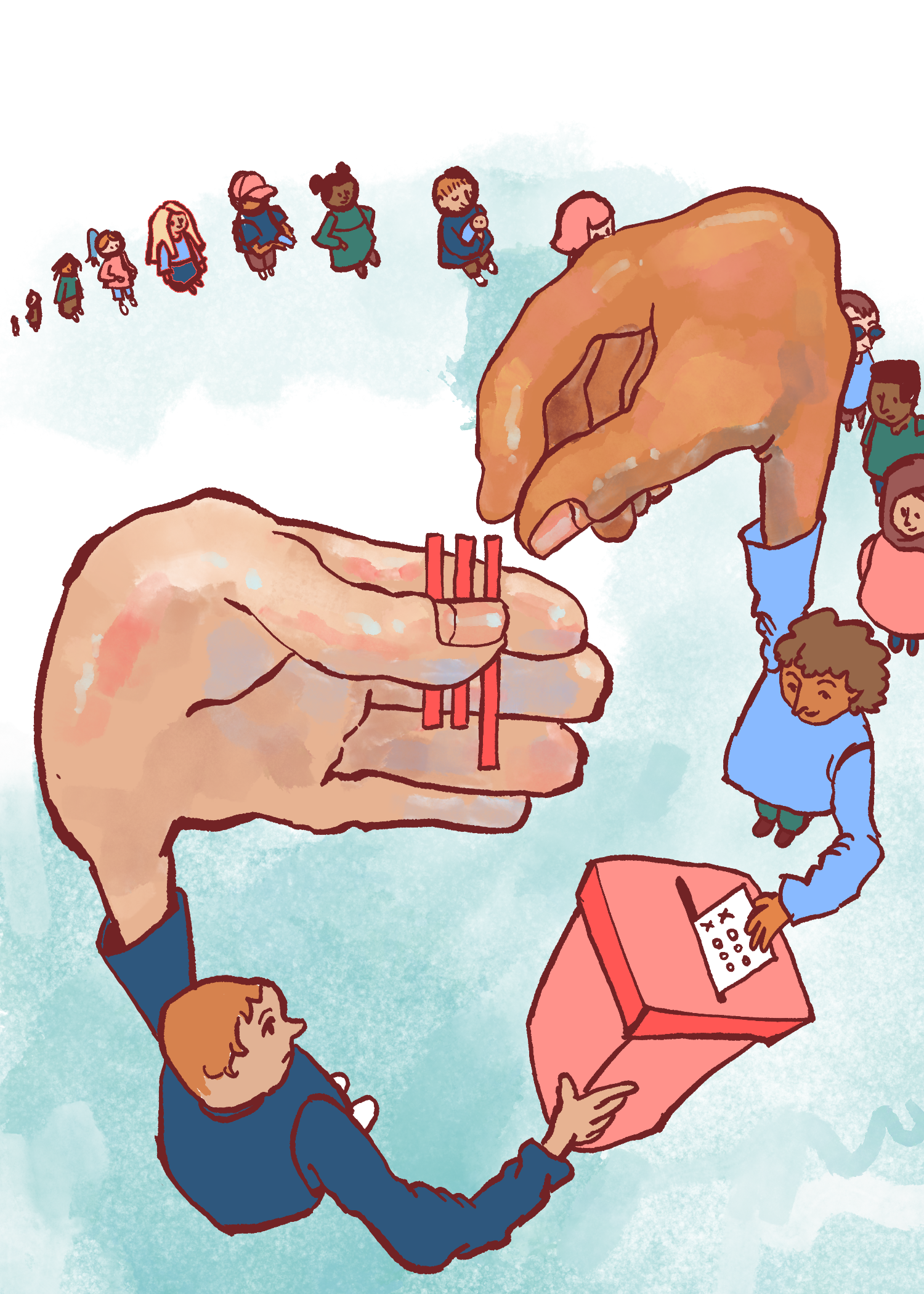
Low acceptance rate as an anti-democratic excuse

An argument against sortition that is fairly common among academics is that allotted bodies are not representative because the acceptance rates of offered seats are low. It is often claimed that “experience has shown” that “less than 10%” of people are willing to serve on allotted bodies. Such a finding, it is claimed, is grounds for not using sortition at all, for limiting the powers of allotted bodies, or for various forms of meddling in the way allotted bodies are made up.

Despite the fact that it is sometimes admitted that acceptance rates change depending on the circumstances, the “fact” of low acceptance rates is largely treated as being an immutable, if unfortunate, obstacle to the representativity of allotted bodies. In fact, however, it is obvious that acceptance rates can be easily increased, quite possibly reaching fairly close to 100%, if compensation for acceptance is high enough. How many people would refuse to commit a few weekends to participating in an allotted body if they are paid a few months’ worth of the median salary for their efforts? The answer to this question is obviously that (while we can probably make a good guess) we do not know for sure. But equally obviously it would be fairly easy to find out by running a few experiments.

It is a small miracle then that all those who busy themselves with attacking sortition by arguing that low acceptance rates make allotted bodies unrepresenative have not argued strongly for running such experiments. One may suspect that complaints about low acceptance rate is a tool for resisting the democratic power of sortition, rather than a real concern coming from people with a genuine interest in democratizing society.
Continue reading

An allotted European People’s Assembly

Joe Mathews writes in The San Francisco Chronicle about an allotted European People’s Assembly.

How government by lottery could save our democracy

Recently, I spent a long afternoon on a dusty and rocky Athens hill called the Pnyx for the first meeting of a novel assembly inspired by the past.

If its members can establish their [new People’s Assembly] in the governance of Europe, it might change everything we think we know about democracy.

“Citizens of Athens, citizens of the world,” declared Kalypso Nicolaidis, a Franco-Greek scholar who helps lead the assembly and is chair in global affairs at the European University’s School of Transnational Governance, “we would like to invite you to change yourselves.”

Around the world, democracy is seen as a system in which the public, through elections, chooses its representatives. But the People’s Assembly wouldn’t consist of elected politicians. Instead, it would be composed of everyday people, chosen by lottery processes that ensure that the body is a demographic mirror of the people it represents.

These wouldn’t be just the people of one city or one province or even one nation. The People’s Assembly would be a transnational body, with members selected by lottery to represent all of Europe. There’s no body like that on Earth.

But what truly sets apart the idea — and what would make it revolutionary — is its permanence.
Continue reading

The Keys to Democracy by Maurice Pope

Maurice Pope’s book The Keys to Democracy is the third book ever written advocating the use of sortition as a major component of a modern government. (The two earlier ones being Ernest Callenbach and Michael Phillips’s A Citizen Legislature and John Burnheim’s Is Democracy Possible?, both first published in 1985. Pope, who seems to have started writing at about the same time, was apparently unaware of either.) The great strengths of Pope’s writing are his independence of thought and his evident sincerity. Coming early into the field, and being a classicist rather than a political scientist, Pope was clearly breaking new ground, following his own logical train of thought. He was thus free from the burden of formulaically making connections to prior writings and from the petty-political considerations of self-promotion. This unique situation made a thoroughgoing impact on the book as a whole.

Authors of works about sortition (including Pope) generally share the ostensible aim of achieving some measure of democratization of society. But while this general aim is broadly shared, the consensus ends there because the detailed aims and the proposed mechanisms for achieving them vary widely. At the conservative end, the problem with the existing system is conceived as some sort of sclerosis. The main symptom of the problem is fatigue, or a lack of confidence. Sortition-based institutions are then seen as a way to infuse the system with new blood or new vigor, rejuvenating a system that is essentially sound but has for various reasons, that generally remain vague, fallen into a bad state. Associated with this view of things are generally quite modest proposals – advisory bodies that “help” current decision makers make more informed decisions. Even those more informed decisions are perhaps less important than the mere fact that allotted citizens are widely recognized as having had a part in the process. Indeed, what exactly the problems are with the current outcomes of the process and what are the expected improvements in terms of policy is usually not specified. In fact, sometimes the entire point is to have the allotted citizens themselves become more informed rather than making any changes in decision making. Writings in this vein tend to be heavy with references to the canon of “deliberative democracy” and light on the idea that democracy is a regime of political equality.
Continue reading

Josine Blok reviews Pope’s The Keys to Democracy

Josine Blok, a historian from Utrecht University, has a review of Maurice Pope’s The Keys to Democracy in H-Soz-Kult. In the last two paragraphs of the review, Blok gives her opinion about the substance of the book:

The quality of the argument is in my view quite uneven. Some of the political analyses and in particular the historical sections suffer from oversimplification, generalisation, and special pleading. For instance: “The political ideals and most of the political practices of Western civilisation go back through Venice and ancient Rome to classical Greece.” (p. 115). No, they don’t, this is simply not true, nor is Pope’s account of how sortition got “lost” in the course of history. On p. 123, Pope contends: “It would be possible […] to define history itself as the story of how experts have been proved wrong. For otherwise […] it would not be history at all, but current practice. […examples in] the history of science. Being history, it is possible to tell which side was wrong.” This view of history is simply bizarre. If Pope resorted to such sweeping statements to help easy reading, I don’t think they are the proper means to that end.

But, making up for such drawbacks, Pope offers excellent observations on deliberation as a crucial ingredient of democracy and on the potential of sortition to prevent oligarchisation (the “law of Michels”), meritocracy and other problematic forms of hierarchy. Sortition enables implementing the equality of citizens and bringing their engagement in policy making about. Importantly, Pope points out that sortition, whenever it is employed, must be rigorous and compulsory to be effective, and allotted bodies must be selected from the whole population (p. 167; complemented by the outstanding comment by Potter in the appendix). He underlines that allotted panels of citizens must have moral authority and real responsibility (to which should be added a transparent system of accountability). Written with an open, engaging style, The Keys to Democracy is set to win a wider audience for its important and pressing message.

Jacquet: Explaining non-participation in deliberative mini-publics

A highly cited 2017 paper by Vincent Jacquet reports about the outcomes of interviews with 34 people who turned down offered (potential) participation in one of three allotted bodies in Belgium: the G1000, the G100 and the Citizen Climate Parliament (CCP).

Explaining non-participation in deliberative mini-publics

Abstract: This article investigates citizens’ refusal to take part in participatory and deliberative mechanisms. An increasing number of scholars and political actors support the development of mini-publics, that is, deliberative forums with randomly selected lay citizens. It is often argued that such innovations are a key ingredient to cure the democratic malaise of contemporary political regimes because they provide an appropriate means to achieve inclusiveness and well considered judgment. Nevertheless, real-life experience shows that the majority of citizens refuse the invitation when they are recruited. This raises a challenging question for the development of a more inclusive democracy: Why do citizens decline to participate in mini-publics? This article addresses this issue through a qualitative analysis of the perspectives of those who have declined to participate in three mini-publics: the G1000, the G100 and the Climate Citizens Parliament. Drawing on in-depth interviews, six explanatory logics of non-participation are distinguished: concentration on the private sphere, internal political inefficacy, public meetings avoidance, conflict of schedule, political alienation and mini-public’s lack of impact on the political system. This shows that the reluctance to take part in mini-publics is rooted in the way individuals conceive their own roles, abilities and capacities in the public sphere but also in the perceived output of such democratic innovations.

The main findings appear in Table 3 of the paper, titled “The six explanatory logics of non-participation in mini-publics”. This table summarizes the findings of an analysis in which explanations were categorized into types (“logics”) and the frequency of explanations of each type being mentioned was recorded (often, being 10 or more times out of 34, or less often, otherwise).
Continue reading

The deliberative cure

In an article in The Boston Globe, James Fishkin and Larry Diamond recount the story, a rather familiar and standard one, of how the participants in a deliberative body became “depolarized” and more democratic.

When our nationally representative sample of 600 (selected by NORC at the University of Chicago) deliberated for a weekend about these issues, Republicans often moved significantly toward initially Democrat positions and Democrats sometimes moved just as substantially toward initially Republican positions. The changes were all consonant with basic democratic values, such as that everyone’s vote should count and that our elections need to be administered in a nonpartisan way.

The novelty of Fishkin and Diamond’s latest deliberative workshop is that it was done on the cheap. The participants met online, saving travel and real-estate costs as well as reducing the commitment required of the participants, and where previously moderators had to be hired, moderation was now taken care of by AI magic:
Continue reading

Irish higher education minister laments the cruelty of random selection

It turns out that entry to higher education programs (“courses”) in Ireland is determined by attaining some cutoff grade. Due to “grade inflation” many programs find themselves over-subscribed and select candidates via a lottery. The Irish higher education Minister Simon Harris expressed his misgivings about the use of random selection:

Random selection can be a particularly cruel and difficult way that you get the max points perhaps required, but you still find yourself not guaranteed a place in the course.

Mr. Harris’s empathy toward the anguish of those with good grades not having a guaranteed place is rather moving. Such students must be more anguished, it seems, than those who are denied a place in a program because they do not meet the cutoff grade.

For more on the convoluted elitist logic behind such statements, see my three part review of Connal Boyle’s book Lotteries for Education.

Sortition can do it all

This post is a rebuttal to the conclusion of Keith Sutherland’s 2013 paper “What sortition can and cannot do”, whereby sortition is deemed inappropriate for the “advocacy role” of representative legislature owing to alleged improper representation.

Since posters here address each other with their first names and especially since I will likely be chatting with him soon, I will refer to Keith Sutherland as Keith despite having never chatted with him yet and despite that going against the convention of referring to scholars one is discussing by their last names.

I have seen that there is a long standing feud of sorts between Keith and Yoram, and I find it appropriate to mention this here given that what seems to be at the origin of the conflict is precisely largely their differing views on the extent to which sortition should pervade the selection of policymakers compounded by a more general disagreement on political ideology according to a fairly standard left-right antagonism. I have no dog in this fight nor a particular affinity to either’s position whether on sortition or on political ideology more generally as far as I can tell, appearing to hold an intermediate position in both respects. As such though I am posting on Yoram’s site against Keith, this should not be construed as an attack by “team Yoram” against “team Keith”, as further evidenced by the fact that I had never communicated with Yoram until a few days ago when a renewed focus on sortition led me to make a few comments on his site. I imagine that Keith has heard all my arguments here before, and that most others have too, but since I couldn’t find a similar post on the topic I figured it would at least be useful to have a post dedicated to it. I am presuming that readers are familiar with the paper and the concepts it discusses and so I am not reintroducing them here.

Continue reading

Adam Grant endorses randomly selected officials

In an excruciating piece in the NYT (unpaywalled version), business guru Adam Grant endorses sortition, but in a risible form in which one randomly selects officials, rather than has a body of randomly selected people. This is all based on a psych experiment that showed that leaders chosen at random do better than those chosen by the group apparently.

Eliminate voting, and candidates with dark triad traits would be less likely than they are now to rise to the top. Of course, there’s also a risk that a lottery would deprive us of the chance to select a leader with distinctive skills. At this point, that’s a risk I’m willing to take. As lucky as America was to have Lincoln at the helm, it’s more important to limit our exposure to bad character than to roll the dice on the hopes of finding the best.

Besides, if Lincoln were alive now, it’s hard to imagine that he’d even put his top hat in the ring.  … A lottery would give a fair shot to people who aren’t tall enough or male enough to win. It would also open the door to people who aren’t connected or wealthy enough to run. Our broken campaign finance system lets the rich and powerful buy their way into races while preventing people without money or influence from getting on the ballot. They’re probably better candidates: Research suggests that on average, people who grow up in low-income families tend to be more effective leaders and less likely to cheat — they’re less prone to narcissism and entitlement.
Continue reading

The American Academy of Arts and Sciences recommends citizen assemblies

In 2020 the American Academy of Arts and Sciences published the report of its Commission on the Practice of Democratic Citizenship.

The report is a useful example of how the liberal U.S. establishment views the state of the political system and for the kind of ideas it generates for institutional reforms. A set of self-appointed reformers, highly credentialed by the establishment, functions as the tribunes of the people. The report is ostensibly based on “listening sessions” held with various groups in the U.S., but of course the entire exercise is controlled from beginning to end by elite actors and it is completely up to the commission members to select the makeup of the groups “listened to” and to channel their “input” into the a set of recommendations. In fact, regarding the makeup of the groups in the “listening sessions”, the report specifically asserts that “[t]he intent of this strategy was not to collect a statistically representative sample, but to cast a wide net and surface the personal experiences, frustrations, and acts of engagement of a diverse array of Americans”.

The Commission on the Practice of Democratic Citizenship was established in the spring of 2018 at the initiative of then Academy President Jonathan Fanton and Stephen D. Bechtel, Jr., Chair of the S. D. Bechtel, Jr. Foundation. Mr. Bechtel challenged the Academy to consider what it means to be a good citizen in the twenty-first century, and to ask how all of us might obtain the values, knowledge, and skills to become still better citizens. Since 1780, projects that work to bolster American citizens’ understanding of and engagement with the institutions of their government have been a hallmark of the Academy’s work.

The background for the commission’s work is a grim picture of disintegration of social cohesion and distrust in institutions. As is standard practice, the real-world causes of this situation are left unclear. Abstract economic issues like inequality and mobility are mentioned, and it is asserted (citing Gilens and Page) that “[c]ongressional priorities, studies have shown, now align with the preferences of the most affluent”. However, real-life, specific outcomes of those “congressional priorities”, such as food insecurity, lack of medical care, indebtedness, declining life spans, or incarceration rates are not discussed.
Continue reading