


The book A Mencken Chrestomathy contains a reprint of an article by H.L. Mencken called “A Purge for Legislatures”. The article, originally published in 1926, may be the first modern piece of advocacy for sortition. Thanks to Roger Knights for writing to draw attention to this article.
A MOOD of constructive criticism being upon me, I propose forthwith that the method of choosing legislators now prevailing in the United States be abandoned and that the method used in choosing juries be substituted. That is to say, I propose that the men who make our laws be chosen by chance and against their will, instead of by fraud and against the will of all the rest of us, as now. But isn’t the jury system itself imperfect? Isn’t it occasionally disgraced by gross abuse and scandal? Then so is the system of justice devised and ordained by the Lord God Himself. Didn’t He assume that the Noachian Deluge would be a lasting lesson to sinful humanity — that it would put an end to all manner of crime and wickedness, and convert mankind into a race of Presbyterians? And wasn’t Noah himself, its chief beneficiary, lying drunk, naked and uproarious within a year after the ark landed on Ararat? All I argue for the jury system, invented by man, is that it is measurably better than the scheme invented by God. It has its failures and its absurdities, its abuses and its corruptions, but taking one day with another it manifestly works. It is not the fault of juries that so many murderers go unwhipped of justice, and it is not the fault of juries that so many honest men are harassed by preposterous laws. The juries find the gunmen guilty: it is functionaries higher up, all politicians, who deliver them from the noose, and turn them out to resume their butcheries.
Continue reading
Filed under: Books, Proposals, Sortition | 13 Comments »
 “With luck, things will turn out well.” Who has not heard this saying at some point? A chance encounter, a decision taken offhandedly, a delay that turned out for the best, any of those may change our life.
 Luc Rouban, director of research at
 David Van Reybrouck was recently
 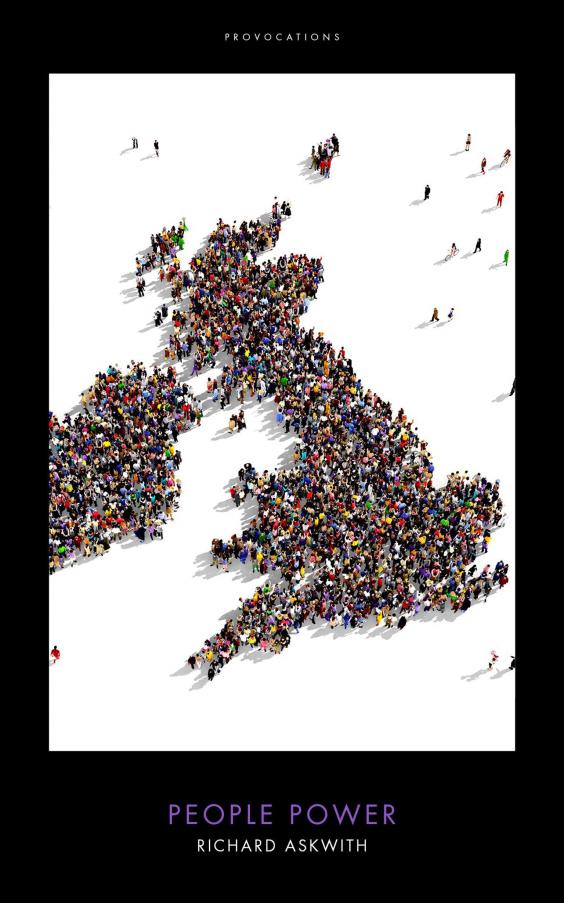 Richard Askwith, a former executive editor of The Independent,
  The French-Canadian newspaper Le Devoir has
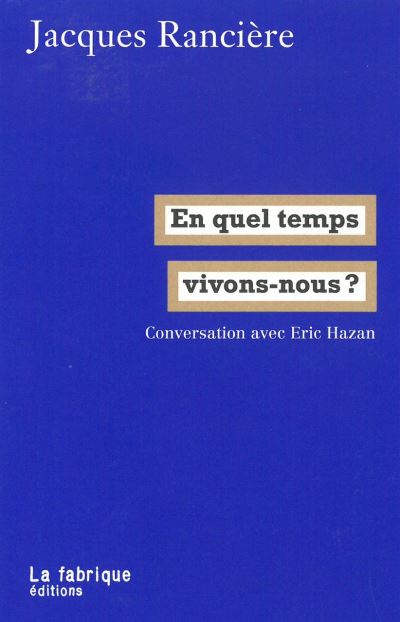 05. The question today is that of rethinking forms of organization, ways of being together for the long term, outside of the electoral forces.
 Adam Cronkright
 Ali
Ali Ahmed R. Teleb
 avanderven
 avergne
 Alex Kovner
 azakaras
 Brett Hennig
 campbellwallace
 Simon Threlkeld
 Nick Coccoma
 codyhipskind
 Common Lot Sortitionist
 Conall Boyle
 constitutionalism
 davidschecter
 graytmatter
 gtridimas
 H.J. Hofkirchner
 Hanspeter Rosenlechner
 James Kierstead
 John Burnheim
 jgarry20151
 Jochen Krattenmacher
 johnedwardtaylor
 johnhuang865
 Jonathan Crock
 keithsutherland
 Jacob Richter
 kkoreilly
 lukewhito
 SimonPek
 Nathan El
 Nicholas Gruen
 Owen Shaffer
 Patrick Chalmers
 Paul Gölz
 peterstone
 Pierre-Etienne Vandamme
 pronfeld
 Emil
Emil rcaze
rcaze richwbrown
 Roger Knights
 roslynfuller
 Pierre-Etienne Vandamme
 shaharavin
 tbouricius
 Ted Wachtel
 Joshua Laferriere
 theodorestathis
 towardsautonomyblog
 Wayne Liebman
 Yoram Gat
 Oliver Milne
 Equality by lot