Étienne Chouard: Public decision-making from the perspective of the common good, Part 4

Previously published parts of this essay are the Introduction, Part 1, Part 2 and Part 3.

It remains to examine the different applications of sortition in politics:

Part II. Comparison of different applications of sortition

Having seen how poorly the common good is served by elections and how well it is defended by sortition, we can ask (i) what are the principal applications of allotment for appointing representatives, and (ii) how could this procedure become part of a constitutional, institutional structure.

(i) Principal applications of sortition in politics

Elections among candidates are generally used to award privileges, whereas sortition is used to assign duties.

In addition, to fill a post or carry out a function we elect a single person for an extended duration, during which time there is little or no control over that person. With sortition, a group of people are allotted for a short period, during which time they are closely monitored.
Here are three notable models for the use of sortition in politics (keeping the most important one for the end):

1. Sortition for appointing oversight bodies

It is often asserted in the literature of political philosophy how important it is for citizens to closely control all forms of political power. Here is Montesquieu:

It is the universal experience that any man who carries power comes to abuse it. He abuses it up to the point where he finds his limits. Even virtue needs to have limits! In order to prevent abuse of power it is necessary to match power against power [The Spirit of the Laws, Book XI, Chapter IV].

Continue reading

Étienne Chouard: Public decision-making from the perspective of the common good, Part 3

Previously published parts of this essay are the Introduction and Part 1, Part 2.

(ii) Elections put the worst in power (whereas sortition does not)

Regarding the rulers, by accepting that we need “representatives” we observe often that election among candidates brings into power the worst qualified – the exact opposite of that which it claims.

There are 7 inherent characteristics of elections that lead to this disastrous result – which are the mirror image of 7 opposite characteristics of sortition which would prevent such results.

1. Elections give power to those who desire it (whereas sortition does not)

It has been known for 2,500 years that giving power to those who desire it must be avoided.

Plato: “The worst of maladies is when power is in the hands of those who desire it” [Cited by Jacques Rancière].

Alain: “The most noticeable characteristic of the just man is not wishing to govern others but rather governing himself alone. Everything flows from that. That is, the worst will rule” [Alain, On Power, Dec. 10th, 1935].

Upon reflection, we see that it is true that the worst will rule, but only if we grant power to those who desire it (because the best do not desire power). Indeed, sortition avoids this crucial trap and grants power to the “others”, and in this way does not condemn us to the tyranny of those who desire power to decide for others.

It is a bad idea to grant power to those who desire it enough to gain it because the abilities and the motivations that are necessary in order to gain power (that is, to win the electoral match) are surely not those that are necessary in order to exercise power – exercise it in an attempt to promote the common good.

2. Elections encourage lying and favor the liars

By relying on the choice of the citizens to appoint the actors, elections give fraudsters, whose entire skill is exactly in misdirecting peoples’ choices, an opportunity. In a way, elections give power to the liars: it is he who lies best who will be elected every time. Therefore, by construction, elections encourage lying: first, lying before the vote in order to get elected, followed by lying after the vote in order to be re-elected. Scientifically, mechanically, consistently, elections among candidates promote lying.

(Again: “The worst rule”, said Alain.)
Continue reading

Kerlouan: Macron treats the allotted citizens like children

Philippe Kerlouan writes in Boulevard Voltaire.

Citizen Climate Convention: Macron treats the 150 allotted citizens like children…

One may ask oneself how can 150 citizens, selected by lot in order to create proposals for addressing global warming, be “France in miniature” and represent “all the significant sections of French society”, as the co-president of the governance committee of the Climate Convention asserted they are. One must believe that the allotment was balanced according to some statistical measurements. But nevermind! The Athenian democracy at the time of Pericles designated numerous officials using a lottery. Chance is maybe the most effective way to turn equality for all and social-professional diversity into a democratic system.

We should also have confidence in the people so selected and not consider them second class citizens. As they met on Friday, January 10th for another weekend of work, they were able to pose questions to Emmanuel Macron, who attend in person for the occasion. No doubt he had nothing better to do in these troubled times. One of the participants, quoted by the Le HuffPost, observed that it is “scandalous that he chose this date in order to clown around in front of the Convention whereas he would have done better to take care of the pensions”. But our president must have had his reasons.
Continue reading

Schnapper: Extreme democracy and democratic extremists

Dominique Schnapper is the director of studies at the School for Advanced Studies in the Social Sciences (EHESS) (retired) and a former member of the French Constitutional Council. This is a translation of Schnapper’s articleExtrême et extrémistes de la démocratie” published in April 2019 on the Telos website.

The Gilets Jaunes movement fights under the banner of “real” democracy and it risks contributing to the destruction of the only democratic regime that has ever existed, namely representative democracy.

Democracy always had two dimensions: a democratic one and an aristocratic one. Democratic because the rulers submit to elections by the ruled and are rewarded or punished through the vote.

The dream of direct democracy

The aristocratic dimension was always a source of disagreement. The dream of direct or total democracy has accompanied the history of democracy. But it is today all the more present in the idea that entrusting decision making to others is contradictory to the conception of the sovereign democratic individual doing things himself, and being the source of all legitimacy and competence. He brings his own legitimacy. He feels fully qualified to express himself directly by himself without the intervention of a representative.

Democrats like neither mediation nor distinctions. Every type of distinction – and in particular the distinction between voters and elected – every hierarchy is perceived as discriminatory. The elites are easily denounced as responsible for all our failures. For there the ideas of direct democracy and ideas inspired by direct democracy regain their power. Protesting activists become actors of a “counter-democracy” [Pierre Rosanvallon, La contre démocratie, 2006], they speak about the foundational principles of democracy and the liberation from electoral rhythm in order to exercise daily surveillance on the actions of the rulers.
Continue reading

Sortition for selecting civilian police control boards

In an undated proposal by Max Rameau from the an organization called “Pan-African Community Action” the author writes:

A Model: The Civilian Police Control Board
The primary institution for the exercise of Community Control over Police is the Civilian Police Control Board (CPCB).

The CPCB must be comprised entirely of civilian adult human beings- not corporations or human representatives of corporations- residing in the police district. To be explicit, residing means living in, not owning property in, without regard to citizenship status or criminal history.

While some envision an elected board, we propose something entirely different: a board selected entirely at random among residents of the policing district.

There are two (2) main constraints to an elected board. First, elections in the US are thoroughly corrupted by influences of corporate finance on one side and two party electoral politics on the other. Even if multiple communities were to win control over their police, it is not difficult to imagine that after one or two election cycles, your local CPCB would be a corporate board brought to you by [ insert name of powerful corporation here ]. For this board to shift power, instead of becoming another institution to maintain power, it must break through the limitations of electoral corruption.

Second, even elections with minimal levels of corporate or party influence, still occur in a social context. In this social context, elected officials are disproportionately white, male and wealthy- the exact population with the highest level of support for the police. We must devise democratic systems that encourage active participation from those least likely to engage, not those most likely to benefit.

Sortition- government by random selection- is the best way to ensure that everyone has an equal opportunity to exercise power. The rich and poor, straight and gay, male and female, white and Black all have an equal shot at making decisions through random selection. If we believe that democracy is for everyone, then random selection of officials is the best way to ensure each person can exercise power.
Continue reading

Trust and the competition delusion: A new frontier for political and economic reform

The Griffith Review has just published a substantial essay of mine that I’ve been working on for some time. It begins with some basic economic ideas, but broadens out to much wider political matters – comprehending our interest in sortition. I reproduce the introductory section below after which you’ll have to hightail it to their website to finish. But it would be good to see you back here for comments which aren’t provided for on the Griffith Review website.

Designing institutions to force (or nudge) entirely self-interested individuals to achieve better outcomes has been the major goal posited by policy analysts for governments to accomplish for much of the past half century. Extensive empirical research leads me to argue that instead, a core goal of public policy should be to facilitate the development of institutions that bring out the best in humans.

Elinor Ostrom, Nobel Lecture, 2009

SINCE ADAM SMITH, economists have marvelled at competition’s capacity to improve our world – not by fostering virtue, but by harnessing the opposing self-interest of buyer and seller in a market. As Smith himself famously suggested, instead of trusting his wellbeing as a consumer to the benevolence of the butcher, baker or brewer, he’d rather rely on their regard for their own interests in competing for his custom.

There’s a lively debate today about how to inject greater competition into Australia’s notoriously oligopolistic industries – like finance, retail, fuel, energy and telecommunications – not to mention our new global digital overlords like Facebook and Google. And there’s a more ideologically charged debate about whether competition will drive better or worse outcomes in sectors where non-market values are important – like health, education and social services.

Having offered some thoughts on those issues elsewhere, in this essay I discuss something more fundamental and, because of that, widely overlooked. We’re falling for the ‘competition delusion’ by which I mean this: In our embrace of private competition as a goal, we mostly pass over a prior issue – which is the terms on which that competition takes place. That’s undermining trust in a remarkably wide range of institutions in our economic and public life.
Continue reading

Electoral meltdown in Peru

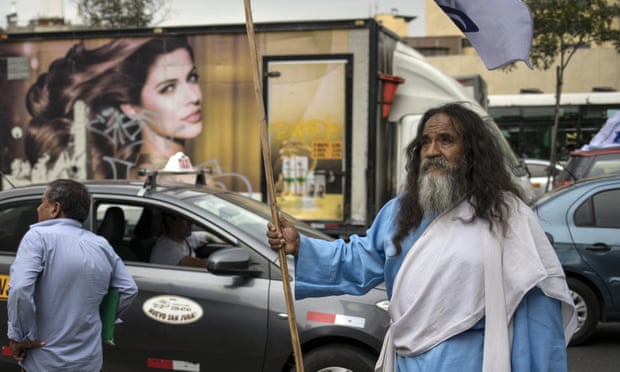
Continuing a pattern of electoral upheaval in various countries around the world, Peru has recently undergone unprecedented early elections, whose outcome is the most fragmented congress in the country’s history. A party associated with a political sect has become the second largest in congress, with 8.9% of the vote.

Citizen assemblies in Bristol

Adam Postans and Matty Edwards report in The Bristol Cable (January 15, 2020):

Experiment in democracy, as council to pilot citizens’ assemblies

Bristolians could be gathered to make decisions on issues such as the climate crisis.

One of the biggest shake-ups in years in how decisions are taken on the major issues in Bristol has been approved with the introduction of citizens’ assemblies.

It came as the city council’s ruling Labour group threw its weight behind the Green Party’s idea, with backing from the Lib Dems.

But the Tories voted against it amid fears it would become “consultation on steroids” and add an unnecessary new layer of bureaucracy when, they say, the power of the mayor should instead be returned to councillors.
Read more

Residents will be chosen at random, like jury service for the assemblies and be paid to spend time hearing from experts on complex issues, including the climate emergency, before making decisions which could be binding on Bristol City Council.

Labour said it “radically strengthened” the Greens’ motion by assigning between £5million and £10million from the council’s capital budget to the “deliberative democracy” proposals, including giving communities more power over spending decisions in their areas.

But Tory group leader Cllr Mark Weston said: “We are going to end up with consultation on steroids. You will have opinions expressed from the centre of the city, all having the same view, and suburbs won’t have their say.”

Sortition in tribal democracy

Alpa Shah writes in the Hindustan Times:

The electoral process is said to be the cornerstone of the world’s biggest democracy. But it has also often been about maintaining or gaining power, status, and money as a means to exert elite control over the political process. Perhaps, it is not surprising then that across India, one finds that those involved in electoral politics are also seen by ordinary people as doing “rajneeti”, an impure and immoral world of corruption, illicit activity and ruthlessness.

As a long-term researcher of Jharkhand, I find that discussions about democracy in India have been reduced to mere elections. But there is an alternative form of democracy that was central to some of Jharkhand’s tribal communities. And it may contain the seeds of a transformative global process of democracy that allows ordinary people the power to rule the world. It is democracy by sortition — the use of random selection to choose those who govern us.

I first saw it in December 2000, less than a month after Jharkhand became a separate state, in the Munda tribe village, where I was staying as a social anthropologist. They were selecting their new pahan and paenbharra, who presided over secular and sacred village matters, for three years.
Continue reading

Electoral redistricting by an allotted citizens commission in Michigan

The Monroe News from Michigan reports:

Applicants sought for Michigan redistricting panel

The Secretary of State’s office recently sent 250,000 randomly selected Michigan voters applications to serve on the Independent Citizens Redistricting Commission.

The 13-member commission will be responsible for drawing the boundaries for the state’s Senate and House of Representatives districts. It also will design the districts for the congressional delegation.

The commission is being formed as a result of the passage of Proposal 2 in November 2018. The ballot measure amended the state constitution to grant the authority to an independent citizen commission, taking the power away from the state’s governor and the Legislature.

Proposal 2 passed statewide 2,522,355- 1,593,556.

The commission will be composed of four Democrats, four Republicans and five voters who do not identify with either party. Districts are redrawn every 10 years in response to the U. S. Census, which will be conducted this year.

Per the proposal, the secretary of state’s office is required to mail out the applications to at least 10,000 randomly selected voters. Troy-based Rehmann LLC handled the selection process.

Residents within the state who weren’t part of the random mailing also may apply for the commission.