

Charlie Pache, a Swiss sortition activist, has a recent TEDx talk titled Make democracy great again in which he offers his audience a system of single-issue allotted citizen panels.
Filed under: Elections, Sortition | 3 Comments »

Charlie Pache, a Swiss sortition activist, has a recent TEDx talk titled Make democracy great again in which he offers his audience a system of single-issue allotted citizen panels.
Filed under: Elections, Sortition | 3 Comments »

There’s a spectre haunting Europe … and the rest of the Western world. We have elaborate ‘diversity’ programs in good upper-middle-class places to prevent discrimination against all manner of minorities (and majorities like women). It’s a fine thing. But there’s a diversity challenge a little closer to home which is tearing the world apart. There’s a war on the less well educated.
They’re falling out of the economy in droves, being driven into marginal employment or out of the labour force. This is a vexing problem to solve economically if the electorate values rising incomes which it does. Because, as a rule, the less well educated are less productive.
Still, the less well educated are marginalised from polite society. Polite society even runs special newspapers for them. They’re called tabloids and they’re full of resentment and hate. And yes, a big reason they are the way they are is that the less well educated buy them. They’re also marginalised, except in stereotyped form from TV.
Then there are our institutions of governance. While less than 50 per cent of our population are university educated, over 90 per cent of our parliamentarians are. Something very similar would be going on down the chain of public and private governance down to local councils and private firms.
And I’m pretty confident that a lot of this is internalised even by those not well educated. The last working-class Prime Minister we’ve had in Australia was Ben Chifley who was turfed out of office by a silver-tongued barrister in 1949. Barrie Unsworth in NSW going down badly in his first election as NSW Premier despite seeming – at least to me to be doing quite a good job. But he sounded working class – because he was. I wonder if that was it?
The world is made by and for the upper middle class, those who’ve been to the right schools and gone to unis (preferably the right unis), to get on. The ancient Greeks had a political/legal principle of relevance here which is entirely absent from our political language. In addition to ‘παρρησία’ or ‘parrhesia‘ which is often translated as ‘freedom of speech’ but which also carries a connotation of the duty to speak the truth boldly for the community’s wellbeing even at your own cost (as Socrates did), they also had the concept of ‘ισηγορια’ or ‘isegoria‘ meaning equality of speech.1
In Australia Pauline Hanson’s One Nation represents the political system’s concession to isegoria – toxified as a protest party within a hostile political culture. My own support for a greater role for selection by lot in our democracy is to build more isegoria into our political system in a way that, I think there’s good evidence, can help us get to a much better politics and policy.
In any event, the big, most toxified political events illustrating these problems are, of course, Brexit and Trump – concrete political acts of transformative significance standing before illustrating the power of isegoria as rage. Continue reading
Filed under: Ballot measures, Deliberation, Elections, Participation, Proposals, Sortition | 3 Comments »
 George Tridimas wrote to draw attention to the recent issue of the journal Homo Oeconomicus which has a set of comments (including one of his own) on a 2017 paper by the Swiss political economist Bruno Frey titled “Proposals for a Democracy of the Future” (PDF).
In the paper, Frey has a section called “True Democracy by Random Decisions?”. Some excerpts from that section:
The major advantage of random procedures in politics is to guarantee equal chance and therewith fairness, given the underlying body (e.g. Stone 2007). Each and every one in the underlying population has an equal chance of getting elected. It is therefore not necessary to introduce special quotas e.g. for the share of women. Interestingly, random procedures even take into account dimensions not yet discussed or even beyond imagination. Most importantly, the body politic is opened to new ideas and otherwise disregarded views. This also holds for preferences not yet even known but which may be important in the future.
The disadvantage of random decisions in politics is that capabilities, education and the intensity of desires are disregarded. This is the main reason why random choices in politics are rarely, if ever, taken from the population as a whole. The advantage of equality and fairness must be compared to the disadvantage of lower competencies. There are a great many possibilities to combine the two – a worthy subject for future research.
In addition to proposing combining sortition with elections, Frey also proposes deciding the outcome of referenda at random with the probabilities of the outcomes given by the vote shares.
Tridimas’s comment contains a review of the use of sortition in Athens. He concludes with a section called “Why Sortition may not Work”:
Clearly, the Athenian democracy was fundamentally different from the present representative democracy. Assembly deliberation, the rule of simple majority, absence of political parties, citizen participation through the courts, and sortition were a joint constitutional package, inexorably linked and mutually reinforcing. Therefore, an institution like sortition that served the direct democracy well may not be easily transferable to a representative democracy without the rest of the institutional structures. Cutting and pasting sortition from Athens to today is not the same thing as grafting it to the current institutional structure, and may fail to deliver ‘‘a better democracy’’.
Filed under: Academia, Athens, Distribution by lot, Elections, History, Proposals, Sortition | 3 Comments »
[Disclaimer: I did not intend to write this blog this early. I’m still caught up by Canadian provincial efforts at electoral reform, of which I’ve posted on Rabble.ca. That said, an article on Jacobin compelled me, so to speak.]
Article The First: Beyond Elections But Lessons From Them
“After the first enumeration required by the first article of the Constitution, there shall be one Representative for every thirty thousand, until the number shall amount to one hundred, after which the proportion shall be so regulated by Congress, that there shall be not less than one hundred Representatives, nor less than one Representative for every forty thousand persons, until the number of Representatives shall amount to two hundred, after which the proportion shall be so regulated by Congress, that there shall not be less than two hundred Representatives, nor more than one Representative for every fifty thousand persons.” (Article The First)
Tom Malleson’s article on Jacobin, Beyond Electoral Democracy, suggests the implementation of a bicameral legislature, with one of the two bodies being selected entirely by lot. I would argue that this article doesn’t go far enough, firstly and most importantly because there are no direct proposals for controlling the standards of living of representatives, and because there is not even one path, let alone multiple paths, for instant recallability (Paul Lucardie’s “Jacobinland” and genuine Socialist Politics 101).
Other than this shortcoming, the article doesn’t go far enough because, despite the laudable goal of going beyond elections altogether, there are lessons that can be learned from them: particular features. The main body for public policymaking and accountability should already be populated by lot, but particular features from various electoral systems should be incorporated.
The first, most important feature from electoral systems that must be incorporated is the party concept. “Party-recallable” checks on legislators by political parties is the apex of this. It is no coincidence that historians have written about correlations between vibrant civil societies at large and vibrant party systems, such as in Europe.
The second important feature from electoral systems that must be incorporated is proportional representation:
“Proportional representation, and, until this is introduced, legal redistribution of electoral districts after every census.” (Erfurt Program)
Continue reading
Filed under: Elections, Sortition | 3 Comments »

On Sunday June 10, 2-5pm (British Summer Time/GMT + 1) the Sortition Foundation will be discussing strategy: what is the best way to get from elections to sortition?
There will be two face-to-face meetings, one in London and one in Cambridge, with people not in either of those locations welcome to join us online.
If you would like to join us, it is not too late to RSVP, just drop us an email and we will send you links to the agenda, our strategy discussion paper, and all the meeting details.
Strategy Discussion: How to get from elections to sortition?
When: Sunday June 10, 2-5pm (British Summer Time/GMT + 1).
Where: London, Cambridge, and online.
RSVP: Via email.
We look forward to talking with you about what you think is the best way forward.
Filed under: Elections, Sortition | Leave a comment »
[Note: this is a repost from the Sortition Foundation]
“Who’s representing me the best?”

A group of friends began the collective #MAVOIX (meaning “my voice”) in France in 2015 – they all believed that the current form of our representative democracy has failed us.
The idea was to bring together diverse citizens from different backgrounds to collaborate, discuss and work out how to “hack” the Assemblée Nationale by allowing everyday citizens to participate in the creation of every single law. After a first run at a local election in 2016, the goal was set to send several deputies (Members of Parliament) to Parliament after the June 2017 election. Once elected, these deputies would play a very special role. Instead of voting according to their own program or convictions, they would always vote according to the outcome of every citizen who had voted on an online platform: if, for example, 10 #MAVOIX deputies were in the Assembly, and the result from the online platform about a law was 40% YES, 30% NO and 30% ABSTENTION, then the #MAVOIX deputies would vote in the same proportions (in this case: 4 YES, 3 NO, 3 ABSTENTIONS).
To prepare for the national election campaign, the collective worked for two years without any leaders or charismatic personalities. Decisions were made horizontally, after in depth discussions, always trying to find a consensus. If people disagreed, they could “fork” (a software development term), which means both options were tested. Soon afterwards, taking into account the results of the experiment, people could decide which option(s) to drop and how to improve the one they kept. This forking process was at the heart of the experimental spirit of #MAVOIX: myriads of small actions, followed by sharing of what has been learnt. An online forum, local/national meetings and open-source software were the tools used to share know-how and to deliberate on any choices to be made.
 And because every contributor was an expert in some area, they developed a peer-to-peer process of teaching and learning skills. For instance, students from the Political-Science University created a MOOC to help everybody understand the actual duties and obligations of an MP (Member of Parliament) during his or her term in office. In these ways contributors could help and volunteer and bring ideas to resonate with the campaign.
Continue reading
Filed under: Applications, Elections, Sortition | 1 Comment »
 Tom Malleson, assistant professor of social justice and peace studies at King’s University College at Western University, Canada, writes in Jacobin magazine that “we need a legislature by lot”.
Some excerpts make the following points. Electoralist regimes are not democratic:
[There is] widespread disillusionment that many of the world’s people feel towards their purportedly democratic systems. [T]he truth, widely known yet rarely acknowledged, is that the American political system is increasingly run not by the people, but by the rich. Plutocracy. Leading scholars of American politics Martin Gilens and Benjamin Page conclude their recent study with the observation that “the majority does not rule — at least not in the causal sense of actually determining policy outcomes. When a majority of citizens disagrees with economic elites or with organized interests, they generally lose.”
The standard reform proposals show little promise to fundamentally improve the situation:
What, then, is to be done? There has long been a conventional answer on the center-left: proportional representation and campaign finance reform — the former to enhance the representativeness of elections and the latter to reduce the distorting effects of money. This intuitive belief that the answer to our democratic problems is enhanced elections runs so deep that it is like an article of faith.
Yet should reformed electoral democracy really be the ultimate aim of our democratic hopes and dreams? Consider some of the places that are much closer to achieving an equitable electoral system, such as Canada, the UK, and particularly Western Europe. Such systems tend to function much more democratically than the US, but they run into the same basic problems with elections.
Money continues to play an important role, biasing elections towards the wealthy. Governments continue to be incredibly unrepresentative of the population — almost always composed of rich, white, middle-aged men. Even in Sweden, the young, the less educated, and the working class continue to be dramatically underrepresented (for instance, blue-collar workers make up about 9 percent of members of parliament despite comprising 41 percent of the electorate).
[T]he electoral process is inherently biased in favor of the rich — thereby undermining the cherished democratic ideal of political equality — because the precondition to winning an election is having the time and resources to communicate with the public and mobilize support, and that will always be done more effectively by those who have more money. This means that electoral democracy, regardless of campaign finance rules, will always be somewhat tilted towards the affluent.
Democracy and elections are incompatible:
If you lived in any previous historical era and told your neighbor that you believed in democracy, they would have understood what you meant. Yet if you had said that you believed in democracy and elections, they would have thought you’d lost your marbles.
For more than two thousand years, it was common knowledge that the only people who wanted elections were the rich and the powerful, since they were the ones who invariably benefitted from them. Those who genuinely believed in democracy, on the other hand, believed that political power must be kept in the hands of regular people and typically advocated the selecting of political positions by lot.
Filed under: Academia, Athens, Books, Deliberation, Elections, History, Press, Proposals, Sortition | 6 Comments »

In 2015 the National Regeneration Movement (Spanish: Movimiento Regeneración Nacional, MORENA), a left-wing political party in Mexico, first selected some of its congressional candidates via allotment among activists.
It is now repeating this procedure.
Interestingly, while Morena was a relatively small party in 2015, winning about 8.5% of the votes and 47 seats out of 500 in the Chamber of Deputies, Morena is now very high profile, with its presidential candidate, Andrés Manuel López Obrador (AMLO), being the early front-runner.
Filed under: Applications, Elections, Press, Sortition | Leave a comment »
For some time now we’ve been ‘proving up’ citizens’ juries as a means of consulting the people, but generally within the context of governments being in charge. As a result they’ve been mostly relatively innocuous. For instance the first two in South Australia were focused on making Adelaide’s nightlife safe and vibrant and getting motorists and cyclists to share the road more safely. They’re pretty anodyne and boutique issues for politicians so it’s pretty low risk. They might generate some answers they’re happy with, help get community buy-in to tricky issues. And if they don’t work out as hoped for, governments can walk away without too much angst.
Having tried exercises with a degree of difficulty of about 3 out of ten, the then Premier of South Australia Jay Weatherill had a rush of blood to the head and tried the citizens’ jury with pike and triple twist – rated in the diagnostic and statistical manual of democracy at 10. Should South Australia start a nuclear waste storage industry? The answer was … no, which wasn’t much fun for anyone. Elsewhere in Melbourne a citizens’ jury worked on a ten year budget plan which was certainly well received at the time. The plan is now a few years old and I’m not sure how well it’s stood the test of time.
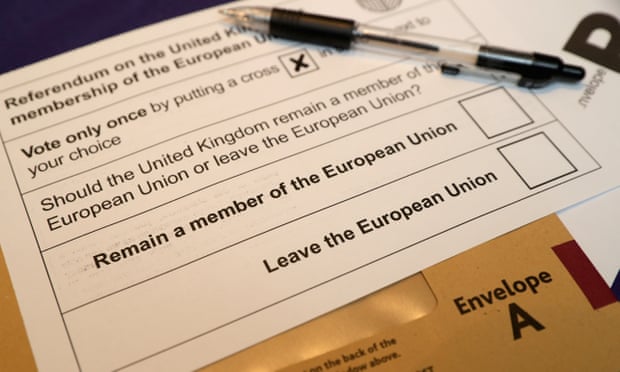
In the UK, a consortium of academic and other interests held a citizens’ jury on Brexit but, in the angst ridden atmosphere of Brexit Means Brexit Britain, they were at great pains not to antagonise the politicians who were planning on spending the next four years masterminding what the overwhelming majority of them understood to be the disaster of Brexit (you know, the way Australia’s politicians did abolishing carbon pricing against the better judgement of around 80 percent of them – it’s costing the budget over $10 billion a year since you asked.)
Thus, as the organisers collateral put it dutifully, “The UK’s voters have decided to leave the EU. The Citizens’ Assembly on Brexit is not reopening this question. This decision has already been made.”[1] However I can’t think of any big change that came about from people playing by the rules of the existing system and asking nicely. And the fact is that sortition has roots going deep into our history and culture – in fact back two and a half millennia to Athens, the birthplace of democratic politics, but also back more than 800 years to Magna Carta in our legal system in the form of juries. As public trust plummets for so many institutions, its trust in juries is alive and well and while ‘vertical’ trust – the trust of people in large and powerful institutions – has been falling, horizontal trust – in people’s peers and People Like Them has not fallen and may have risen.
And, not being able to recall any form of political activism that brought about major change except by asserting its own legitimacy in competition with the legitimacy of the existing system, I want to find ways of confronting the existing system in its weakest places with the legitimacy of citizens’ juries and sortition where they are strongest. This is the way I put it in a recent interview:
Filed under: Athens, Elections, History, Juries, Proposals, Sortition | 16 Comments »
Hello to the Equality by Lot community and thanks to Yoram for inviting me to post here.
I’d be really grateful if anyone in the community could help me with something I’m trying to research. A critical question in many people’s minds in assessing the merit or otherwise of sortition based political deliberation is the way in which the conclusions deliberative groups chosen by sortition would differ from the conclusions arrived at after ‘deliberation’ as it occurs in the current system – via the mutual assured misrepresentation we see at the heart of most political campaigns.
Websites such as this one have extensive information on changes of view in individual deliberations in deliberative polling, but I’m interested in what writing has been done to try to characterise the kinds of changes that take place. The only stylised fact I have been able to glean from the literature and from researchers I’ve contacted is that sortition based deliberation tends to produce ‘swings’ towards more socially minded and cooperative conclusions – for instance people show themselves more prepared to pay for collective goods like environmental protection.
The question I’m particularly interested in, is whether deliberation amongst ordinary people tends to make them more supportive of egalitarian policies. To be specific, whether it would support policies to generate a more equal distribution of income and wealth than electoral democracy. It seems to me that it should, and that to some extent that is implied in more ‘social mindedness’ and preparedness to pay for collective goods but I’d be interested in any research or authorities anyone could point me to on the subject.
Filed under: Academia, Deliberation, Elections, Sortition | 12 Comments »
 Adam Cronkright
 Ali
Ali Ahmed R. Teleb
 avanderven
 avergne
 Alex Kovner
 azakaras
 Brett Hennig
 campbellwallace
 Simon Threlkeld
 Nick Coccoma
 codyhipskind
 Common Lot Sortitionist
 Conall Boyle
 constitutionalism
 davidschecter
 Ethan McCutchen
 graytmatter
 gtridimas
 Henry Tuttle
 H.J. Hofkirchner
 HpR
HpR James Kierstead
 John Burnheim
 jgarry20151
 Jochen Krattenmacher
 johnedwardtaylor
 johnhuang865
 Jonathan Crock
 keithsutherland
 Jacob Richter
 kkoreilly
 lukewhito
 SimonPek
 Nathan El
 Nicholas Gruen
 Owen Shaffer
 Patrick Chalmers
 Paul Gölz
 peterstone
 Pierre-Etienne Vandamme
 pronfeld
 Emil
Emil rcaze
rcaze richwbrown
 Roger Knights
 roslynfuller
 Pierre-Etienne Vandamme
 shaharavin
 tbouricius
 Ted Wachtel
 Joshua Laferriere
 theodorestathis
 towardsautonomyblog
 Wayne Liebman
 Yoram Gat
 Oliver Milne
