Malkin on Greek allotment

Irad Malkin is a prominent Israeli classicist. He has already been mentioned twice on Equality by Lot, when in 2013 and 2014 he penned op-ed pieces advocating for the use of sortition as a tool of democracy. It seems that lottery and its role in Ancient Greek society has become Malkin’s main focus of research over the last few years. The product of this research is a forthcoming book called “Greeks Drawing Lots: from Egalitarianism to Democracy”.

A first taste of Malkin’s research is already available in the form of a chapter in a book published last year edited by Sofia Greaves and Andrew Wallace-Hadrill and titled “Rome and the Colonial City: Rethinking the Grid”. The chapter written by Malkin is called “Reflections on egalitarianism and the foundation of Greek poleis“. It opens as follows:

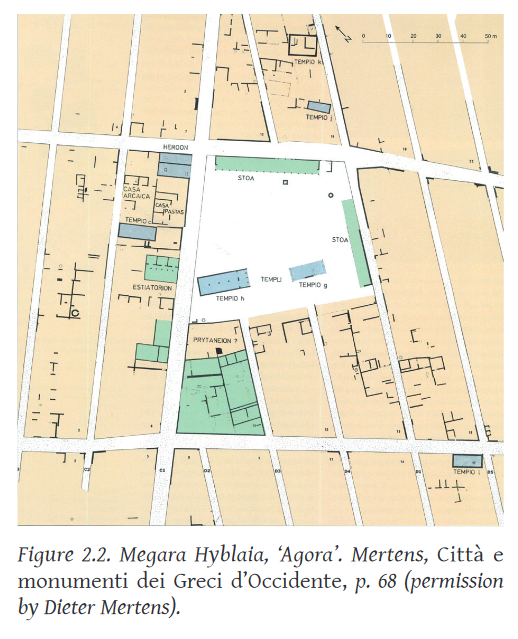
When Greeks founded new settlements, they were facing the question of how to distribute plots of land to individual settlers. The main reason individuals joined a new foundation was to get such a plot of land (klêros), regardless of other reasons for colonisation. Back home, two brothers would need to share a klêros through partible inheritance by lot. However, if one brother stayed and another left for a new settlement abroad, both would have ended up, each, with a viable klêros. In and of itself, a klêros provides a basis for livelihood and a mutually recognised share of political and military power within the community. Practices of Greek colonisation are parallel to the Greek practice of ‘partible inheritance by lot’, since the same general principles and structures apply to both when it comes to land distribution: equality before the chance of the lottery, and, when possible, equality (sometimes equitability) of the size of the klêros.

From this we learn, if I understand correctly, that (like the English word “lot”?!) the word “klêros”, as in the randomizing machine “klêroterion”, meant in the first place a piece of fertile land, and the use of this word for randomization is derived from the custom of using the lottery for the distribution of such lands.

Malkin’s main thesis appears to be that the lottery was an embodiment of an egalitarian ideology. This ideology was especially influential in newly established colonies was in competition with oligarchization trends in more established settlements. It is this ideology that eventually, over the course of hundreds of years, developed into the Greek democracy.
Continue reading

Martin Wolf: Citizens’ juries can help fix democracy

Sortition has found a fairly prominent advocate in the Financial Times‘s Martin Wolf. Wolf was introduced to the idea by Nicholas Gruen and is highly influenced by him. Wolf has written a book offering sortition as a solution to “ailing Western polities”. His prominent position and impeccable institutional credentials make him possibly the most prominent promoter of sortition in the Anglophone world.

Wolf is now repeating his argument in an article in the Financial Times. In particular he is implying that the “failure” of Brexit would not have happened if the decision whether to leave or remain were made by an allotted body. But Wolf goes farther and proposes a permanent allotted chamber with not insignificant powers.

“Brexit has failed.” This is now the view of Nigel Farage, the man who arguably bears more responsibility for the UK’s decision to leave the EU than anybody else. He is right, not because the Tories messed it up, as he thinks, but because it was bound to go wrong. The question is why the country made this mistake. The answer is that our democratic processes do not work very well. Adding referendums to elections does not solve the problem. But adding citizens’ assemblies might.

In my book, The Crisis of Democratic Capitalism, I follow the Australian economist Nicholas Gruen in arguing for the addition of citizens’ assemblies or citizens’ juries. These would insert an important element of ancient Greek democracy into the parliamentary tradition.
Continue reading

Bouricius: The Trouble With Elections

In former lives, Terry Bouricius was an elected politician in the US state of Vermont and an electoral reformer. In the present, Terry is a sortition advocate and a regular commenter on this blog. Among other activities, he has published an influential paper offering a multi-body sortition-based government system. In addition, it turns out, Terry has also been writing a book which he is now about to start publishing in installments on democracycreative.substack.com. You can sign up to get notified as new chapters are published.

Random citizens’ panel to advise on German food policy

Julia Dahm writes in EURACTIV Germany about the decision by the German parliament to convene an allotted body to “bring the citizens’ perspective into the political debate” about food policy. Even at this early stage (the proposal was only adopted a few days ago), it seems all the expected elements of such a situation – familiar from the going-ons around the French Citizen Climate Convention, for example – are there: a government elected promising to act on a certain set of do-good principles, established powers pushing against any change, conservatives claiming that citizen assemblies are a sign of weakness and a shirking of authority, and the inevitable suspicions and accusation of manipulation by the organizers.

The German parliament has decided to launch a panel of randomly selected citizens set to advise lawmakers on food and nutrition policies, in an effort to help navigate the thorny issue of the state interfering in dietary choices.

The motion to set up a citizens’ panel on diets and nutrition had been tabled by the three government parties – the Social Democrats (SPD), the Greens, and the Liberals (FDP) – and was adopted by the Bundestag on Wednesday evening (10 May).

The first-ever citizens’ council put in place by the German parliament s set to “focus on the radical dietary changes that are already taking place in our day-to-day” and should “bring the citizens’ perspective into the political debate”.
Continue reading

Sortition Foundation answers criticism regarding the Herefordshire Climate Assembly

Tom Lord, the director of the Sortition Foundation, responds in a letter to the editor of the Hereford Times to an earlier letter to the editor claiming that the makeup of the Herefordshire Climate Assembly, whose members were selected by the Sortition Foundation, was biased.

This is how we chose Herefordshire Climate Assembly members

FRANK Myers raises concerns (Who are they? April 22) that participants in the Herefordshire Citizens’ Climate Assembly had preconceived ideas about climate change.

The reason that over 80 per cent of participants had preexisting concerns about climate change is simply because that reflects the broader population’s views at the time, according to national statistics gathered every three months.

This issue of the potential for some people to be more likely to sign up than others is exactly why we asked people about their existing opinion about climate change when registering.
Continue reading

Another Herefordshire citizen council letter to the editor

The Herefordshire citizen council for the climate has been the subject of a couple of critical letters to the editor of the Hereford Times last year. In a new letter, Frank Myers MBE from Ross-on-Wye is critical of the process as well, and in particular is unhappy about the fact that the identities of the members of the council are not made public.

Why won’t Herefordshire Council name Climate Assembly members?

LAST year a Citizen’s Climate Assembly was formed. Some 50 or so members were recruited and each were paid £300 for their participation.

The group was chosen, with the help of the infamous Sortition Foundation, in such a way that almost 90 per cent had preconceived concerns about climate change.

As we approach the local elections I think it is important to know how many of these people have put themselves forward for election for posts where they are paid nothing.

So I asked Herefordshire Council for their names and the council refused to disclose them.

So we are not allowed to know but Councillor Ellie Chowns, the leader of the Greens, who chaired the foundation proceedings, obviously knows their identity and has had the opportunity to share the Green message with them.

Is this democracy?

The Times alarmed about the radical proposals of the Sortition Foundation

The Times writes:

Group that wants to abolish MPs wins government cash

Even Extinction Rebellion believes the Sortition Foundation’s ideas are too radical

The taxpayer has been funding a group that campaigns for the end of parliamentary democracy and which even Extinction Rebellion considers to be too radical.

The Sortition Foundation has provided recruitment services for parliament and other governmental bodies, helping them to organise “citizens’ assemblies” that are used to inform decision makers on issues such as climate change.

Participants are paid to take part and chosen through a process of “stratified random selection” so that assemblies, made up of between 20 to 200 people, are representative of communities in the UK and can be used to guide government policy.

The not-for-profit company was awarded £26,000 by the Department for Environment, was among the beneficiaries of a £120,000 contract from the House of Commons and received £10,000.

A democratic rock bottom

Guillaume Drago, a law professor at Université Panthéon-Assas Paris II writes [original in French] the following in the Catholic monthly journal La Nef.

A democratic rock bottom

It is the time, it seems, of “participative democracy”, which has been described as “the collection of methods aiming to involve the citizens in the process of political decision making” [L. Blondiaux, on the site vie-publique.fr], and which could be defined as the direct participation of citizens in the creation of rules, and in particular legislation. It surely involves that when it concerns the “Citizen Conventions” for the climate and for the end-of-life question.

The composition of these “conventions” is the product of allotment which is supposed to be representative of the French population. The institution which organizes these conventions is the Economic, Social and Environmental Council (CESE, pronounced “se-zeh”), with a “governance committee” which, it is easily understood, is there to steer the discussions in the desired directions and an “oversight body”, for the end-of-life convention [The role of the oversight body is defined on the site of the “convention”: “The oversight body is tasked with ensuring respect for the essential principles of the Citizen Convention: sincerity, equality, transparency, respect for the speech of the citizens. The body also verify that the conditions guarantee the independence of the Citizen Convention”.] The assessment of a legal scholar of the use of “citizen conventions” cannot avoid being severely negative, for several reasons.

The first is that these bodies are neither constitutionally nor legally recognized. No provision of our constitution discusses such a device for preparing or for participating in deciding laws or regulations. The law is silent on this type of device and it is unclear why the members of parliament would wish to give up some of their legislative power in favor of the citizens whereas those citizens have duly elected the members of parliament in order to represent them… For those two “conventions”, a simple letter of the prime minister to the president of the CESE is all that justifies their existence. They are then associated with what one of the sites of the “conventions” calls the “third Assembly of the Republic, and a legitimate player acting as an independent constitutional assembly, whose task is to be a juncture of citizen participation”. Good heavens! Such responsibility!
Continue reading

Hugh Pope on the Belgian Citizens’ Dialogue

Hugh Pope has a piece in the The New European about the permanent allotted body in the German speaking community in Belgium.

If we are trying to fix our “broken politics”, is the solution really just another set of politicians? If the electoral system is at fault, might the process of government work better if it were run by a group of randomly selected citizens?

Liesa Scholzen is a politician whose constituents are the 70,000 German speakers on Belgium’s eastern border. People with an interest in new political systems are paying close attention to Scholzen’s hilltop parliament in Eupen, Ostbelgien. That’s because in 2021, as part of its Citizens’ Dialogue initiative, Ostbelgien inaugurated the world’s first official, permanent legislative body chosen not by votes, but by lottery.

“The Citizens’ Dialogue” […] is led by a standing council of citizens, drawn by lot. The 24-member council serves for 18 months, and they choose the topics which are then debated by separate Citizens’ Assemblies. These assemblies have 25-50 members, also chosen by lot, who make their recommendations following two to three days of deliberation. Members meet in the evening or at weekends, and receive expenses plus €50 to €95 (£44-£84) per session. All participants are chosen from the German-speaking community.

An interesting paragraph discusses the matter of the rate of acceptance:

[O]nly 5% to 10% of invitations to attend Citizens’ Assemblies are initially accepted. This is because people have no knowledge of them, no time to spare or just think the invitation letters are a hoax. Organisers usually ensure that those who do volunteer are representative through “stratification”, a second layer of random selection that balances gender, language, age, education and other criteria. But [activist Juliane] Baruck from Es geht LOS [a German organization promoting sortition] goes out knocking on the doors of those who don’t respond. “We trust the lottery to get a truly representative sample, so we keep trying,” she said. “I don’t try to convince those chosen. I ask them: ‘What do you need to join in?’ Already, we’ve got the positive response rate up to 22%.”

Continue reading

Bailly: The democratic quality of European Citizens’ panels

“The democratic quality of European Citizens’ panels” is an interesting study of the citizen panels convened within the framework of the Conference on the Future of Europe which took place in 2021. The study by Jessy Bailly involved interviews with dozens of participants in the panels.

The study highlights some of the problems of the lack of an acceptable design, resulting in biased outcomes. Examples of problematic aspects of the design are the use of volunteers, the way the experts are appointed, the overrepresentation of a stratum of their choice (youth in this case), and the lack of transparency of the sortition method.

Some excerpts:

When I surveyed the citizens, many praised the “diversity of people” within the panels. Others emphasised the lack of representativeness of the citizens’ panels, with at least 5 of the 31 citizens interviewed insisting on it. One of them was a German citizen in her 30s: “You should pay attention to a greater diversity of people and not only people who are pro-Europe. There should be a greater selection of different people, different social classes and also religions.” It is worth noting that the “social class” criterion had to be respected (through the prism of occupation). However, no ethnic or religious criteria were considered.

Continue reading