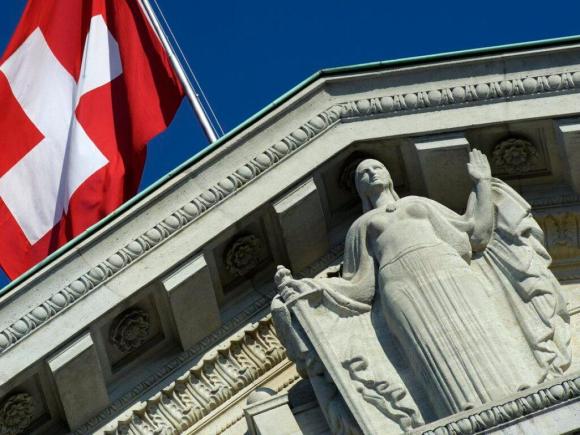
The Swiss Council of States rejects sortition for judges

SwissInfo reports:

Like the National Council, the Council of States has rejected the initiative that would replace the selection of judges by election to their selection by sortition.

Submitted by the entrepreneur Adrian Gasser, the initiative “Appointment of federal judges by sortition” aims to make judges more independent. The candidates have to attain their high position based solely on their qualifications, even if they do not have a political network, according to the text of the initiative.

Selected by a a commission of experts, the judges would then be allotted in a way that the official languages would be fairly represented. They would be able to serve five years beyond the normal age of retirement.

Democratic legitimacy

The senators have implicitly rejected the text. The initiative contradicts the Swiss practice where judges are elected and enjoy democratic legitimacy, a principle that is incompatible with a random process, declared Beat Rieder, a member of the judiciary committee.

The existing system has proven itself. Andrea Caroni, the president of the commission, the idea must be “voting rather than rolling the dice, democracy rather than lottery”. Sortition would in no way guaranty more independence and more fairness, added Thomas Minder.

The choices of the members of the commission of experts would not be neutral either, added Carlo Sommaruga. And it would not necessarily be the best that would be designated due to chance, concurred Karin Keller-Sutter, the Minister of Justice. According to her, the initiative introduces a “foreign element” into our institutions.

A different proposal that was also discussed would have judges elected for life rather than facing periodic re-election. In practice, however, non-re-elections are very rare. This proposal was rejected as well. According to article, Andrea Caroni thinks that “parliament knows how to protect the judiciary institution”.

An in-depth study of the “Irish Model” by Dimitri Courant

In “Citizens’ Assemblies for Referendums and Constitutional Reforms: Is There an “Irish Model” for Deliberative Democracy?” Dimitri Courant analyzes the recent Irish citizens’ and constituional assemblies in a nuanced and contexuatlized way. This must be one the better treatments of the subject for anyone intersted in the “trans-localization” of the model itself and for those intersted in the design issues for citizens’ assemblies. To me it is a sober evaluation of the “Irish case” and gives us much food for thought on what might happen going forward.

Among democratic innovations, deliberative mini-publics, that is panels of randomly selected citizens tasked to make recommendations about public policies, have been increasingly used. In this regard, Ireland stands out as a truly unique case because, on the one hand, it held four consecutive randomly selected citizens’ assemblies, and on the other hand, some of those processes produced major political outcomes through three successful referendums; no other country shows such as record. This led many actors to claim that the “Irish model” was replicable in other countries and that it should lead to political “success.” But is this true? Relying on a qualitative empirical case-study, this article analyses different aspects to answer this question: First, the international context in which the Irish deliberative process took place; second, the differences between the various Irish citizens’ assemblies; third, their limitations and issues linked to a contrasted institutionalization; and finally, what “institutional model” emerges from Ireland and whether it can be transferred elsewhere.

Continue reading

Mathews: Citizens’ assembly for democratic governance of the internet

An op-ed by Joe Mathews in The Mercury News.

We need a new way to govern the internet, here’s how to do it
Joe Mathews, May 7, 2021

Today’s methods for governing the internet do not constitute a coherent system, much less a democratic one. Instead, internet governance is a contest for power between the most powerful tech companies, who put their shareholders first, and national governments, which prioritize their own political interests.

In this contest, both sides create the pretense of democracy. Facebook, based in Menlo Park, has created its own “independent oversight” board of global experts, though it’s unelected and chosen by Facebook. The European Union touts its tougher regulation of privacy and the internet — but those regulators are also unelected, and impose their rules on people far from Europe.

Which is why the internet needs a democratic government that operates beyond the reach of tech companies or national government. Such a system must be both local — to allow people to govern the internet where they live — and transnational, just like the internet itself.

I’d suggest that the internet’s democratic government combine multiple forms of democratic governance.

The center of such a government should be a citizens’ assembly — a tool used around the world to get democratic verdicts that are independent of elites. This citizens’ assembly would consist of 1,000 people who, together, would be representative by age, gender and national origin of the global community of internet users. They would not be elected individually, but rather chosen via randomized processes that use sortition (or drawing lots).

The assembly would be supplemented by an online platform that allowed people to report problems, make suggestions, or even petition for proposals that could be voted upon in a global referendum by internet users everywhere. The models for such a platform include Rousseau, the controversial online environment through which Italy’s Five Star Movement governed itself for a time, and Decide Madrid, the online participatory framework that has spread from the Spanish capital to more than 100 cities worldwide.

National governments and tech companies would try desperately to influence this government, but they would not be in charge of it. And each citizens’ assembly would dissolve after two or three years — making it harder for the powerful to lobby it.

Mansbridge: Beyond Adversary Democracy

An interview with Jane Mansbridge in the Harvard Gazette.

GAZETTE: How might we get citizens who are so polarized to listen to one another?

MANSBRIDGE: One proven practice is the technique of citizens’ assemblies or deliberative polls. These are groups of citizens drawn randomly, through a democratic lottery, from a particular population. It could be an entire country, a state, a city, or even a neighborhood, from which you bring together a group of citizens to talk about an issue that is of concern to their community. For this technique to be successful, the group has to be random, meaning that you have to have good representation from everyone, not just the white retirees who don’t have much to do and would love to come to this sort of thing. To get a random group, you ought to able to pay the participants because you want to be able to get the poor, the less educated, and people who, for one reason or another, would not give up a weekend otherwise to come together with other citizens to deliberate about some major issue.

GAZETTE: Have you participated in a citizens’ assembly? What was it like?
Continue reading

My Turn: On citizens’ assemblies

Dennis Merritt, a resident of Shelburne Falls, writes in the Greenfield Reporter (keeping Franklin County informed since 1792!):

Judith Truesdell’s letter on immigration reform [“Illegal immigration”, April 24] made me think more about a friend of mine’s opinions on citizens’ assemblies, a form of sortition.

What’s sortition? It turns out the Athenian Greek democracy did not elect representatives. Instead they were chosen at random from the population. That’s sortition.

For some, the very fact that we elect our representatives is at the core of the problems with our government today. They argue that if Congress were made up of randomly selected individuals, who are demographically representative of the country, rotating through fixed terms, then a lot more would get done, and get done better.

Why? Because the representatives would focus on the issues, not the visibility of the issue and how it affects their fundraising and chances for re-election.

That’s clearly not going to happen any time soon, but there is a variation on the idea that is happening in places and could happen on a national level. It’s called citizens’ assemblies.

A citizens’ assembly is a group of randomly selected, demographically representative individuals brought together to address one particular issue, hopefully to make law, but at least to make recommendations. These could be relatively large groups. They would take input from various stake holders and experts. After making their decision, they would disband.
Continue reading

New Zealand: Fresh water requires fresh ideas

Nicolas Pirsoul, Policy Analyst and Research Assistant, and Maria Armoudian, Lecturer, Politics & International Relations, both at the University of Auckland, write:

While the primary industry sector undeniably plays a key role in New Zealand’s economy (5-7% of GDP for agriculture), its true contribution might look quite different if environmental impacts – and freshwater quality in particular – were taken into account.

Currently, New Zealand taxpayers shoulder the heavy cost of lax oversight and regulation of freshwater. While the public is aware of the issue of freshwater quality, arguably there is less awareness of the democratic deficit contributing to the problem.

In a liberal representative democracy such as New Zealand’s, political decisions result from elections. The three-yearly electoral cycle, however, tends to encourage symbolic politics geared towards winning votes rather than generating long-term solutions to complex problems like freshwater quality.

In 2017, for example, Labour campaigned on cleaning up our waterways. Its eventual plan, “Essential Freshwater: Healthy Water, Fairly Allocated“, appeared promising but is ambiguous and short on detail or substance. Some of the promised reforms have since been delayed.

Elections won’t help

With no real mechanism for public participation beyond the next general election or non-binding public consultation and submission processes, New Zealanders are left largely powerless.
Continue reading

Rebooting Democracy candidate is running for Cambridge city council

Keith Garrett, co-founder of the Rebooting Democracy party (named after Manuel Arriaga’s book), is running for Cambridge city council. He was interviewed by Alya Zayed.

[Rebooting Democracy] puts forward a system whereby decisions are made by randomly selected members of the public, who discuss and deliberate the issues before coming to a decision, like a jury – a process known as ‘sortition’.

[Garrett] said: “I’ve stood before for the Green Party and nothing has changed. One of the key things in my life is climate change – although it’s not the focus of my party. I did everything I could and it makes no difference because you’re essentially trying to appeal to people in charge who have a set of vested interests. They’re career politicians. They’re interested in keeping their jobs and staying in that party machine.

“But actually, if you directly devolve decisions to a group of people, you give them true power, and it would solve most of our big world ills, like social inequality or climate change.”

He added: “You have deliberation, you talk, and you listen to each other. It’s ‘optimise’ not ‘compromise’. It’s about trying to find the best decision, not just the one that keeps everyone happy.”

If elected as councillor, he plans to use this kind of thinking to change the council’s decision making process.

Continue reading

Not a one-off threat

The Morning Star is a UK newspaper which describes itself as “a reader-owned co-operative and unique as a lone socialist voice in a sea of corporate media”.

In a recent editorial it writes:

Groups like Extinction Rebellion (XR) have raised the profile of the climate emergency, forcing politicians to acknowledge it. [But the] link between environmental action and anti-capitalism is one movements like XR have been reluctant to concede.

This probably stems from a desire to appeal to the broadest possible coalition willing to take action, but it is self-defeating.

Green parties that have reached the mainstream through accommodation with the capitalist system in Germany and Ireland have become pillars of the centrist, liberal and environmentally catastrophic status quo.

One approach to circumventing this promoted by XR especially is the Citizen’s Assembly, a representative body chosen by sortition (as a jury is, rather than by election) that stands outside the political system and would be tasked with decreeing solutions to the environmental crisis.

The suggestion has one key merit, in drawing attention to the inability of our current political structures to meet the biggest global challenge of our time.

But it falls into the trap of viewing climate change as a one-off threat that can be seen off independently of our political and economic system, rather than a process driven by the economic system itself.
Continue reading

Waserman: What the Convention has brought to us is different from what government or Parliament would have produced

Sylvain Waserman is a representative from Bas-Rhin and the vice president of the French National Assembly. He is a member of Macron’s party, LREM. He published the following piece in the French Huffington Post.

The Climate Convention: a democratic innovation or a sign of crisis of the representative system?

The citizen climate convention tests our democratic model. It was born in an atmosphere of general skepticism, or even worse, a certain condescension. We kept hearing that sortition has no democratic legitimacy and that its place is only in the history books under the heading “Ancient Greece”.

Today the situation is quite the opposite: no one doubts anymore the value of the proposals formulated, and the only question is about knowing how those proposals will be implemented and if they are going to be implemented in full.

When the so-called “climate and resilience” bill arrived at the Assembly, numerous deputies expressed irritation and some opined that this signaled another decline in the status of Parliament and a negation of the role of its members.

Following the example of the citizen members of the Convention

Let’s be clear: what the Convention has brought to us is different from what either the government or the Parliament would have produced in a classic legislative process. Surely it is more audacious and truly different. Let’s have the humility to recognize that and the intelligence to see that as a virtue rather than as an affront. The best example is the text for the amendment of the first article of the Constitution. Few among us would have spontaneously proposed the bold formulation adopted by the Convention: “France guarantees the preservation of the environment and of biodiversity, and the struggle against global warming”. The term “guarantee” is vertiginous and could open the door to questions of constitutional priorities, leading to complex issues and giving constitutional judges wide discretion in invalidating laws which would not respect this guarantee. Indeed: Nicolas Hulot, a sincerely committed environmentalist, had proposed constitutional reforms that are judicially less risky and more convenient legalistically, such as “France acts in order to” or “committed to promote”.
Continue reading

Democratic lotteries featured in FastCompany

Democratic lotteries and our organization, of by for*, were recently featured in a piece in FastCompany. The article introduces selection of representatives by lottery, the history in Athens, Democracy R&D, and our recent Citizens’ Panel on COVID-19. It will be followed up by a ‘World Changing Ideas’ podcast episode within the next month.

Excerpt below and full article here: What if we replaced elected politicians with randomly selected citizens?

For Cronkright, drawn-out election cycles—filled with stump speeches, attack ads, and super PACs—are dysfunctional. The candidates are often “slick and vicious performers” trained to put on a show and say the right things, who spend most of their time fundraising. “We are awarding power to those who can win, and keep winning, cutthroat popularity contests,” he says. When elected, many politicians are then at the whim of parties, lobbyists, and corporations and don’t have personal incentives to make the right decisions for the average Joe. “To me, they’re the least qualified bunch to represent us,” he adds.

Real representation can only be achieved by putting ordinary people in charge of governing. That means “representatives” should reflect the greater population’s demographics, but also its struggles, fears, hopes, and values. These people would be accountants, waitresses, engineers, business owners, single mothers, and students, who are actually affected by the decisions they make for everyone. “If they sink the ship,” he says, “they, too, are going down.”