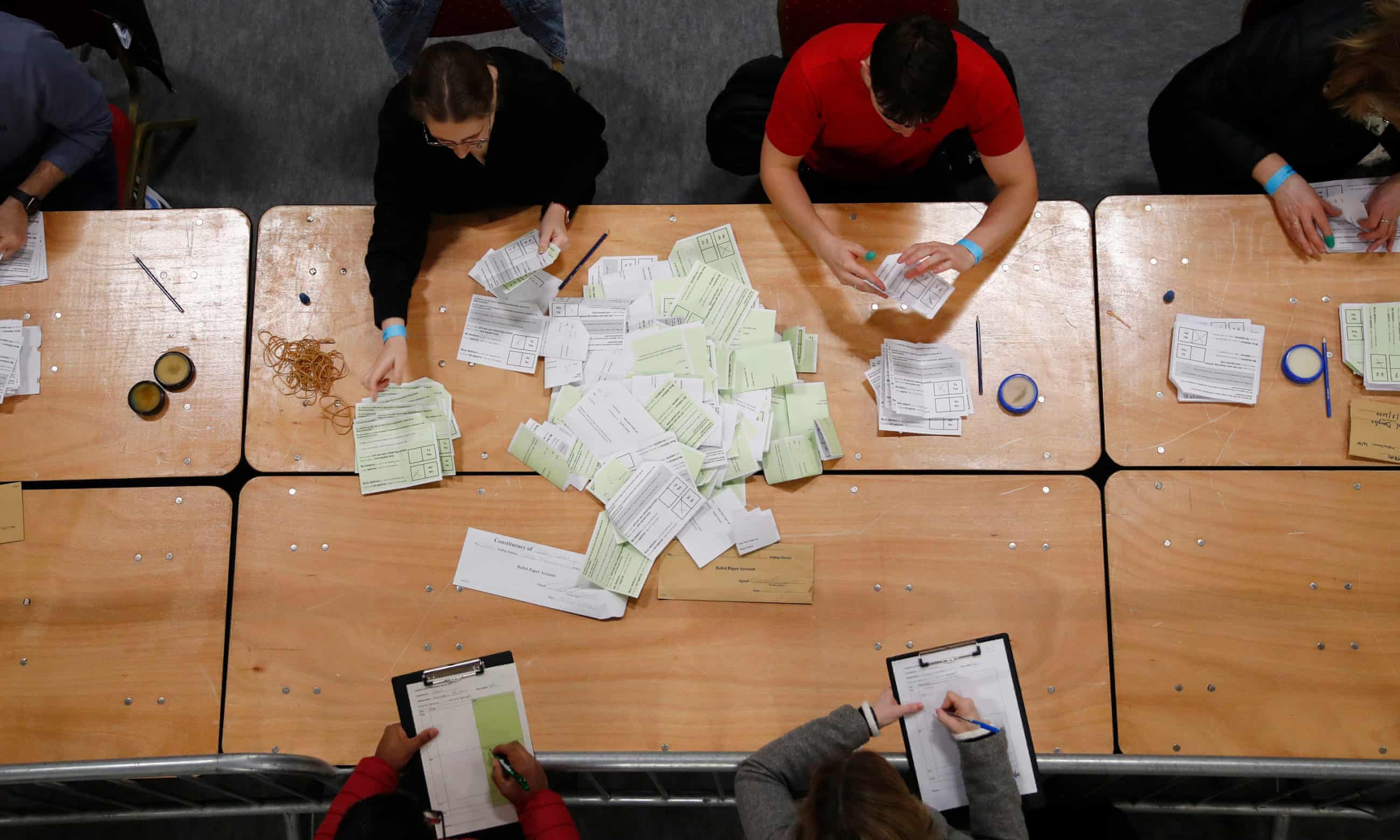
Rolling the Dice on Democracy

A new short video discussing sortition lays out the standard discourse around sortition. In doing so, despite the video’s tone that seems rather sympathetic to sortition, it echos the arguments against sortition made by supporters of elections rather naively. Similar arguments were made by elitists throughout the ages, going back at least 2,500 years to Socrates, when they argued against any democratic mechanism. When people argue for the maintenance of their privilege, they always claim that they do so for the general benefit. We are quick to dismiss such claims when they come from our ideological enemies, e.g., advocates of monarchy, theocracy, and most notably from those who argue for the system used in the People’s Republic of China. Shouldn’t this skepticism be applied to those defending elections as well?

Demiocracy, Chapter 8: Employees need Inner Voice Entities

American employees usually lack a voice. Three-quarters of them aren’t represented by a union. As for the rest, unions here typically disclaim a willingness to help management improve its likability and operations.

It is essential in the trade union view that they should not be compromised by having a share in management. —H.R.G. Greaves, Democratic Participation and Public Enterprise, 1964.

Employees often suffer from the slings and arrows of outrageous managers—Dilbert’s pointy-haired boss is a notorious example.

So employees would benefit from having a proxy entity that is able complain to a higher-level manager; and, that failing, as it often might, to the board of directors and/or shareholders; and that failing, to the media and/or the internet.

Management would benefit too, by being able to float trial balloons within IVEs, thereby fine-tuning new policies and averting blunders.

The interests of the owners (stockholders) are not necessarily aligned with those of management. A “managerial revolution” long ago wrested effective control from the owners …

… things in a private economic enterprise are quite similar: the real “sovereign,” the assembled shareholders, is just as little influential in the business management as is a “people” ruled by expert officials. —Max Weber, Politics as a Vocation, 1919.

… and management has often put its own petty interests first. The long-term viability of firms has suffered as a result.

Continue reading

Demiocracy, Chapters 6 & 7: Demiocratic Representation of the Voiceless, by Means of a Novel “Bal-lottery” Technique

There are certain segments of the population (specified in the next chapter) who are often poorly treated, but who can’t complain about it to their higher-ups—or, really, to anyone—because they can’t speak out as a group, lacking representatives.

These groups, by their nature, are not in a position to allow election campaigns. They would either not be feasible, or would be too disruptive.

Nor would it be feasible for representatives to be selected completely by chance, because: 1) They would be treated dismissively, as mere nobodies, by the officials above them; and 2) They would not be as enthusiastic about, or effective at, their duties as certain others in their group—persons who would tend to be selected by a bal-lottery.

These groups should therefore employ the novel (AFAIK), election-free bal-lottery technique described in Item 2 above to select representatives.

I urge sympathizers of such underdogs to promote this means of representation. Equally, I urge “uber-dogs” to heed it, as it is in their interest to be wise in time.

Here’s a simplified example. Let’s say that some group has 1000 members, and that the agreed-upon ballot-to-lot ratio is 50:50. (For voiceless groups the ratio would be 100:0.) INTO the bal-lottery box might therefore go 10 ballots BY each member, nominating other members, and 10 lots FOR each member, automatically.

Continue reading

Professor Neil explains the principle of distinction

TikToker Professor Neil is, it turns out, a sortition advocate. In a recent clip Prof. Neil lays out the reason that elected government does not represent the interests of the population.

Demiocracy, Chapter 5: History’s Hints — The Venetian Republic’s Electoral Procedures

[In Venice,] to prevent tensions between the ruling families, sortition was introduced as way of appointing a new doge, but in order to ensure only a competent person could become ruler, the procedure was combined with elections. The result was an unbelievably roundabout system that took place in ten phases over a period of five days….

The Venetian system seems absurdly cumbersome, but recently several computer scientists have shown that this leader election protocol is interesting in that it ensured the more popular candidates actually won, while nevertheless giving minorities a chance and neutralizing corrupt voting behavior. Furthermore, it helped to bring compromise candidates to the fore by amplifying small advantages…. In any case, historians agree, that the extraordinary, lasting stability of the Venetian republic, which endured more than five centuries, until ended by Napoleon, can be attributed in part to the ingenious selection of ballotte. Without sortition the republic would undoubtedly have fallen prey far sooner to disputes between ruling families. (You do quietly wonder whether today’s governments are not similarly falling prey to the bickering between parties.) —David van Reybrouck, Against Elections, 2018, p. 70-71.

My “take” is that what is worth copying from Venice are: a small electorate, a mix of sortition and election, and an indirect, multi-stage process of electing electors.

We compensate, we reconcile, we balance. … From hence arises, not an excellence in simplicity but one far superior, an excellence in composition. —Edmund Burke, Reflections on the Revolution in France, 1790.

These made the office tend to seek the man, baffling the “presuming” ambitions of would-be “Kings of the Mountain.” That’s good, because such persons are often overbearing and blunder-prone once ensconced in office.

We can work up to these commanding heights of politics modestly, step-by-step from below, as follows in Chapters 6 & 7.

Debunking the Citizens’ Assembly

https://www.academia.edu/113766495/Debunking_the_Citizens_Assembly

Abstract: Most designs of “Citizen Assemblies” appear to establish a representational system without being able to live up to an acceptable explicitly or implicitly claimed representativeness and inclusiveness, or to make a (scientifically) acceptable attempt to demonstrate them. It is a representational system with representativeness based solely on “everyone having an equal chance of being selected”, and even that is not always realized. Then again, in some cases the representativeness or inclusiveness is very targeted and limited. Also, the design seldom has a reasoned relationship to the area of application. Most designs are vulnerable, to very vulnerable, to manipulation. The selection method and choice of operation practices is in the hands of specialists or specialized companies where sortition is just the generic name and is far from the sortition system with the values we spontaneously assign to it such as reliability and fairness. Independent evaluation system/application area/result is virtually non-existent.

Clay Shentrup: Election by Jury

Clay Shentrup wrote to announce the Election by Jury website he created.

If you were accused of a crime, who would you want deciding your fate?

  • A panel of randomly selected jurors, all of whom have spent multiple weeks sitting in a courtroom, listening to all the relevant facts and arguments put forward by both sides
  • A popular vote open to hundreds of thousands of people in your county, the vast majority of whom only know a few sound bites about the case, which they heard from a biased and one-sided source

The premise behind “Election by Jury” is simple: we believe that our government, just like the criminal justice system, will function better if our representatives are elected after weeks of deliberation by a panel of randomly selected jurors. These jurors would hear from the candidates and their expert-witnesses, deliberate among themselves, and cast their votes in secret.

Here are a few of the most compelling benefits of our proposal:

  1. An “electorate” that is better informed
  2. Better ways of combating misinformation
  3. Breaking away from echo-chambers

Another Crisis-of-Democracy book

Erica Benner is “a political philosopher who has held academic posts at St Antony’s College, Oxford, the London School of Economics and Yale University”. Her new book, Adventures in Democracy: The Turbulent World of People Power, is a contribution to the “Crisis of Demcoracy” genre. In an article in the Financial Times Benner lays out her outlook, rather standard for the genre, which includes a mention of Athens and sortition.

Democracies have always presented themselves as beacons of human progress. In 431BC, the statesman Pericles declared that Athens’s democracy was “the school for all Greece” — while over the past two centuries, democracy warriors everywhere have measured their countries’ success or failure by comparison with western models: American, British, French, Swedish.

It’s harder to do now that these formerly self-congratulating democracies are doing battle with new and older demons. Today, millions of people around the world crave freedom from authoritarian rule. Yet when they hear almost daily that the liberal heartlands are plagued with inflation, strikes, high crime rates, gun violence and ill-informed voters who care little about truth, many of them doubt that democracy is the best alternative.

Note how oppression is carefully left out of what “plagues” the “liberal heartlands”, and how blame for the troubles is laid at the feet of the masses – “ill-informed voters who care little about truth” – rather than at those of the powerful.

Benner concludes with a mention of sortition and some useful bromides:

We see the same urgent need to give more effective authority and voice to people on the ground inside today’s older democracies. There are organisations around the democratic world whose members advocate the creation of citizen assemblies, chosen by lot instead of personality-driven or partisan campaigns, to advise and monitor existing branches of government. By avoiding pathological rivalries among (and within) political parties, such assemblies might stand a better chance of coming up with policies aimed at narrowing the gaps in unbalanced societies.

But even well-crafted institutions can’t function without popular support. Change has to start with our own attitudes. Take other people’s beliefs and discomforts more seriously than ideologies that preach faith in the inevitable progress of whatever you think best. Fight to take power back, of course, from democracy’s most obvious enemies — extremists, insatiable plutocrats and tyrannical leaders. But also take a more modest, closer-to-home kind of responsibility: for getting our own hypercompetitive societies and psyches into better shape.

Demiocracy, Chapter 3: What’s the Solution? Why

By narrowing each electorate’s topical and electoral scope, and by simultaneously and necessarily multiplying the number of electorates, we enable every issue and every candidate to be thoroughly and continuously evaluated by everyday citizens. In other words, we replace P-dominated DeMockery with demos-dominated democracy.

In addition, by restricting each legislator’s topical domain, we enable ordinary citizens, who are not typically fluent in multiple political domains (unlike members of the current “political class”), to become viable political candidates, also vastly expanding the role of the demos.

Democracy should be rule by an informed public opinion acting, after deliberation, in the public interest. But, in a mass-electorate DeMockery, the average voter will NOT be adequately informed, and will engage in little deliberation—resulting in misgovernment.

The problem with letting everybody vote too is that people are really easily manipulated and they’re really undereducated. They don’t have any incentive to pay attention to the real issues, what’s at stake and what are the consequences of each vote. They just vote with whatever feels good. And they’re busy, and they’re tired … and they don’t have the time, and they don’t have the incentive to be enlightened. They don’t have the incentive to have an objective, enlightened approach to how you handle the future of our society. —“Joe Rogan’s harsh truth about American voters” —Podcast, viewed November 6, 2023.

Continue reading

Demiocracy, Chapter 2: What’s the Solution? How

My prescription is to “de-mass-ify” democracy by downsizing and dividing the electorate into multiple, issue-specific “Demi” (small) electorates, each responsible for a single electee. At a stroke the power of the Pernicious P’s would be cut by some 80%.

The representatives must be raised to a certain number in order to guard against the cabals of a few; and … must be limited to a certain number in order to guard against the confusion of a multitude. —The Federalist #10.

Such Demi-electorates would continuously oversee and supervise their single officeholder throughout his/her term, not just during an election campaign.

These Proxy Electorates (PEs) would meet for hours every few months, primarily over a private intranet. Each PE would hear a report from its officeholder (who would have a correspondingly limited, issue-specific scope), pose questions, hear criticisms, discuss matters among themselves, and optionally make recommendations, authorize research, and launch investigations. During intervals individual electors could add comments, do research, chat, message, query the webmaster, etc.

In other words, these PEs would not be solely electors—they would be, at the least, actively involved overseers, and at most semi-legislatures, with their electee being only a functionary, depending on their charter and their mood.

Proxy Electors would be chosen as follows. Each member of the “full” (or “base,” or “mass”) electorate would be given 10 (say) “ballots” with which he/she could nominate similar everyday citizens to be his/her Proxies; no more than three ballots could be cast for any one person, including for him/herself.

All nominations would go into a virtual “bal-lottery box,” along, optionally, with some percentage of randomly selected names—say from 20% to 50%. From the box the names of pending Proxy Electors would be drawn and put into a reserve pool.

This technique is a combination, respectively, of selection (by nomination) and sortition (the technical term for random selection in politics).

There would be four (say) tiers, or levels, of Proxy Electorates: Local, County, State, and National. Bal-lotteries would be used to promote Electors from one tier to the next-higher tier, while remaining as much as possible within a similar issue-specialty (or “topical domain”) —e.g., education, law enforcement, transportation, commerce, etc. These successive bal-lotteries would tend to sift out the invincibly ignorant, improving the quality of the remaining Proxy Electors, especially at the upper levels, where noxious numbskulls would be the most damaging.

A dozen or so single-topic legislators would make up a “Demi” (i.e., small), single-topic legislature. Twelve to thirty Demi legislatures would in turn make up a full, Omni-topic legislature, whose approval would be needed before bills passed by its Demi components became law. Its members would be elected by either Demi-legislators, or Proxy Electorates, or some combination of both.

Proxy Electors would in addition freely nominate their favorite fellow electors for promotion to the electorate at the next level up (town, county, state, nation), using the random selection method already described, which I’ve dubbed a “bal-lottery.”