In a recent article Dr. Polyvia Parara made reference to a 2005 book by Mogens Herman Hansen, The Tradition of Ancient Greek Democracy and its Importance for Modern Democracy. It turns out this book is available online.
As always, Hansen is a very useful source of information about democracy in the ancient Greek world. In this book, Hansen focuses less on ancient Greece and more on the connections between ancient Greek democracy and “modern democracy”. Hansen rightly points out that, contrary to what some would have us believe (he cites and quotes Hannah Arendt), there is very little evidence for either institutional or ideological continuity between the two periods.
Hansen focuses first on the ideology.
The classical example that inspired the American and French revolutionaries as well as the English radicals was Rome rather than Greece. Thus, the Founding Fathers who met in Philadelphia in 1787, did not set up a Council of the Areopagos, but a Senate, that, eventually, met on the Capitol. And the French constitution of 1799, designed by Sieyès, had no board of strategoi but a triumvirate of consuls.
The very useful Dutch sortition-focused blog Tegen Verkiezingenreports about a new bachelor’s thesis at Leiden university in the Netherlands titled “Lottery as a democratic instrument?”. The thesis was written by Max Van Duijn, who is the leader of a local political party in the Katwijk municipality named DURF. DURF, which is the biggest party in the municipal council, advocates the application of sortition at the municipal level.
Tegen Verkiezingen provides the following translation of an excerpt from the thesis:
In essence ‘representative democracy’ is not democratic. It’s something fundamentally different. It would be more justified to label it ‘elective aristocracy’. In that sense the contrast between classical and representative democracy is a false one. In fact what we’re talking about is a contrast between democracy (sortition) and aristocracy (elections).
Dr. Polyvia Parara teaches Classics and Modern Greek Studies at the University of Maryland College Park. In a recent article in the English edition of the Greek newspaper Kathimerini, Parara argues that modern Western-system states, conventionally known as “democracies”, are in fact a distortion of the original meaning of democracy, since they do not implement “Isopoliteia” – political equality.
Compared to the original meaning of democracy, it is deduced that modern western societies constitute liberal parliamentary republics protecting individual freedoms and granting rights. They are governed by elected representatives, professional politicians that draw legitimacy by the popular vote. Yet, the citizenry remains limited in the private sphere, not constituting a governing body.
Hugh McTavish is running as an independent for the governor of Minnesota. McTavish’s primary policy position is
Jury Democracy. Have statistically valid juries of 500+ randomly selected citizens make all important decisions of government after hearing full debate and information from all sides on a single issue or proposal.
What would be the characteristics of an ideal government? It would produce decisions in this way:
Decisions made by every citizen, not just by a single dictator or president and not just by a small number of representatives or the elites of society.
Decisions made with full information and after careful consideration of all evidence and arguments and with respectful, open-minded discussion about the decision among the decision makers; not made based on snap emotion or limited and biased information.
Decisions made by consensus where possible and not be 51% imposing their will on 49%.
Obviously, our current system falls short of these goals. But that is necessary, right? We do not have time for everyone in society to stop their lives to carefully consider all the evidence on every issue that our government has to decide.
Does it have to be this way? Can we achieve a better government?
Yes, we can. The way is a new idea I developed that I call Jury Democracy.
Jury Democracy is a system of government of having large juries (about 500 to 2,000 persons) of randomly selected citizens, where the juries constitute statistically valid samples of the citizenry or voters, make policy decisions for government after seeing full informed debate on the policy, being given full information for and against the policy, and fully deliberating and discussing the decision with equally informed citizens in the same jury.
McTavish is running as an independent and faces an uphill battle. Incumbent Governor Tim Walz has a commanding 18-point lead over his Republican challenger Scott Jensen 51% to 33%. However, I welcome any campaign that can promote the idea of democracy by lottery.
The International Network of Sortition Advocates will have our next meeting on, Thursday, September 22, 2022, at 19:00 GMT [20:00 Europe, 21:00 Israel, 14:00 EST (2:00 PM), 6:00 AED].
The meeting will be held on our Discord platform. You must register on the app to attend the meeting. If you’re interested in registering on on the Discord platform and attending the upcoming meeting contact: Rich Brown at rbrowncmt@yahoo.com.
*Please note our desire to keep the meetings to a maximum of 1-hour in length.
Below is the Introduction to a Master’s thesis by G.J. Booij, submitted in 2021 at the Tilburg School of Humanities and Digital Sciences of Tilburg University, the Netherlands, titled “Sortition as the Solution: How randomly sampled citizen assemblies can complement the Dutch democracy”. Booij was advised by Prof. Michael Vlerick, author of the 2020 paper “Towards Global Cooperation: The Case for a Deliberative Global Citizens’ Assembly”.
During World War II, Winston Churchill famously stated that “Democracy is the worst form of government, except for all the others.”. Not only does this indicate that, at least in Churchill’s eyes, the current governmental form is flawed, but also that, remarkably, Churchill sees democracy as being synonymous to the elective representative democracy that was present during his life. If this kind of democracy would indeed be the best way to govern a nation, it is logical that many countries have stuck with it. However, if it is actually flawed, as he also claims, it may be wise to investigate alternative forms of government.
In this thesis, I will do just this by investigating alternative (democratic) governmental systems, since democracy is in fact not synonymous to the elective representative democracy that is still present in many Western countries. In particular, I will scrutinize the democratic system of sortition (democracy through citizen assemblies drawn by lot) and I will argue that this system should be used as a complement to the system currently in play in the Netherlands. By doing this, I will build on existing literature regarding sortition (Fishkin, 2011; van Reybrouck, 2016) by presenting a comparative perspective of several (democratic) systems, focusing specifically on the Dutch context. This kind of critical evaluation of the governmental status quo and democratic renewal is now more important than ever, since political trust dropped drastically over the past years – 70% of the Dutch population has indicated they do not have faith in politics (Erasmus University Rotterdam, 2021; NOS, 2021a). Continue reading →
The planet is burning. The Intergovernmental Panel on Climate Change’s warnings about the consequences of rising temperatures are becoming increasingly dire. And Russia’s invasion of Ukraine has set off a race in Europe and elsewhere to achieve energy independence through rapid transformations of the economy.
With decarbonization becoming such an urgent priority, it is tempting to consider political shortcuts. Why not try enlightened despotism or “epistocracy” (rule by experts), picking the best climate scientists and engineers and empowering them to make the decisions for us? Why not embrace the Chinese method of forcing through sweeping changes and swatting away any misguided resistance from below?
This opening has at least three standard features of Western elite political discourse. First, it puts climate change front and center – a problem that is widely recognized in elite circles not only as an issue that should be at the top of the governance agenda, but also one where the elite, duly concerned about the upcoming catastrophe, find themselves at the forefront of moral thought, desperately trying to lead a reluctant, obtuse public. The single issue of climate change is the only issue that matters in the article and other issues, issues that affect the public at large but are of no concern to the elite (most urgently recently, for example, the rising costs of energy, but many perennial issues as well), are considered only to the extent that they bear on the issue of climate change. Continue reading →
Aviv Ovadya works in the area of governance of social networks. Some months ago while he was Technology and Public Purpose fellow at Harvard’s Belfer Center he published a paper advocating applying sortition for constituting governance bodies for social networks.
Towards Platform Democracy: Policymaking Beyond Corporate CEOs and Partisan Pressure
Aviv Ovadya, Oct. 18, 2021
Facebook, YouTube, and other platforms make incredibly impactful decisions about the speech of billions. Right now, those decisions are primarily in the hands of corporate CEO’s—and heavily influenced by pressure from partisan and authoritarian governments aiming to entrench their own power.
We propose an alternative: platform democracy. In the past decade, a new suite of democratic processes have been shown to be surprisingly effective at navigating challenging and controversial issues, from nuclear power policy in South Korea to abortion in Ireland. These processes have been tested around the world, overcome the pitfalls of elections and referendums, and can work at platform scale. They enable the creation of independent ‘people’s mandates’ for platform policies—something invaluable for the impacted populations, the governments which are constitutionally unable to act on speech, and even the platforms themselves.
Nathan Jack, an attorney in Salt Lake City, is a sortition advocate blogging at democracyplus.substack.com. He has recently written the following article in The Salt Lake Tribune.
Time to replace elections with Democracy+
Picking our leaders at random would be better than hard-fought elections.
Congress is broken. With few legislative accomplishments, we shouldn’t be surprised at its abysmal 16% approval rating. But with midterms approaching, all five Utah incumbents up for election won their primary. And all five are projected to keep their seats.
In states and districts across the country, incumbents easily win reelection. Despite our dissatisfaction with Congress, nothing changes.
This problem lacks an easy solution. Many look to term limits. Sen. Mike Lee himself has long advocated for senators to serve two six-year terms (although he seems unwilling to apply that rule to himself). Others look to campaign finance reform, as fundraising is one of the biggest advantages that incumbents gain. But these measures only treat the symptoms. We need to rid our government of the disease.
Modern Ghanapublishes a short futuristic piece by Brett Hennig (falsely mis-attributing it to other writers).
The End Of Politicians: Time For Real Democracy
It all started in the small countries of north-western Europe. The movement began way back in 2011-12 when one of them went without a government for almost 2 years. But it wasn’t until 2020 that the first regional parliament there instituted a second chamber of randomly selected citizens to review legislation. That made other governments around the world takes note. Then, after the global crisis of 2023-25 people hit the streets, leaders paid attention, and randomly selected, representative “citizens’ chambers” began to flourish. Canada replaced its Senate with a citizens’ chamber and, finally – after years of campaigning – the House of Lords in the UK was also replaced with a representative, randomly selected “House of the People”. It wasn’t long after that – when people began to realise that these assemblies work well and make good, fair, trusted decisions – that the call to abolish elected chambers all together began to spread like wildfire.
Then it happened. After the political crisis in north America in 2039 a couple of US states responded to the crisis by completely replacing their elected legislature with a citizens’ chamber. First it was Oregon, and then the big one: California. Now, in 2050, some countries have followed suit. Among the early adopters were Belgium and The Netherlands in Europe. Who would be next was hard to predict: The depth and breadth of the political movement depended crucially on the local conditions and historical context of each country. Yet the movement continues to grow: Slowly, politicians are becoming a thing of the past. They are now commonly seen as a bizarre historical artefact of that brief period in the 1900s, between the time when parliaments elected by universal suffrage became the norm across half the planet, and the 21st-century spread of the new sortition democracy based on universal, representative random selection. Continue reading →


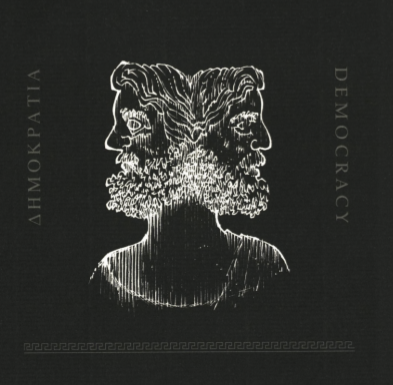 In a recent article Dr. Polyvia Parara made reference to a 2005 book by Mogens Herman Hansen, The Tradition of Ancient Greek Democracy and its Importance for Modern Democracy. It turns out this book is available online.
 The very useful Dutch sortition-focused blog Tegen Verkiezingen
  Dr. Polyvia Parara teaches Classics and Modern Greek Studies at the University of Maryland College Park. In



 Nathan Jack, an attorney in Salt Lake City, is a sortition advocate blogging at
  Modern Ghana
  Adam Cronkright
 Ali
Ali Ahmed R. Teleb
 avanderven
 avergne
 Alex Kovner
 azakaras
 Brett Hennig
 campbellwallace
 Simon Threlkeld
 Nick Coccoma
 codyhipskind
 Common Lot Sortitionist
 Conall Boyle
 constitutionalism
 davidschecter
 graytmatter
 gtridimas
 H.J. Hofkirchner
 Hanspeter Rosenlechner
 John Burnheim
 jgarry20151
 Jochen Krattenmacher
 johnedwardtaylor
 johnhuang865
 Jonathan Crock
 keithsutherland
 Jacob Richter
 kkoreilly
 lukewhito
 SimonPek
 Nathan El
 Nicholas Gruen
 Owen Shaffer
 Patrick Chalmers
 Paul Gölz
 peterstone
 Pierre-Etienne Vandamme
 pronfeld
 Emil
Emil rcaze
rcaze richwbrown
 Roger Knights
 roslynfuller
 Pierre-Etienne Vandamme
 shaharavin
 tbouricius
 Ted Wachtel
 Joshua Laferriere
 theodorestathis
 towardsautonomyblog
 Wayne Liebman
 Yoram Gat
 Oliver Milne
 Equality by lot