A practical and transparent method to sort

In this short post, I introduce a method that might interest readers from this blog. I present a practical method that randomly pick people without the need for a trustworthy third party. Before describing it in more details, I want to insist on its two main features.

The method is practical because it only requires a basic computer (a smartphone largely suffices). Computers cannot generate random numbers because they are deterministic, however they can produce long sequences of numbers that do not repeat themselves for a long time. If you don’t know how the computer generated sequence work it is difficult to predict the next outcome. The numbers in this sequence will constitute our set of random numbers.

How could we generate the set without a trustworthy party? A malevolent individual can let the computer run until they obtain the desired results. If you know the initial number of the sequence and how the sequence works the result becomes entirely deterministic. We call this number the seed and this number will entirely determine our set of random numbers. We use this property to generate an impossible to forge sorted list of members. But how do we pick this seed?

Our method uses a stock market index. This has two interesting properties, firstly it is impossible to predict (otherwise tell me so we can become rich fast :) and every market agrees on it. This guarantees true randomness. Secondly, everybody will be able to reproduce our sortition if they have the seed value, the member’s list and the script we used. This guarantees transparency and accessibility.

We will employ this method in our association (l’Association Française pour la Sortition) to constantly renew our board. I already wrote the code using the CAC40 index to perform this task, it is free, open-source and you can access it you can follow this link: https://framagit.org/PersonnePirate/sort.

Sicard: Replacing representative democracy with participative democracy is dangerous, Part 2/2

This is the second and final part of a translation of an article by Claude Sicard published in July 2020 in Le Figaro. The first part is here.

In order to put an end to the Gilets Jaunes revolt, Macron embarked in January 2019 upon what he called the “Great National Conversation”. This has consisted of organizing huge meetings in city halls with the participation of mayors and the local elected politicians, and urging the population to share their comments in person in during the meetings or through an online platform. Macron himself made many animated appearances in these meetings all over the country, which usually lasted more than four hours. Macron would take off his jacket and respond to all the questions addressed to him. Meetings took place in more than 10,000 municipalities, and 1.9 million comments were made. The “Great Conversation” was concluded with a press conference on April 25th, 2019. On that occasion Macron said: “I wished to meet you in order to draw the main lessons from the Great National Conversation and to propose to the nation directions for a new way that our citizens are looking for, a new way for our republic”. He has described the Great Conversation as “an unprecedented exercise for contemporary democracies”. This was therefore a mass popular consultation whose goal was to orient the actions of public institutions over the coming years.

That was followed by a second step. Following the coronavirus crisis, on May 25th, the “Health Conference at Ségur”. The crisis required great dedication from health professionals in order to make up for grave weaknesses of our public hospital system. It was therefore necessary to take their many demands into account without any further delay. Macron saw himself as forced to try to address as well as possible those demands, having been the first praise the exceptional dedication of the health personnel during the crisis, going as far as calling the first responders “national heros”. Macron initiated another great consultation, this time among 300 principal actor in the health sector. This was a second exercise, then, in participative democracy. The goal of this consultation was particularly ambitious. The prime minister defined it as follows in his opening speach: “To construct together the future of the hospital, to heal a system that was blocked and impoverished, and build a new health system organization in each territory”. The participants were given an incredibly short period for reforming our public health system: a month and a half at the most.
Continue reading

Reporterre: The members of the Citizen Climate Convention rebel against Macron, Part 3/3

This is the third and last part of a translation of an article published by Reporterre following the aftermath of the French Citizen Climate Convention. Part 1, Part 2.

The situation mystifies the citizens. “We were sent to the front because government has to take responsibility”, says Willaim Aucant. “For us it is out of the question to re-debate our measures. We simply want to explain to those measures to all the actors”, he explains. The task is not simple. “France in its totality” is much more discordant than the allotted “France in miniature”.

“We are getting to a time when the citizens are going to come to reassert themselves”

“The government’s strategy is very clever”, observes Yolande Bouin. “While the cameras are trained on 150 regular folks, the executive short-circuits government bodies and civil society. We find ourselves the only ones speaking on the issue and the environmental organizations are completely marginalized. It’s absurd! We would like to have the doors of the ministries open to the activists, they know much better than us about the climate!” She regrets “the lack of countervailing powers and of oversight to monitor the actions of the executive”. The balance of powers is tilted. “The government dominates the discussion”, she emphasizes. In the media, the comments of the ministers are picked up more often than those of the citizens. The voices of the Convention’s guarantors, Cyril Dion and Laurence Tubiana, who are increasingly critical of the government, and of political supporters, like Matthieu Orphelin and Éric Piolle, do not get heard either.

“We are tired”, admits Grégoire Fraty, former president of the Association of the 150. “This experience, enriching as it is, has lasted for over a year. We all have jobs, family lives, it is complicated to find times in the evenings and the weekends for meetings and lectures”, he says. “It’s good to be in the midst of it, but at the end of the month that’s not what puts food on our tables.”

The citizens have not official standing, no legal existence. This weakness has already been observed by several legal experts such as Arnaud Gossement. “It is necessary to create a legal status for engaged citizens”, says Grégoire Fraty. As of now the citizens remain waiting. “For the moment, we do not boycott and do not throw a fit, but we would like to see things said clearly, truthfully and plainly”, he says.
Continue reading

Reporterre: The members of the Citizen Climate Convention rebel against Macron, Part 2

This is the second part of a translation of an article published by Reporterre following the aftermath of the French Citizen Climate Convention. Part 1 is here.

There are some signs that the Convention is becoming an opposing force to the government. On October 14th about ten citizens, coming from all over the country, set up a protest in front the National Assembly. They protested nothing less than an “act of treason”. Yolande Bouin, who arrived early in the morning from Douarnenez (Brittany) was angrier than ever. In front of an audience of journalists and reporters she announced:

The government is openly jerking us around. I have the feeling of having participated in a big scam to greenwash the President and to buy him some time. Still, 4 or 5 million Euros have been spent on this.

One of her companions, Isabelle Robichon, said she has the impression “of being taken for a sidekick”. Pierre Ruscassie, another citizen, laments “this series of small steps of reversal”. A week before, the MPs of the coalition voted for a law that re-authorized the use of neonicotinoides and for an emergency law that sharply violated environmental rights. “It’s a mess”, says Matthieu Sanchez to Reporterre. “Right now, it’s like fireworks. We don’t know anymore where to look. Between the comments of some ministers and the anti-environmental laws, we can’t work in a reasonable manner anymore.”
Continue reading

Reporterre: The members of the Citizen Climate Convention rebel against Macron, Part 1

An article in Reporterre, original in French.

The members of the Citizen Climate Convention rebel against Macron
November 2, 2020
Gaspard d’Allens

Anger mounts among the members of the Citizen Climate Convention. Left to “face the lobbies” all by themselves, disappointed that many of their proposals have been thrown out or unraveled, some lose their energy, others do battle.

Promises oblige only those who believe them. The same is true for Emmanuel Macron’s commitments. It seems so long ago that the President has talked, with great gusto, in the gardens of the Élysée about the climate crisis and the adoption “without filtering” of 146 out of the 149 measures of the Citizen Climate Convention. “I want to have all your proposals implemented as soon as possible. Let’s go! Let’s act!”, he exclaimed to the sustained applause of the citizens, reburnishing, on the cheap, his environmental credentials.

Four months later, however, the ground covered is limited and motion has nearly stopped. Discussion of the bill handling the proposals of the CCC was postponed to next year instead of being discussed this fall. The idea of a constitutional referendum has disappeared and many proposals were dismissed or watered down. Time is passing and opportunities are lost. The stimulus plan and the financing bill could in fact have included the Convention’s measures but they did not.
Continue reading

Voting is a Community Right

In an election day post, I discuss how traditional voting and sortition can be viewed as aspects of the same right. Unifying both is the need to reverse the burden of action: while voting requires citizens to decide to vote, sortition requires proper authorities to find participants. Instead, voting in democracies now should require electoral authorities to obtain a valid vote from everyone who is eligible. At that point, calling random juries and assemblies will be a breeze.

Documentary: “Citizen Power: More Direct Democracy?”

Last week, a German documentary about their citizens’ assembly on “improving representative democracy,” which took place in Leipzig over two weekends in Sept. 2019, aired on MDR in Saxony and will air in other regions later. Bürger. Macht. – Mehr direkte Demokratie? is also available on YouTube in its entirety.
The film crew recorded the four days of deliberation at one of the 23 small group tables (table #20 I believe) in addition to the plenaries and the presentation of the “citizens’ recommendations” to parliamentary representatives two months later. The documentary profiled about half a dozen participants from different walks of life, interviewing them in their homes in the weeks following the Assembly. The facilitator at the table filmed was definitely one of the most experienced and probably one of the most effective, from my own observation of the event. That said, the particular group at each particular table was changed via lottery at the beginning of each day.

The style of the documentary is rather understated, and it does not take a position on the future role of CA’s, lotteries, or direct democracy–rather the polar opposite of a heavy handed Michael Moore film.

Of interest to Kleroterians might be the short “tutorial” about Athenian democracy at minute 19:00, a warning about the abuse of referenda during the NS era at 52:00, and the summary of the Irish Assembly at 1:03:30. A journalist hyper skeptical of citizens’ assemblies, lotteries, and “more participation” generally appears at 43:00 along with most of the talk he gave to the “Buergerrat” assembly. At 1:16:00, find drone footage of the installation art / performance “Democracy for Future” which took place on November 15, 2019 outside the Reichstag, shortly before participants from the Leipzig assembly (lot-based) and the regional conferences (self selected) met representatives from the six major parties in the Bundestag along with the Bundestag’s President in a half-day event.

As of now, I don’t know of subtitles other than in German, but will post here if that comes to my attention. Overall, I think the documentary does captures the overall mood of the assembly and what one of the better table discussions looked like.

Does anyone know of a similar documentary about either the Irish Assembly or the French Climate Convention, or any other recent CA for that matter?

Belgiorno-Nettis: There’s a problem with elections

Luca Belgiorno-Nettis, the founder and director of the newDemocracy​ Foundation, takes the opportunity of US elections day to propose sortition to the readers of The Sydney Morning Herald. Belgiorno-Nettis recounts Australia’s historical record of electoralist innovation.

Australia led the world in democratic innovations throughout the 19th century, beginning with the secret ballot, the first independent electoral commission, and then compulsory and preferential voting. […] New Zealand is often heralded as pioneering the vote for women, but it was Australia that also enabled women to stand for office – 20 years ahead of the Kiwis. The American political scientist Louise Overacker wrote in 1952: “No modern democracy has shown greater readiness to experiment than Australia.”

He then offers the adoption of sortition as continuing this trend:

[W]e need to go further. In 2017 the former secretary-general of the United Nations, Kofi Annan, said: “We need to make our democracies more inclusive. This requires bold and innovative reforms to bring the young, the poor and minorities into the political system. An interesting idea would be to reintroduce the ancient Greek practice of selecting parliaments by lot instead of election. In other words, parliamentarians would no longer be nominated by political parties, but chosen at random for a limited term, in the way many jury systems work. This would prevent the formation of self-serving and self-perpetuating political classes disconnected from their electorates.”
Continue reading

Random Selection for the Supreme Court

In an opinion piece in The New York Times, Yale law student Melody Wang lays out an extremely cogent argument for random selection in choosing cases. She emphasizes the power of random selection to prevent corrupt practices, and to focus advocates on directing their arguments to the general good, rather than to specific decision makers.

Claude Sicard: Replacing representative democracy with participative democracy is dangerous, Part 1

A translation of an article from Le Figaro.

Replacing representative democracy with participative democracy is dangerous
Claude Sicard, economist and international consultant
July 6, 2020

Seeing his popularity ratings decline, Emmanuel Macron appeals to the French people for a reform. For this economist, the head of state’s seemingly bright idea is a mistake because making decisions concerning the future of a country requires thorough study and the assistance of experts.

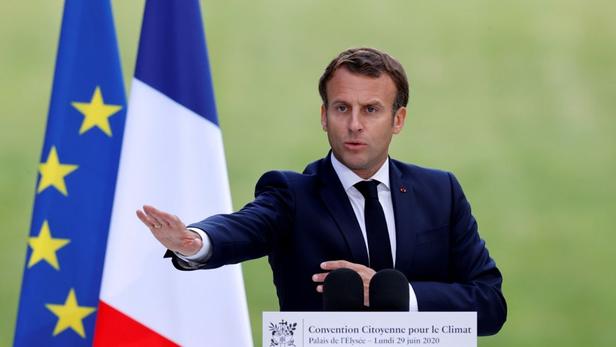
Macron at the Citizen Convention for the Climate at the Élysée, June 29, 2020.

The distance in our country between civil society and the institutions never stops increasing. In every democratic system it is the law that the majority prevails: the dominant fraction imposes its will on the minority, and the electoral moment is decisive for the duration of the mandate of the elected representatives. These principles are increasingly questioned these days. Minorities are increasingly unwilling not to be heard, and moreover they too often observe that the elected do not always have the virtues which they claimed to have during the campaign. Pierre Rosanvallon, a noted researcher of democracy, tells us that we are seeing in our modern democracies the rise of the “people as a judge”. The “monitoring citizen”, he says, is replacing the “voting citizen”. In this way a tendency has developed in our modern societies toward the creation of “counter-democracies”.

CEVIPOF surveys confirm this claim: 70% of the French think that in our country democracy “does not function very well”, and assert that they have no confidence in the ability of members of parliament to address issues that the country is facing. The American political scientist Yascha Mounk, a Harvard professor, writes in his book The People vs. Democracy published in 2018 that “in North America and in Western Europe, a growing number of citizens are turning their backs on democracy: they are feeling that they have less and less influence over political decisions”.
Continue reading