Posted on May 4, 2024 by Yoram Gat
 Cristina Lafont, Professor of Philosophy at Northwestern University, presents her anti-sortition position as being based on participationist ideology. In a debate with Brett Hennig and Samuel Bagg, which took place in August 2022, Lafont initially makes the standard participationist arguments:
[T]he very idea of having something like a lottocracy, where we change the political system, my main concern is it is not democratic. It is a way of empowering the few, the very few the tiny, tiny few randomly selected people to do the thinking and the deciding for the rest of the citizenry. Whereas the citizens really are just supposed to blindly defer to whatever decisions they make. They have no formal tools of holding them accountable or of collectively shaping which political agenda we are going to have. They just can only blindly refer to whatever those very few people decide, and to me, that is really not democratic. Blind deference is quintessentially a non-democratic relationship of political inequality where you have just decision makers who are not accountable, they can decide anyway they like as they see fit, and then you have people who just follow and obey and have no other way of shaping their decisions. That’s my main concern.
Continue reading →
Filed under: Academia, Elections, Participation, Sortition | 140 Comments »
Posted on April 28, 2024 by Yoram Gat

The French discussion of “participative democracy” has recently produced several texts expressing suspicion of the way “participative devices” are being used by government to produce supposedly democratic outcomes.
Guillaume Gourgues writes in la vie des idées:
By setting up citizen consultations that it selects and organizes itself, the State sidesteps democratic procedures and institutions. There is the risk of a gradual drift towards a form of “participatory authoritarianism”.
On March 22, 2023, as he began his speech in the face of protests over pension reform, Emmanuel Macron defended the legitimacy of his reform by affirming that it followed a “democratic path” which began with “months of consultation”.
The claim of having followed a “democratic path” by the President, punctuated by regular reminders of “consultation” and “participation” mechanisms, is perplexing, as the political conduct of pension reform is obviously marked by the choice to reduce democratic debate to its strict minimum.
[This choice is highlighted when,] in the shadow of the pension reform, the citizens’ convention on the end of life, convened by the government, delivered its final opinion on April 2, 2023, after three months of deliberation.
Continue reading →
Filed under: Academia, Books, Elections, Participation, Press, Sortition | 2 Comments »
Posted on April 25, 2024 by Yoram Gat
Roger Hallam, co-founder of Extinction Rebellion, writes:
This week in the Portuguese elections, the far right surged to 18% of the vote while the two main parties collapsed to around 25% each. This is now a pattern across western democracies. The collapse in support of the centre left and centre right and the rise of the populist left and right forces. At the moment, the momentum is with the radical right.
The conventional wisdom of the liberal political class, as shown in endless opinion articles, is that the centre right and left have to, in various unspecified ways, get their act together and stop the rise of the extremes. “Will Europe ever learn?”, one Guardian article writes. What does that actually mean apart from a vague appeal for people to be nice?
It is vague because there is, in fact, no effective structural response to the rise of the political outsiders. Both the centre right and centre left are ideologically committed to an international neo-liberal regime that systematically undermines the incomes and the identities of the majority. This international regime has also shown itself incapable of fulfilling its first political duty: to protect the lives and livelihoods of the people. The elites pouring more carbon in the air will now take us over 2C.
Continue reading →
Filed under: Elections, Sortition | Tagged: Climate | Leave a comment »
Posted on April 12, 2024 by Yoram Gat
 Phil Wilson, a retired mental health worker, makes a pretty good, as well as entertaining, case for sortition on Resilience.org. Some excerpts are below, but the entire piece is pretty well written.
Invasion of the Body Snatchers: Can Sortition Save Us From the Zombies of Extinction?
If, like me, you live in the brain consuming fog of American culture, you might never have heard of sortition. Randomly selected citizens rather than ruling class proxies will make the important decisions in a future society that chooses to employ sortition as its fundamental political philosophy.
We need sortition to replace the poisonous, deformed contraption that we bizarrely call democracy. Let me try to explain.
Any available elective office summons demons, fiends and gargoyles from the burning sewage pits of hell – things with eyes pulsating, greedy and murderous. We want to keep these monsters calmly interred beneath the soil, and that can only occur if voting is treated like small pox.
Look at the wreckage surrounding us. We voted for it.
Most people who seek power in any political system are mentally deformed and broken – these are the people we try not to marry or even sit near at the pub, but we elect them with barely a thought.
We can’t have anarchy – we need a way to gather benign bureaucrats and harmless functionaries. We have seats in congress, seats in the senate, chairpersons and committee seats, and there has to be a method, other than voting for batshit, flaming, spirits of death – chosen by corporate goons. We need to simply match chairs with rumps. Give us body snatchers – blind ones with big nets.
Continue reading →
Filed under: Elections, Press, Sortition | 2 Comments »
Posted on April 10, 2024 by Yoram Gat

A few days ago, the Portland Press Herald published a bold, “completely original” plan for city government, about which “political philosophers will be writing for millennia”. Sortition is an important part of this plan.
First, competitive elections will be abolished. No more “vote for me.” No more sloganeering. No more name recognition. Instead of popularity contests, members of every representative office in our city will be elected by sortition, or through a lottery system, with officials chosen at random for a term of one year. We will have 66 districts, each containing roughly 1,000 people. This will make our city a true government of the people. The mechanics of election-by-sortition are simple: An algorithm will randomly select a name from the city’s draft rolls.
Next, we are proposing a tricameral system of government: a 66-person Popular Assembly of Legislative Supremacy (“PALS”), a House of Landlords and Yeomanry (“HOLY”) and a three-person Supreme High-most Unlimited Council of Knowledge Systems (“SHUCKS Troika”). Our nine-person City Council will be gone. So will be our city manager. All three new branches have key roles, but the PALS shall be our chief lawmaking and deliberative body.
Sortition shall select the members of the 66-person PALS branch. The idea is simple: It could be you. PALS will be a raucous parliament made up of average citizens, all chosen at random.
Filed under: Elections, Fiction, Press, Proposals, Sortition | 4 Comments »
Posted on April 1, 2024 by Yoram Gat

Gillian Dymond writes in The Conservative Woman:
AN article in the online publication Civil Service World last February announced that former civil servant Sue Gray is working with Labour on plans to introduce citizens’ assemblies should the party, as is likely, win the next election. These assemblies are very much in vogue, with recent examples having allegedly helped secure ‘yes’ votes for abortion and gay marriage in the Irish Republic. The less enthusiastic amongst us, however, might conclude that they are just another charade to be played out within the parameters of permitted debate, with a view to ensuring, in the words of Nick Cohen back in 1999, that ‘the public can only want what the public gets’.
Choice of subject matter is only one of the many ways in which citizens’ assemblies may be subverted and controlled.
How, for instance, are the questions put to participants chosen, and what are the implications of the wording in which they are framed?
Continue reading →
Filed under: Applications, Press, Sortition | 6 Comments »
Posted on March 25, 2024 by Yoram Gat
This post is a transcript of a discussion that has been going on in email over the last few days. I suggested that we continue this on Equality-by-Lot so more people can respond if interested, and so that a public record is produced which can later be referred to. All are invited to continue the discussion in the comments thread.
The discussion was part of a longer thread, but the transcript starts with the following message from Chris Forman:
I’m leaning to the premise that it’s the sum of the daily interactions between people that adds up to the behavior of society writ large. The purpose of lotteries and deliberation is to build connectivity and relationships from which good policy flows.
A simple plan to transform US society is to hold social events with a lottery element in them. I think simply connecting random people in local communities and supporting those connection meetups with well structured events and follow up activities could be a recipe that many many civic organizations could get behind.
Could be a really useful tool for organizations trying to reach broader demographics while training people in the value of lotteries, and building up support for lotteries through direct experiences.
Could transform society.
I replied:
Meeting with random people could be fun (although it could also be tedious). But the notion that mass participation is by itself a path to democracy is unconvincing. It ignores the fact that governance takes structure. Our current non-democratic government is based on structure, and democratic government would also require structure.
Continue reading →
Filed under: Deliberation, Participation, Sortition | 134 Comments »
Posted on March 23, 2024 by Yoram Gat
A referendum in Ireland on March 8 resulted in a “no” vote for constitutional changes. The rejected proposals were the product of a process involving an allotted citizen assembly. An article by Rory Carroll in the The Guardian offers an illuminating review of the aftermath of the failure of the proposed changes at the polls.
Irish referendum fiasco puts future of lauded citizens’ assemblies in doubt
Debates involving 99 randomly selected people were hailed as a model for the world, but some say faith has been eroded
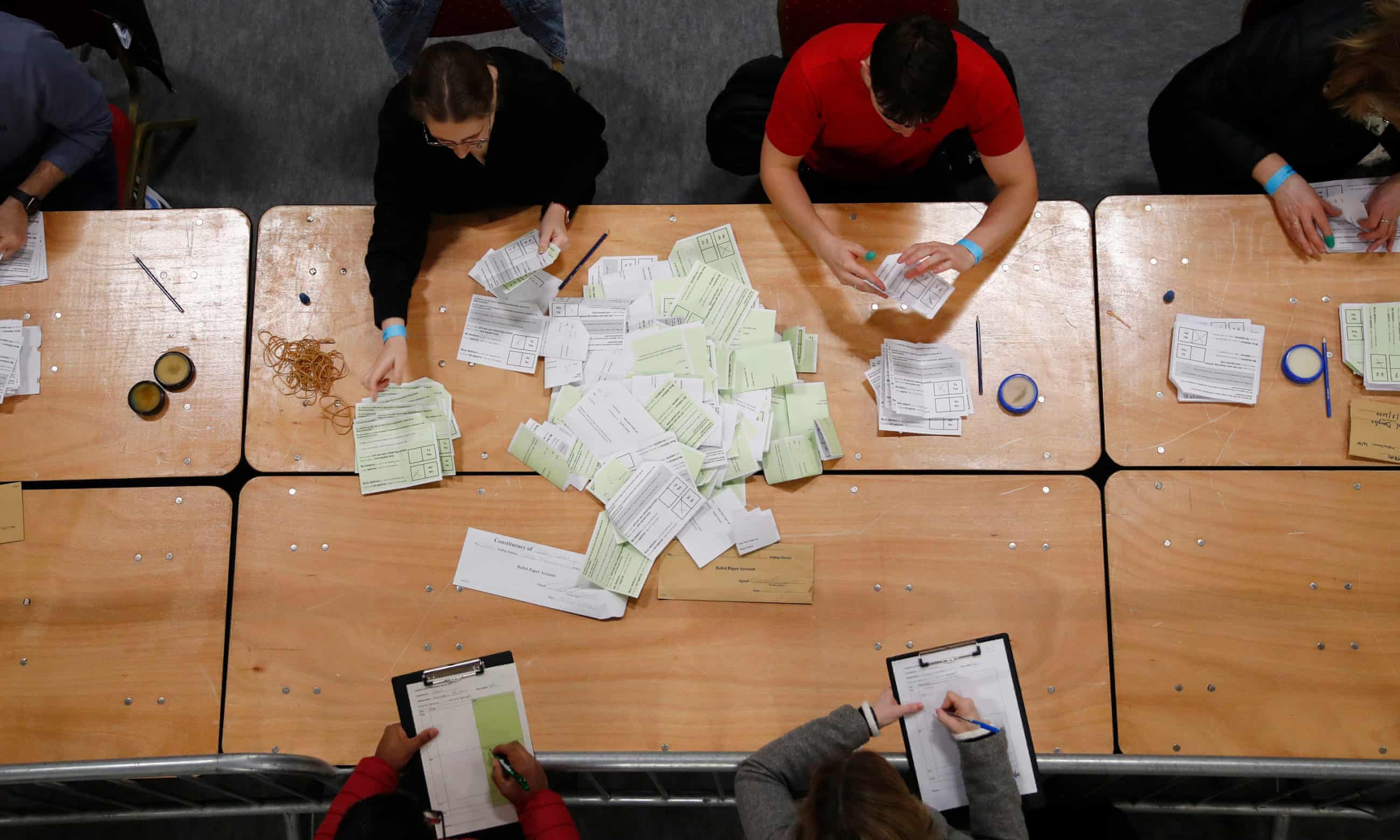
When Ireland shattered its history of social conservatism by passing a 2015 referendum on same-sex marriage and a 2018 referendum on abortion, progressives credited its citizens’ assembly.
Ninety-nine randomly selected people, who are brought together to debate a specific issue, had weighed evidence from experts and issued policy recommendations that emboldened the political establishment, and voters, to make audacious leaps.
Governments and campaigners around the world hailed Ireland as a model for how to tackle divisive issues and a modern incarnation of the concept of deliberative democracy that dated back to ancient Athens.
Continue reading →
Filed under: Applications, Press, Sortition | 21 Comments »
Posted on March 20, 2024 by Yoram Gat
Fortune tells the story of Marlene Engelhorn who is busy dispensing with €25 million which she inherited.
Engelhorn settled on an idea: Let 50 strangers decide how to give it away.
Those strangers, all of whom live in Engelhorn’s native Austria, will meet for the first time this weekend at a hotel in Salzburg. Dubbed the Guter Rat, or Good Council, they were chosen through a statistical process run by research group Foresight and range in location, age, race, socioeconomic background and other demographic factors chosen in an effort to be representative of the overall Austrian population.
Engelhorn’s goal is not only to give away €25 million, but also to spark conversations on wealth inequality. She’s frustrated that her windfall wasn’t taxed — Austria eliminated its inheritance tax in 2008 — and doesn’t see traditional philanthropy as a good solution because it still gives her too much power.
“I’m just one brain, I’m just one person and so to me, this is a huge relief knowing that the process of redistribution is much more legitimate and thorough and democratic than I could ever do it,” she said in an interview. “Nobody needs another foundation.”
Continue reading →
Filed under: Applications, Press, Sortition | 2 Comments »
Posted on March 19, 2024 by Yoram Gat
 Continuing what is a bit of a tradition, Evan Tao, a Brown University student, proposes employing sortition to select student government at Brown.
Over the past decade, many countries have held citizens’ assemblies in which citizens are randomly selected to deliberate and make policy recommendations to legislators. Hundreds of these assemblies have been held around the world with great success. An Irish citizens’ assembly’s proposal to legalize abortion was sent to a national referendum; in France, an assembly submitted recommendations on combating climate change to the incumbent government. Citizens’ assemblies can be effective pilot programs, proving to the public that sortition works. Ideally, they will become regularized and eventually hold direct legislative power in local government.
If I’ve convinced you that lotteries are preferable to elections, and you’re wondering what to do about it, we can start right here at Brown. Our student government election process has room for improvement. I don’t know about you, but I only voted for the people who asked me to or who had cute posters, neither of which seem like a good indication of the best future leader. Voter turnout in the class of 2026 first-year elections was only 33.5 percent. And, as we saw with the recent Undergraduate Finance Board budget surplus fiasco, who our student government representatives are matters. Let’s make it an opt-in lottery at Brown—and then take it to the rest of the country.
Filed under: Academia, Press, Proposals | Tagged: Student government | 9 Comments »


 Adam Cronkright
 Ali
Ali Ahmed R. Teleb
 avanderven
 avergne
 Alex Kovner
 azakaras
 Brett Hennig
 campbellwallace
 Simon Threlkeld
 Nick Coccoma
 codyhipskind
 Common Lot Sortitionist
 Conall Boyle
 constitutionalism
 davidschecter
 graytmatter
 gtridimas
 H.J. Hofkirchner
 Hanspeter Rosenlechner
 James Kierstead
 John Burnheim
 jgarry20151
 Jochen Krattenmacher
 johnedwardtaylor
 johnhuang865
 Jonathan Crock
 keithsutherland
 Jacob Richter
 kkoreilly
 lukewhito
 SimonPek
 Nathan El
 Nicholas Gruen
 Owen Shaffer
 Patrick Chalmers
 Paul Gölz
 peterstone
 Pierre-Etienne Vandamme
 pronfeld
 Emil
Emil rcaze
rcaze richwbrown
 Roger Knights
 roslynfuller
 Pierre-Etienne Vandamme
 shaharavin
 tbouricius
 Ted Wachtel
 Joshua Laferriere
 theodorestathis
 towardsautonomyblog
 Wayne Liebman
 Yoram Gat
 Oliver Milne
 Equality by lot