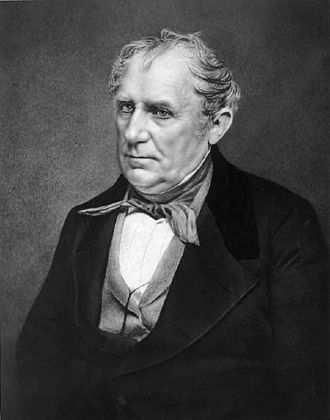
Rancière: The scandal of sortition

The second chapter of Jacques Rancière’s Hatred of Democracy (2005), “Politics, or the Lost Shepherd”, contains a fairly long discussion of sortition and its relation to democracy. The following paragraph is from page 41 of the English translation:

The scandal [of sortition] is simply the following: among the titles for governing there is one that breaks the chain, a title that refutes itself: the [Plato’s] seventh title is the absence of title. Such is the most profound trouble signified by the word democracy. It’s not a question here of a great howling animal, a proud ass, or an individual pursuing pleasure for his or her own sake. Rather is it clearly apparent that these images are ways of concealing the heart of the problem. Democracy is not the whim of children, slaves, or animals. It is the whim of a god, that of chance, which is of such a nature that it is ruined as a principle of legitimacy. Democratic excess does not have anything to do with a supposed consumptive madness. It is simply the dissolving of any standard by which nature could give its law to communitarian artifice via the relations of authority that structure the social body. The scandal lies in the disjoining of entitlements to govern from any analogy to those that order social relations, from any analogy between human convention and the order of nature. It is the scandal of a superiority based on no other title than the very absence of superiority.

This is somewhat reminiscent of the “blind break” argument for sortition (by eliminating all reasons for selection, bad reasons are eliminated as well). Later on, for example, Rancière emphasizes the fact that when using sortition seeking power is not a prerequisite to attaining it. But the tone here is quite different. The emphasis is on rejecting traditional or “natural” reasons, reasons that dominate social relations throughout, reasons that justify the elevated status of established elites. It is the rejection of those traditional reasons that scandalizes those elites, as well as many among the masses who have internalized the justness or naturalness of those “distinctions”.

Larry Bartels wants democratic theory to focus on elites

Larry Bartels is an American political scientist. In 2016 he published, together with Christopher Achen, the book Democracy for Realists: Why Elections Do Not Produce Responsive Government, in which the authors argued that voters can’t really tell what’s good for themselves. One possible takeaway from this argument could have been that elections are not a democratic mechanism. A recent interview with Bartels, on the occasion of the publication of a new book of his, indicates that he draws a very different conclusion. Bartels gives up on the people altogether (“they are what they are”) and wants to focus democratic theory on the behavior of elites.

I think what we need is a theory of democracy that has some real understanding of, on one hand, the inevitable power and leeway of political elites and, on the other hand, the goals they should strive to achieve when they exercise that power. Much of our thinking about democracy is very focused on ordinary citizens and what they should or shouldn’t be doing in their role in the process.

I’ve come increasingly to think that that’s a futile exercise. Ordinary people are pretty much what they are. We have a pretty good sense of how they behave. There are a lot of commonalities in their behavior across political systems with different cultures and different institutions. In all those places, regardless of the role of citizens, it’s the political leaders who really call the shots. So what we need is a better understanding of what democratic leadership entails, and how institutions can be made not to ensure, but at least to increase the probability that leaders will govern in enlightened ways, and on behalf of the interests of ordinary citizens.

Bartels ends on an overtly aristocratic note, where, perhaps taking a page from the Chinese, he wants to cultivate better elites. But at the same time he is overtly pessimistic and warns his audience that we should not expect too much from democracy.

[W]hat would a better system of democracy look like? I don’t have the answer to that. I do have the sense that we tend to focus too much on trying to avoid every conceivable threat to democracy and to imagine that if only we got the system and the rules right, that the system would operate happily in perpetuity. I think in reality there’s a huge gray area between democracy and autocracy, and lots of different dimensions in which democracies perform better or worse. Maybe the sense that a lot of people in the U.S. and elsewhere have now that we’re in a period of crisis is a belated recognition that democracy in all times and places is partial and risky and chancy.

[W]hat we really have to focus on is how we can socialize leaders to want the right things, and constrain them to avoid the worst excesses of misuse of power in political systems.

Rangoni, Bedock, and Talukder: MPs’ discourses on deliberative mini-publics

A 2021 paper in Acta Politica by Sacha Rangoni, Camille Bedock, David Talukder analyzes interviews made with French-speaking Belgian politicians on the subject of policy making citizen bodies (which they call Deliberative Minipublics, or DMPs). A large majority among the interviewees is in favor of consultative citizen bodies, either allotted or self-selected, a minority is in favor of bodies with binding decision making powers, and a small minority (all men, it turns out) is against both.

More competent thus more legitimate? MPs’ discourses on deliberative mini-publics

Abstract: MPs face a dilemma when it comes to deliberative mini-publics (DMPs): in a context of distrust they may see it as an opportunity to re-legitimize themselves and solve complex policy issues. But it could also challenge the quasi-monopoly they used to have on political decisions and undermine the role of the Parliament and the primacy of elections. The article is founded on 91 face-to-face interviews with French-speaking Belgian MPs sitting in federal or regional parliaments. First, we describe the profile of supporters of DMPs. We then identify three ideal-typical discourses: the power-sharing discourse, the consultative discourse, and the elitist discourse. The contribution of this article is twofold. First, it analyzes the argumentative frames used by MPs to assess deliberative mini-publics using a large number of interviews. Second, it demonstrates that their discourses depend on their evaluation of ordinary citizens’ competence to participate and on their resulting vision of representation. Political actors mainly perceive DMPs as power-sharing instruments that would alter their elected position and the legitimacy of the election.

Table 2 in the paper summarizes the positions associated with the three types discourse regarding allotted bodies:
Continue reading

Where does the legitimacy of citizen conventions come from?

Clément Viktorovitch for France Info, April 2023 [Original in French].

Where does the legitimacy of citizen conventions come from?

In France we have already had two citizen conventions: the first in 2020, dealing with the climate, the second very recently, dealing with end-of-life issues. But where does legitimacy of such institutions come from? Why should we trust 150 allotted citizens?

This question is fundamental: citizen conventions are being established, in France and abroad, as a component of representative democracies. Let’s quickly recall the procedure: draw at random several dozens, or even hundreds of individuals, who then meet regularly, for several months, until they formulate their recommendations on the question with which they are dealing. This is what we would like to clarify. Why should we accept that a handful of citizens, selected by chance, would be vested with the power to influence the decisions on subjects that concern all, without us being able to say a word about it, whereas we already have our elected bodies?
Continue reading

A poll finds a plurality of Britons support an allotted House of Lords

A story in the Byline Times.

The Idea to Overhaul the House of Lords that Politicians Aren’t Talking About

YouGov polling suggests strong potential support across the board for a very different chamber to replace the House of Lords

Josiah Mortimer
28 June 2023

There is significant public support for overhauling the House of Lords in a way that is almost never discussed in political debate, according to a newly published poll.

YouGov, commissioned by the Sortition Foundation – a social enterprise which campaigns for greater use of citizens’ assemblies – has shed some new light on public opinion regarding Lords reform.

Typically, the debate is about moving to an elected second chamber – for instance, using a proportional voting system to more fairly reflect how the public vote than under the Commons’ winner-takes-all ‘First Past the Post’ system. Others suggest an ‘indirectly’ elected house, whereby council leaders or regional mayors would fill a new Senate of the Nations and Regions.

The latter idea stems largely out of fears of a directly-elected second chamber simply replicating the House of Commons, or ‘worse’ in their eyes, having more legitimacy and therefore power over MPs.

But the Sortition poll adds another option for the first time: replacing the Lords with a permanent citizens’ assembly made up of ordinary people, reflective of the UK population.

Out of the options presented for the future of the Lords, this was the most popular with 23% of public support. The idea came top among all major party supporters (bar Liberal Democrats, who marginally prefer an elected second chamber).
Continue reading

Psychologizing the electoralist phenomenon

Steve Taylor, a Senior Lecturer in Psychology at Leeds Beckett University wrote a piece in The Conversation offering his explanation for trouble with the electorlist system. Taylor writes:

The ancient Greeks practised direct democracy. It literally was “people power”. And they took measures specifically to ensure that ruthless, narcissistic people were unable to dominate politics.

Recent political events show that we have a great deal to learn from the Athenians. Arguably, a key problem in modern times is that we aren’t stringent enough about the people we allow to become politicians.

There’s a great deal of research showing that people with negative personality traits, such as narcissism, ruthlessness, amorality or a lack of empathy and conscience, are attracted to high-status roles, including politics.

In a representative democracy, therefore, the people who put themselves forward as representatives include a sizeable proportion of people with disordered personalities – people who crave power because of their malevolent traits.
Continue reading

Wallonia: A first citizen commission to discuss democracy

An article by Eric Deffet published in Belgian Le Soir on June 14th, 2023.

The Walloon parliament has approved the creation of a first deliberative commission with a mix of allotted citizens and elected officials. Creating a mirror-in-mirror situation, this commission will discuss… the creation of a permanent commission to serve alongside the legislature.

Several years after Brussels, Wallonia is getting ready to launch its own experimentation with a first deliberative commission mixing elected officials and allotted citizens. The legal framework has long existed and the green light for a real life test has been given on Wednesday in the assembly. It responds to demands for citizen participation and transparency following the revelations on the dysfunction of the regional parliament. The participants will be drawn from the National Register: 30 citizens and as many additional fill-ins, who will have to represent the Walloon population.
Continue reading

Peter Jones: The lost art of persuasion

In his column “Ancient and Modern” published in the Spectator Australia, Peter Jones warns his readers against the “Maoist re-education” of the young, generated by the “cancellation” tactics wielded by those “urging gender changes on children who rather feel like it”. In the process, Jones gives his readers a sketch of the Athenian system, including its reliance on sortition, presenting it as a model of good government, where policy was decided based on debate, persuasion and “peaceful agreement”, rather than the outrageous tactics he decries.

Despite mentioning selection by lot, Jones ignores the role of the allotted Council in Athenian politics. When talking about “the all-powerful Assembly” Jones does not consider the question of whether this Assembly in reality provided an arena where isegoria was more than a formality. It also remains unclear whether Jones advocates for the radical change that would be required in order to turn the Western political system into something that is more akin to the Athenian system and providing “more political control over tyrants and oligarchs”. His focus on activists causing an “uproar and silently glueing [themselves] to tarmac” may indicate that leaving those aside we are already living in a system which embodies the ideals of democracy. An off-handed comment about the “rights” of free speech being “rescindable” may also provide a hint regarding Jones’s mindset.

What would ancient Greeks have made of the current protests relating to the oil industry and identity reassignment? Very little indeed.

The Greek invention of democracy (‘people power’) emerged in the late 6th century bc after strong popular demand for more political control over tyrants and oligarchs. The result was a system in which all male citizens over 18 debated and determined all political questions in the regular Assemblies. Most official posts were held, usually for one year, by citizens who presented themselves for selection by lot (voting was considered meritocratic, not democratic), with serious consequences for failure.
Continue reading

Malkin on Greek allotment

Irad Malkin is a prominent Israeli classicist. He has already been mentioned twice on Equality by Lot, when in 2013 and 2014 he penned op-ed pieces advocating for the use of sortition as a tool of democracy. It seems that lottery and its role in Ancient Greek society has become Malkin’s main focus of research over the last few years. The product of this research is a forthcoming book called “Greeks Drawing Lots: from Egalitarianism to Democracy”.

A first taste of Malkin’s research is already available in the form of a chapter in a book published last year edited by Sofia Greaves and Andrew Wallace-Hadrill and titled “Rome and the Colonial City: Rethinking the Grid”. The chapter written by Malkin is called “Reflections on egalitarianism and the foundation of Greek poleis“. It opens as follows:

When Greeks founded new settlements, they were facing the question of how to distribute plots of land to individual settlers. The main reason individuals joined a new foundation was to get such a plot of land (klêros), regardless of other reasons for colonisation. Back home, two brothers would need to share a klêros through partible inheritance by lot. However, if one brother stayed and another left for a new settlement abroad, both would have ended up, each, with a viable klêros. In and of itself, a klêros provides a basis for livelihood and a mutually recognised share of political and military power within the community. Practices of Greek colonisation are parallel to the Greek practice of ‘partible inheritance by lot’, since the same general principles and structures apply to both when it comes to land distribution: equality before the chance of the lottery, and, when possible, equality (sometimes equitability) of the size of the klêros.

From this we learn, if I understand correctly, that (like the English word “lot”?!) the word “klêros”, as in the randomizing machine “klêroterion”, meant in the first place a piece of fertile land, and the use of this word for randomization is derived from the custom of using the lottery for the distribution of such lands.

Malkin’s main thesis appears to be that the lottery was an embodiment of an egalitarian ideology. This ideology was especially influential in newly established colonies was in competition with oligarchization trends in more established settlements. It is this ideology that eventually, over the course of hundreds of years, developed into the Greek democracy.
Continue reading

Martin Wolf: Citizens’ juries can help fix democracy

Sortition has found a fairly prominent advocate in the Financial Times‘s Martin Wolf. Wolf was introduced to the idea by Nicholas Gruen and is highly influenced by him. Wolf has written a book offering sortition as a solution to “ailing Western polities”. His prominent position and impeccable institutional credentials make him possibly the most prominent promoter of sortition in the Anglophone world.

Wolf is now repeating his argument in an article in the Financial Times. In particular he is implying that the “failure” of Brexit would not have happened if the decision whether to leave or remain were made by an allotted body. But Wolf goes farther and proposes a permanent allotted chamber with not insignificant powers.

“Brexit has failed.” This is now the view of Nigel Farage, the man who arguably bears more responsibility for the UK’s decision to leave the EU than anybody else. He is right, not because the Tories messed it up, as he thinks, but because it was bound to go wrong. The question is why the country made this mistake. The answer is that our democratic processes do not work very well. Adding referendums to elections does not solve the problem. But adding citizens’ assemblies might.

In my book, The Crisis of Democratic Capitalism, I follow the Australian economist Nicholas Gruen in arguing for the addition of citizens’ assemblies or citizens’ juries. These would insert an important element of ancient Greek democracy into the parliamentary tradition.
Continue reading