Achen and Bartels: Democracy for Realists: Why Elections Do Not Produce Responsive Government

Via Garreth McDaid.

Political scientists Christopher Achen and Larry Bartels have a new book, Democracy for Realists: Why Elections Do Not Produce Responsive Government.

I have not read the book. Chapter 1 is available online, and it certainly makes for some interesting reading. Some comments following reading that first chapter:

(1) It seems that despite their critique of electoralism the authors are not ready to abandon it. At some point they seem to indicate that they cannot imagine something better when they opine that “[n]o existing government comes close to meeting all of Dahl’s criteria [for democracy]; in our view, no possible government could.” The book’s objective seems purely analytical: to produce “a democratic theory worthy of serious social influence [which] must engage with the findings of modern social science.”

(2) The book appears to adopt the conventional electoralist terminology which makes no clear distinction between electoralism and democracy. The authors should have known better.

(3) “Democracy for realists” seems to largely retrace the elitist democratic theories which rose to prominence in political science in the third quarter of the 20th century. Indeed Joseph Schumpeter and Walter Lippmann – leading propounders of those ideas – make a prominent appearance in the first chapter. Those theories fell out of fashion when, after the civil rights struggles, dominant ideology changed and became incompatible with their conclusions. It may be that the main innovation of the book is not in “engaging with the findings of modern social science”, but in being willing to (re)acknowledge the (now-)inconvenient truths that were buried over the last 40 years or so. In that, the book seems to be very much a product of current politics.

Excerpt:

In the conventional view, democracy begins with the voters. Ordinary people have preferences about what their government should do. They choose leaders who will do those things, or they enact their preferences directly in referendums. In either case, what the majority wants becomes government policy — a highly attractive prospect in light of most human experience with governments. Democracy makes the people the rulers, and legitimacy derives from their consent. In Abraham Lincoln’s stirring words from the Gettysburg Address, democratic government is “of the people, by the people, and for the people.” That way of thinking about democracy has passed into everyday wisdom, not just in the United States but in a great many other countries around the globe. It constitutes a kind of “folk theory” of democracy, a set of accessible, appealing ideas assuring people that they live under an ethically defensible form of government that has their interests at heart.
Continue reading

Rousseau’s Mistake

A recent article by Hélène Landemore:

Rousseau’s Mistake: Representation and the Myth of Direct Democracy

Abstract: For Rousseau, democracy was direct or it wasn’t. As he famously put it, “the moment a people allows itself to be represented, it is no longer free: it no longer exists. The day you elect representatives is the day you lose your freedom” (Social Contract, III, 15). In other words, representative democracy is no democracy at all. Rousseau isn’t alone in this belief, and today the disappointed of representative government have turned to celebrating anew the virtues of direct democracy as more true to the ideal of popular sovereignty, self-rule, and genuine political equality. This paper defends the thesis that Rousseau was, in fact, mistaken and that there is no salvation to be found in the ideal of direct democracy. If democracy as a political regime is always, in fact, representative, then the interesting question is not: direct or representative democracy? But instead: What kind of representation should we aim for? The paper argues that beyond the familiar electoral model there are at least two other models of representation that present attractive features: the first is based on sortition and the other on self-selection.

Continue reading

Irish senior coalition party wants more allotted bodies

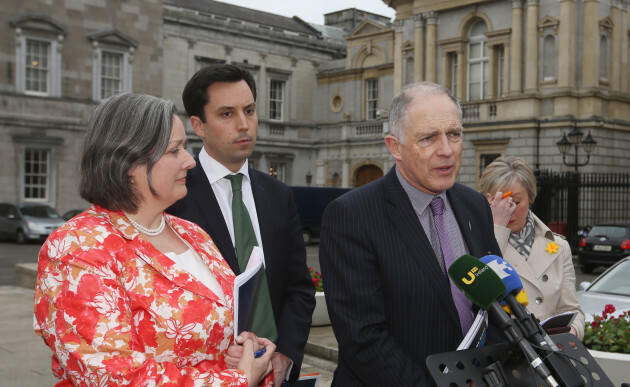
During a recent presentation of their party’s government reform plans, four parliament members from the Irish senior governing party Fine Gael said that “the party wants ’randomly selected’ members of the public to review issues like climate change, Seanad Reform and the Eighth Amendment”, thejournal.ie reports. The report adds:

Fine Gael has previously suggested the issue of the Eighth Amendment could be put to a public forum similar to the Constitutional Convention.

The party has expanded on that with its proposal for a ‘Citizens’ Assembly’ consisting of members of the public who could carry out a “detailed review of a limited number of key issues”.

Their findings would be referred to the appropriate Oireachtas Committee and then to the government.

Marcella Corcoran Kennedy TD insisted that the Citizens Assembly would not be a ‘talking shop’ that would put issues like abortion on the long finger: “Because it would be established by the Oireachtas, you could set specific timelines so there’s plenty of scope there to make the Oireachtas involved to a greater degree with the result of the discussions of the Citizen’s Assembly.”

On the issue of climate change, Corcoran Kennedy said that putting it to a Citizen’s Assembly would help make the issue “part of the dialogue of every citizen in this country”.

Norgrove: Why Britain Should Scrap Democracy in Favour of Sortition

Oliver Norgrove writes in The Huffington Post:

Horse-shoeing my way round the English coastline, setting up stools, handing out thousands of leaflets and talking to many passers-by certainly has come with its frustrations. As I wrote on my blog a few days ago, my patience for democracy and its input of all has now pretty much whittled away.

Without meaning to sound too contemptuous, I cannot bring myself to trust various sects of the population with a say on how the country is governed. Inevitably, polling day becomes Groundhog Day, in which the clueless, easily-manipulated and generationally tribal congregate like farm animals in a bid to shape the country’s government according to their own inaccurate, dogmatic or bigoted predispositions. […]

Problem is, of course, that nothing is preferable to democracy. Nothing beats the hot fury of election night, or the excitement of those voting for the same party they’ve always selected (rarely through genuine political passion and generally for the comfort of brave, tribal voting) and constantly wonder why things never seem to get any better.

Enter sortition.
Continue reading

John Keane: Elections are joyous carnivals of equality

John Keane, Professor of Politics at the University of Sydney, writes in The Conversation a response to David van Reybrouck’s “tired democracy” argument, which Keane presents as an argument for “the replacement of periodic elections, the ritual of citizens choosing parliamentary representatives, by government based on random selection and allotted assemblies of citizens considered as equals”. It may be worth noting that this description overstate’s van Reybrouck’s position significantly and contradicts Keane’s own disclaimer later on about “a deep prevarication in [van Reybrouck’s] work about whether or not elected legislatures should be replaced in their entirety by a ‘parliament of allotted citizens’”.

Keane responds to van Reybrouck by enumerating the mystical wonders of elections:

Democratic representation […] defies the distinction between mimicry (mandating, or issuing instructions) and self-sacrifice by delegation. It rather involves freely and fairly choosing others to take decisions for a fixed period of time. Representation means keeping continuous public tabs on politicians, then throwing them from office at the next election, or when their time is up. It’s much too simple to say that voting is equivalent to throwing away votes. Representation by election is a clever way of rotating leaders. It is equally a method of reminding citizens publicly that the body politic contains disagreements, and that those who act as if there’s consensus can turn out to be politically dangerous.

Continue reading

First meeting of Sortition Ireland

Garreth McDaid has announced the first meeting of an organization he calls “Sortition Ireland”. The meeting is to take place in Dublin on April 12th at 8pm. Virtual attendance will also be possible.

[Via Google Alerts.]

“Real democracy” videos

Tomas Mancebo wrote to draw attention to the following video clips. They seem to be inspired by the ideas promoted by Étienne Chouard.


Choice

No one party

Charlie Douglass: Guaranteeing gender equality

A post by Charlie Douglass.

Democracy we are told is government by the people. What if many of the people aren’t involved? What if some have a much stronger voice than others?

If a government is to act on behalf of people of every colour, gender, age, and wealth status, then we must either rely on politicians ignoring self-interest completely, or find a way in which a house of parliament can have its members chosen very differently to today. Bias matters because today our parliaments under-represent many groups. Women are under-represented and although some change is happening, the change is slow. Why should the men who are already there be the ones who decide how fast the change is? Why is there so little effort to represent people from below the poverty line?

If you could draw equal representation from across society into a house of parliament, then self-interest matters much less. If a parliament was half female, half male, and contained people from every type of wealth status, then many really important issues would see quick and effective change. Poverty has the attention of many of us, but without power not much is changing. When there is a vote which gives voice to all, then the bias of media barons and political donations can be put in the trash-can where it belongs.

In many countries politics has two houses of government, and the proposal here is to replace the one is which the nation’s leader does not stand. In the USA, France and Australia this is the Senate. In the UK this is the House of Lords, and in Germany it is The Bundesrat. After two terms perhaps this new senate could replace both houses, or the second house could be replaced by sortition also – forming two houses.
Continue reading

Democratic Innovation on Postwaves

postwaves

Adam Cronkright writes:

This is Adam Cronkright, cofounder of Democracy In Practice, an organization that has been experimenting with random selection of representatives in student governments in Bolivia for the past two years. Independently from Democracy In Practice, I’m putting out a call for contributors and readers of Equality by Lot to participate in and help beta test a new online platform that randomly distributes decision-making/moderating power and responsibility among its users.

I’ve been doing some beta testing for a website called Postwaves. The site is inspired by the Wisdom of Crowds (popularized by James Surowiechi) and uses sortition to share moderator responsibilities evenly among all the members of a forum. That is, each post gets randomly and anonymously sent out to a small portion of forum users who vote independently and anonymously on whether the post is relevant to the large group (NOT on whether or not they agree with the post). If it receives a certain threshold (say 50% of those randomly asked to assess it find that it is relevant) it get’s made public on the forum. So in essence, they are testing a sortition-based, scalable way for online groups to moderate themselves horizontally. The idea is to more effectively filter out noise (i.e. irrelevant content) and allow the best content to be most visible regardless of who posted it (celebrity vs. normal person) or whether the first person(s) that read it gave it a thumbs up or a thumbs down (which can have a disproportionate effect on the opinions of those that follow).
Continue reading