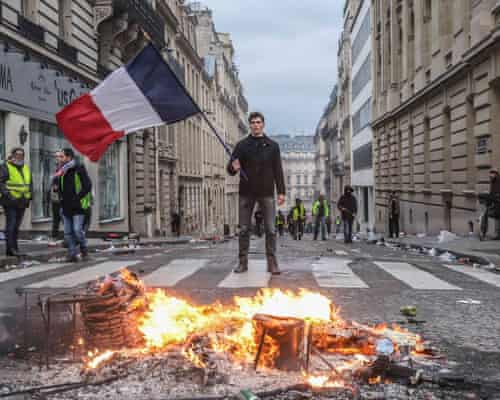
 A review of Hélène Landemore’s Politics Without Politicians by Gaby Hinsliff in The Guardian makes the predictable points. Substance aside, the very fact that an article in a wide circulation newspaper has the subheading
A Yale professor’s radical proposal to replace elected leaders with ordinary people, chosen by lottery
should be seen as a positive development.
The title of the review prefigures the content:
[C]ould we get rid of Farage, Truss and Trump?
Clearly we need to get rid of some politicians, but not all of them.
No Donald Trump, Nigel Farage or Liz Truss; no Zack Polanski, Jacinda Ardern or Volodymyr Zelenskyy either. No political parties and no elections, but instead a random bunch of ordinary people chosen by lottery to run the country for two-year spells, like a sort of turbo-charged jury service except with the jurors holding an entire country’s fate in their hands.
Hinsliff likes the feel good stories about “the human benefits of participation”.
The best bits of the book, worth reading for anyone interested in combating polarisation, are the unexpectedly moving chapters explaining the human benefits of participation for the French citizen jurors in particular. These range from the forging of lasting friendships and deeper civic bonds to the breakthroughs that can happen when strangers meet face to face and genuinely try to understand each other’s points of view, instead of merely yelling at each other on social media.
Giving people actual policy making power in serious matters, is, however, clearly, absurd.
Continue reading →
Filed under: Academia, Books, Elections, Participation, Press, Sortition | 8 Comments »


 In
In 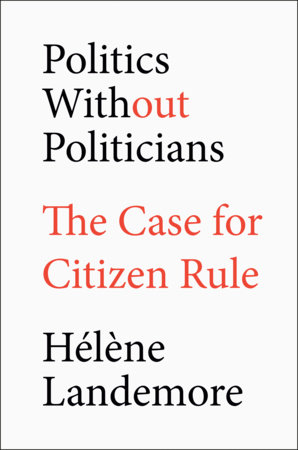 Hélène Landemore has
  Back in
 Alexander Guerrero’s book Lottocracy was published
 Adam Cronkright
 Ali
Ali Ahmed R. Teleb
 avanderven
 avergne
 Alex Kovner
 azakaras
 Brett Hennig
 campbellwallace
 Simon Threlkeld
 Nick Coccoma
 codyhipskind
 Common Lot Sortitionist
 Conall Boyle
 constitutionalism
 davidschecter
 graytmatter
 gtridimas
 H.J. Hofkirchner
 Hanspeter Rosenlechner
 John Burnheim
 jgarry20151
 Jochen Krattenmacher
 johnedwardtaylor
 johnhuang865
 Jonathan Crock
 keithsutherland
 Jacob Richter
 kkoreilly
 lukewhito
 SimonPek
 Nathan El
 Nicholas Gruen
 Owen Shaffer
 Patrick Chalmers
 Paul Gölz
 peterstone
 Pierre-Etienne Vandamme
 pronfeld
 Emil
Emil rcaze
rcaze richwbrown
 Roger Knights
 roslynfuller
 Pierre-Etienne Vandamme
 shaharavin
 tbouricius
 Ted Wachtel
 Joshua Laferriere
 theodorestathis
 towardsautonomyblog
 Wayne Liebman
 Yoram Gat
 Oliver Milne
 Equality by lot