The cartelization thesis

A paper by Richard Katz and Peter Mair called “Changing models of party organization and party democracy: The emergence of the cartel party” published in Party Politics Journal in 1995 (and based on a 1992 workshop presentation by the same authors) spurred a body of academic work in political science dealing with the “cartelization” of party politics. In the abstract of a 2009 paper by the same authors (“The Cartel Party Thesis: A Restatement”) Katz and Mair write:

The cartel party thesis holds that political parties increasingly function like cartels, employing the resources of the state to limit political competition and ensure their own electoral success.

The thesis sees this cartelization as a phase in the evolution of party dynamics. Earlier phases were the “cadre party” (19th c.), the “mass party” (first half of 20th c.), and the “catch-all party” (second half of the 20th c.). While the mass parties and the catch-all parties competed for votes by presenting competing policies, the thesis asserts, the cartel parties do not. They huddle around a neo-liberal consensus and offer the public no alternatives.

In their 2005 paper “From Catch-all Politics to Cartelisation: The Political Economy of the Cartel Party”, Mark Blythe and Richard Katz explain the cartelization phenomenon as follows:

We argue that two key changes have occurred that have effectively turned parties from maximising competitors into risk averse colluders: the limits of catch-all politics, and the rhetoric and reality of globalisation.

The first factor, according to Blythe and Katz, is that by the 1970’s the policy competition between parties has produced welfare policy that was at the maximum capacity of the state to provide. Supposedly this was the dominant dimension along which parties were competing, and it has now become impossible to compete along this dimension any longer.

The second factor is a reduction in the ability of states to control the economy due to globalization:

In brief, catch-all parties were creatures of the Keynesian era. States were assumed to have primary responsibility for ensuring jobs and growth and were also assumed to be able to marshal fiscal instruments to those ends.

Continue reading

Procaccia: Lotteries Instead of Elections? Not So Arbitrary

Ariel Procaccia, an associate professor in the computer science department at Carnegie Mellon University, has an opinion piece in Bloomberg News advocating sortition. Some excerpts:

Have you ever thought that 535 random people off the street would do a decidedly better job than the duly elected members of the U.S. Congress? If so, you’ve been scooped by a few millenniums; the idea of selecting government officials at random, known as sortition, is neither as outrageous nor as original as it seems.

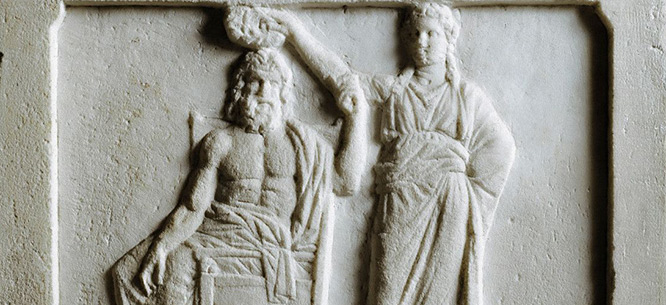
In the fourth and fifth centuries BC, some of the central organs of the Athenian government were populated by selecting random volunteers. For example, the members of the Council of 500 — whose responsibilities included developing legislation, overseeing the executive branch and managing diplomatic relations — were selected at random for one-year terms.

During the Renaissance, sortition was all the rage. For centuries it played a key role in the process of selecting the Doge of Venice, as well as in populating the branches of the Florentine government. It was also employed widely throughout the Kingdom of Aragon, which is part of modern-day Spain. [King Ferdinand II of Aragon spoke highly of the virtues of sortition. Unfortunately, he also established the Spanish Inquisition and ordered the expulsion of practicing Jews from his kingdom, so he is hardly an authority on governance.] Sortition actually endured as a system of government into the 20th century: San Marino’s two heads of state were selected at random from 60 councilors as recently as 1945. [The two heads of state constitute a non-negligible fraction of the minuscule country’s population.]

Procaccia mentions in quick succession David Van Reybrouck, Terrill Bouricius, citizens’ assemblies, Ireland, and the German-speaking Community of Belgium, and finishes off with:

Admittedly, even the Belgian initiative is still a long way off from a Bouricius-style sortition utopia — and the jury is still out on whether we’d want to go that far. But it’s comforting to think that the best fix for our political chaos may be a bit of randomness.

Are citizens’ assemblies little more than institutional band aids?

The following are some excerpts from an article by Tom Gerald Daly, from the University of Melbourne, in Pursuit (a publication of the University):

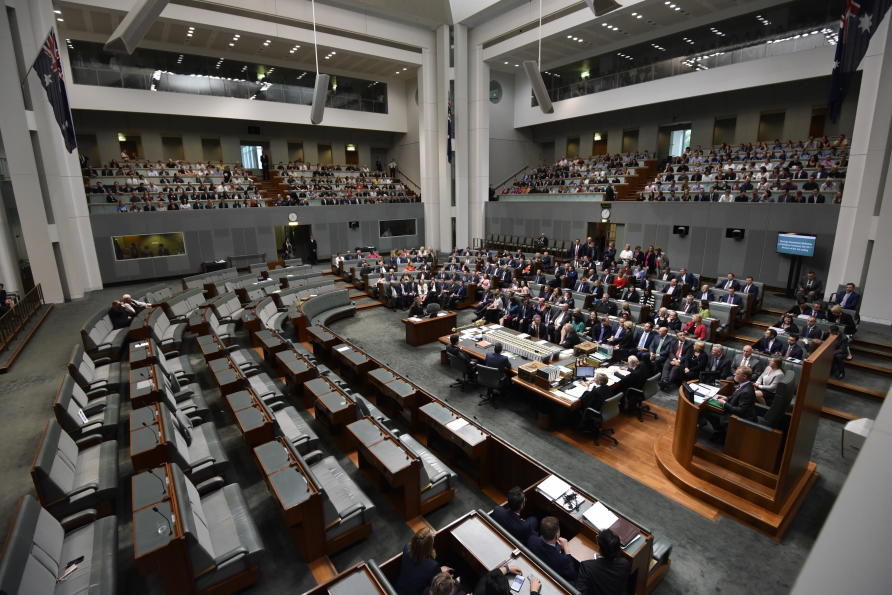
Australian democracy: crisis, resilience and renewal

Given the global rise in authoritarian populist parties and political forces that are opposed to the key tenets of liberal democracy, Australia’s own democracy appears on the surface to be in relatively good health.

For instance, most democracy assessment indices (although far from perfect as reflections of reality) have not registered any declines for Australian democracy for the past decade.

That said, a dominant view has taken hold that Australia’s political system is in crisis, paralysis and even decline. The public images of both the federal government and parliament has been tarnished by a variety of factors, especially the regularity with which Prime Ministers have been ousted between elections – since 2007 Australia has had six prime ministers, when in the previous 36 years (1971-2007) there were only six.

Some polls suggest that public faith in the political system and democracy has plummeted. A broad survey of polling data in December 2018 showed that fewer than 41 per cent of Australian citizens are satisfied with the way democracy works in Australia, a stark drop from 86 per cent in 2007.

There is a strong case then for some reform of our political institutions.
Continue reading

On the unrepresentativeness of representatives stretching back through time

Who Becomes a Member of Congress? Evidence From De-Anonymized Census Data
Daniel M. Thompson, James J. Feigenbaum, Andrew B. Hall, and Jesse Yoder #26156

Abstract:
We link future members of Congress to the de-anonymized 1940 census to offer a uniquely detailed analysis of how economically unrepresentative American politicians were in the 20th century, and why. Future members under the age of 18 in 1940 grew up in households with parents who earned more than twice as much as the population average and who were more than 6 times as likely as the general population to hold college degrees. However, compared to siblings who did not become politicians, future members of Congress between the ages of 18 and 40 in 1940 were higher-earners and more educated, indicating that socioeconomic background alone does not explain the differences between politicians and non-politicians. Examining a smaller sample of candidates that includes non-winners, we find that the candidate pool is much higher-earning and more educated than the general population. At the same time, among the candidate pool, elections advantage candidates with higher earnings ability and education. We conclude that barriers to entry likely deter a more economically representative candidate pool, but that electoral advantages for more-educated individuals with more private-sector success also play an important role.

Sortition in Ha’aretz

Ha’aretz is Israel’s elite newspaper. With Israel’s second election day of 2019 coming up in about a month, Ha’aretz published in its latest weekend magazine an article by Hilo Glaser offering readers several reform ideas for the political system. Sortition got top billing. I was interviewed for the article. Below is a translation of some excerpts (original in Hebrew, paywalled).

The method: Sortition (i.e., lottery instead of elections)

The idea: Advocates of sortition note that modern democracy embraces ideas originating from Ancient Greece, but it disposes of the government mechanism that enabled their application. In ancient democracy public offices were appointed by lottery among the entire citizenry. This is how officials, clerics, and even government ministers were appointed.

In 2014, Prof. Irad Malkin published an article in Ha’aretz in which he explained that “the lottery was the most effective tool against the oligarchy of money and government, drawing the citizens into the political activity and allowing them to take part at different levels: in the sovereign assembly, in the high council, and in the courts. This worked well for 200 years.”

Not only historians are calling to revive the lottery mechanism. Yoram Gat, a software engineer and a statistics Ph.D., has recently published an article challenging the mechanism of elections in view of the public frustration with elected institutions and offering sortition as an alternative. He claims that allotment of political office holders will result in optimal representation of the different groups in the population.
Continue reading

Paper: No Stratification Without Representation

One fascinating aspect of sortition is that it treats all groups in the population fairly: If a group constitutes x% of the population, the group’s share in the panel will be x% in expectation (that is, on average over many random panels). Furthermore, it is unlikely that, in a random panel, this percentage will deviate much from x%; this event becomes ever less likely the larger the panel is. Unfortunately, there are practical limits to how large sortition panels can get, which means that a certain variance remains. Had the Irish citizens’ assembly been sampled without consideration for gender, for example, a gender imbalance of at most 45 women against at least 54 men would have happened in about 15% of random panels.¹

One way around this problem is stratified sampling. For example, one could fill half of the seats with random women and half of them with random men. As Yoram wrote in an earlier post on this blog, one can still guarantee that every person is selected with equal probability, and thus, that every group will get its fair share of the panel in expectation. Stratification by gender will obviously ensure accurate representation to the genders. But what happens to the representation of other groups?

My collaborators — Gerdus Benadè and Ariel Procaccia — and I studied this question in a paper that we recently presented at the ACM Conference on Economics and Computation. As Mueller, Tollison, and Willett argued as early as 1972,² stratification can greatly reduce the variance in representation for groups that highly correlate with the feature we stratified on. This is good news since correlation is everywhere; for example, stratifying by gender will help to represent opinion groups related to military intervention, gun control, and healthcare.³ We show that there is no real downside to stratification: Even in the worst case, stratification cannot increase the variance of another group by more than a negligible amount. These results hold up to very fine stratifications, where each seat is filled by a random member of a dedicated stratum. This suggests that we should indeed make extensive use of stratification. In a case study on a real-world dataset, we show that stratification can reduce the variance in an opinion group’s representation by a similar amount as an increase of panel size by multiple seats — even if the stratifier does not know the opinion in question!

The main technical difficulty in the paper is working with indivisibilities. For instance, if we split the 99 seats of the Irish citizens’ assembly proportionally by gender, women should get around 50.66 seats. To ensure that every person is still selected with equal probabilities, we need to randomly “round” the seat assignments, giving women sometimes 50 and sometimes 51 seats. This process is somewhat delicate — rounding introduces new variance, which might lead to some unfortunate group becoming much less accurately represented than without stratification. If one uses the rounding procedure suggested in our paper, this is not the case.

Continue reading

Schulson and Bagg: Sortition needs to become part of mainstream U.S. political discourse

Michael Schulson is a journalist who has written before about sortition. Schulson and Samuel Bagg, a democratic theorist at McGill University, have a new article about sortition in Dissent magazine. Here are some excerpts.

Give Political Power to Ordinary People

To fight elite capture of the state, it’s time to consider sortition, or the assignment of political power through lotteries.

Our broken campaign finance system is a longstanding target of progressive ire. And as Republican state legislatures have made increasingly aggressive moves to entrench minority rule, many people are beginning to see a broader defense of democratic integrity as a crucial part of any left agenda. Yet most of the attention of reformers has been limited to the electoral process—perhaps because we tend to assume that getting “our people” into office will solve the problem.

It won’t. Elite capture of the state extends far beyond the influence of large donors on elections.
Continue reading

Bradatan: Today’s democracy favors the the power-hungry, arrogant, oppressively self-assertive political animal

Costica Bradatan, professor of philosophy at Texas Tech University, has a free-ranging essay about democracy in the New York Times. It is a rather incongruous mass of ideas, some more convincing than others. It does mention (approvingly? hard to tell) sortition as one of the fundamental foundations of Athenian democracy.

The institutions of democracy, its norms and mechanisms, should embody a vision of human beings as deficient, flawed and imperfect.

Ancient Athenian democracy devised two institutions that fleshed out this vision. First, sortition: the appointment of public officials by lot. Given the fundamental equality of rights that all Athenian citizens — that is, free male adults — enjoyed, the most logical means of access to positions of leadership was random selection. Indeed, for the Athenian democrats, elections would have struck at the heart of democracy: They would have allowed some people to assert themselves, arrogantly and unjustly, against the others.

The other fittingly imperfect Athenian institution was ostracization.

Bradatan notes how different is the modern system that self-describes itself as “democracy”:
Continue reading

Sortition at the University of Lausanne

A short video by Michele Andina on swissinfo.ch featuring Maxime Mellina and Aurèle Dupuis from the University of Lausanne discussing sortition.

Interview with Yves Sintomer, part 2 of 2: With sortition, the scale is immaterial

This is the second part of a translation of an interview with Yves Syntomer. The first part is here, the original in French is here.

Does the end of the 20th century mark the return of a desire to experiment with sortition?

We witnessed in the 1980’s and 1990’s an explosion of experiments applying sortition, a “first wave” where the reference to Athens was very significant. There are however big differences. We aim to obtain a representative sample of the population by allotment, where the Athenians did not have this mathematical notion and resorted to pure luck. The second big difference is that we wish to use sortition to create an Assembly which is going to debate in nearly ideal conditions, following the ideas of ­Jürgen ­Habermas, according to which a decision is not legitimate unless it is preceded by a well-formed discussion.

The third difference is that sortition is introduced at the margins of the political system and that the mini-publics so constituted are merely consultative. This first wave allowed to show that with discussions among ordinary citizens, non-specialists, once they have sufficient information and have the opportunities to examine things, where opportunity to speak has been equally apportioned, in a general assembly or in small groups, high-quality conversation is attained. It is impressive to see that the exchanges between ordinary citizens put to shame those that take place in parliaments.

We are now seeing the emergence of a second wave. Sortition is now invoked by social movements in France, including Nuit Debout and some among the Gilets Jaunes. Ireland has recently offered us a paradigmatic example of this second wave. We had two allotted assemblies (one in its entirety, the other in its majority) convened first to discuss marriage for all and then abortion and to propose constitutional reforms which were then submitted to the people who have ratified those propositions by referenda.

Iceland is another significant example. The country was in a bad state at the moment of the subprime crisis… Two citizen assemblies were allotted (one in its entirety, the other in its majority) in order to propose how to reconstruct the country. That was followed by an election of a constituante committee where professional politicians could not be members, a proposal of a new constitution, a validation of the proposal by a consultative referendum… It was finally buried by an obstruction by a majority in Parliament, which refused to adopt the text.

It may be objected that those are two small countries…

With sortition, the scale is immaterial: it may be used at the level of a city or a country in quite similar ways.
Continue reading