Hallam: Sortition is democracy

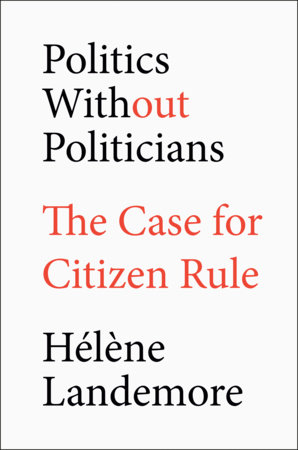
Roger Hallam, a co-founder of Extinction Rebellion, recently released from a year-long stay in jail where he was serving a sentence for criminal political activities, has been a sortition advoacate for some time. Hallam has a new forceful article in The New Stateman (and a new book). Unlike other authors, for Hallam, sortition is not an add-on. It is democracy. If memory serves, Hallam is the most high-profile consistent advocate for sortition to date.

Hallam starts by a full frontal assault on elections.

Voting isn’t democratic. We need sortition

Randomly selecting people to rule would be a hell of a lot better than holding elections

[V]oting and elections do not, and never have, produced rule by the people. What they produce is oligarchy – rule by the few. Don’t take my word for it. This was standard political knowledge from ancient times up to the French Revolution. What you got with voting and elections was a few people in charge – obviously! Because, as everyone who observes what actually happens knows, so-called electoral “democracies” are always controlled by the few. Sure, if you like voting and elections and oligarchies that’s fine. They have their pros and cons, but don’t delude yourself and others that you are a democrat. You are not.
Continue reading

A predictable critique of Guerrero’s Lottocracy

Niko Kolodny, Professor of Philosophy at the University of California, Berkeley has a lengthy piece in the Boston Review which reviews Alexander Guerrero’s Lottocracy. Unsurprisingly, Kolodny is not sympathetic to the idea of sortition. Predictably, Kolodny finds ample opportunities to criticize Guerroro’s “relentlessly thorough”, eclectic argumentation.

In particular, Kolodny effectively exploits Guerrero’s reliance on the supposed inability of the public to represent its own interests without proper guidance. For example:

Guerrero imagines that each SILL [single-issue, lottery-selected legislatures] would be guided in its deliberation by a poll of those few citizens who somehow are able to take a week off of work and other responsibilities to pay attention to the five day-long discussions of the final five proposals. Again, if the powerful can, in effect, buy off the general public to support a particular electoral party, then why can’t the powerful mobilize a (again, presumably quite small) group to pay attention to the review of proposals for the Water Access and Water Quality SILL and support what they favor? No one but the powerful, one worries, would be minding the store.

Kolodny’s argument above, as well as his other arguments (e.g., his assertion that people cannot be expected to accept offers in an allotted body), are standard. He goes so far as to inflict on his readers the electoralist dogma about how “[b]y choosing some political programs and parties over others, [voters] shape the political/ideological space within which the elected representatives must operate until the next election”. A formula he quotes from Cristina Lafont and Nadia Urbinati’s The Lottocratic Mentality: Defending Democracy Against Lottocracy.

Such arguments are easily refuted and have been refuted many times. However, Guerrero’s book is not up to the task. Instead, the book makes it easy for the opponents of sortition – or more to the point, for the opponents of democracy – to rehash the old superficial talking points and present them as “a splendid and convincing recent counterpoint to arguments for lottocracy”.

Democracy and Truth

In a recent article in The Catholic Herald Niall Gooch discusses some objections to sortition from the book Against sortition?. As he describes sortition, “[t]he idea is that involving “normal people” in such deliberation helps to spread power more widely and obtain broader perspectives”.

The contributors to the book set out various reservations about this idea, and various objections. Many of them have procedural concerns – for example, they believe that existing approaches don’t gain a wide enough spectrum of opinion, or that they are easily captured by special interests, or that they don’t really add anything new to a conventional elected legislature.

Others highlight the problems of accountability raised by citizens’ assemblies, or the way in which they dilute the legitimacy of existing bodies. But a few contributors are clearly trying to articulate something like the more fundamental problem identified by John Paul II, which we might sum up with this question: “Does involving lots more people in political decision making actually get you closer to the truth?”

Gooch refers his readers to, Evangelium Vitae, The Gospel of Life, a 1995 essay by Pope John Paul II. In it John Paul II writes:

Democracy cannot be idolized to the point of making it a substitute for morality or a panacea for immorality. Fundamentally, democracy is a “system” and as such is a means and not an end. Its “moral” value is not automatic, but depends on conformity to the moral law to which it, like every other form of human behaviour, must be subject: in other words, its morality depends on the morality of the ends which it pursues and of the means which it employs. If today we see an almost universal consensus with regard to the value of democracy, this is to be considered a positive “sign of the times”, as the Church’s Magisterium has frequently noted. But the value of democracy stands or falls with the values which it embodies and promotes. Of course, values such as the dignity of every human person, respect for inviolable and inalienable human rights, and the adoption of the “common good” as the end and criterion regulating political life are certainly fundamental and not to be ignored.
Continue reading

Choosing by lot and the politics without titles

Yavor Tarinski

The man who wears the shoe knows best that it pinches and where it pinches. ~John Dewey [1]

One of the main pillars of contemporary oligarchies worldwide is the institution of elections. Every leader and government, regardless of how liberal or authoritarian, claims its ascendance to power through some kind of electoral process. Elections are considered as “the democratic means” per se – if a system is based on elections, then it supposedly is a “democracy”.

The supporters of this view see in electoral processes a means of sustaining popular sovereignty, while avoiding what they see as a danger of popular self-rule – i.e., rule by the incompetent. But as philosopher Jacques Rancière underlines, there is an “evil at once much more serious and much more probable than a government full of incompetents: government comprised of a certain competence, that of individuals skilled at taking power through cunning.”[2]

Electoral processes tend to nurture antagonism and competitiveness, rather than cooperation and dialogue. They give way to a certain anthropological type – the power-hungry political demagogue. Rather than concerned with resolving public issues and problems, it focuses on “winning” elections. The very essence of politics is radically altered in elections-based systems – with their content being emptied of any substantial deliberatory essence and replaced with a lifestylish approach that focuses on candidates – their ways of life, the tricks they pull on each other, etc.

Ultimately, the main agenda that drives the action of the electoral anthropological type is that of opinion polls. Candidates must learn what and when to say things that will be liked by the largest amount of people, so that they can get ahead in the race. The result is a type of craft where electoral competitors outbid each other, play dirty, and resort to all sort of tricks in order to win. This becomes the main occupation of people involved in electoral competitions for office. Because of this political scientist James S. Fishkin suggests:

Candidates do not wish to win the argument on the merits as much as they wish to win the election. If they can do so by distorting or manipulating the argument successfully, many of them are likely to do so. Representatives elected through such processes are looking ahead to the next election while in office.[3]

Continue reading

Representation as Embodiment

‘May you live in interesting times’ is both an ancient Chinese curse and an accurate description of current politics. Despite often being at opposite ends of the policy scale, lottocrats and charismatic populists share the same perspective on ‘representation as embodiment’, as illustrated in this crude mash-up of the frontispiece to Hobbes’s Leviathan (1651 m/s drawing). Both camps (while often disagreeing on policy matters) claim that the Mortall God is an emergent property of popular sovereignty. Lafont and Urbinati (2024) equate lottocracy with populism: populism has an unaccountable leader who is supposed to ‘embody’ the nation; lottocracy has an unaccountable assembly that is supposed to ‘embody’ the nation.
Continue reading

True Representation Sketchbook—Sketches #1 and #2

Free Webinar: Lottocracy Versus House of Citizens: Contradictory or Compatible?

The Building a New Reality Foundation is featuring Brett Hennig and Alex Guerrero on April 1 at noon EDT (UTC-4) to present and discuss their ideas, and to respond to audience questions. An optional half hour small group discussion will follow the one-hour webinar. If the time is not good for you, register anyway because we will send all registrants a link to the recording.

Register Now!

The following written “sketches” about the work of BANR’s webinar guests supplement my True Representation (2020) book and illustrate examples of how True Representation might be used in practice.

Sketch 1: House of Citizens for the UK

I first saw a video of Brett Hennig delivering a brilliant 9-minute TEDx Talk entitled, “What if we replaced politicians with randomly selected people,” in which he talked about “sortition” replacing elections and bringing about the end of politicians.

There is a growing global interest in citizens’ assemblies, with members chosen randomly like a jury, who collectively study issues and provide recommendations to government.

Hennig helps organize single-issue citizens’ assemblies as a way of demonstrating the “wisdom of crowds” but his end goal is to replace elected legislators with citizens chosen by lottery, free from party politics.

He is co-director of the UK-based Sortition Foundation that in 2024 launched Project 858 — a campaign and petition drive calling for the replacement of the utterly undemocratic House of Lords with a randomly selected House of Citizens.

The 858.org.uk website explains:

858 years ago King Henry II shook things up by introducing juries. After eight centuries they’ve more than proven their worth as the backbone of the legal system and now it’s time to put ordinary people at the helm in politics too.
Continue reading

Should a Citizens’ Assembly Complement the European Parliament?

A new book with the title “Should a Citizens’ Assembly Complement the European Parliament?” has been published by the European University Institute. The book is made of a 30-page proposal by Kalypso Nicolaidis for setting up a permanent allotted citizen assembly as part of the EU governance structure followed by about 20 short responses from different authors including many who are known names in the sortition milieu.

From a cursory look, the for and against arguments are predictable and well-worn, but someone possessing a strong character and an iron discipline may be able to go through the whole thing and find some new ideas.

Henry George’s analysis of electoralism, with a side note on sortition

From Book X, Chapter IV of Progress and Poverty (1879) by Henry George:

Where there is anything like an equal distribution of wealth—that is to say, where there is general patriotism, virtue, and intelligence—the more democratic the government the better it will be; but where there is gross inequality in the distribution of wealth, the more democratic the government the worse it will be; for, while rotten democracy may not in itself be worse than rotten autocracy, its effects upon national character will be worse. To give the suffrage to tramps, to paupers, to men to whom the chance to labor is a boon, to men who must beg, or steal, or starve, is to invoke destruction. To put political power in the hands of men embittered and degraded by poverty is to tie firebrands to foxes and turn them loose amid the standing corn; it is to put out the eyes of a Samson and to twine his arms around the pillars of national life.

Even the accidents of hereditary succession or of selection by lot, the plan of some of the ancient republics, may sometimes place the wise and just in power; but in a corrupt democracy the tendency is always to give power to the worst. Honesty and patriotism are weighted, and unscrupulousness commands success. The best gravitate to the bottom, the worst float to the top, and the vile will only be ousted by the viler. While as national character must gradually assimilate to the qualities that win power, and consequently respect, that demoralization of opinion goes on which in the long panorama of history we may see over and over again transmuting races of freemen into races of slaves.

Sortition in 2024

Equality-by-Lot’s traditional yearly review post.

2024 continued the trend of the last few years of cooling interest in the idea of sortition among the elites. This happened despite the re-emergence of Donald Trump as a viable candidate and his subsequent election to the presidency of the United States. The same Trump who was hysterically portrayed as a menace to democracy in 2016, and triggered (together with Brexit) a wave of elite interest in sortition, was accepted this time without nearly as much alarm. Presumably, Trump’s first term indicated that he is not the threat to the electoralist establishment that he was feared to be. This time the electoralist establishment seems confident enough with the existing structures that it has no need to consider introducing allotment into the system in order to shore it up.

Indeed, the most prominent application of sortition in 2024, a third constitutional assembly in Ireland, ended in what was described as “a fiasco”, as the proposals derived from the assembly’s work (there is some controversy about how close those proposals were to the those issued by the body itself) were rejected by two thirds of the Irish in a ratification referendum. This led to the inevitable hand-wringing and acrimony among those who have been promoting sortition based on the supposed success of such bodies.

Of course, the underlying issues with electoralism are not abating. The electoralist system maintains its record of generating low approval ratings and gestures of rejection by the public.

The academic world continued to churn out the familiar arguments for and against sortition, with a side of AI. In this ongoing discussion, two notable contributions this year are Malkin and Blok’s book Drawing Lots, which sets the Greek use of sortition in a longue durée context of an egalitarian ideology, and Alex Guerrero’s tome Lottocracy which, as it argues for replacing electoralism with a sortition-based system, provides a broad overview of the literature. Also worthy of note is the impending launch of the Journal of Sortition.

A few more mentionable sortition-related developments in 2024: Students continued to write positively about the idea. Sortition was mentioned in popular social media outlets and mass media. Of particular interest is an exchange on the pages of The Conservative Woman, in which an opinion writer bashed citizen assemblies, only to be corrected by a reader who actually took part in one. A new appointee to the House of Lords in the UK advocates for selecting this chamber using sortition. A kleroterion-inspired statue is on display at the Storm King art center in New York state.

Finally, three figures who played important early roles in the modern discussion of sortition have died over the last 14 months:

Late last year John Burnheim, an Australian researcher with a seminal contribution to igniting interest in sortition, passed away. Burnheim’s 1985 book Demarchy was a radical proposal for replacing the existing electoralist system with a very different system which relied heavily on sortition.

Mogens Herman Hansen, a prominent historian of Ancient Greece, died in June this year. Hansen’s book, The Athenian Democracy in the Age of Demosthenes, has become the go-to book on many questions regarding the functioning of democratic Athens, including specifically the application of sortition.

Most recently, Bernard Manin, a French researcher who wrote the seminal book The principles of representative government, died in November. Manin set out to problematize elections in the 1990’s, a time when following the collapse of the Soviet bloc electoralism was considered by a triumpalist West as the political holy grail at the end of history. Manin’s “pure theory of elections” is, in my opinion, the most incisive critique of electoralism ever written. Interestingly, Manin was not an advocate of sortition but his scholarship on this subject is unmatched.

A review of Lottocracy in the Journal of Sortition

The first issue of the new Journal of Sortition is going to be published in 2025.

Keith Sutherland, the publisher, wants to emphasize that all those who register on the webpage of Imprint Academic’s sortition hub will get a free printed copy of the first issue of JoS. Please visit https://www.imprint.co.uk/sortition-hub/.

A review of mine of Alex Guerrero’s book Lottocracy will be appearing in this first issue.

The discussion around sortition and the possibility of applying it in modern political systems has been intensifying in academia over the last two decades. A debate between sortition-optimists and sortition-pessimists (as well as intermediate positions) has been taking shape. Alex Guerrero’s Lottocracy, with its over 450 pages, recaps this debate with considerable breadth while arguing for what may be perceived as the sortition-optimist position par excellence, namely, for replacing the elections-based system with one which is sortition-based.

Among some other points, I discuss how Lottocracy, like the academic discussion of sortition as a whole, adopts a Socratic viewpoint, according to which the experts are those who should shape and authorize (or choose not to do so) the use of sortition as a tool of politics.