Larry Bartels wants democratic theory to focus on elites

Larry Bartels is an American political scientist. In 2016 he published, together with Christopher Achen, the book Democracy for Realists: Why Elections Do Not Produce Responsive Government, in which the authors argued that voters can’t really tell what’s good for themselves. One possible takeaway from this argument could have been that elections are not a democratic mechanism. A recent interview with Bartels, on the occasion of the publication of a new book of his, indicates that he draws a very different conclusion. Bartels gives up on the people altogether (“they are what they are”) and wants to focus democratic theory on the behavior of elites.
I think what we need is a theory of democracy that has some real understanding of, on one hand, the inevitable power and leeway of political elites and, on the other hand, the goals they should strive to achieve when they exercise that power. Much of our thinking about democracy is very focused on ordinary citizens and what they should or shouldn’t be doing in their role in the process.

I’ve come increasingly to think that that’s a futile exercise. Ordinary people are pretty much what they are. We have a pretty good sense of how they behave. There are a lot of commonalities in their behavior across political systems with different cultures and different institutions. In all those places, regardless of the role of citizens, it’s the political leaders who really call the shots. So what we need is a better understanding of what democratic leadership entails, and how institutions can be made not to ensure, but at least to increase the probability that leaders will govern in enlightened ways, and on behalf of the interests of ordinary citizens.

Bartels ends on an overtly aristocratic note, where, perhaps taking a page from the Chinese, he wants to cultivate better elites. But at the same time he is overtly pessimistic and warns his audience that we should not expect too much from democracy.

[W]hat would a better system of democracy look like? I don’t have the answer to that. I do have the sense that we tend to focus too much on trying to avoid every conceivable threat to democracy and to imagine that if only we got the system and the rules right, that the system would operate happily in perpetuity. I think in reality there’s a huge gray area between democracy and autocracy, and lots of different dimensions in which democracies perform better or worse. Maybe the sense that a lot of people in the U.S. and elsewhere have now that we’re in a period of crisis is a belated recognition that democracy in all times and places is partial and risky and chancy.

[W]hat we really have to focus on is how we can socialize leaders to want the right things, and constrain them to avoid the worst excesses of misuse of power in political systems.

Malkin on Greek allotment

Irad Malkin is a prominent Israeli classicist. He has already been mentioned twice on Equality by Lot, when in 2013 and 2014 he penned op-ed pieces advocating for the use of sortition as a tool of democracy. It seems that lottery and its role in Ancient Greek society has become Malkin’s main focus of research over the last few years. The product of this research is a forthcoming book called “Greeks Drawing Lots: from Egalitarianism to Democracy”.

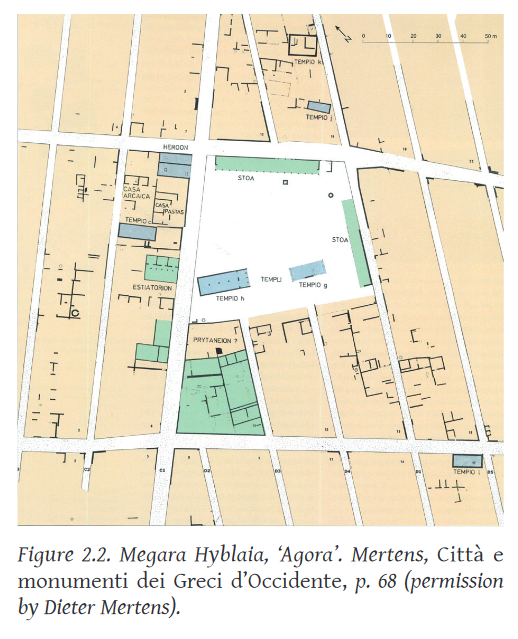
A first taste of Malkin’s research is already available in the form of a chapter in a book published last year edited by Sofia Greaves and Andrew Wallace-Hadrill and titled “Rome and the Colonial City: Rethinking the Grid”. The chapter written by Malkin is called “Reflections on egalitarianism and the foundation of Greek poleis“. It opens as follows:

When Greeks founded new settlements, they were facing the question of how to distribute plots of land to individual settlers. The main reason individuals joined a new foundation was to get such a plot of land (klêros), regardless of other reasons for colonisation. Back home, two brothers would need to share a klêros through partible inheritance by lot. However, if one brother stayed and another left for a new settlement abroad, both would have ended up, each, with a viable klêros. In and of itself, a klêros provides a basis for livelihood and a mutually recognised share of political and military power within the community. Practices of Greek colonisation are parallel to the Greek practice of ‘partible inheritance by lot’, since the same general principles and structures apply to both when it comes to land distribution: equality before the chance of the lottery, and, when possible, equality (sometimes equitability) of the size of the klêros.

From this we learn, if I understand correctly, that (like the English word “lot”?!) the word “klêros”, as in the randomizing machine “klêroterion”, meant in the first place a piece of fertile land, and the use of this word for randomization is derived from the custom of using the lottery for the distribution of such lands.

Malkin’s main thesis appears to be that the lottery was an embodiment of an egalitarian ideology. This ideology was especially influential in newly established colonies was in competition with oligarchization trends in more established settlements. It is this ideology that eventually, over the course of hundreds of years, developed into the Greek democracy.
Continue reading

Martin Wolf: Citizens’ juries can help fix democracy

Sortition has found a fairly prominent advocate in the Financial Times‘s Martin Wolf. Wolf was introduced to the idea by Nicholas Gruen and is highly influenced by him. Wolf has written a book offering sortition as a solution to “ailing Western polities”. His prominent position and impeccable institutional credentials make him possibly the most prominent promoter of sortition in the Anglophone world.

Wolf is now repeating his argument in an article in the Financial Times. In particular he is implying that the “failure” of Brexit would not have happened if the decision whether to leave or remain were made by an allotted body. But Wolf goes farther and proposes a permanent allotted chamber with not insignificant powers.

“Brexit has failed.” This is now the view of Nigel Farage, the man who arguably bears more responsibility for the UK’s decision to leave the EU than anybody else. He is right, not because the Tories messed it up, as he thinks, but because it was bound to go wrong. The question is why the country made this mistake. The answer is that our democratic processes do not work very well. Adding referendums to elections does not solve the problem. But adding citizens’ assemblies might.

In my book, The Crisis of Democratic Capitalism, I follow the Australian economist Nicholas Gruen in arguing for the addition of citizens’ assemblies or citizens’ juries. These would insert an important element of ancient Greek democracy into the parliamentary tradition.
Continue reading

Engines of oligarchy: me and Hugh Pope on the Keys to Democracy

One of my favourite discussions so far with journalist, scholar and gentleman Hugh Pope. As readers of this site will know, Hugh has just brought to publication The Keys to Democracy: Sortition as a Model for Citizen Power, a book written by his father in 1990. But being well ahead of its time, the book was unpublishable. It pursued Aristotle’s point that elections installed a governing class and were therefore oligarchic. The institution that democracy represented the people was selection by lot as embodied today in legal juries. And it has a delicious fondness for G. K. Chesterton’s idea that, like a hostess, “democracy is bringing the shy people out”. You’ll also see me learning profound new things — like the fact that one of the things democracy is about is how you change your mind.

If you’d rather just listen to the audio file, it’s here.

Bouricius: The Trouble With Elections

In former lives, Terry Bouricius was an elected politician in the US state of Vermont and an electoral reformer. In the present, Terry is a sortition advocate and a regular commenter on this blog. Among other activities, he has published an influential paper offering a multi-body sortition-based government system. In addition, it turns out, Terry has also been writing a book which he is now about to start publishing in installments on democracycreative.substack.com. You can sign up to get notified as new chapters are published.

Interview with the Classical Republican

I was interviewed some time ago about sortition for the Classical Republican. It was a wide-ranging conversation that included discussion of this blog. The interview is now on Youtube, and can be viewed here. Note that the Classical Republican has an entire Youtube playlist devoted to sortition which features, in addition to my interview, an extended conversation with longtime sortition advocate Oliver Dowlen and other interesting videos. The playlist can be found here.

Understanding the present by listening to the past: Walter Lippmann’s “The Public Philosophy”

I thought readers of this blog might be interested in a post I’ve just put on my own blog on Walter Lippmann’s The Public Philosophy. It does not directly reference sortition, but I think it’s an excellent illustration of the value that sortition can bring — and it provides a corroborative context for the ideas I sketched out here.

oooOOOooo

One way to get beneath the surface of what’s going on is to read people who were writing about issues as they emerged rather than in more modern times when they’d become the norm and become infused in our commonsense.

I was browsing in one of the few remaining second-hand bookshops around (as is my wont) when I came upon Walter Lippmann’s 1955 book, The public philosophy. Walter Lippmann was one of the great journalists and thinkers of the 20th century. He wrote a series of books that were landmarks in their day, despite uniformly bland titles. Public opinion. The good life. And this one — The public philosophy

Reading part 1. I was shocked to discover a critique of democracy that I had not really crystallised for myself. It comprehends two tendencies both of which are at their most disastrous in the avoidance of war on the one hand and the fighting of wars on the other.

In the first place there’s what I’ll call temporal mismatch. It can take an electorate years to catch up with emerging developments and so public opinion can be a disastrous guide to the exigencies of a particular situation. A further aspect of public opinion is its capacity for wild swings in sentiment which I’ll call temperamental amplification.

Lippmann explains how democracies wildly overshoot. They’re not good at avoiding war by preparing properly for it. It is easy to understand why that is. Wars are very expensive. So preparing for them is expensive too. That means that politicians get the choice between warning the electorate and preparing for war and winning elections. If they call for more military spending their democratic opponent will say that it can be handled without serious financial pain — either because the threat is overblown or because it can be managed via borrowing or some other evasively defined expedient.

Then as war looms larger, far greater sacrifice than would otherwise have been necessary is called for, alongside industrial scale demonisation of the enemy. We’re somewhat familiar with this narrative from WWII, but Lippmann extends it back to the insouciance of war before WWI, the imposition of the Carthaginian Peace of 1919 which in humiliating Germany made Round Two of the Great War all the more likely. (Lippmann became fast friends with Keynes when they were both in Versailles. Coming to terms with the cataclysm of that war and its peace burned itself deeply into both men’s thought.)

Of course, this is directly relevant to today’s circumstances where the economic hangover from both COVID and Europe’s first major war in eighty years is intensifying the scarcity of energy and food, and in so doing undermining living standards. A further demand is to get Ukraine the arms it needs to fight off the Russians — but that’s expensive too.

But how much are our political leaders leveling with their populations? They’re not of course. Because to do so they’d have to say something like “Here’s the plan. We need to reduce living standards compared to what they would otherwise be by 2-3%. Then their opponents will denounce this as the counsel of despair and incompetence and come out and say they can do all they need to do without such hardship.

An extract from Lippmann is over the fold.

Continue reading

Beaudet: Let us push the frontiers of democracy

Thierry Beaudet is the President of the French Economic, Social and Environmental Council (CESE), the body which organized the French allotted bodies which discussed environmental policy and end-of-life policy. He has now published a book in which he advocates the use of sortition as a tool of democracy. The book is described by the publisher as follows:

The trappings of our democracy are falling apart: elections are no longer adequate for the task, and there is general distrust toward every authority and every power. Facing this crisis, new political practices assert themselves, practices which engage and refer to the citizen body. Citizen participation, still in its beginning in our country, must develop, through sortition, the exercising of collective deliberation, the systematic collaborative construction of public policy. Thierry Beaudet, the President of the Economic, Social and Environmental Council, proposes that we learn how to remake democracy and to discuss together substantive issues rather than keep rehashing divisions in a vacuum.

Bertrand Russell on Athenian democracy

In his 1945 book History of Western Philosophy Betrand Russell writes the following (p. 74):

Athenian democracy, though it had the grave limitation of not including slaves or women, was in some respects more democratic than any modern system. Judges and most executive officers were chosen by lot, and served for short periods; they were thus average citizens like our jurymen, with the prejudices and lack of professionalism characteristic of average citizens.

It is remarkable that the reason given for the Athenian system being more democratic than modern systems is not the standard superficial argument about the Assembly voting directly on laws. Russell’s appeal to the fact that Athenian judges and officers had, as a result of being chosen by lot, the same outlook as the average citizen is an adumbration of Manin’s pure theory of elections (“the principle of distinction”).

Maurice Pope’s The Keys to Democracy is now available

Hugh Pope writes:

I’m writing to share details about the publication of the book that has been my special project over the past 18 months: The Keys to Democracy: Sortition as a New Model for Citizen Power, by my late father, the classicist Maurice Pope.

The back story: my dad wrote the book in the 1980s, but, perhaps because it was ahead of its time, his usual publishers wouldn’t take it. We had thought the work was lost well before he passed away in 2019. But two years ago, while sorting through his library, my mother found the typescript.

As my brother Quentin and I edited the text, we consulted several experts and were urged on by messages back telling us that the book was “masterful”, “bold”, “visionary” and more (you can see all their endorsements here). Dr. Hélène Landemore of Yale University and Cambridge classicist Dr. Paul Cartledge generously wrote a preface and an introduction. With many such helping hands, we found a publisher at UK philosophy specialists Imprint Academic. The book went on sale on 7 March.

Back in the 1980s, few others proposed that randomly selected citizens could, after proper information and deliberation, reach better decisions than elected politicians. This open field is perhaps one reason for the book’s unique and accessible combination of the history, mathematics, philosophy and future of sortition. My dad’s ideal – in which random selection could be the decision-making heart of all branches of government – also makes him more radical than most other thinkers writing today.
Continue reading