The question of sortition generates a heated debate in the French Senate

The following is a translation of an AFP article.

Reform of the CESE: The question of sortition generates a heated debate in the French Senate
October 15, 2020

Representative democracy vs. participative democracy: the question of the usage of allotment of citizen for participation in public consultations has generated a heated debate in the Senate during the discussion of the proposal for the reform of the Council for the Economy, Society and Environment (CESE).

The organic law bill, adopted by the National Assembly in September was approved on Thursday in first reading by the Senate with 292 votes for (LR, UC, PS, the large majority of RDSE, LIRT) and 50 abstentions (RDPI – mostly the LREM members, CRCE – mostly the communists, EST).

Assembly members and Senators are now going to try to reach an agreed text in a joint committee. If that fails, the National Assembly will have the last word.

During his speech in front of Congress in 2017, President Emmanuel Macron spoke about transforming the CESE, a little-known consultative institution which convenes representatives of employers, of workers’ unions and of NGOs at the Palais d’Iéna, into “a chamber of the future, where all the stakeholders of the nation take part”.

Short of a constitutional reform, the organic law bill aims to breathe new life into this institution in order to respond to strong demand for participative democracy in public opinion. Notably, the bill streamlines petitioning the CESE for it to form an opinion on economic, social and environmental questions raised by the public. The number of required signatures would be reduced from 500,000 to 150,000. The senators have approved this procedure with some reservations.

Moreover, opposing “any legitimization of sortition”, the right-wing Senate majority has removed any possibility for the CESE to organize “public consultations” based on allotment modeled after the Citizen Climate Convention. The removal of this central tool has been debated at length, with the government and the Left failing to reintroduce it through amendments during session.
Continue reading

Rothchild: “Ancient wisdom” in MI’s new redistricting process

John Rothchild, Professor of Law at Wayne State University, writes approvingly in The Conversation about Michigan’s new allotted electoral redistricting commission. Rather naively, Rothchild seems to believe that democratic redistricting could result in the selection of “representatives who truly reflect [citizens’] political preferences”. Alas, this is more than mere redistricting can deliver, however well done.

How, then, should Michigan’s decision to assign unskilled members of the public the job of drawing nonpartisan election districts be evaluated?

Redistricting is a complex task. Michigan’s Constitution says that the districts must be drawn in compliance with federal law. That includes a requirement that voting districts have roughly the same population. It also requires that the districts “reflect the state’s diverse population and communities of interest,” and “not provide a disproportionate advantage to any political party.”

Dividing the map to meet all of these criteria is not likely to be within the capabilities of a group of randomly selected citizens.

There are several reasons to think that the redistricting commission will nevertheless prove adequate to the task.
Continue reading

Chumbley: Abolish student government elections now

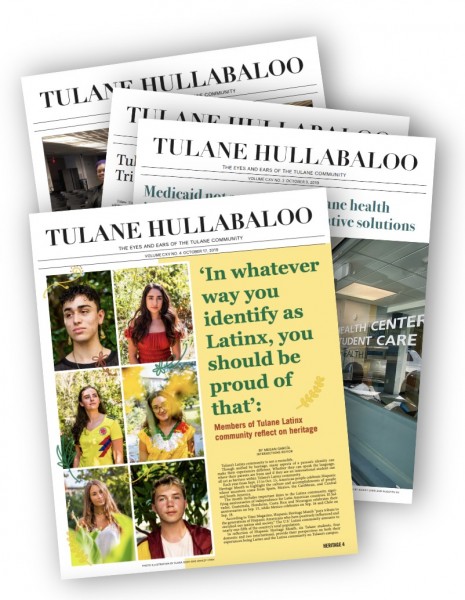
Robert Chumbley writes in the Tulane Hullabaloo:

Elections are detrimental to the establishment of diversity of thought in any given student government. Cognitive diversity is more important to the success of political leadership than relying solely on demographic diversity, which can potentially foster differences in thinking but does not guarantee it.

When individuals with varying opinions interact, these relationships are more conducive to innovation and the development of problem solving abilities. Given that cognitive diversity and the ensuing boon to collective problem solving should be a higher priority than the maintenance of elections for traditional-ideological purposes, Tulane ought to replace USG elections with sortition, the random selection of individuals for offices.

The reason for that logical jump may not be intuitively obvious, but the fact is that random allotment of political offices promotes cognitive diversity and improves problem solving ability.

Random selection does not produce a mob of unqualified commoners. In truth, those who object to sortition on the basis of “lack of qualification” are effectively dividing the population into commoners and elites, the former of whom deserve to be managed and the latter of whom deserve to manage by virtue of their special “qualifications,” whatever those are alleged to be.
Continue reading

People in “increasingly autocratic” regimes show confidence in “democracy” in their countries

The Centre for the Future of Democracy is based at Bennett Institute for Public Policy at the University of Cambridge aims “to explore the challenges and opportunities faced by democratic politics over the coming century”. Back in January, the Centre has published a report [PDF] titled “Global Satisfaction with Democracy 2020”. The report is based on what seems like a very useful data set created by combining multiple survey data sources comprising 3,500 surveys from many countries around the world over the years 1973 to 2020 asking citizens whether they are satisfied or dissatisfied with democracy in their countries.

The key findings are not surprising:

Across the globe, democracy is in a state of malaise. In the mid-1990s, a majority of citizens in countries for which we have time-series data – in North America, Latin America,Europe, Africa, the Middle East, Asia and Australasia – were satisfied with the performance of their democracies. Since then, the share of individuals who are “dissatisfied” with democracy has risen by around +10% points, from 47.9 to 57.5%.

This is the highest level of global dissatisfaction since the start of the series in 1995. After a large increase in civic dissatisfaction in the prior decade, 2019 represents the highest level of democratic discontent on record.The rise in democratic dissatisfaction has been especially sharp since 2005. The year that marks the beginning of the so-called “global democratic recession” is also the high point for global satisfaction with democracy, with just 38.7% of citizens dissatisfied in that year. Since then, the proportion of “dissatisfied” citizens has risen by almost one-fifth of the population (+18.8%).
Continue reading

Martin: convert the Upper House to one based on sortition

Peter Martin, a reader of the Adelaide, SA, Australia newspaper InDaily, wrote to share his thoughts after reading an article complaining about the going-ons in the SA Upper House:

Commenting on the opinion piece: Richardson: The House where democracy goes to sleep

An interesting account, but not really surprising.

Why doesn’t SA lead the nation (again) in social and political reform and convert the Upper House to one based on sortition – ie members are selected for short terms via random ballot from the electoral list, just as juries are chosen for our legal system.

We know juries work well, and that the task is taken very seriously by all citizens. People would be paid for their time, and could receive ample expert support in their deliberations.

Such a change would end the need for politicians in the Upper House, make political parties and lobbying redundant. – Peter Martin

Jacquet, Niessen and Reuchamps: Sortition, its advocates and its critics

A new paper (full text) in International Political Science Review by Belgian academics Vincent Jacquet, Christoph Niessen and Min Reuchamps titled “Sortition, its advocates and its critics: An empirical analysis of citizens’ and MPs’ support for random selection as a democratic reform proposal” is a useful survey-based study comparing the attitudes of Belgian citizens towards sortition to those of Belgian MPs. As may be expected, and as can be seen in the figure above, MPs are much more reluctant than citizens to hand off power to allotted bodies.

Abstract: This article explores the prospects of an increasingly debated democratic reform: assigning political offices by lot. While this idea is advocated by political theorists and politicians in favour of participatory and deliberative democracy, the article investigates the extent to which citizens and MPs actually endorse different variants of ‘sortition’. We test for differences among respondents’ social status, disaffection with elections and political ideology. Our findings suggest that MPs are largely opposed to sortitioning political offices when their decision-making power is more than consultative, although leftist MPs tend to be in favour of mixed assemblies (involving elected and sortitioned members). Among citizens, random selection seems to appeal above all to disaffected individuals with a lower social status. The article ends with a discussion of the political prospects of sortition being introduced as a democratic reform.

Cirone: Lotteries in Political Selection

A 2019 paper by Alexandra Cirone, Assistant Professor of Government at Cornell University, is titled “When democracy is broken roll the dice: Lotteries in political selection”.

There is a long tradition in political science and law that analyzes the benefits of lotteries in political selection (Manin 1997; Elster 1989; Engelstad 1989; Dowlen 2009; Duxbury 1999; Ober 1993 among many others). Most readers will be familiar with selection by lottery – also called sortition – where individuals are randomly chosen for political office.

The element of chance in a lottery has always captured our imaginations. Yet from a policy perspective, lotteries are now being proposed in various forms to address democratic deficits. Lottery-based selection of high-ranking politicians have been suggested for the national parliaments of the UK and France, as well as for the supranational institutions of the European Union. Citizens assemblies have been implemented in a wide range of countries, at both the local and national levels (Fishkin 2011).

However, lottery-based political selection is no panacea. There are a number of shortcomings to these processes. First, no matter which selection rule, it is likely that elites can still be disproportionately involved in politics, and lotteries don’t insulate all democratic institutions from partisan or corrupt pressures. Second, politics benefits from investment in expertise and career politicians; the uncertainty inherent in random selection of permanent institutions could disincentivize potential candidates from acquiring skills or experience. Alternatively, problems with recruitment and attrition from selected citizens will always be an issue with lottery-based selection; and randomly chosen officials might lack democratic legitimacy, which could impair their ability to do their job well. Third, even implementing lotteries in the form of temporary citizens assemblies require time, resources, and careful design of the process. Lotteries are also difficult to endogenously implement, particularly at top levels of governance — political parties and other groups are too invested in current systems of selection, so it is unlikely we will see a return to the pure sortition of ancient times.

Still, there is distinct promise to the use of lotteries in political selection, to help include more citizens in the democratic process. By examining unique institutional experimentation in the past, and by adapting democratic initiatives based on more recent instances of lottery-based selection, it may be possible to alleviate current democratic shortcomings.

Knowing your arse from your Albo: how political parties might access the ‘blind break’ to get better leaders

Herewith a brief post I wrote for my (mostly Australian) audience sketching out one possible use of sortition within a political party rather than the political system itself. As those reading this blog with any attentiveness will know, this is part of my own approach to sortition as one of a number of ‘hacks’ that can help unpick some of the pathologies of oligarchies of various kinds both specific and systemic.

A lottery is a defensible way of making a decision when, and to the extent that, it is important that bad reasons be kept out of the decision.
Peter Stone

Left of centre parties have been serving up seriously, obviously bad candidates for years now. That happened at the last election in the US and will happen at the next one. It’s happened at the last two elections in Australia and looks like happening at the next one. This nearly happened to the Liberal Government in Australia when they nearly acquired Peter Dutton as leader.

Why?
Continue reading

Replacing elections with lotteries on The Daily Show

Malcolm Gladwell, who recently had an episode on his podcast devoted to sortition, was interviewed yesterday on The Daily Show and for a few seconds in the beginning of the segment the topic of replacing elections with lotteries was “discussed” (for some definition of this term). It is really a shame that this was not tied to the topics mentioned during the rest of the segment: policing and struggles for democratization of society in the present and in the past.

Consensus in this group

I would like to identify the ideas held by members of this group that reach the level of consensus. Can I assume that there is a general consensus that sortition is better than elections?

At the other end, there appears to not be consensus that using sortition to replace elections in a legislative body can be accomplished using one sortition-selected body that does it all vs. an agenda-setting sortition-selected body working in conjunction with one or more policy-deciding mini-publics. And there is not consensus about whether a bicameral legislature is effective if one chamber is elected and one is sortition-selected.

What are the ideas in the group that actually reach the level of consensus?