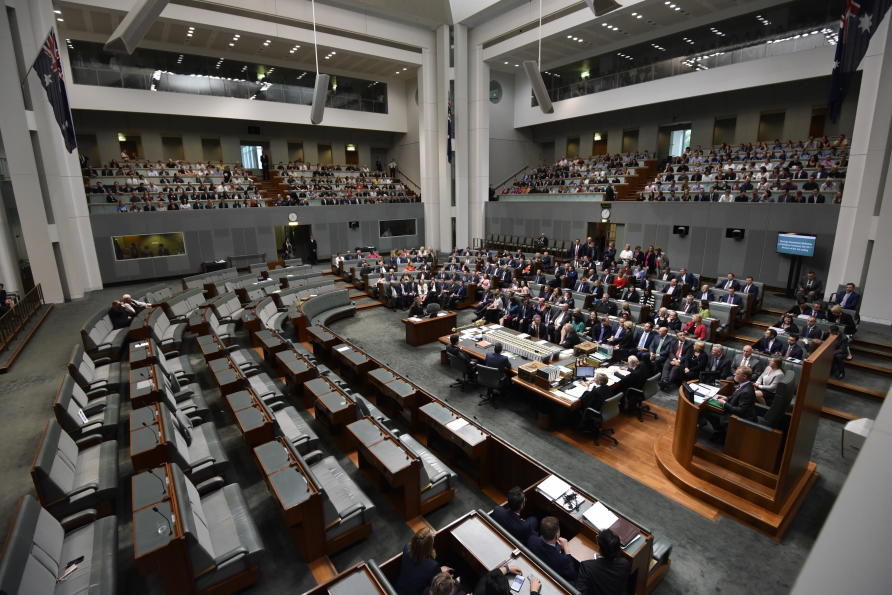
IPSA World Congress, 25-29 July 2020

The Call for Papers is currently out for the World Congress of the International Political Science Association. The congress will take place on 25-29 July 2020 in Lisbon. I am currently involved with an effort to assemble a panel or two for this meeting. The focus will be on combining sortition with election and other institutional mechanisms.

The Call for Papers can be found here: https://wc2020.ipsa.org/wc/home. If you have any interest in joining a panel like this, please let me know ASAP. The deadline is coming rather fast–10 October, in fact.

The principles of representative government and the French sortitionists

A fun paper paper by Samuel Hayat, “La carrière militante de la référence à Bernard Manin dans les mouvements français pour le tirage au sort”, Participations 2019/HS (Hors Série) [original in French, abstract in English], tells the story of how Bernard Manin’s book The principles of representative government came to play a role in the sortitionist movement in France. The bottom line, according to Hayat’s telling, is that it is all Etienne Chouard’s doing. Hayat also claims that Manin’s book was not the source of the reformists’ interest in sortition but rather that they, and in fact mostly Chouard himself, used the book, with its impeccable academic credentials, as a legitimating force for their position.

Hayat’s paper seems to serve as the starting point for Antoine Chollet (“Les postérités inattendues de Principes du gouvernement représentatif : une discussion avec Bernard Manin” by
Antoine Chollet and Bernard Manin, Participations 2019/1 (N° 23)”, [original in French, abstract in English]) and for his claim that Manin’s book was misunderstood by both activists and scholars as a polemic in favor of sortition, when in fact Manin is pretty happy with elections, which he sees as mixing democratic and aristocratic elements.
Continue reading

The cartelization thesis

A paper by Richard Katz and Peter Mair called “Changing models of party organization and party democracy: The emergence of the cartel party” published in Party Politics Journal in 1995 (and based on a 1992 workshop presentation by the same authors) spurred a body of academic work in political science dealing with the “cartelization” of party politics. In the abstract of a 2009 paper by the same authors (“The Cartel Party Thesis: A Restatement”) Katz and Mair write:

The cartel party thesis holds that political parties increasingly function like cartels, employing the resources of the state to limit political competition and ensure their own electoral success.

The thesis sees this cartelization as a phase in the evolution of party dynamics. Earlier phases were the “cadre party” (19th c.), the “mass party” (first half of 20th c.), and the “catch-all party” (second half of the 20th c.). While the mass parties and the catch-all parties competed for votes by presenting competing policies, the thesis asserts, the cartel parties do not. They huddle around a neo-liberal consensus and offer the public no alternatives.

In their 2005 paper “From Catch-all Politics to Cartelisation: The Political Economy of the Cartel Party”, Mark Blythe and Richard Katz explain the cartelization phenomenon as follows:

We argue that two key changes have occurred that have effectively turned parties from maximising competitors into risk averse colluders: the limits of catch-all politics, and the rhetoric and reality of globalisation.

The first factor, according to Blythe and Katz, is that by the 1970’s the policy competition between parties has produced welfare policy that was at the maximum capacity of the state to provide. Supposedly this was the dominant dimension along which parties were competing, and it has now become impossible to compete along this dimension any longer.

The second factor is a reduction in the ability of states to control the economy due to globalization:

In brief, catch-all parties were creatures of the Keynesian era. States were assumed to have primary responsibility for ensuring jobs and growth and were also assumed to be able to marshal fiscal instruments to those ends.

Continue reading

Roslyn Fuller: Don’t be fooled by citizens’ assemblies

Highly recommended post by Roslyn Fuller on UnHerd.com:

I believe that the biggest threat to democracy is the belief among the current societal elite that what they want and what democracy is are the same thing – and that tweaking the rules of the game to get what you want is therefore right, just and somehow unto itself democratic.

This trend that sees democracy as a set of particular decisions, rather than just as a method for making decisions, has been well under way for some time and tends to divide the world between ‘informed’, ‘correct’ decisions, and ‘uninformed’ ‘incorrect’ decisions. ‘Correct’ decisions are automatically democratic; ‘incorrect’ ones are not.

One of the ways that is currently in vogue for ensuring ‘informed’, ‘correct’ decisions is to hold so-called citizens’ assemblies, a democratic ‘innovation’ that many leaders currently feel assured will bring them the results that they want.

This is followed by a nuanced (and sceptical) examination of the use and abuse of randomly-selected citizens’ assemblies, focusing on (wilful) misunderstandings of Irish CAs:

British politicians and intellectuals apparently feel themselves entitled to just blithely repeat these myths as a justification for holding such assemblies on all manner of decisions in Britain.

Are citizens’ assemblies little more than institutional band aids?

The following are some excerpts from an article by Tom Gerald Daly, from the University of Melbourne, in Pursuit (a publication of the University):

Australian democracy: crisis, resilience and renewal

Given the global rise in authoritarian populist parties and political forces that are opposed to the key tenets of liberal democracy, Australia’s own democracy appears on the surface to be in relatively good health.

For instance, most democracy assessment indices (although far from perfect as reflections of reality) have not registered any declines for Australian democracy for the past decade.

That said, a dominant view has taken hold that Australia’s political system is in crisis, paralysis and even decline. The public images of both the federal government and parliament has been tarnished by a variety of factors, especially the regularity with which Prime Ministers have been ousted between elections – since 2007 Australia has had six prime ministers, when in the previous 36 years (1971-2007) there were only six.

Some polls suggest that public faith in the political system and democracy has plummeted. A broad survey of polling data in December 2018 showed that fewer than 41 per cent of Australian citizens are satisfied with the way democracy works in Australia, a stark drop from 86 per cent in 2007.

There is a strong case then for some reform of our political institutions.
Continue reading

Sortition in the press

Some recent media items mentioning sortition:

Jack Hunter, a research fellow at think tank IPPR North, writes in PSE proposes to use the Northern Powerhouse to encourage greater social purpose among businesses in the region by having investment directed by an allotted citizen panel.

The Northern Powerhouse was created in Whitehall, but is increasingly something owned and championed by the north’s leaders. Because of this, there is also the opportunity to leverage the strength of the north’s history and culture, to develop a more civic role for businesses.

In a recent report, IPPR North set out how to make this happen. One idea we have put forward is the creation of a Northern Powerhouse Community Fund. We suggested that a pan-northern charitable fund should be set up, funded through a voluntary contribution of 1% of profits from northern businesses in order to help to fund voluntary and community activity in the region. Decisions about investment would be made by a panel of northern citizens, chosen by sortition.

Such a fund would give firms across the north a new opportunity to put their money where their mouth is. At the same time, it could be an opportunity to give people in the north a greater say in where money in their region goes.

Allotted citizen panels are part of Extinction Rebellion’s call to action:
Continue reading

On the unrepresentativeness of representatives stretching back through time

Who Becomes a Member of Congress? Evidence From De-Anonymized Census Data
Daniel M. Thompson, James J. Feigenbaum, Andrew B. Hall, and Jesse Yoder #26156

Abstract:
We link future members of Congress to the de-anonymized 1940 census to offer a uniquely detailed analysis of how economically unrepresentative American politicians were in the 20th century, and why. Future members under the age of 18 in 1940 grew up in households with parents who earned more than twice as much as the population average and who were more than 6 times as likely as the general population to hold college degrees. However, compared to siblings who did not become politicians, future members of Congress between the ages of 18 and 40 in 1940 were higher-earners and more educated, indicating that socioeconomic background alone does not explain the differences between politicians and non-politicians. Examining a smaller sample of candidates that includes non-winners, we find that the candidate pool is much higher-earning and more educated than the general population. At the same time, among the candidate pool, elections advantage candidates with higher earnings ability and education. We conclude that barriers to entry likely deter a more economically representative candidate pool, but that electoral advantages for more-educated individuals with more private-sector success also play an important role.

Sortition in Ha’aretz

Ha’aretz is Israel’s elite newspaper. With Israel’s second election day of 2019 coming up in about a month, Ha’aretz published in its latest weekend magazine an article by Hilo Glaser offering readers several reform ideas for the political system. Sortition got top billing. I was interviewed for the article. Below is a translation of some excerpts (original in Hebrew, paywalled).

The method: Sortition (i.e., lottery instead of elections)

The idea: Advocates of sortition note that modern democracy embraces ideas originating from Ancient Greece, but it disposes of the government mechanism that enabled their application. In ancient democracy public offices were appointed by lottery among the entire citizenry. This is how officials, clerics, and even government ministers were appointed.

In 2014, Prof. Irad Malkin published an article in Ha’aretz in which he explained that “the lottery was the most effective tool against the oligarchy of money and government, drawing the citizens into the political activity and allowing them to take part at different levels: in the sovereign assembly, in the high council, and in the courts. This worked well for 200 years.”

Not only historians are calling to revive the lottery mechanism. Yoram Gat, a software engineer and a statistics Ph.D., has recently published an article challenging the mechanism of elections in view of the public frustration with elected institutions and offering sortition as an alternative. He claims that allotment of political office holders will result in optimal representation of the different groups in the population.
Continue reading

Code of Good Practice for allotted mini-publics involved with legislation

This text is meant as a start to discuss the problem, it is not even a draft. My hope is nevertheless that we will reach that point, or even farther.

Introduction: As the use of mini-publics appointed by sortition is spreading around the world, and is reaching the legislative level, a code of good practice is essential. A glossary is also necessary.

We know that not all essential criteria can always be met, but we have to know at least what to aim for and how to refute well-founded criticism and protect a valuable democratic system. Citizens must know that there are essential choices to make that are of significant impact on the outcome and on the reliability of the results.

The first question we have to ask ourselves is what the kind of application it is we have at hand. The participation ladder from Arnstein may be of help. The participation cube from Archon Fung is somewhat more complicated but more up to date. Or we can look for an answer ourselves.

– Is the proposed mini-public of significant influence on legislation? Answers may differ, but we have to make a decision.

The Oregon CIR system has a noticeable influence on legislative decision making (by referendum in this case). Providing information is a very important issue in any form of democratic legislation.

The Washington state panel that sets the wages of elected legislators has no influence on legislation.

The Irish panel is also not of direct significant influence on legislation. It makes non-binding suggestions to the elected body which decides to whether to initiate a referendum or not.

A Jury in the judicial system has no relation to legislative use.

For this reasons I suggest that the first code of good practice is about the lowest legislative level, the Oregon CIR (or alike).  Although the Oregon CIR is difficult to place at the Arnstein ladder I propose to qualify it at level 6 for the sake of comparing it with other initiatives.

Schulson and Bagg: Sortition needs to become part of mainstream U.S. political discourse

Michael Schulson is a journalist who has written before about sortition. Schulson and Samuel Bagg, a democratic theorist at McGill University, have a new article about sortition in Dissent magazine. Here are some excerpts.

Give Political Power to Ordinary People

To fight elite capture of the state, it’s time to consider sortition, or the assignment of political power through lotteries.

Our broken campaign finance system is a longstanding target of progressive ire. And as Republican state legislatures have made increasingly aggressive moves to entrench minority rule, many people are beginning to see a broader defense of democratic integrity as a crucial part of any left agenda. Yet most of the attention of reformers has been limited to the electoral process—perhaps because we tend to assume that getting “our people” into office will solve the problem.

It won’t. Elite capture of the state extends far beyond the influence of large donors on elections.
Continue reading