On the unrepresentativeness of representatives stretching back through time

Who Becomes a Member of Congress? Evidence From De-Anonymized Census Data
Daniel M. Thompson, James J. Feigenbaum, Andrew B. Hall, and Jesse Yoder #26156

Abstract:
We link future members of Congress to the de-anonymized 1940 census to offer a uniquely detailed analysis of how economically unrepresentative American politicians were in the 20th century, and why. Future members under the age of 18 in 1940 grew up in households with parents who earned more than twice as much as the population average and who were more than 6 times as likely as the general population to hold college degrees. However, compared to siblings who did not become politicians, future members of Congress between the ages of 18 and 40 in 1940 were higher-earners and more educated, indicating that socioeconomic background alone does not explain the differences between politicians and non-politicians. Examining a smaller sample of candidates that includes non-winners, we find that the candidate pool is much higher-earning and more educated than the general population. At the same time, among the candidate pool, elections advantage candidates with higher earnings ability and education. We conclude that barriers to entry likely deter a more economically representative candidate pool, but that electoral advantages for more-educated individuals with more private-sector success also play an important role.

Sortition in Ha’aretz

Ha’aretz is Israel’s elite newspaper. With Israel’s second election day of 2019 coming up in about a month, Ha’aretz published in its latest weekend magazine an article by Hilo Glaser offering readers several reform ideas for the political system. Sortition got top billing. I was interviewed for the article. Below is a translation of some excerpts (original in Hebrew, paywalled).

The method: Sortition (i.e., lottery instead of elections)

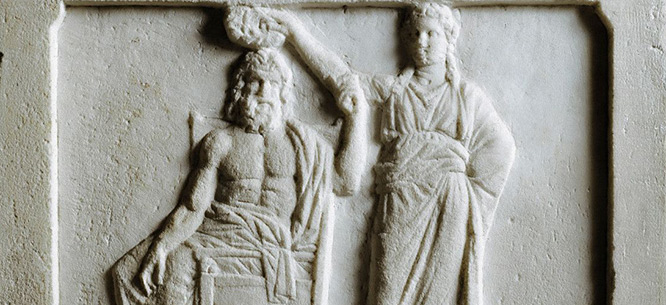
The idea: Advocates of sortition note that modern democracy embraces ideas originating from Ancient Greece, but it disposes of the government mechanism that enabled their application. In ancient democracy public offices were appointed by lottery among the entire citizenry. This is how officials, clerics, and even government ministers were appointed.

In 2014, Prof. Irad Malkin published an article in Ha’aretz in which he explained that “the lottery was the most effective tool against the oligarchy of money and government, drawing the citizens into the political activity and allowing them to take part at different levels: in the sovereign assembly, in the high council, and in the courts. This worked well for 200 years.”

Not only historians are calling to revive the lottery mechanism. Yoram Gat, a software engineer and a statistics Ph.D., has recently published an article challenging the mechanism of elections in view of the public frustration with elected institutions and offering sortition as an alternative. He claims that allotment of political office holders will result in optimal representation of the different groups in the population.
Continue reading

Code of Good Practice for allotted mini-publics involved with legislation

This text is meant as a start to discuss the problem, it is not even a draft. My hope is nevertheless that we will reach that point, or even farther.

Introduction: As the use of mini-publics appointed by sortition is spreading around the world, and is reaching the legislative level, a code of good practice is essential. A glossary is also necessary.

We know that not all essential criteria can always be met, but we have to know at least what to aim for and how to refute well-founded criticism and protect a valuable democratic system. Citizens must know that there are essential choices to make that are of significant impact on the outcome and on the reliability of the results.

The first question we have to ask ourselves is what the kind of application it is we have at hand. The participation ladder from Arnstein may be of help. The participation cube from Archon Fung is somewhat more complicated but more up to date. Or we can look for an answer ourselves.

– Is the proposed mini-public of significant influence on legislation? Answers may differ, but we have to make a decision.

The Oregon CIR system has a noticeable influence on legislative decision making (by referendum in this case). Providing information is a very important issue in any form of democratic legislation.

The Washington state panel that sets the wages of elected legislators has no influence on legislation.

The Irish panel is also not of direct significant influence on legislation. It makes non-binding suggestions to the elected body which decides to whether to initiate a referendum or not.

A Jury in the judicial system has no relation to legislative use.

For this reasons I suggest that the first code of good practice is about the lowest legislative level, the Oregon CIR (or alike).  Although the Oregon CIR is difficult to place at the Arnstein ladder I propose to qualify it at level 6 for the sake of comparing it with other initiatives.

Schulson and Bagg: Sortition needs to become part of mainstream U.S. political discourse

Michael Schulson is a journalist who has written before about sortition. Schulson and Samuel Bagg, a democratic theorist at McGill University, have a new article about sortition in Dissent magazine. Here are some excerpts.

Give Political Power to Ordinary People

To fight elite capture of the state, it’s time to consider sortition, or the assignment of political power through lotteries.

Our broken campaign finance system is a longstanding target of progressive ire. And as Republican state legislatures have made increasingly aggressive moves to entrench minority rule, many people are beginning to see a broader defense of democratic integrity as a crucial part of any left agenda. Yet most of the attention of reformers has been limited to the electoral process—perhaps because we tend to assume that getting “our people” into office will solve the problem.

It won’t. Elite capture of the state extends far beyond the influence of large donors on elections.
Continue reading

Sortition in the New Yorker

Another step in the thousand mile march: Sortition is positively featured in the second paragraph of Masha Gessen’s article in the New Yorker. The oligarchical nature of elections is rather matter-of-factedly asserted:

The concept of democracy rests on the premise that any citizen is a potential member of government. The ancient Athenian choice of sortition—the selection of government by lottery—was based on the understanding that elections would inevitably favor the aristocracy, and in a democracy the government should be a mirror of the governed. The American system has proved the Athenians right. Access to our electoral system is determined by the candidates’ ability to attract financial contributions. The contest itself is rigged in favor of the white, the highly educated, and the privileged—those who reproduce the class, race, and style of their predecessors.

Bradatan: Today’s democracy favors the the power-hungry, arrogant, oppressively self-assertive political animal

Costica Bradatan, professor of philosophy at Texas Tech University, has a free-ranging essay about democracy in the New York Times. It is a rather incongruous mass of ideas, some more convincing than others. It does mention (approvingly? hard to tell) sortition as one of the fundamental foundations of Athenian democracy.

The institutions of democracy, its norms and mechanisms, should embody a vision of human beings as deficient, flawed and imperfect.

Ancient Athenian democracy devised two institutions that fleshed out this vision. First, sortition: the appointment of public officials by lot. Given the fundamental equality of rights that all Athenian citizens — that is, free male adults — enjoyed, the most logical means of access to positions of leadership was random selection. Indeed, for the Athenian democrats, elections would have struck at the heart of democracy: They would have allowed some people to assert themselves, arrogantly and unjustly, against the others.

The other fittingly imperfect Athenian institution was ostracization.

Bradatan notes how different is the modern system that self-describes itself as “democracy”:
Continue reading

Sortition and democracy. History, instruments, and theories: a special issue of Participations journal

Participations journal’s latest issue is devoted to sortition. This appears to be a treasure trove. The issue, titled “Sortition and democracy. History, instruments, and theories”, has 24 papers comprising over 500 pages. The French text of all papers seems to be allow unrestricted access.

The papers are organized into 5 sections:

  1. The ancient world
  2. The medieval world and the modern world
  3. The Chinese world
  4. The contemporary world
  5. Postface

The authors include familiar names (Sintomer, Demont, Courant) as well as many that I, at least, am not familiar with.

“The contemporary world” section has some papers that seem particularly interesting, e.g., Samuel Hayat’s “The militant trajectory of the reference to Bernard Manin in French activism for sortition” and Julien Talpin’s “Does random selection make democracies more democratic? How deliberative democracy has depoliticized a radical proposal”.

Another intriguing paper is Alexei Daniel Serafín Castro’s “Political representation and the uses of sortition in Mexico: 1808-1857” which discusses a historical application of sortition that I have never heard of before.

A response to Cody Hipskind, part 3 of 3

Cody Hispkind’s post is here. The previous parts of my response are here and here.

Political activism under a democratic system

A major tenet of democratic ideology is that people are the best representatives of their own interests: when provided sufficient opportunity, each person and each group of people are best able to understand and express their own values and ideas and the actions that should be taken in order to promote these values and ideas. This tenet is in contrast to “republican” ideology which shares with democratic ideology the idea that everyone’s interests should count equally, but asserts that some people (“a natural aristocracy”) are best qualified to determine what those interests are and how they should be pursued, and therefore those people should be in charge.

Elections are a republican, anti-democratic mechanism: they empower an elite to determine public policy for others (whether this elite may be called a “natural aristocracy” is a matter of taste, I guess). That elite should be able to represent itself, the democratic tenet asserts, but is quite unlikely to represent the majority of the people who are very different from it. Sortition, through the process of statistical sampling, creates a body that by representing itself would represent the public at large.

However, the capacity for self-representation is not a spontaneous, automatic capacity. Getting a group of people (or a single person, for that matter) to the state where it is able to represent its own interests effectively is not a trivial matter. From an institutional standpoint, there are clearly some preconditions that need to be met: there need to be enough resources at the disposal of the group so that reliable information can be gathered. There needs to be enough time to discuss matters, determine an agenda, fashion proposals, debate them, amend them, vote on them, evaluate the effect of the adopted policy, reconsider the matter and repeat the procedure over time.
Continue reading

A response to Cody Hipskind, part 2

Cody Hispkind’s post is here. The first part of my response is here.

Using an electoral campaign as a focus for political organization and action

Electoral campaigns are like military campaigns. Like military campaigns, electoral campaigns can in principle be fought for good causes – causes that serve the greater good. But there is no reason to believe this is generally the case. Like military campaigns, electoral campaigns, at least those with any traction, are invariably led by an elite, for purposes determined by that elite, and with power in them held by that elite. Like in war, the masses are mobilized by the elite using sloganeering and propaganda rather than rational argumentation and once mobilized they play the role of canon fodder. In political campaigns, the masses are milked for their political and moral energy as well as for time, money and, eventually, votes. Yes – there could be benevolent elites who promote good causes, but these surely are the exception. Thus, as a rule, electoral campaigns serve elite purposes.

It might be objected that it would be easier to recruit the electorate to campaigns that serve the greater good. This, however, relies on the false assumption that people join political campaigns based on informed and considered analysis of their objectives and prospects. Just as is true about recruits to the military, a realistic assessment of the objectives, actions and consequences of the organization which one joins is rarely a major factor in the decision to join a campaign.

Even if one has successfully overcome the inherent oligarchizing tendencies of an electoral campaign and managed to send a democratically-minded delegate to an elected chamber, one has won a single contest. While one is busy with the effort of identifying a campaign worth supporting and then putting one’s precious spare time and energy into that campaign, a well-funded effort by a narrow interest group has broadcast its messages into the minds of millions and has co-opted promising candidates as well as those already in power. Rather than getting an effective platform, the rare democratically-minded delegate is ignored or painted in mass media as a lone lunatic.

So the fact that electoral campaigning may actually be one of the relatively more effective ways to promote democratic goals in an electoral system is really an indication of how dysfunctional that system is. With all its futility, an electoral campaign may actually be a relatively promising political activity in a system that is so thoroughly oligarchical.

The oligarchizing effects of electoral campaigning are largely effects of mass politics in general, where nominally egalitarian political relations in fact almost invariably result in hierarchical relations. Having no formal hierarchy is far from a guarantee of democracy. Contrary to liberal, Marxist and progressive dogmas, democracy in large groups is not a spontaneously occurring phenomenon. It does not just appear due to the good intentions and hard work of the members of the group. It needs to be designed and applied with care and rigor in order to exist and thrive.

A response to Cody Hipskind, part 1

Thank you Cody for your post. I believe it can serve as a starting point for a fruitful discussion – a discussion that has already started in the comments thread to the post.

I would like to address various points you made separately. Here are the first 3 points, corresponding to the first 6 paragraphs in your post.

1. Class and political conflict

It is an obvious fact of life that different people have different political ideas. If everybody agreed on everything politics would be very easy – any one of “us” would do what “we” all agree upon. Still, there is a tendency, which used to be the dominant line of elite political thought in pre-modern times but is common today especially among liberals, to argue, or at least to imply, that disagreements are over means rather than ends. That is, that “we” all agree what is the common good (or at least would agree what is the common good if some of us overcame our ignorance) and the main difficulty is finding competent people who would be able to achieve that good. This translates to elitism. The elitism used to be explicit with the pre-moderns, the archetype being Plato, it was slightly less explicit with the early moderns, e.g., the American Founders, and it is much more implicit today. Nevertheless, it is often still just below the surface of the democratic rhetoric.

The notion that “we” all agree on goals can be dismissed. The common-goals ideology and the attendant elitism are of course self-serving notions for those in power. They imply that to the extent policy produces undesirable outcomes – say enrichment of those in power and their associates and the impoverishment of much of the rest of the population – then those in power can at most be blamed for incompetence rather than corruption. (Naturally, they would in fact argue that unfortunate as the outcomes are, they are necessary for the achievement of the commonly agreed goals.)
Continue reading