


For some time now we’ve been ‘proving up’ citizens’ juries as a means of consulting the people, but generally within the context of governments being in charge. As a result they’ve been mostly relatively innocuous. For instance the first two in South Australia were focused on making Adelaide’s nightlife safe and vibrant and getting motorists and cyclists to share the road more safely. They’re pretty anodyne and boutique issues for politicians so it’s pretty low risk. They might generate some answers they’re happy with, help get community buy-in to tricky issues. And if they don’t work out as hoped for, governments can walk away without too much angst.
Having tried exercises with a degree of difficulty of about 3 out of ten, the then Premier of South Australia Jay Weatherill had a rush of blood to the head and tried the citizens’ jury with pike and triple twist – rated in the diagnostic and statistical manual of democracy at 10. Should South Australia start a nuclear waste storage industry? The answer was … no, which wasn’t much fun for anyone. Elsewhere in Melbourne a citizens’ jury worked on a ten year budget plan which was certainly well received at the time. The plan is now a few years old and I’m not sure how well it’s stood the test of time.
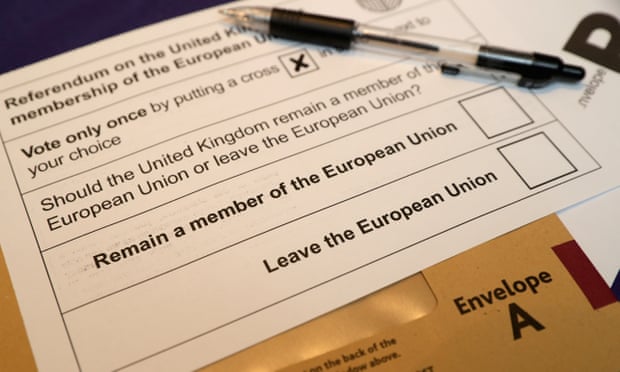
In the UK, a consortium of academic and other interests held a citizens’ jury on Brexit but, in the angst ridden atmosphere of Brexit Means Brexit Britain, they were at great pains not to antagonise the politicians who were planning on spending the next four years masterminding what the overwhelming majority of them understood to be the disaster of Brexit (you know, the way Australia’s politicians did abolishing carbon pricing against the better judgement of around 80 percent of them – it’s costing the budget over $10 billion a year since you asked.)
Thus, as the organisers collateral put it dutifully, “The UK’s voters have decided to leave the EU. The Citizens’ Assembly on Brexit is not reopening this question. This decision has already been made.”[1] However I can’t think of any big change that came about from people playing by the rules of the existing system and asking nicely. And the fact is that sortition has roots going deep into our history and culture – in fact back two and a half millennia to Athens, the birthplace of democratic politics, but also back more than 800 years to Magna Carta in our legal system in the form of juries. As public trust plummets for so many institutions, its trust in juries is alive and well and while ‘vertical’ trust – the trust of people in large and powerful institutions – has been falling, horizontal trust – in people’s peers and People Like Them has not fallen and may have risen.
And, not being able to recall any form of political activism that brought about major change except by asserting its own legitimacy in competition with the legitimacy of the existing system, I want to find ways of confronting the existing system in its weakest places with the legitimacy of citizens’ juries and sortition where they are strongest. This is the way I put it in a recent interview:
Filed under: Athens, Elections, History, Juries, Proposals, Sortition | 16 Comments »
 How can we fix our broken democracies? What lessons can we learn from the past and what bold new democratic experiments are happening right now? At Thinking on Sunday on March 11 at
 Arturo Íñiguez, an occasional contributor to Equality-by-Lot, recently published a rather beautiful essay touching upon sortition which weaves together history, linguistics and political philosophy (
 05. The question today is that of rethinking forms of organization, ways of being together for the long term, outside of the electoral forces.
 Adam Cronkright
 Ali
Ali Ahmed R. Teleb
 avanderven
 avergne
 Alex Kovner
 azakaras
 Brett Hennig
 campbellwallace
 Simon Threlkeld
 Nick Coccoma
 codyhipskind
 Common Lot Sortitionist
 Conall Boyle
 constitutionalism
 davidschecter
 Ethan McCutchen
 graytmatter
 gtridimas
 Henry Tuttle
 H.J. Hofkirchner
 HpR
HpR James Kierstead
 John Burnheim
 jgarry20151
 Jochen Krattenmacher
 johnedwardtaylor
 johnhuang865
 Jonathan Crock
 keithsutherland
 Jacob Richter
 kkoreilly
 lukewhito
 SimonPek
 Nathan El
 Nicholas Gruen
 Owen Shaffer
 Patrick Chalmers
 Paul Gölz
 peterstone
 Pierre-Etienne Vandamme
 pronfeld
 Emil
Emil rcaze
rcaze richwbrown
 Roger Knights
 roslynfuller
 Pierre-Etienne Vandamme
 shaharavin
 tbouricius
 Ted Wachtel
 Joshua Laferriere
 theodorestathis
 towardsautonomyblog
 Wayne Liebman
 Yoram Gat
 Oliver Milne
