Posted on January 22, 2024 by Roger Knights
The “classical” justification for democracy was that it is, or should be, rule by an informed public opinion acting, after deliberation, in the public interest.
Investigations, especially by post-war political science, discovered that the democracy we have actually got is not the classical model the Founders had in mind, but in fact mostly the rule of factions and partisans, which the Founders dreaded.
Factions include organized pressure groups and other “players.” They are only fitfully concerned—truly and wisely concerned—with the public interest.
Some political scientists have called this system “pluralism” or “polyarchy” (the rule of many); others have called it “interest group liberalism.” Both have concluded that elections are a mostly ceremonial affair and that it is unrealistic to expect (width-first) democracy to function in any very different way. They have also mostly concluded that polyarchy’s scramble isn’t so bad, especially compared to totalitarianism.
They hope that they may persuade you, that since it is impossible to do any good, you may as well have your share in the profits of doing ill. —Edmund Burke, The Philosophy of Edmund Burke, p. 148.
Continue reading →
Filed under: Books, Deliberation, Elections, History | 2 Comments »
Posted on January 5, 2024 by Roger Knights
Here are a few instances where DeMockery has badly failed us, and where Demiocracy [to be explained later] would have done a better job—and had greater legitimacy with the public, because of its Everyman composition. The priorities of common folk are not as much warped by the Pernicious P’s. (Their relative resistance to Propaganda, for instance, was portrayed by the cynicism of the “proles” in the saloon-set scenes in 1984.)
To me, as to the alienated Greeks I posted about yesterday, these outrages are not just incidental accidents, but revelations of the essential objectionable character of the political class that is nurtured and sustained by DeMockery.
There’s no such thing as a cheap politician. — Ferdinand Lundberg, Scoundrels All, 1968.
- The Great Depression, Part 1. I’ve read that some officials wanted the Federal Reserve to be more hawkish in 1927, because a house of cards was a-building due to its loose credit policy. But moderating the roaring Twenties then would have impinged on the wealth of Wall Streeters and dimmed the GOP’s presidential prospects in 1928, so pressure was applied to keep the party going. Even if this speculation isn’t 100% correct, it is the SORT of thing that is likely occur under DeMockery. For instance:
Also to blame is former President Donald Trump, who repeatedly pressured and even threatened to fire Federal Reserve Chairman Jerome Powell to continue to keep the interest rates low to aid his re-election campaign. When Mr. Trump was first elected, the 2007-09 recession and its aftereffects had more or less ended. But he wanted low interest rates to artificially boost the economy at great expense. He met with the Fed chairman to remind him of his expectations. —Letter to the WSJ, April 10, 2023, by A. Salinity.
Continue reading →
Filed under: Books, Elections, History, Press, Sortition | 10 Comments »
Posted on January 2, 2024 by Roger Knights
 Common Sense is a pamphlet written by Thomas Paine in 1775–1776 advocating independence from Great Britain to people in the Thirteen Colonies. In it he writes:
Yet I should be glad to ask how they [monarchists] suppose kings came at first? The question admits but of three answers, viz. either by lot, by election, or by usurpation. If the first king was taken by lot, it establishes a precedent for the next, which excludes hereditary succession. Saul was by lot, yet the succession was not hereditary, neither does it appear from that transaction there was any intention it ever should be. If the first king of any country was by election, that likewise establishes a precedent for the next; for to say, that the RIGHT of all future generations is taken away, by the act of the first electors, in their choice not only of a king, but of a family of kings for ever, hath no parallel in or out of scripture but the doctrine of original sin.
Filed under: Elections, History, Sortition | 2 Comments »
Posted on December 4, 2023 by Yoram Gat

Jack Graves writes in the East Hampton Star:
An Op-Ed in The Times not long ago [the author presumably refers to this. -YG] suggested that the ballot in this country be replaced by “sortition” — appointment by lot, which democratic Athens used in the 5th and 4th centuries B.C.E. to stock its populous Council, Assembly, and jury courts.
While the level of participation was very high, putting to shame our apathetic turnouts, Athenian democracy wasn’t at the root all that democratic: Women had no voice, neither did resident aliens, who could not own property; there were slaves, as many as 100,000 in the 4th century, it’s estimated in Thomas N. Mitchell’s “Athens: A History of the World’s First Democracy,” and in its Golden Age an aristocratic general and gifted orator, Pericles, essentially called the tune.
Socrates, who was to be sentenced to death for impiety, wasn’t a fan, nor were Plato and Aristotle, though he saw some potential good in it. Socrates said, “It is absurd to choose magistrates by lot where no one would dream of drawing lots for a pilot, a mason, a flute player, or any craftsman at all though the shortcomings of such men are far less harmful than those that disorder our government.”
Frankly, I see no reason why sortition would work any better in the United States, a vastly larger country, than the representative democracy (or democratic republic, if you will) that we already have; though it’s clear that the Electoral College has skewed things, according to smaller states’ disproportionate power, and, because of the winner-take-all allocation of electoral votes, focuses presidential campaigns on battleground states.
Filed under: Athens, Elections, History, Press, Sortition | 3 Comments »
Posted on October 22, 2023 by Yoram Gat
 A reader of the Indian political news website ThePrint contributes a sortition proposal.
The case for Sortition to replace elections
For most democrats electing politicians is the essential feature to prevent a free society from becoming a dictatorship.
Questions are raised about the legitimacy of [elections-based] systems! Politicians have little in common with the people they govern. Parliaments around the world are filled with crooks, criminals, frauds, imposters, illiterates or incompetent, uninformed, immature, lazy or questionable people. Rent-seeking or the perks of the office seem more on their mind than fulfilling duties of their office or campaign-promises. Elections create the illusion of choice, a circus masquerading as exercise of democracy.
Sortition presents an elegant solution. It was first implemented in the democracy of ancient Athens. Instead of electing Parliamentarians / Alders, Members of those bodies are randomly selected from a pool of suitable applicants. It has been a widely debated alternative to elections to pry politicians from the hands of all powerful Party-Presidents without them falling prey to deep-pocketed donors.
Continue reading →
Filed under: Elections, History, Press, Sortition | 1 Comment »
Posted on October 11, 2023 by Yoram Gat
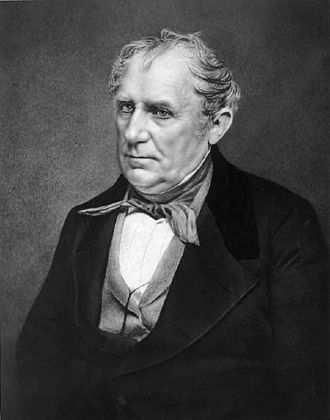 It turns out that the American author James Fenimore Cooper (1789 – 1851), primarily known today for the novel The Last of the Mohicans, wrote in 1835 a book of political theory titled The American Democrat. The book is a rather interesting document of the political views of the “democratic” elite of his time, which are remarkably similar to the views of the “republican”, explicitly anti-democratic, elite of a generation or two before – i.e., of the American founders.
Underneath the similarity, it is clear that there are now new concerns. While the founders expended most of their efforts optimizing and justifying “checks and balances” and considered their sentiment against the rule of the mob as an easy case to make, Cooper is concerned with dispelling any misapprehensions about the equality of men – indicating that democratic ideology is gaining political power in the early 19th century. Cooper explains to his readers that if men were really thought to be equals elections would be replaced with sortition:
The absolute moral and physical equality that are inferred by the maxim, that “one man is as good as another,” would at once do away with the elections, since a lottery would be both simpler, easier and cheaper than the present mode of selecting representatives. Men, in such a case, would draw lots for office, as they are now drawn for juries. Choice supposes a preference, and preference inequality of merit, or of fitness. (p. 79)
Filed under: Books, Elections, History, Sortition, Theory | 2 Comments »
Posted on October 7, 2023 by Yoram Gat
 Maurice Pope’s book The Keys to Democracy is the third book ever written advocating the use of sortition as a major component of a modern government. (The two earlier ones being Ernest Callenbach and Michael Phillips’s A Citizen Legislature and John Burnheim’s Is Democracy Possible?, both first published in 1985. Pope, who seems to have started writing at about the same time, was apparently unaware of either.) The great strengths of Pope’s writing are his independence of thought and his evident sincerity. Coming early into the field, and being a classicist rather than a political scientist, Pope was clearly breaking new ground, following his own logical train of thought. He was thus free from the burden of formulaically making connections to prior writings and from the petty-political considerations of self-promotion. This unique situation made a thoroughgoing impact on the book as a whole.
Authors of works about sortition (including Pope) generally share the ostensible aim of achieving some measure of democratization of society. But while this general aim is broadly shared, the consensus ends there because the detailed aims and the proposed mechanisms for achieving them vary widely. At the conservative end, the problem with the existing system is conceived as some sort of sclerosis. The main symptom of the problem is fatigue, or a lack of confidence. Sortition-based institutions are then seen as a way to infuse the system with new blood or new vigor, rejuvenating a system that is essentially sound but has for various reasons, that generally remain vague, fallen into a bad state. Associated with this view of things are generally quite modest proposals – advisory bodies that “help” current decision makers make more informed decisions. Even those more informed decisions are perhaps less important than the mere fact that allotted citizens are widely recognized as having had a part in the process. Indeed, what exactly the problems are with the current outcomes of the process and what are the expected improvements in terms of policy is usually not specified. In fact, sometimes the entire point is to have the allotted citizens themselves become more informed rather than making any changes in decision making. Writings in this vein tend to be heavy with references to the canon of “deliberative democracy” and light on the idea that democracy is a regime of political equality.
Continue reading →
Filed under: Academia, Athens, Books, Elections, Fiction, History, Juries, Participation, Press, Sortition | 10 Comments »
Posted on September 23, 2023 by Yoram Gat
 Josine Blok, a historian from Utrecht University, has a review of Maurice Pope’s The Keys to Democracy in H-Soz-Kult. In the last two paragraphs of the review, Blok gives her opinion about the substance of the book:
The quality of the argument is in my view quite uneven. Some of the political analyses and in particular the historical sections suffer from oversimplification, generalisation, and special pleading. For instance: “The political ideals and most of the political practices of Western civilisation go back through Venice and ancient Rome to classical Greece.” (p. 115). No, they don’t, this is simply not true, nor is Pope’s account of how sortition got “lost” in the course of history. On p. 123, Pope contends: “It would be possible […] to define history itself as the story of how experts have been proved wrong. For otherwise […] it would not be history at all, but current practice. […examples in] the history of science. Being history, it is possible to tell which side was wrong.” This view of history is simply bizarre. If Pope resorted to such sweeping statements to help easy reading, I don’t think they are the proper means to that end.
But, making up for such drawbacks, Pope offers excellent observations on deliberation as a crucial ingredient of democracy and on the potential of sortition to prevent oligarchisation (the “law of Michels”), meritocracy and other problematic forms of hierarchy. Sortition enables implementing the equality of citizens and bringing their engagement in policy making about. Importantly, Pope points out that sortition, whenever it is employed, must be rigorous and compulsory to be effective, and allotted bodies must be selected from the whole population (p. 167; complemented by the outstanding comment by Potter in the appendix). He underlines that allotted panels of citizens must have moral authority and real responsibility (to which should be added a transparent system of accountability). Written with an open, engaging style, The Keys to Democracy is set to win a wider audience for its important and pressing message.
Filed under: Academia, Athens, Books, Deliberation, Elections, History, Opinion polling, Press, Sortition | 2 Comments »
Posted on September 14, 2023 by theodorestathis
In my article Democracy through sortition I mentioned that sortition is a tool and not an end in itself. That means for sortition to work it needs to be subject to certain constrains. This condition is neglected by many followers of sortition and that creates a problem, at least in when trying to make a political system to operate democratically. One such problem is created, concerning quality of representation in a legislative body, like a parliament, when sortition neglects to take into consideration the use of prerequisites.
Sortition was used in the first democracy in ancient Athens, in order to select, from teams of volunteers, 500 parliamentarians for a term of one year, 50 from each of the 10 districts with equal population. The prerequisites for one to be selected through sortition as a member of parliament in a district were: He had to be a Greek, a member of a district, 30 years of age and older among others. The question may arise as to whether these prerequisites were sufficient in order for the representation to be, concerning its quality, sufficiently appropriate. The operation of that parliament started around 509 B.C. and for more than half a century the parliamentarians, while working all year around, were not paid for their services. So the members of a district that were working for a living, even if they wanted to be among those in the teams of volunteers, it was, objectively, not possible and there were many of them. Another difficulty for the citizens to participate was the distance to Athens from the place they lived, which to many of them was a major obstacle. In any case the fact is that, even in the first democracy, prerequisites were used!
Continue reading →
Filed under: Athens, History, Sortition | 14 Comments »
Posted on August 4, 2023 by Yoram Gat
 Adam Lee writes a polemic for sortition in OnlySky, a website billing itself as being “dedicated to protecting America’s secular democracy through reality-based journalism, storytelling, and commentary”. Lee covers standard ground – Athens using sortition and rejecting elections, the statistical representativity of allotted bodies, the unrepresentativity of elected bodies, Ireland’s use of sortition. (One thing that I have not heard before is that Ireland will soon have another constitutional referendum for adopting or rejecting a proposal by the allotted constitutional convention, this time for deleting Article 41.2 of the Irish constitution which is concerned with making sure mothers do not neglect “their duties at the home”.)
Lee offers two potential problems with a sortition-based system. The first is the statistical possibility of unrepresentative samples:
What if we choose 100 representatives by lot and get 75 QAnon-believing evangelicals? A legislature that’s far out of the mainstream could wreak tremendous harm or radically reshape society in disastrous ways.
The other is problem is that
even if [the system is] representative, it wouldn’t necessarily be responsive. People mounting a campaign on issues that matter to them is one of the safety valves of democracy. If there’s a problem that the government is ignoring—anything from potholed streets to rampant gun violence to unpopular wars—someone can, and probably will, run for office on a platform of fixing it.
Under sortition, that’s impossible. No matter what your cause is, you have no lever to force the government to act. You have to sit back and hope that someone who shares your views gets chosen on the next go-round.
Lee concludes:
Despite these problems, I can see real potential for sortition—if not as the sole basis for government, then maybe as a component of it. What if, instead of a House and a Senate, we had one democratically elected chamber and one made up of citizens chosen by lot?
Filed under: Athens, Elections, History, Press, Sortition | 29 Comments »


 Adam Cronkright
 Ali
Ali Ahmed R. Teleb
 avanderven
 avergne
 Alex Kovner
 azakaras
 Brett Hennig
 campbellwallace
 Simon Threlkeld
 Nick Coccoma
 codyhipskind
 Common Lot Sortitionist
 Conall Boyle
 constitutionalism
 davidschecter
 graytmatter
 gtridimas
 H.J. Hofkirchner
 Hanspeter Rosenlechner
 John Burnheim
 jgarry20151
 Jochen Krattenmacher
 johnedwardtaylor
 johnhuang865
 Jonathan Crock
 keithsutherland
 Jacob Richter
 kkoreilly
 lukewhito
 SimonPek
 Nathan El
 Nicholas Gruen
 Owen Shaffer
 Patrick Chalmers
 Paul Gölz
 peterstone
 Pierre-Etienne Vandamme
 pronfeld
 Emil
Emil rcaze
rcaze richwbrown
 Roger Knights
 roslynfuller
 Pierre-Etienne Vandamme
 shaharavin
 tbouricius
 Ted Wachtel
 Joshua Laferriere
 theodorestathis
 towardsautonomyblog
 Wayne Liebman
 Yoram Gat
 Oliver Milne
 Equality by lot