Point of View: Shoring Up Democracy

Jack Graves writes in the East Hampton Star:

An Op-Ed in The Times not long ago [the author presumably refers to this. -YG] suggested that the ballot in this country be replaced by “sortition” — appointment by lot, which democratic Athens used in the 5th and 4th centuries B.C.E. to stock its populous Council, Assembly, and jury courts.

While the level of participation was very high, putting to shame our apathetic turnouts, Athenian democracy wasn’t at the root all that democratic: Women had no voice, neither did resident aliens, who could not own property; there were slaves, as many as 100,000 in the 4th century, it’s estimated in Thomas N. Mitchell’s “Athens: A History of the World’s First Democracy,” and in its Golden Age an aristocratic general and gifted orator, Pericles, essentially called the tune.

Socrates, who was to be sentenced to death for impiety, wasn’t a fan, nor were Plato and Aristotle, though he saw some potential good in it. Socrates said, “It is absurd to choose magistrates by lot where no one would dream of drawing lots for a pilot, a mason, a flute player, or any craftsman at all though the shortcomings of such men are far less harmful than those that disorder our government.”

Frankly, I see no reason why sortition would work any better in the United States, a vastly larger country, than the representative democracy (or democratic republic, if you will) that we already have; though it’s clear that the Electoral College has skewed things, according to smaller states’ disproportionate power, and, because of the winner-take-all allocation of electoral votes, focuses presidential campaigns on battleground states.

Sortition proposal in the Indian ThePrint

A reader of the Indian political news website ThePrint contributes a sortition proposal.
The case for Sortition to replace elections

For most democrats electing politicians is the essential feature to prevent a free society from becoming a dictatorship.

Questions are raised about the legitimacy of [elections-based] systems! Politicians have little in common with the people they govern. Parliaments around the world are filled with crooks, criminals, frauds, imposters, illiterates or incompetent, uninformed, immature, lazy or questionable people. Rent-seeking or the perks of the office seem more on their mind than fulfilling duties of their office or campaign-promises. Elections create the illusion of choice, a circus masquerading as exercise of democracy.

Sortition presents an elegant solution. It was first implemented in the democracy of ancient Athens. Instead of electing Parliamentarians / Alders, Members of those bodies are randomly selected from a pool of suitable applicants. It has been a widely debated alternative to elections to pry politicians from the hands of all powerful Party-Presidents without them falling prey to deep-pocketed donors.
Continue reading

The American Democrat by James Fenimore Cooper

It turns out that the American author James Fenimore Cooper (1789 – 1851), primarily known today for the novel The Last of the Mohicans, wrote in 1835 a book of political theory titled The American Democrat. The book is a rather interesting document of the political views of the “democratic” elite of his time, which are remarkably similar to the views of the “republican”, explicitly anti-democratic, elite of a generation or two before – i.e., of the American founders.

Underneath the similarity, it is clear that there are now new concerns. While the founders expended most of their efforts optimizing and justifying “checks and balances” and considered their sentiment against the rule of the mob as an easy case to make, Cooper is concerned with dispelling any misapprehensions about the equality of men – indicating that democratic ideology is gaining political power in the early 19th century. Cooper explains to his readers that if men were really thought to be equals elections would be replaced with sortition:

The absolute moral and physical equality that are inferred by the maxim, that “one man is as good as another,” would at once do away with the elections, since a lottery would be both simpler, easier and cheaper than the present mode of selecting representatives. Men, in such a case, would draw lots for office, as they are now drawn for juries. Choice supposes a preference, and preference inequality of merit, or of fitness. (p. 79)

The Keys to Democracy by Maurice Pope

Maurice Pope’s book The Keys to Democracy is the third book ever written advocating the use of sortition as a major component of a modern government. (The two earlier ones being Ernest Callenbach and Michael Phillips’s A Citizen Legislature and John Burnheim’s Is Democracy Possible?, both first published in 1985. Pope, who seems to have started writing at about the same time, was apparently unaware of either.) The great strengths of Pope’s writing are his independence of thought and his evident sincerity. Coming early into the field, and being a classicist rather than a political scientist, Pope was clearly breaking new ground, following his own logical train of thought. He was thus free from the burden of formulaically making connections to prior writings and from the petty-political considerations of self-promotion. This unique situation made a thoroughgoing impact on the book as a whole.

Authors of works about sortition (including Pope) generally share the ostensible aim of achieving some measure of democratization of society. But while this general aim is broadly shared, the consensus ends there because the detailed aims and the proposed mechanisms for achieving them vary widely. At the conservative end, the problem with the existing system is conceived as some sort of sclerosis. The main symptom of the problem is fatigue, or a lack of confidence. Sortition-based institutions are then seen as a way to infuse the system with new blood or new vigor, rejuvenating a system that is essentially sound but has for various reasons, that generally remain vague, fallen into a bad state. Associated with this view of things are generally quite modest proposals – advisory bodies that “help” current decision makers make more informed decisions. Even those more informed decisions are perhaps less important than the mere fact that allotted citizens are widely recognized as having had a part in the process. Indeed, what exactly the problems are with the current outcomes of the process and what are the expected improvements in terms of policy is usually not specified. In fact, sometimes the entire point is to have the allotted citizens themselves become more informed rather than making any changes in decision making. Writings in this vein tend to be heavy with references to the canon of “deliberative democracy” and light on the idea that democracy is a regime of political equality.
Continue reading

Josine Blok reviews Pope’s The Keys to Democracy

Josine Blok, a historian from Utrecht University, has a review of Maurice Pope’s The Keys to Democracy in H-Soz-Kult. In the last two paragraphs of the review, Blok gives her opinion about the substance of the book:

The quality of the argument is in my view quite uneven. Some of the political analyses and in particular the historical sections suffer from oversimplification, generalisation, and special pleading. For instance: “The political ideals and most of the political practices of Western civilisation go back through Venice and ancient Rome to classical Greece.” (p. 115). No, they don’t, this is simply not true, nor is Pope’s account of how sortition got “lost” in the course of history. On p. 123, Pope contends: “It would be possible […] to define history itself as the story of how experts have been proved wrong. For otherwise […] it would not be history at all, but current practice. […examples in] the history of science. Being history, it is possible to tell which side was wrong.” This view of history is simply bizarre. If Pope resorted to such sweeping statements to help easy reading, I don’t think they are the proper means to that end.

But, making up for such drawbacks, Pope offers excellent observations on deliberation as a crucial ingredient of democracy and on the potential of sortition to prevent oligarchisation (the “law of Michels”), meritocracy and other problematic forms of hierarchy. Sortition enables implementing the equality of citizens and bringing their engagement in policy making about. Importantly, Pope points out that sortition, whenever it is employed, must be rigorous and compulsory to be effective, and allotted bodies must be selected from the whole population (p. 167; complemented by the outstanding comment by Potter in the appendix). He underlines that allotted panels of citizens must have moral authority and real responsibility (to which should be added a transparent system of accountability). Written with an open, engaging style, The Keys to Democracy is set to win a wider audience for its important and pressing message.

Quality of representation through sortition is assured using appropriate prerequisites

In my article Democracy through sortition I mentioned that sortition is a tool and not an end in itself. That means for sortition to work it needs to be subject to certain constrains. This condition is neglected by many followers of sortition and that creates a problem, at least in when trying to make a political system to operate democratically. One such problem is created, concerning quality of representation in a legislative body, like a parliament, when sortition neglects to take into consideration the use of prerequisites.

Sortition was used in the first democracy in ancient Athens, in order to select, from teams of volunteers, 500 parliamentarians for a term of one year, 50 from each of the 10 districts with equal population. The prerequisites for one to be selected through sortition as a member of parliament in a district were: He had to be a Greek, a member of a district, 30 years of age and older among others. The question may arise as to whether these prerequisites were sufficient in order for the representation to be, concerning its quality, sufficiently appropriate. The operation of that parliament started around 509 B.C. and for more than half a century the parliamentarians, while working all year around, were not paid for their services. So the members of a district that were working for a living, even if they wanted to be among those in the teams of volunteers, it was, objectively, not possible and there were many of them. Another difficulty for the citizens to participate was the distance to Athens from the place they lived, which to many of them was a major obstacle. In any case the fact is that, even in the first democracy, prerequisites were used!

Continue reading

Under sortition, no matter what your cause is, you have no lever to force the government to act

Adam Lee writes a polemic for sortition in OnlySky, a website billing itself as being “dedicated to protecting America’s secular democracy through reality-based journalism, storytelling, and commentary”. Lee covers standard ground – Athens using sortition and rejecting elections, the statistical representativity of allotted bodies, the unrepresentativity of elected bodies, Ireland’s use of sortition. (One thing that I have not heard before is that Ireland will soon have another constitutional referendum for adopting or rejecting a proposal by the allotted constitutional convention, this time for deleting Article 41.2 of the Irish constitution which is concerned with making sure mothers do not neglect “their duties at the home”.)

Lee offers two potential problems with a sortition-based system. The first is the statistical possibility of unrepresentative samples:

What if we choose 100 representatives by lot and get 75 QAnon-believing evangelicals? A legislature that’s far out of the mainstream could wreak tremendous harm or radically reshape society in disastrous ways.

The other is problem is that

even if [the system is] representative, it wouldn’t necessarily be responsive. People mounting a campaign on issues that matter to them is one of the safety valves of democracy. If there’s a problem that the government is ignoring—anything from potholed streets to rampant gun violence to unpopular wars—someone can, and probably will, run for office on a platform of fixing it.

Under sortition, that’s impossible. No matter what your cause is, you have no lever to force the government to act. You have to sit back and hope that someone who shares your views gets chosen on the next go-round.

Lee concludes:

Despite these problems, I can see real potential for sortition—if not as the sole basis for government, then maybe as a component of it. What if, instead of a House and a Senate, we had one democratically elected chamber and one made up of citizens chosen by lot?

Psychologizing the electoralist phenomenon

Steve Taylor, a Senior Lecturer in Psychology at Leeds Beckett University wrote a piece in The Conversation offering his explanation for trouble with the electorlist system. Taylor writes:

The ancient Greeks practised direct democracy. It literally was “people power”. And they took measures specifically to ensure that ruthless, narcissistic people were unable to dominate politics.

Recent political events show that we have a great deal to learn from the Athenians. Arguably, a key problem in modern times is that we aren’t stringent enough about the people we allow to become politicians.

There’s a great deal of research showing that people with negative personality traits, such as narcissism, ruthlessness, amorality or a lack of empathy and conscience, are attracted to high-status roles, including politics.

In a representative democracy, therefore, the people who put themselves forward as representatives include a sizeable proportion of people with disordered personalities – people who crave power because of their malevolent traits.
Continue reading

Peter Jones: The lost art of persuasion

In his column “Ancient and Modern” published in the Spectator Australia, Peter Jones warns his readers against the “Maoist re-education” of the young, generated by the “cancellation” tactics wielded by those “urging gender changes on children who rather feel like it”. In the process, Jones gives his readers a sketch of the Athenian system, including its reliance on sortition, presenting it as a model of good government, where policy was decided based on debate, persuasion and “peaceful agreement”, rather than the outrageous tactics he decries.

Despite mentioning selection by lot, Jones ignores the role of the allotted Council in Athenian politics. When talking about “the all-powerful Assembly” Jones does not consider the question of whether this Assembly in reality provided an arena where isegoria was more than a formality. It also remains unclear whether Jones advocates for the radical change that would be required in order to turn the Western political system into something that is more akin to the Athenian system and providing “more political control over tyrants and oligarchs”. His focus on activists causing an “uproar and silently glueing [themselves] to tarmac” may indicate that leaving those aside we are already living in a system which embodies the ideals of democracy. An off-handed comment about the “rights” of free speech being “rescindable” may also provide a hint regarding Jones’s mindset.

What would ancient Greeks have made of the current protests relating to the oil industry and identity reassignment? Very little indeed.

The Greek invention of democracy (‘people power’) emerged in the late 6th century bc after strong popular demand for more political control over tyrants and oligarchs. The result was a system in which all male citizens over 18 debated and determined all political questions in the regular Assemblies. Most official posts were held, usually for one year, by citizens who presented themselves for selection by lot (voting was considered meritocratic, not democratic), with serious consequences for failure.
Continue reading

Malkin on Greek allotment

Irad Malkin is a prominent Israeli classicist. He has already been mentioned twice on Equality by Lot, when in 2013 and 2014 he penned op-ed pieces advocating for the use of sortition as a tool of democracy. It seems that lottery and its role in Ancient Greek society has become Malkin’s main focus of research over the last few years. The product of this research is a forthcoming book called “Greeks Drawing Lots: from Egalitarianism to Democracy”.

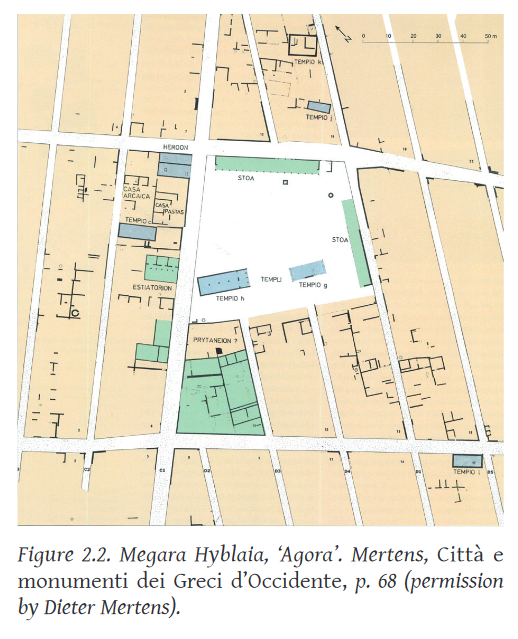
A first taste of Malkin’s research is already available in the form of a chapter in a book published last year edited by Sofia Greaves and Andrew Wallace-Hadrill and titled “Rome and the Colonial City: Rethinking the Grid”. The chapter written by Malkin is called “Reflections on egalitarianism and the foundation of Greek poleis“. It opens as follows:

When Greeks founded new settlements, they were facing the question of how to distribute plots of land to individual settlers. The main reason individuals joined a new foundation was to get such a plot of land (klêros), regardless of other reasons for colonisation. Back home, two brothers would need to share a klêros through partible inheritance by lot. However, if one brother stayed and another left for a new settlement abroad, both would have ended up, each, with a viable klêros. In and of itself, a klêros provides a basis for livelihood and a mutually recognised share of political and military power within the community. Practices of Greek colonisation are parallel to the Greek practice of ‘partible inheritance by lot’, since the same general principles and structures apply to both when it comes to land distribution: equality before the chance of the lottery, and, when possible, equality (sometimes equitability) of the size of the klêros.

From this we learn, if I understand correctly, that (like the English word “lot”?!) the word “klêros”, as in the randomizing machine “klêroterion”, meant in the first place a piece of fertile land, and the use of this word for randomization is derived from the custom of using the lottery for the distribution of such lands.

Malkin’s main thesis appears to be that the lottery was an embodiment of an egalitarian ideology. This ideology was especially influential in newly established colonies was in competition with oligarchization trends in more established settlements. It is this ideology that eventually, over the course of hundreds of years, developed into the Greek democracy.
Continue reading