Hugh Pope on the history sortition in Brussels

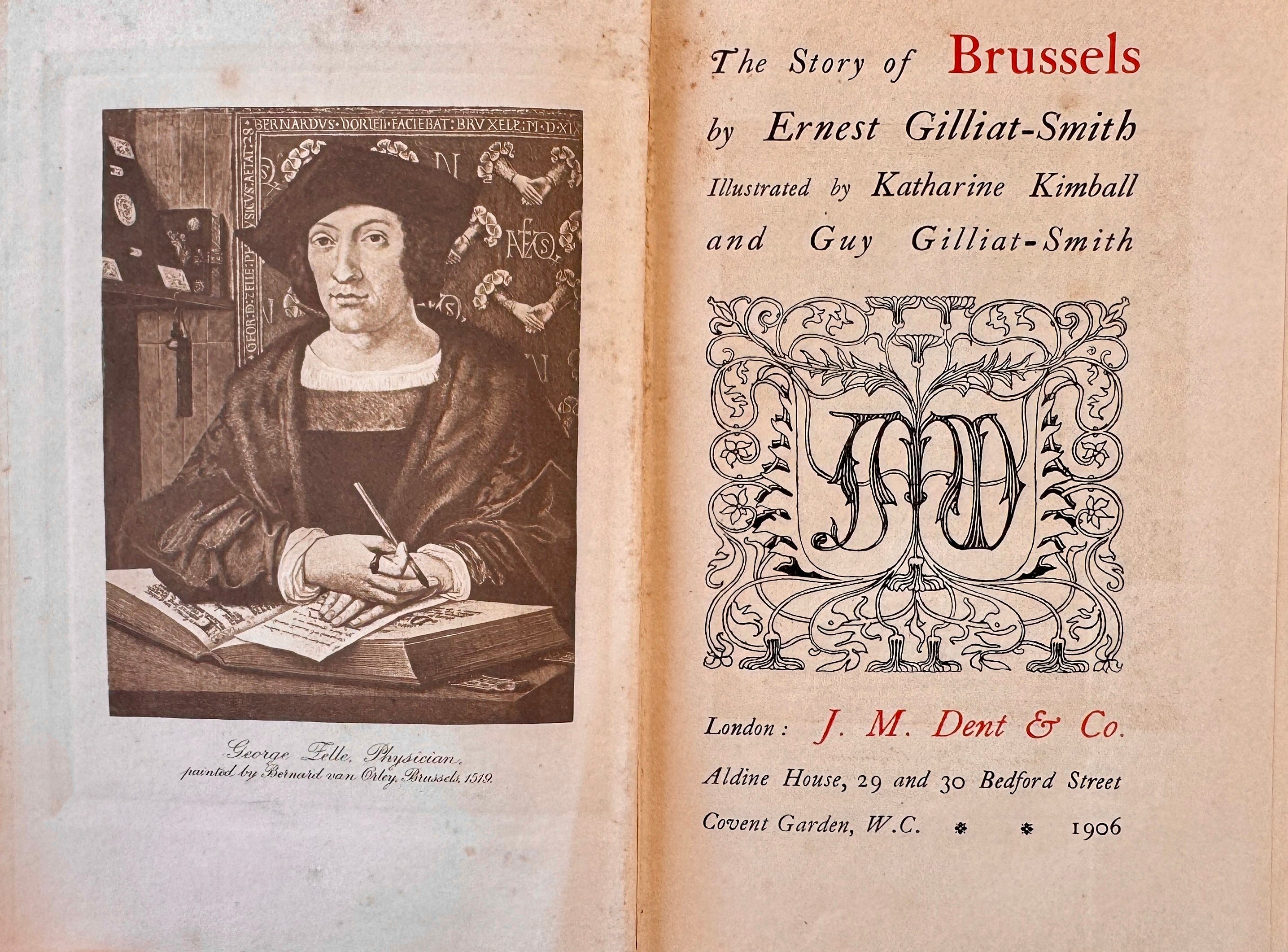
While the fact that Italian city-states of the middle ages employed sortition in their governance structure is often mentioned in discussions of sortition, a new article by Hugh Pope on his substack page discusses the use of sortition in Brussels in the middle ages as well. Below is an excerpt.

In 1375, the city [Brussels] introduced a new system to choose the seven patrician members of its government. This government council would still be chosen from among the seven lineages, but with a strict new methodology to combat nepotism and corruption.

The pool of people in these lineages was not a particularly large minority, as in other early European variants of sortition-based decision-making. From about 30,000 people living in Brussels in 1375, only about 300 families belonged to the seven lineages. Of these, the only eligible candidates were men over the age of 28 who were married and could live without exercising any trade or profession.

These eligible members of the seven lineages would all meet once a year at a hall on the Grand Place in the centre of town. The aim was that each lineage should choose three candidates for alderman. Gilliat-Smith describes the drawing of the lots in each lineage as follows:

“A number of waxen balls, equal to the number of clansmen present, all without alike, but of which four contained within a white and one a black cipher, were placed in an urn, and, when they had been well shuffled, each member drew therefrom one of them, and presently, when the drawing was over, broke it. Whereupon the four men to whom the white-marked balls had fallen withdrew to a separate apartment to consider who was the most fitting man to represent their lineage, each man being free to propose what name he would, provided it was not his own.”

International Network of Sortition Advocates presents

Challenges of Non-State Supported

Sortition Selected Forums

A German study of 68 randomly selected extra-parliamentary councils (ERASCO) found that while citizens’ assemblies are gaining popularity as democratic innovations, they are largely ignored by policymakers or designed to limit meaningful participation. In March of this year, a workshop in Germany addressed these issues. Presenter Georg Rackow of Neue Generation, will highlight the full findings of the study and share the five key challenges facing these forums as well as solutions identified at the workshop.


Date: Sunday, 21 June 2026

– Monday, 22 June – Australia & Asia –

Time: 18:00 – 19:00 London

– 19:00-20:00 Europe/Copenhagen • 1:00 PM-2:00 PM US Eastern • 10:00-11:00 AM US Pacific –

Location: Online – Registration at Eventbrite

FREE – Reserve your spot now!


About the Presenter: Georg Rackow is a linguist working in the field of language education. He is the founder of the pan-european think tank Deliberative Democracy Network and member of Neue Generation since its beginning. He helped organize all Parlamente der Menschen–The People’s Parliament–and was in charge of all moderation and editorial work related to these events. He is the main author of all studies and reports published by Neue Generation. Neue Generation, among other goals, advocates for a fundamental renewal of democracy.


INSA is a volunteer organisation aimed at connecting pro-sortition academics, advocates, and activists around the world, to share resources & tactics and advance the theoretical understanding and practice of sortition. 

You are invited to join our Discord server at

https://discord.gg/6sgnrphp6w

The ideology behind the notion of the deliberative transformation

In a previous post I discussed the “deliberative transformation”, a favorite trope within the theory of “deliberative democracy”. I pointed out that whereas the deliberative democrats see this hypothetical phenomenon as an ideal (maybe the central normative goal of their theory, more important than any policy outcomes), such a phenomenon, if it were really a widespread phenomenon as the deliberative democrats imagine, would be a major obstacle to an allotment-based democratic system (which, it is worth mentioning, is the only theoretically well-motivated schema of a democratic system).

This post considers the ideological structure that is associated with the idea of the deliberative transformation.

It may be claimed that the rather obvious, but of course unadmitted, starting point of the deliberative democracy theory, is that the adherents of the theory are concerned by the fact that the mass of citizens often refuse to support certain ideas that are accepted by the adherents as truth. Classically the reaction to the fact that citizens cannot be depended upon to see things as they are seen by an elite group was to assert that government should be left to those who are enlightened enough to see things as they should be seen. However, in the modern democratic age such crude elitism is unacceptable. Thus, the deliberative democrats seek a cure for the popular disorder. According to this view, deliberation is nothing more than the treatment that the deliberative democrats prescribe to the recalcitrant masses. It is the process which will lead the masses out of the Platonic cave and into the dazzling light of rational thought. If applied correctly, this treatment will inevitably, indeed, by definition of correctness, make the masses accept the objective truths, those that will lead them to support the policy choices preferred by the deliberative democrats.
Continue reading