


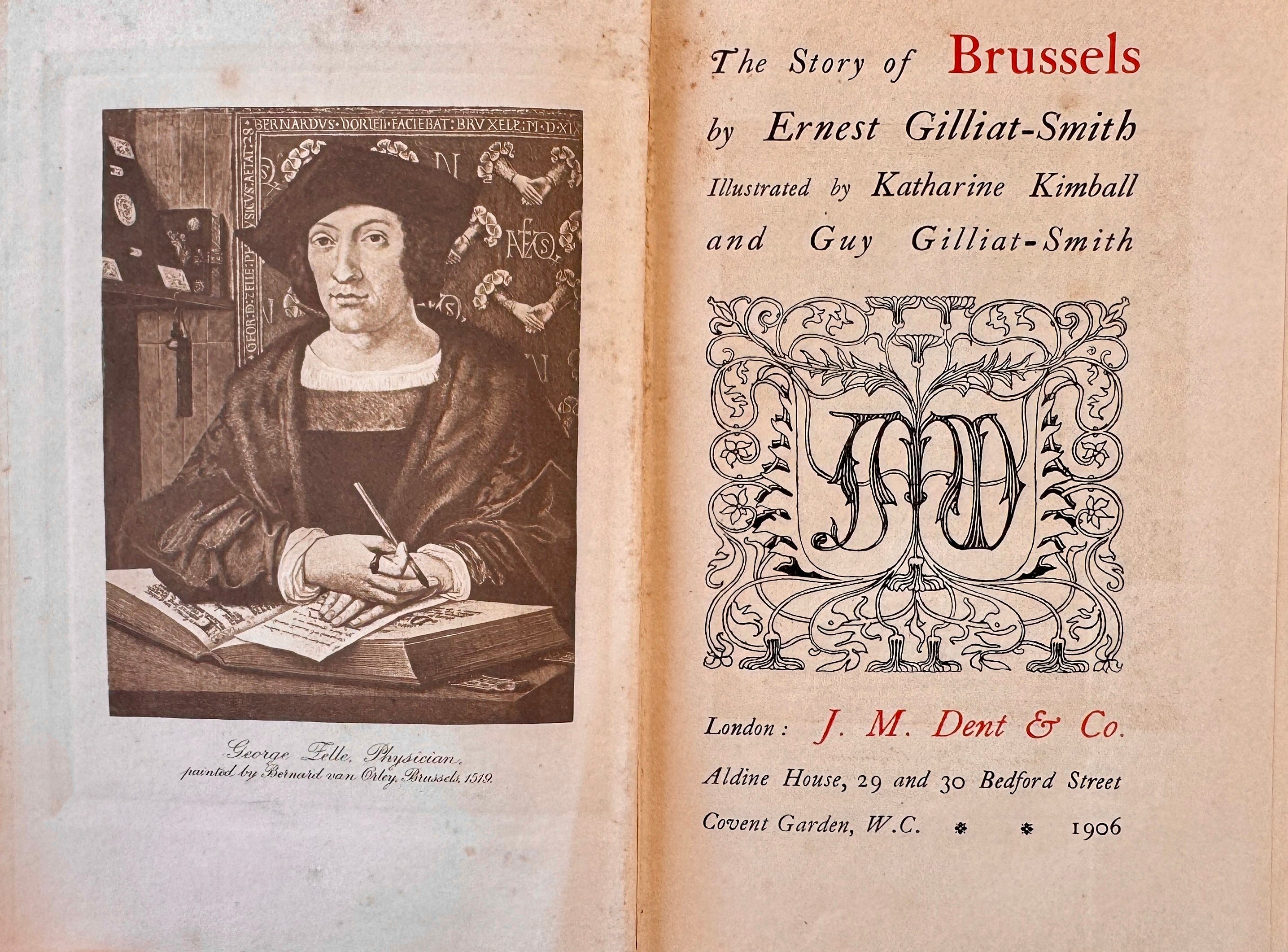
While the fact that Italian city-states of the middle ages employed sortition in their governance structure is often mentioned in discussions of sortition, a new article by Hugh Pope on his substack page discusses the use of sortition in Brussels in the middle ages as well. Below is an excerpt.
In 1375, the city [Brussels] introduced a new system to choose the seven patrician members of its government. This government council would still be chosen from among the seven lineages, but with a strict new methodology to combat nepotism and corruption.
The pool of people in these lineages was not a particularly large minority, as in other early European variants of sortition-based decision-making. From about 30,000 people living in Brussels in 1375, only about 300 families belonged to the seven lineages. Of these, the only eligible candidates were men over the age of 28 who were married and could live without exercising any trade or profession.
These eligible members of the seven lineages would all meet once a year at a hall on the Grand Place in the centre of town. The aim was that each lineage should choose three candidates for alderman. Gilliat-Smith describes the drawing of the lots in each lineage as follows:
“A number of waxen balls, equal to the number of clansmen present, all without alike, but of which four contained within a white and one a black cipher, were placed in an urn, and, when they had been well shuffled, each member drew therefrom one of them, and presently, when the drawing was over, broke it. Whereupon the four men to whom the white-marked balls had fallen withdrew to a separate apartment to consider who was the most fitting man to represent their lineage, each man being free to propose what name he would, provided it was not his own.”
Filed under: Books, History, Sortition | 1 Comment »
 Adam Cronkright
 Ali
Ali Ahmed R. Teleb
 avanderven
 avergne
 Alex Kovner
 azakaras
 Brett Hennig
 campbellwallace
 Simon Threlkeld
 Nick Coccoma
 codyhipskind
 Common Lot Sortitionist
 Conall Boyle
 constitutionalism
 davidschecter
 Ethan McCutchen
 graytmatter
 gtridimas
 Henry Tuttle
 H.J. Hofkirchner
 HpR
HpR Carl Lundgren
 James Kierstead
 John Burnheim
 jgarry20151
 Jochen Krattenmacher
 johnedwardtaylor
 johnhuang865
 Jonathan Crock
 keithsutherland
 Jacob Richter
 kkoreilly
 lukewhito
 SimonPek
 Nathan El
 Nicholas Gruen
 Owen Shaffer
 Patrick Chalmers
 Paul Gölz
 peterstone
 Pierre-Etienne Vandamme
 pronfeld
 Emil
Emil rcaze
rcaze richwbrown
 Roger Knights
 roslynfuller
 Pierre-Etienne Vandamme
 shaharavin
 tbouricius
 Ted Wachtel
 Joshua Laferriere
 theodorestathis
 towardsautonomyblog
 Wayne Liebman
 Yoram Gat
 Oliver Milne
