 This article by Professor Josine Blok (Utrecht University) is forthcoming in a theme-issue of the journal Representation, edited by Hugo Bonin and Henk te Velde, on Bernard Manin’s Principles of Representative Government. The article is available (open access) at https://doi.org/10.1080/00344893.2026.2688260
Professor Blok argues that Manin’s distinction between direct and representative government is in need of further refinement, based on Daniela Cammack’s analysis of the Athenian system using Frank Ankersmit’s distinction between synechdochical and metaphorical representation:
A governing body or office is representative either because its members are just a part of the whole citizenry, similar to and interchangeable with the other citizens (synecdoche) or they can stand for the whole citizeny by virtue of being different from them (metaphor) (p.5)
Professor Cammack identifies both forms of representation in the Athenian governmental system:
She finds synecdochical representation in the Assembly, which is practice always held about one-quarter of all male citizens, and the Council of 500 and the jury courts, en masse drawn by lot from all male citizens. These bodies were parts of the whole and interchangeable with the whole, for any male Athenian of the right age could participate in these bodies on the rules set by law and would do so sooner or later. (ibid.)
Metaphorical representation was embodied in the (elected) executive and military offices, the rhetores and (to a lesser extent) the minor magistracies (selected by lot). The distinction between the two categories of representation was not so much the selection method as the size of the body, along with the accounatability criteria. Synecdochical representatives were not accountable (by euthynai or graphe paranomon) simply because they were ‘parts of us’, whereas Athenians saw office holders as ‘them’.
Some of the Athenian bodies (including the Council) involved a mix of the two forms of representation, and the emphasis changed over time, however two bodies in Athens were and remained fully synecdochical: the Assembly and the jury courts:
According to Cammack, the fact that the switch to metaphorical representation did not happen here was due to the large numbers of both bodies. The power of the demos was, by definition, that of a mass in the Athenian demokratia instituted in the constitution. (p. 8).
If this is the case, then the attempt by deliberative democrats and the designers of small citizens’ assemblies to claim Athenian provenance is dubious.
Filed under: Academia, Athens, Books, Elections, History, Sortition, Theory | 23 Comments »



 Ian Troesoyer is a nurse practitioner, epidemiologist and sortition activist living in Idaho, USA. Treosoyer has recently published a very good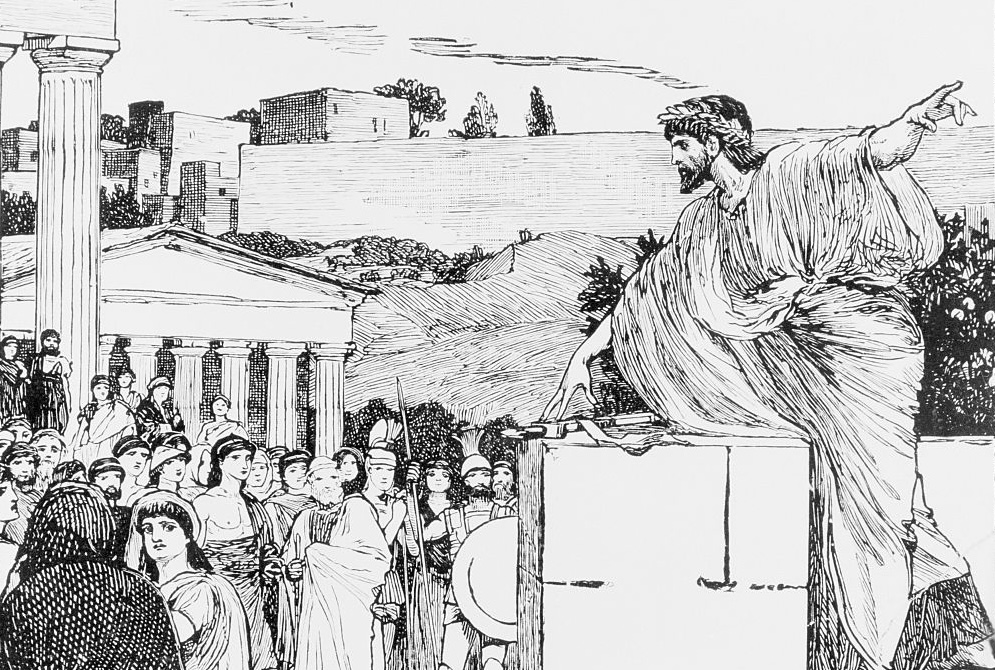

 Adam Cronkright
 Ali
Ali Ahmed R. Teleb
 avanderven
 avergne
 Alex Kovner
 azakaras
 Brett Hennig
 campbellwallace
 Simon Threlkeld
 Nick Coccoma
 codyhipskind
 Common Lot Sortitionist
 Conall Boyle
 constitutionalism
 davidschecter
 Ethan McCutchen
 graytmatter
 gtridimas
 Henry Tuttle
 H.J. Hofkirchner
 HpR
HpR James Kierstead
 John Burnheim
 jgarry20151
 Jochen Krattenmacher
 johnedwardtaylor
 johnhuang865
 Jonathan Crock
 keithsutherland
 Jacob Richter
 kkoreilly
 lukewhito
 SimonPek
 Nathan El
 Nicholas Gruen
 Owen Shaffer
 Patrick Chalmers
 Paul Gölz
 peterstone
 Pierre-Etienne Vandamme
 pronfeld
 Emil
Emil rcaze
rcaze richwbrown
 Roger Knights
 roslynfuller
 Pierre-Etienne Vandamme
 shaharavin
 tbouricius
 Ted Wachtel
 Joshua Laferriere
 theodorestathis
 towardsautonomyblog
 Wayne Liebman
 Yoram Gat
 Oliver Milne
