

Filed under: Athens, Elections, History, Juries, Sortition, video | 1 Comment »

For ten years, Alexander Guerrero of Rutgers University has been building the academic case for choosing leaders by lottery instead of election. It began as a 2014 journal paper, "Against Elections: The Lottocratic Alternative," and became a 464-page book, Lottocracy: Democracy Without Elections (Oxford University Press, 2024). I have been working on a plan of my own, The People's Lottery. When I sat down and compared the two properly — his paper read in full, his book studied through its table of contents and six independent reviews — I found two designs that start from the same diagnosis and arrive at the same core answer, but take different roads to get there. This post is that comparison, and the ideas of his I am considering for my own plan.
Guerrero replaces elections, not democracy. His design runs on single-issue legislatures — SILLs — about twenty of them at the federal level, one per policy domain: Agriculture, Health Care, Housing, Energy, and so on. Each has roughly 450 members, drawn by unweighted lottery from all adult citizens, serving staggered three-year terms, with about 3,000 new legislators drawn each year. Nobody is required to serve if drawn, and nobody chooses their issue — assignment is random, because self-selection skews who shows up.
Members are "guardians," not agents. There are no voters to answer to, so there is no re-election and no fundraising. A SILL enacts law directly by simple majority, after a set sequence: agenda-setting, a learning phase (roughly the first year of a term is mostly education), community consultation, deliberation, drafting, revising, and voting. Experts advise but never decide — they pass a qualification assessment and a selection process, must disclose conflicts of interest, and are chosen at random from a database carrying their track records and "records of epistemic integrity." Where qualified experts disagree, each side gets substantial time.
The presidency is abolished — unbundled, not replaced. Its powers, in his words, are a "mish-mash of tasks inherited from the late eighteenth century," and there is no reason pardons, appointments, and war powers must sit in the same hands. Executive functions go to lottery-selected assemblies. Courts continue to exist, with judges appointed and monitored by sortition bodies. Members are paid a floor of about $100,000 a year, or 1.1 times their normal income if that is higher, plus relocation expenses — conditioned on taking no outside money from special interests.
The agreement is deep. Both plans replace elections with sortition. Both put ordinary citizens in the lawmaking seats with no credential test — my People's Pool uses the jury standard, no degree test. Both end campaigns and donors. Both rotate: his three-year staggered terms, my one term only. And both start from the same diagnosis: voter ignorance destroys meaningful accountability, broken accountability produces capture by the wealthy and powerful, and the representatives elections produce look nothing like the public they govern.
One pool vs. three pools — the central difference. Guerrero draws everyone from a single pool of all adult citizens and deliberately refuses credential gates for office. Expertise reaches his decisions only through advisors. I gate the executive and the judiciary behind credentials: the Civic Pool requires a bachelor's degree, or an equivalent professional credential — a state professional license, a master trades credential, or commissioned military service — with ten years' practice, for executives and money posts. The Law Pool requires a law degree, an active bar license in good standing, and ten years' practice for prosecutors and trial judges, fifteen for appellate judges, the Attorney General, and the Supreme Court pool. Mine is sortition within credentialed pools where professional competence is non-negotiable. His is sortition without gates, with competence supplied by the learning phase.
Filed under: Academia, Books, Proposals, Sortition | 4 Comments »
Freakonomics Radio is one of the oldest and most listened to podcasts on civil society and economics, and a recent episode is all about sortition, with extensive interviews of me (Terry Bouricius), and Yale professor Hélène Landemore.
The title of this Freakonomics episode is:”Does Democracy Really Need Elections?“
It can be accessed on their site here:
or on any standard Podcast platform.
Filed under: Sortition | 10 Comments »
 The Democratic party was the landslide winner in the elections that took place on Nov. 3rd. in the U.S. In view of that it is unsurprising that exit polls show that the Republican party is now seen very unfavorably by the voters. 60% of the voters see the Republican party unfavorably, against 40% who see it favorably. It is important to note, however, that the Democrats, despite winning the total congressional vote by 12%, the largest margin since 1976, are also seen more unfavorably than favorably, just less so than the Republicans: 52% of Americans see the Democratic party unfavorably against 47% who see it favorably.
The frequent electoral defeats of ruling parties in the West, a phenomenon that is often celebrated as an indication of the democratic character of Western regimes, are in fact a testimony to the lack of this character. Voters are repeatedly frustrated with the policies pursued by their elected governments, express their frustration in the ballot box by electing officials from alternative parties, parties (and often officials) whom they removed from power only recently in a previous cycle of frustration, only to be, unsurprisingly, frustrated again within a short while. Indeed, contrary to electoralist dogma, long term popular satisfaction with an electoral regime can be expected to lead to long stretches of electoral successes for a single party or a stable coalition of parties – the very same long stretches that are regularly interpreted by Western political scientists as an indication of “authoritarianism”.
Filed under: Academia, Elections | 10 Comments »
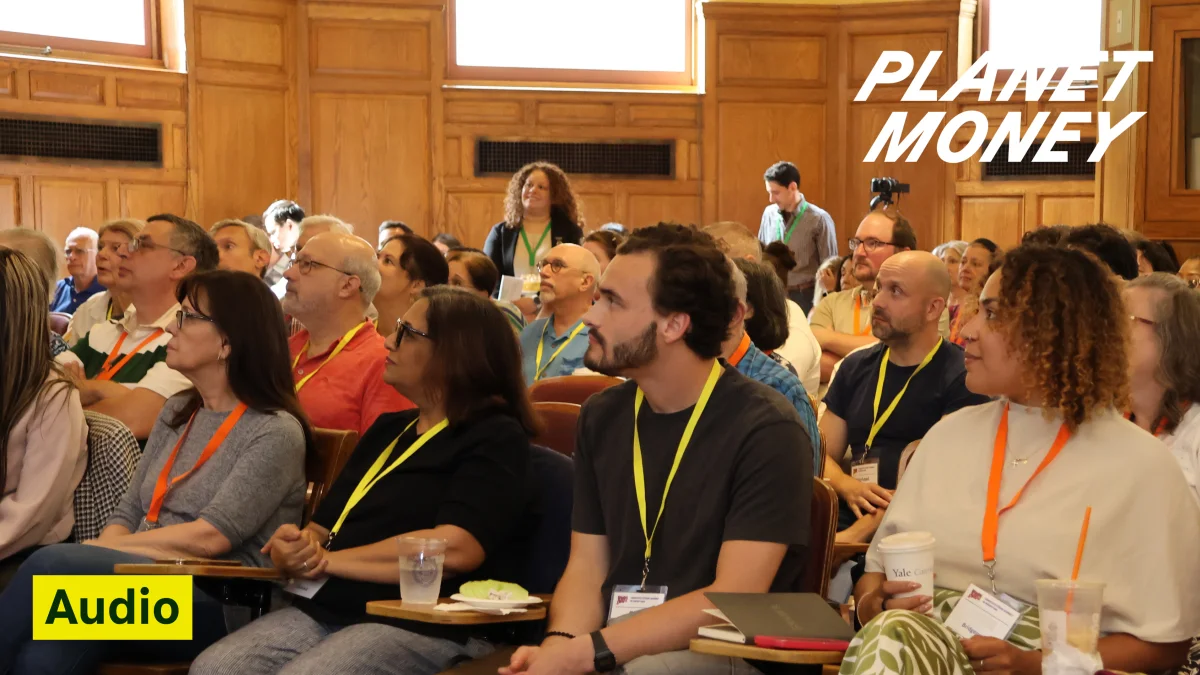
The NPR Planet Money podcast did a recent episode on Citizens’ Assemblies, featuring Helene Landemore. You can find the episode below. 100 citizens formed a Citizens’ Assembly in Connecticut to discuss tax policy.
The narrative is typical of most coverage of Citizens’ Assemblies around the world. Citizens get together, are able to agree on otherwise politically controversial policies, but are ultimately stymied by political manipulation.You can find the citizen recommendations here: Final Report — Connecticut Citizens’ Assembly. Some big ticket agreements are an income tax on millionaires, and increasing revenue through tolls.
Filed under: Academia, Applications, Sortition | 9 Comments »
norfolktoday.ca reports:
Brady calls for an end to random draws in tied municipal elections
Haldimand-Norfolk MPP Bobbi Ann Brady is calling on the Ontario government to change how tied municipal elections are resolved, arguing that choosing a winner by random draw undermines confidence in the democratic process.
Continue reading
Filed under: Elections, Press | 10 Comments »
 Adam Cronkright
 Ali
 Ahmed R. Teleb
 avanderven
 avergne
 Alex Kovner
 azakaras
 Brett Hennig
 campbellwallace
 Simon Threlkeld
 Nick Coccoma
 codyhipskind
 Common Lot Sortitionist
 Conall Boyle
 constitutionalism
 davidschecter
 Ethan McCutchen
 graytmatter
 gtridimas
 Henry Tuttle
 H.J. Hofkirchner
 HpR
 Carl Lundgren
 James Kierstead
 John Burnheim
 jgarry20151
 Jochen Krattenmacher
 johnedwardtaylor
 johnhuang865
 Jonathan Crock
 Linda Lane
 keithsutherland
 Jacob Richter
 kkoreilly
 lukewhito
 SimonPek
 Nathan El
 Nicholas Gruen
 Owen Shaffer
 Patrick Chalmers
 Paul Gölz
 peterstone
 Pierre-Etienne Vandamme
 pronfeld
 Emil
 rcaze
 richwbrown
 Roger Knights
 roslynfuller
 Pierre-Etienne Vandamme
 shaharavin
 tbouricius
 Ted Wachtel
 Joshua Laferriere
 theodorestathis
 towardsautonomyblog
 Wayne Liebman
 Yoram Gat
 Oliver Milne

