Reybrouck explains to the New York Times that Against Elections is not really against elections

The crisis of electoralism (more commonly misleadingly referred to as “the crisis of democracy”) has been producing a stream of books warning about its dangers and proposing solutions. Ari Berman, a senior reporter at Mother Jones, a fellow at the Nation Institute and the author of “Give Us the Ballot: The Modern Struggle for Voting Rights in America”, reviews in the New York Times 4 of the books in the genre, with one of those books being David van Reybrouck’s Against Elections.

While the other three books, which according to the review offer no useful actionable remedies, are evaluated in generally appreciative terms (“comprehensive, enlightening and terrifyingly timely new book”, “hard to argue with [the] analysis”, “[the] book provides important insights into the present political moment”), van Reybrouck’s book is rather rudely dismissed:

Democracy is experiencing a “crisis of legitimacy,” writes Van Reybrouck, a Belgian cultural historian, who cites declining voter turnout, higher volatility in voter support and fewer people identifying with political parties. This is the fault not of politicians or the structure of the electoral system, but of elections themselves, Van Reybrouck says. “We have all become electoral fundamentalists, despising those elected but venerating elections.”

Van Reybrouck is a skilled polemicist, but his solutions to remedy “democratic fatigue syndrome” are naïve and unfeasible. Echoing the ancient Greek practice of drawing lots, he suggests replacing the American House of Representatives with a random sample of citizens, like a jury pool. That seems like an utterly impractical way to govern nowadays and reflects the same demonization of political experience that led the country to favor a reality television star over a former secretary of state in 2016.

Van Reybrouck fetishizes direct democracy, like citizens’ councils, but ignores the way existing electoral institutions could be made more responsive to the popular will through reforms like proportional representation or nonpartisan redistricting. The solution to democratic fatigue syndrome is to make elections more democratic, not to get rid of them altogether.

In response, van Reybrouck protests in a letter to the editor that he has been misunderstood:
Continue reading

Suzuki: The solution we need is a system where politicians are drawn from a hat

Canadian scientist and environmentalist David Suzuki has given up on the electoral system and proposes to replace it with a sortition-based system. Some excerpts from an interview with the National Observer:

Q: Trudeau’s called the pipelines a “trade off” for the national carbon plan. Earlier this month, he was in Nanaimo saying we can both build Kinder Morgan and hit the Paris targets.

DS: That’s such a lot of bullshit! this is just political doublespeak: ‘We’ve got to keep burning more oil, more fossil fuels, in order to meet our reduction targets.’ What are you talking about? That’s such a crock of shit!

Q: So how can citizens hold our democratic leaders accountable?

DS: I was asked to give a talk to the Senate last year on the 150th anniversary of Canada. What I said is, ‘We elect people to run government, but their problem is they only look to the next election.’ They can’t look down and say, ‘Jesus, we have to spend $50 billion a year for the next fifteen years to deal with climate change,’ because they know someone else will take credit for it. They won’t be in office then. So that kind of view is not in their thinking.

So I said, ‘You guys are the Senate. You’re not elected. You’re appointed for life! You’re the ones to think of sober second thought, and think in terms of one generation, two generations from now. You’re the guys who should be doing that.’

They didn’t do a goddamn thing. But I really think that would be a huge opportunity, if we’ve got that bicameral system.
Continue reading

Jury citoyen

The original post comes from: www.stochocratie.org. The post below is in French (for Yoram to practise :) but there is an English version here: http://www.stochocratie.org/2018/04/17/jury-citoyen.

La démocratie prend trop de temps au citoyen ordinaire et devrait être laissée à un petit nombre de personnes soigneusement sélectionnées. Telles étaient les pensées des fondateurs de nos démocraties modernes. Ils ont décidé que nous devrions élire les personnes qui détiennent le pouvoir entre leurs mains. La sélection aléatoire permettrait aux gens de décider pour eux-mêmes – beaucoup trop dangereux selon eux. Les fondateurs savaient que la sortition permettait la démocratie et que les élections favorisent l’aristocratie. C’est pour cette raison qu’ils ont choisi les élections. Mais décider en utilisant le hasard semble …. mmh…. aléatoire… Jury Citoyen ou Citizen Jury également appelé Minipublics se penche sur cette question.

Deux personnes qui ont proposé ou proposent d’utiliser plus souvent le Jury Populaire en politique. Segolène Royal et Loïc Blondiaux (source : Wikimedia).

Utiliser un dé pour décider serait stupide. Choisir au hasard une seule personne pour décider serait également stupide. Choisir quelques personnes – aussi peu que quinze personnes – pour donner un avis sur un sujet précis est une excellente idée. Les politologues et le grand public se penchent sur cette question dans de nombreux pays comme l’Irlande, le Canada, l’Australie, l’Islande ou la France. Partout les effets sont similaires : les personnes sélectionnées changent souvent d’avis après les longues discussions pendant les quelques week-ends où le rassemblement a lieu ; elles s’impliquent davantage dans la politique et prennent davantage conscience de l’intérêt publics. Partout, ils fournissent de nouvelles orientations qui peuvent être suivies ou non par les politiciens. Mais pourquoi ne peuvent-ils pas prendre des décisions exécutives ?

Les mini-publics sont trop souvent des boîtes noires. La sélection aléatoire se fait souvent derrière d’épais rideaux. De plus, il est facile de faire pression sur quinze personnes. Ces deux arguments réduisent de beaucoup la légitimité d’un Minipublic. Je plaide dans ce blog pour la transparence et propose des moyens de rendre la sélection aléatoire plus fluide. Il faut consulter des experts, le Minipublic a besoin de demander leurs avis, mais pas de les laisser décider quoi que ce soit. Les modérateurs/animateurs/facilitateurs jouent un rôle clé et devraient être sélectionnés en utilisant la sortition ;) Les politiciens professionnels et les journalistes affiliés adorent critiquer les membres du Jury populaire. Le Figaro a montré une photo des gens du Jury Populaire pour démontrer à quel point Nuit Debout était devenue farfelue.

Pourtant, ces jurys fournissent d’excellents avis et certains proposent que nous utilisions les Minipublics pour nommer nos dirigeants exécutifs. J’irai ici encore un peu plus loin, peut-être pourrions-nous utiliser les Minipublics pour prendre des décisions exécutives ?

The programmable voter, or, elections are not what they used to be

Mark Zuckerberg was hauled in front of Congress to answer for the “Cambridge Analytica scandal”. In the hearing he remorsefully promised that his top priority is now “making sure no one interferes in the various 2018 elections around the world”.

At face value this is a meaningless (and somewhat self-important) promise – there is nothing to distinguish “interference” from plain old campaign propaganda. And indeed at some level the whole spectacle was nothing more than a show – nothing concrete can be expected to be gained or lost. Presumably Facebook will make some changes to the way information (or misinformation) flows through its servers and the result will be that some pieces information (or misinformation) will be amplified and others suppressed. But, of course, Facebook already processes information in some way and this existing way also inevitably discriminates between pieces of information. What Facebook does or will do with the information it handles is completely up this private, unaccountable, opaque organization, motivated by its business and political interests, and there is thus little reason to expect any fairness or equality in the way it handles information. Thus no substantive change can be expected.
Continue reading

A bold new trust-building project called a Community Solutions Panel

From the Byron Shire Council website:

Community Solutions Panel
What infrastructure spending should we prioritise, and how should we fund these priorities if the rates alone are not enough?

This is the question that Byron Council will put to a randomly selected group of 28 people as part of a bold new trust-building project called a Community Solutions Panel.

Council has chosen to work with the newDemocracy Foundation to see if a community deliberation can be designed which delivers an informed voice of everyday people.
Continue reading

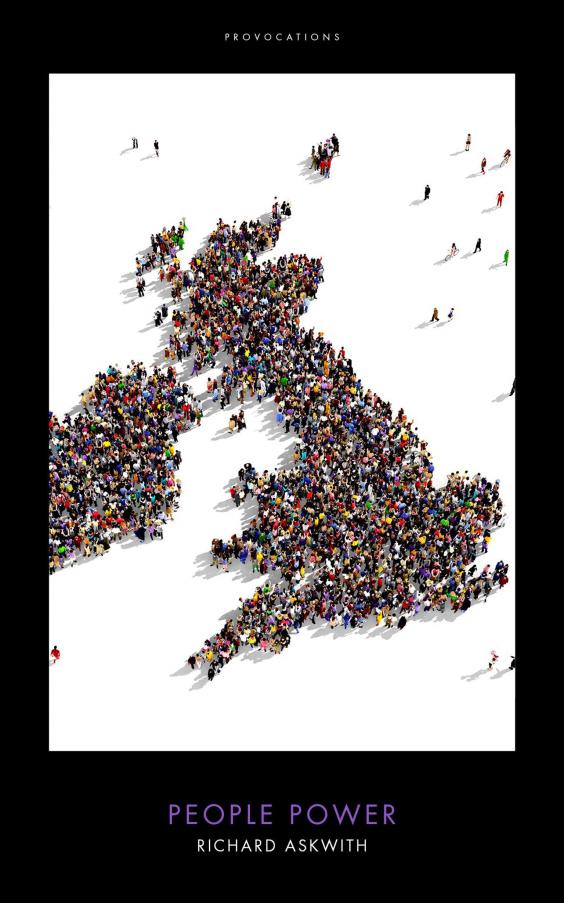
Richard Askwith: People Power

Richard Askwith, a former executive editor of The Independent, has a new book out:

People Power: If we want to defend our democracy we must expel the Lords and replace them with the people

In his new book, ‘People Power’, Richard Askwith makes the case for abolishing the House of Lords and replacing it with a citizens chamber of 400 people to bridge the gap between ‘us’ and ‘them’

[…]

Here’s how [to reform Parliament]. We start in the obvious place, at the least democratic, southern end of the Palace of Westminster. We expel the occupants. And we give the House of Lords to the people.

We cannot put everyone in the chamber; nor can we sensibly put everything to referendum. What we could do, though, is create a People’s Chamber, whose 400 members, randomly conscripted from the electoral roll as jurors, would be a small, representative sample of the population as a whole.

The details are negotiable. Here’s one hypothetical version. Everyone eligible to vote is also eligible for selection by lot to serve in the chamber for a fixed term of, say, four years. Service is compulsory, well-paid and prestigious. The People’s Peers can wear ermine and, if they want, use titles; the financial rewards are comparable to a sizeable lottery win.
Continue reading

Bouniol: The idea of a Citizens Chamber gains ground

Béatrice Bouniol has been showing some interest in sortition in her stories at La Croix. Last November, on the occasion of the publishing of a new book on the subject of “The Citizens Assembly of the Future”, Bouniol had the following story.

The idea of a Citizens Chamber gains ground

During COP 23, the Foundation for Nature and Man calls on France to make a democratic innovation by establishing a Citizen Assembly for the Future. Facing a crisis of representation, a citizens’ third chamber, an idea which has been discussed for about twenty years, gains ground.

On July 3rd, 2017, speaking in front of Congress, Emmanuel Macron proposed the transformation of the Social and Environmental Economy Council (CESE) into a Chamber of the Future, “a forum of our Republic” aimed at becoming “the crossroad of public deliberation”. Dominique Bourg, president of the scientific council of the Foundation for Nature and Man – created by Nicolas Hulot – having advocated the creation of such a chamber since 2011, was thus pleased at the proposal, but expressed his worry on the pages of La Croix that it could be a mere “rebranding – certainly necessary but far below what is desired.” The programmatic essay that appears today under his direction (Inventing the 21st Century Democracy: The Citizen Assembly of the Future. [Inventer la démocratie du XXIe siècle. L’Assemblée citoyenne du futur, Les Liens qui libèrent/Fondation pour la Nature et l’homme, 2017]) aims therefore to remind the President of the Republic of the conditions required for creating a Citizen Assembly for the Future.


The hall of the Social and Environmental Economy Council, at Iena Square, Paris.

In order to go beyond a feel-good formula, the establishment of a third parliament chamber must rest on an effort of democratic creativity, required by an unprecedented situation. At the age of the anthropocene (a new geological period defined by the impact of humans on their environment), reported by a group of researchers, it is necessary to systematically take into consideration of the impact of laws on the long term, that is, of their influence on the large scale physical and biological evolution of the planet.
Continue reading

Official records lacking in EMA location allotment

Corriere dela Sera writes:

Doubts emerge over EMA ballot and “burnt” voting slips

Various aspects of assignment to Netherlands of EMA headquarters still unclear, also due to lack of official records regarding draw by lot

The assignment of the European Medicines Agency (EMA) to Amsterdam by lot – to the detriment of Milan – was made official at the EU General Affairs Council on 20 November. But it has now emerged that there is no documentary evidence to reassure European citizens everything was done correctly and according to the rules; the procedure displayed unprecedented anomalies and levels of secrecy, culminating in selection by lot. The representatives of Italy and the Netherlands were not even called to supervise the proceedings at close hand. “Even in children’s tournaments the referee allows the two team captains to watch the toss of the coin …”, commented one ambassador present on the day.

No checks
The ballot papers of the three rounds of voting by the ministers were immediately burned, and the speed with which the draw was performed made any checks either before or after impossible. Above all, on 20 November there was an attempt to shroud everything in the utmost secrecy, with not even the draw method made public. Moreover, since last week the EU Council has continued to refuse to give the Corriere any information on how the voting and count took place, let alone on the lot drawing procedure. We have been able to reconstruct what happened thanks to informal interviews with ministers and ambassadors present, who set greater importance on the value of transparency than on being sworn to secrecy.

Sortition in the Bulletin of the Institute of Mathematical Statistics

The Bulletin of the Institute of Mathematical Statistics has published a column of mine that deals with the historical and theoretical connections between democracy and statistical sampling:

Democracy and statistical sampling

For about 2,500 years, statistical sampling was closely linked with democracy. “Selection by lot is natural to democracy, as that by choice [i.e., elections] is to aristocracy,” asserted Aristotle in the 4th century BC, following his own first-hand experience at Athens and the conventional wisdom of his time. Montesquieu concurred in the first half of the 18th century. It was only in the last 200 years, as democracy displaced aristocracy as the legitimate organizing principle of politics, that sortition—the delegation of power by statistical sampling—had to be air-brushed out of history and political science. […]

As part of the attempt to dismiss sampling as a political device it is sometimes claimed today that its use in Athens was motivated by the superstition that randomization allowed the gods to make the selection. However, the historical record indicates that the main motivation behind the practice was the law of large numbers. It was expected that sortition would produce a group that would mirror the population in important respects. This was often stated as an expectation of resemblance between the population and the sample in terms of wealth and social status (i.e., that most members would be poor commoners) but it was taken for granted that these characteristics would be correlated with certain interests and beliefs.

Continue reading

2017 review – sortition-related events

This is the end-of-year summary of notable sortition related events for 2017.

Readers wrote that in their opinion the most important sortition-related event of 2017 was the adoption by law in Mongolia of deliberative polling as part of its constitutional amendment process. The opinions in the exit survey of the deliberation poll “help shape the process of constitutional amendment the government undertakes”.

This event seems like a natural part of a decades-long trend of declining confidence in electoral systems and a more recent trend of increasing, if very preliminary and tentative, adoption of sortition-based political devices.

Worldwide, trust in elected government in 2017 remained low and showed no signs of recovery.

As in previous years, French speaking countries showed the most noticeable moves toward seeing sortition as a way to redistribute significant political power. In France, two of the three most successful presidential candidates in the 2017 elections, including the winner, Emmanuel Macron, were politicians who made sortition part of the political agenda. In November, La France insoumise allotted members of its constitutional convention. Sortition was also discussed, again and again in French media. Proposals for using sortition in Belgium and Switzerland received some attention.

Elsewhere in Europe, the allotted Irish Citizens’ Assembly sent its recommendations to the parliament with a referendum to follow. Sortition was also adopted by a branch of Podemos in Spain and was promoted by a party in Austria.

In the English speaking world, academics devoted some attention to sortition in workshops at McGill university and at the University of Wisconsin, Madison. Outside of academia, a fairly robust polemic for sortition appeared in the US magazine Current Affairs. A book proposing sortition as an add-on to the electoral system was reviewed in the New York Times.

As another indication of increasing prominence of the idea of sortition in establishment circles, former UN secretary general Kofi Annan mentioned sortition in a speech he gave to the Athens Democracy Forum.

Finally, distribution-by-lot received fairly intense attention in Greece in the context of a debate over the mechanism of selection of flag bearers in schools.