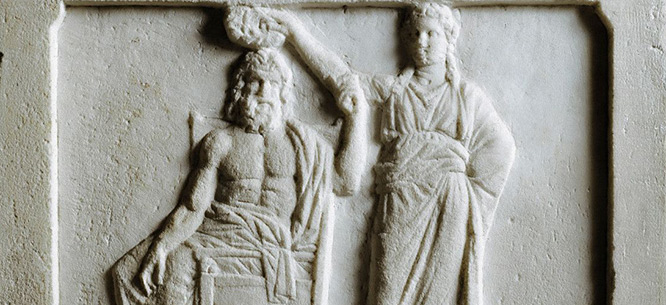
Interview with Yves Sintomer, part 2 of 2: With sortition, the scale is immaterial

This is the second part of a translation of an interview with Yves Syntomer. The first part is here, the original in French is here.

Does the end of the 20th century mark the return of a desire to experiment with sortition?

We witnessed in the 1980’s and 1990’s an explosion of experiments applying sortition, a “first wave” where the reference to Athens was very significant. There are however big differences. We aim to obtain a representative sample of the population by allotment, where the Athenians did not have this mathematical notion and resorted to pure luck. The second big difference is that we wish to use sortition to create an Assembly which is going to debate in nearly ideal conditions, following the ideas of ­Jürgen ­Habermas, according to which a decision is not legitimate unless it is preceded by a well-formed discussion.

The third difference is that sortition is introduced at the margins of the political system and that the mini-publics so constituted are merely consultative. This first wave allowed to show that with discussions among ordinary citizens, non-specialists, once they have sufficient information and have the opportunities to examine things, where opportunity to speak has been equally apportioned, in a general assembly or in small groups, high-quality conversation is attained. It is impressive to see that the exchanges between ordinary citizens put to shame those that take place in parliaments.

We are now seeing the emergence of a second wave. Sortition is now invoked by social movements in France, including Nuit Debout and some among the Gilets Jaunes. Ireland has recently offered us a paradigmatic example of this second wave. We had two allotted assemblies (one in its entirety, the other in its majority) convened first to discuss marriage for all and then abortion and to propose constitutional reforms which were then submitted to the people who have ratified those propositions by referenda.

Iceland is another significant example. The country was in a bad state at the moment of the subprime crisis… Two citizen assemblies were allotted (one in its entirety, the other in its majority) in order to propose how to reconstruct the country. That was followed by an election of a constituante committee where professional politicians could not be members, a proposal of a new constitution, a validation of the proposal by a consultative referendum… It was finally buried by an obstruction by a majority in Parliament, which refused to adopt the text.

It may be objected that those are two small countries…

With sortition, the scale is immaterial: it may be used at the level of a city or a country in quite similar ways.
Continue reading

Yves Sintomer: Blow the dust off of democracy with an allotted third chamber. Part 1

This is an English version of an interview with Yves Sintomer in the journal Socialter (original in French).
The Gilets Jaunes, who are looking for new democratic experiences, have called for an “assembly of assemblies”. Would it be necessary, in order to resolve the impasse, to radicalize our democracy? Why not re-institutionalize one of the its original components: sortition. A conversation with Yves Sintomer, a political scientist and an expert in democratic procedures.

Philippe Vion-Dury, 17/04/2019
Photos: Cyrille Choupas

The Gilet Jaunes have been first presented at an anti-tax movement and then as a social justice movement. Isn’t it, however, fundamentally, the question of institutions and democracy question which predominates?

What unites the Gilets Jaunes, it seems to me, is not so much the question of institutions in the strict sense as much as denial of recognition to which they respond by protesting against social injustice and against the democratic gap, a sentiment of non-representation. These two components appear to me to be tied together: society does not recognize them both because its fruits are distributed too unequally and because their voice is not being heard.

Popular distrust can be observed in most western democracies, in different forms. Isn’t there a generalized crisis of “representative government” itself?

There is a French particularity: a President with disproportionately concentrated power, little countervailing power, unusually weak political parties… and the revolt of the Gilet Jaunes is a social mobilization to which there is no equivalent in neighboring countries. This particularity has to be put in context, because it works within a much more general crisis of representation which affects not only European democracies but is also the young democracies of Latin America and in the formally democratic countries of Africa and Asia.

Representative governments were created during the English, French and American revolutions as a compromise solution. It involved giving effective decision power to a self-proclaimed elite – from this point of view, there is an aristocratic dimension to representative government. This ruling aristocracy, however, would not longer be one of “blue blood”, of nobility, but an aristocracy determined by the voters.

This institutionalization of representative government has long been opposed to the feudal society of the Ancien Regime, but also against democracy, understood as “government of the people, for the people, by the people” – to quote Abraham Lincoln. The is to limit the power of the people by giving decision making power to an elected aristocracy. That allows us to distance ourselves from the classical liberal conception asserting that “democracy means elections”.
Continue reading

Cancio: Sortition and the Allotted Chamber as Institutional Improvements to Democracy

Here [PDF] is an automated translation (with a few touch-ups) of Jorge Cancio’s 2010 paper “Invitación a un Debate: El Sorteo y las Cámaras Sorteadas Como Mejoras Institucionales de la Democracia”.

Abstract:

I start off inviting my readers to exercise their imagination and then explaining a proposal of creating new “sortition chambers” on all administrative levels – from a chamber at the same level as the present-day Spanish Congress and Senate down to sortition chambers for each municipality. They essentially would be an addition to present-day institutions and would partake in the powers which are held today by elected representatives and officials, although the proposal envisages that in the short run they could be out-voted by the elective institutions. They would exercise their powers according to deliberative procedures.

After that introduction I offer a short account of present-day theoretical and practical proposals and implementations of sortition-based systems in the political field – highlighting the fact (following Manin) that mainstream discussions on democracy tend to ignore sortition altogether (including those made by the political left), but also making the point that since Dahl and others (inter alia, Burnheim, Goodwin, Barber; and the more recent works now appearing in Imprint Academic) there seems to be an increasing renaissance of this subject. I also point to the practical experiences of the Planungszelle and the voters’ and citizens’ juries.

Thereafter I try to explain why sortition is mainly ignored nowadays – here I follow again Bernard Manin – identifiying the contractualist bias of the XVII and XVIII century revolutions (which sought to establish a rule of consent for being governed) as the main reason for opting for elections instead of sortition as mechanism for the selection of political office-holders. Afterwards, the emergence of the political parties as oligopolical forces in the political market (here I refer to the work of C.B. Macpherson) and their growing distance from society and increasing autonomy vis-à-vis societal needs have led to a “party democracy” or “cartel party” system (Katz and Mair). The facade of autonomous decision in electing public officials covers, therefore, a system where political offers are very limited, allowing me to speak about an “election-fetish”. Contrasting to this evolution I then underline the paradox of identifiyng democracy with elections (and political parties) when we consider that democracy was linked in Athens with sortition whereas elections were considered aristocratic.
Continue reading

Radical reform: selecting 5-10% of councillors by lot

Vernon Bogdanor, Research Professor at the Institute for Contemporary British History at King’s College London and Professor of Politics at the New College of the Humanities, advocates bold, radical reforms:

Local government reform

One way that our democratic system can face these challenges is by making local government `Self Government’ once again. […] Local government is the best arena for the next phase of constitutional reform, but something much more radical than elected mayors is needed.

Selection by lot

That more radical innovation might be found in the principle of sortition—selection by lot. That principle was first adopted in fifth‐century Athens, a direct democracy, but it is perfectly feasible to extend participation in a modern democracy.

A small proportion of councillors—say 5 per cent or 10 per cent—could be selected randomly by lot from the electoral register. Participation would be voluntary but most of those selected would probably be willing to do so. That would increase the representation of the young and of members of ethnic minorities, groups markedly under‐represented in most local authorities. These councillors could decide what was best for their communities without being beholden to party.

Sénat Citoyen and Citizens’ Assemblies

Sénat Citoyen is a French organization whose manifesto offers the following principle:

For every authority, government or elected assembly, there must exist an allotted citizen assembly which monitors, creates proposals and controls this authority.

Citizens’ Assemblies is a book by the Polish activist Marcin Gerwin which he describes as “a step-by-step presentation of how to organise a citizens’ assembly, with the primary focus on the city level”. It is available online for free in 6 languages.

On the website Gerwin lists “Basic standards for organizing citizens’ assemblies”, which are:

  1. Random selection of participants
  2. Demographic representation
  3. Independent coordination
  4. Citizens’ assembly can invite experts
  5. Inclusion of a widest practical range of perspectives
  6. Inviting all stakeholders
  7. Deliberation
  8. Openness
  9. Sufficient time for reflection
  10. Impact
  11. Transparency
  12. Visibility

Legislature by Lot: Transformative Designs for Deliberative Governance

[This is repost from https://www.bretthennig.com/legislature_by_lot_published]

Legislature by LotLegislature by Lot: Transformative Designs for Deliberative Governance has just been published by Verso a few days ago. I contributed a chapter, “Who Needs Elections? Accountability, Equality, and Legitimacy Under Sortition” that questions the premise of the opening chapter of the book: that sortition should only accompany an elected chamber.

However, even as I’m excited by the publication of this new book, I’m thinking today about Erik Olin Wright, who conceived of the “Real Utopias” series and brought so many challenging and brilliant insights to this and his many other works, but sadly passed away recently. It was another book in this series, Deepening Democracy, which he co-edited as well, that started me down the path I’m now on. It was such an honour to meet him and get to know him – and to sing “Bella Ciao” together with him at his house a few short years ago.

McKay: Combining mini publics and multi stage popular votes

The section ‘Combining mini publics and multi stage popular votes’ in Spencer McKay’s new paper ‘Building a better referendum’ presents an interesting overview of several systems where the referendum is combined with mini publics.

Pairing a multi-stage popular vote with a mini-public – a process I refer to as an iterated popular vote (IPV) – may aid in bridging the gap between micro-deliberation and macro-participation. The IPV is an attempt at institutional design inspired by the notion of “designed coupling,” which seeks to “find the optimal strength of linkages between different parts of a deliberative system” (Hendriks, 2016, p. 55).

Two proposals for representative representation

Representative representation: a citizens’ jury appointed by sortition (v 2019.03.11). (For a fuller context, see the paper released by democratie.nu: ‘Sortition as a democratic system for the appointment of a real parliament, also called ‘Citizens’ Jury’).

Introduction

Proposal I: The principle of our proposals is derived from some aspects of the jury in its judicial application. The ‘Legislative Citizens’ Jury’ is only called when necessary and has a short term mandate with the power to make a decision in just one specific case.

During the national elections, voters can allocate a number of additional parliamentary ‘seats’ to a descriptively representative Citizens’ Jury of at least 500 citizens, appointed by sortition[1]. This Legislative Citizens’ Jury will vote, along with the elected parliamentarians, on all bills and proposals for implementing decisions that citizens consider to be of sufficient social importance. A new jury will be summoned for each vote.

Questions and answers

Q1. What does the legislative power look like after summoning a ‘Legislative Citizens’ Jury’?

A1. The Citizens’ Jury presents itself like a ‘party’ in the political structure. The citizen himself determines the balance of power during free elections.


Continue reading

Lottocracy among 5 ideas to upgrade democracy

NJ.com presents “5 ideas to upgrade democracy” by 5 “of America’s leading political philosophers”. One of those is Alexander Guerrero, professor of philosophy at Rutgers University-New Brunswick’s School of Arts and Science, who offers the readers his ‘lottocracy‘:

Maybe America’s problem stems not from the fact that we aren’t picking the right people, but from the fact that we aren’t picking them in the right way.

Maybe — bear with me here — we should get rid of elections. I believe that you — that each of us — has something to offer, and that we can find ways to work together.

I propose we use a new system that uses random selection, rather than elections, to select political representatives.

I call it lottocracy.

For it to work, we must agree that having an elected, generalist legislature has run its course.

We should instead have randomly-chosen citizens selected to serve on single-issue legislatures, each covering specific areas such as immigration, transportation, education, agriculture and so on.

Each of the proposals was evaluated by 3 political scholars from Rutgers’ Eagleton Institute of Politics: Ashley Koning, Elizabeth C. Matto and John Weingart. Here is what they wrote about lottocracy:

Why won’t this work?
Continue reading

New permanent sortition assembly in Belgium

Parliament of the Belgian German-speaking community

The parliament of the German-speaking Belgian community (Ostbelgien, 77.000 inhabitants) – which enjoys some political autonomy in the Belgian federal system – has officially and unanimously decided on February 25 to use sortition on a permanent basis, starting after the next elections in the fall.

Two different institutions will involve sortition. First, a permanent “Citizen council” (Bürgerrat) composed of 24 randomly selected citizens serving for 18 months. This council will have the mission to select topics and set the agenda, each year, for several “Citizen assemblies” (Bürgerversammlungen). These assemblies (maximum 3 per year) will be composed through sortition and age, gender and education quotas. The council will decide both their size (between 25 and 50 citizens) and the duration of their work (e.g. 3 weekends over 3 months).

These assemblies will produce recommendations to the German-speaking Parliament, the latter having the obligation to discuss the proposals (provided that they reach a 4/5 majority support in the citizen assembly) and to justify its decision to follow them or not.

Topics discussed in the citizen assemblies will usually concern the competencies of federated communities (culture, education, scientific research, development aid) but could exceptionally go beyond if the citizen council recommends it. Non-selected citizens can easily propose topics to the council, provided that they gather 100 signatures.

The selection method will be the following: First, a mail will be sent by the local parliament to a large number of randomly selected citizens. Second, a new public random selection will be made among those who responded positively, with quotas and a 17 years old threshold. Interestingly (compared to Ancient Athens), participation will be open to non-Belgian residents.
Continue reading