Special Webinar: Revitalizing Democracy: Sortition, Citizen Power, and Spaces of Freedom

Hannah Arendt Center at Bard College will hold on Friday, October 16, a free open-to-the-public online seminar titled “Revitalizing Democracy: Sortition, Citizen Power, and Spaces of Freedom”. Speakers will include some of the usual suspects such as David van Reybrouck, Hélène Landemore, Selina Thompson and Peter MacLeod along with some names that are not as well associated with sortition. A PDF file is available for download containing some writings about sortition by the speakers and by others.

The Center has also announced that on the day before the seminar, Thursday, October 15, a debate titled “Should federal officeholders in the US should be determined by lottery instead of election?” will take place.

The crisis facing democratic regimes today is cause for serious concern; it is also an opportunity for deep reflection on questions and assumptions concerning liberal representative democracy. Instead of assuming a defensive posture and taking up arms to defend the status quo, our conference asks: how can we revitalize our democracy? Hannah Arendt knew that democracy is tenuous. In 1970 she famously wrote:

“Representative government is in crisis today, partly because it has lost, in the course of time, all institutions that permitted the citizens’ actual participation, and partly because it is now gravely affected by the disease from which the party system suffers: bureaucratization and the two parties’ tendency to represent nobody except the party machines.”
Continue reading

The Blind Break is the Heart of Democracy

In part 4 of my legislative series, I propose a new definition of democracy, one that revolves around the blind break. The blind break is, of course, an information control mechanism, and has not usually been treated as so essential to the political project. While concepts like representation and delegation have historically been treated as essential to political theory, information flow has been treated as secondary.

In this post, I aim to correct this mistake. Political systems are information flows at their very core. We must treat constraints on those flows as central to the entire political project, right up there with separation of powers, equality under the law, and other traditional notions of political theory.

Ferey: Populism against science: a new political cleavage?, Part 2/2

This is part 2 of a translation of an op-ed by Camille Ferey in BibliObs. Part 1 is here.

Analyzing the legitimate reasons for criticizing science

If the ideological dimension of the cleavage between rationalism and populism has been clarified, there remains a real phenomenon behind it. There exists a mass of untruths (lies and errors) whose effects on humanity are deleterious: climate-skepticism, historical denialism, anti-Darwinism and various kinds of conspiracy theories. But there is a pressing need to analyze the real causes of these untruths rather than to attribute them to the mental dysfunction of idiots: democracy cannot be defended by being anti-democrats.

The foremost of these causes is a political one: the process of scientification of politics and technicalization of democracy. Liberal capitalism largely subordinates collective decisions to mathematical economic models that are presented by a stratum of “experts” that are linked to power as eternal truths. In this way, presenting political choices as scientific ones, a rhetoric that was widely used in the management of the COVID19 pandemic (the decisions, said Edouard Phillipe, are not political, they are scientific), exposes science to skepticism from that point on whenever choices prove to have negative consequences. How can we believe, for example, the irrefutability of economic laws after the 2008 crisis? Dismissing any critical reflection of a technical-scientific vision of politics, immediately branding such reflection as mistrustful and irrational populism, and eliminating from public debate a set of subjects under the pretext that they are matters of science, thus contributes directly to putting science in doubt.

Another cause, this one sociological, can explain the lack of confidence in science. As history and sociology show clearly: no science is neutral in the sense that it may be produced by an observer with no characteristics and no purpose. Science is produced by scientists and if the scientists all belong to the same social class or to the same group, their products will necessarily be affected. And so, the fact that over the centuries scientists were men can explain the great delay in research about feminine sexual organs as well as about certain diseases such a endometriosis, which afflict only women.

If today women are slowly gaining ground in science (even if with much difficulty, for the scientific establishment is barely opening up and renewing itself), this is not happening with regards to the working class due to the length and uncertainty of the path leading to a career in research (being inversely proportional to the ridiculous sums and the small numbers of the scholarships available). Therefore, as science is going to be done by the wealthier classes, it will necessarily to some extent be done for the wealthy. Objectivity and neutrality grow from pluralism and equality. Without those, as the philosopher John Dewey wrote in 1927, “a class of experts is inevitably so removed from common interests that it becomes a class with private interests and private knowledge, which in social matters is no knowledge at all. [The Public And Its Problems, p. 207]”
Continue reading

Today German Bundestag Live Committee Discussion of “Citizen Engagement” via Sortition

With the title, “A New Form of Citizen Participation,” a special subcommittee of the German Parliament [of the Bundestag or popular assembly] convenes a “technical discussion” of experts on October 6 at noon Berlin time on the upcoming citizens’ assembly on “the role of Germany in the world.” It will be live-streamed at http://www.bundestag.de.

“A lot-based Citizens Council will produce a report on Germany’s role in the world. This project will be implemented as an independent undertaking of the More Democracy association [Mehr Demokratie e. V.] under the patronage of the President of the Bundestag,” reads the announcement of the Bundestag.

It continues that this kind of participation has been practiced in Ireland since 2012 as “Citizens’ Assembly.” The ambassador of Ireland will be a special guest of the committee to report on the Irish experience with “citizens’ councils.” [In Germany the term Buergerrat or “citizen council” has come to mean an allotted body of either the size of a panel or an assembly; it seems, the literal translation of assembly has the connotation of an Ekklesia or gathering of all.]

  • Dr. Nicholas O’Brien, Ambassador from Ireland
  • Roman Huber, Executive Director, Mehr Demokratie e. V. [More Democracy]
  • Dr. Siri Hummel, Acting Director, Maecenata Institute for Philanthropy and Civil Society
  • Dr. Ansgar Klein, Managing Policy Director, Federal Network for Citizen Engagement, [Bundesnetzwerk Bürgerschaftliches Engagement (BBE)] Advisory Board of Bürgerrat Demokratie [the organization which organized the CA on democratic reform in 2019]
  • Univ.-Prof. Dr. Roland Lhotta, Helmut-Schmidt-Universität Hamburg, Professor, Political Science, specializing in the German Federal System

https://www.bundestag.de/dokumente/textarchiv/2020/kw41-pa-buergerschaftliches-engagement-793926

More info in English regarding the upcoming CA on Germany’s role in the world: https://deutschlands-rolle.buergerrat.de/english/

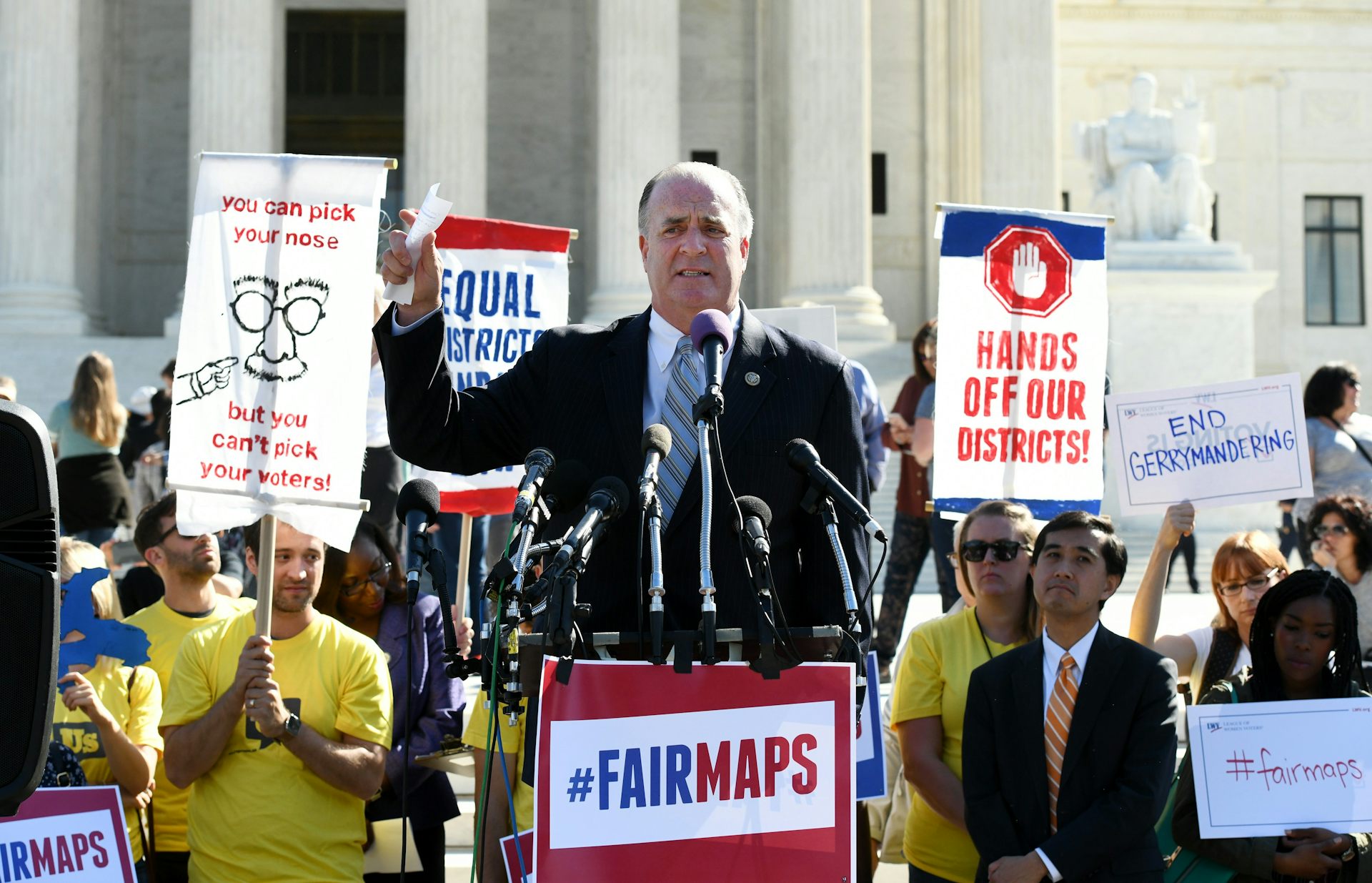
Rothchild: “Ancient wisdom” in MI’s new redistricting process

John Rothchild, Professor of Law at Wayne State University, writes approvingly in The Conversation about Michigan’s new allotted electoral redistricting commission. Rather naively, Rothchild seems to believe that democratic redistricting could result in the selection of “representatives who truly reflect [citizens’] political preferences”. Alas, this is more than mere redistricting can deliver, however well done.

How, then, should Michigan’s decision to assign unskilled members of the public the job of drawing nonpartisan election districts be evaluated?

Redistricting is a complex task. Michigan’s Constitution says that the districts must be drawn in compliance with federal law. That includes a requirement that voting districts have roughly the same population. It also requires that the districts “reflect the state’s diverse population and communities of interest,” and “not provide a disproportionate advantage to any political party.”

Dividing the map to meet all of these criteria is not likely to be within the capabilities of a group of randomly selected citizens.

There are several reasons to think that the redistricting commission will nevertheless prove adequate to the task.
Continue reading

Ferey: Populism against science: a new political cleavage?, Part 1

Camille Ferey is a doctoral student at the Université de Paris-Nanterre where she is writing a thesis about theories of participative democracy and democratic social movements. She wrote the following op-ed in BibliObs back in July.

Populism against science: a new political cleavage?

Rarely does science provoke as many hopes and controversies as it has been doing over the last few months.

It is a matter of great importance: upon the progress of science depends the neutralization of a disease that has confined half of humanity, upon its instructions and warnings depend our rights to travel, to meet and to kiss. However, many commentators talk about the threat of “distrust” that undermines the authority of science, if not of the authority of Truth itself, in our democracies. Furthermore, this dominant narrative confounds this phenomenon of skepticism (which is very real) with a different phenomenon, a political one: populism. The political cleavage is then reduced to a binary opposition between reason and populism, and consequently all criticism of scientific and political institutions is ruled out.

Mistrust of science and political non-conformism: a problematic confounding

It is a widely circulated narrative, with its opinion polls, its statistical studies, its indicators and its media talking points: democracies are suffering because of the irrational acceptance by a growing number of citizens of a mass of fake news, alternative truths and conspiracy theories (vaccines are bad for your health, the theory of evolution is a lie, climate change is a hoax). Yet, this narrative never asks whether what is taking place is a rejection of scientific theories, of scientific protocols, of scientists, of institutions of research, of technical applications of science or of its political uses. This vagueness allows to systematically associate this distrust with a specific phenomenon: populism, which is designated willy-nilly as both a cause and an effect of the regime of errors and lies.

The latest CEVIPOF poll on the relations between science and society establishes a correlation between, on the one hand, “an indicator” of mistrust calculated based on questions such as “Do you think that science brings more good than bad, as much good as bad, or more bad than good?”, and, on the other hand, “and indicator of populism”, based on the following questions: “Politicians are generally corrupt? A good political system is one where citizens rather than a government decide what they think is better for the country? Democracy functions best if the representatives are allotted citizens?”. A surprising definition of “populism”, which rather resembles the definition of democracy, or maybe of common sense.
Continue reading