Henry Jeffrey: sortition in Guyana

In his column in Stabroek News, Dr. Henry Jeffrey, former minister of Labour, Human Services and Social Security in Guyana, suggests using the lottery to resolve a political stand-off in Guyana that has left key positions in government vacant.

It appears to me that in the case of the chancellor and the chief justice [the vacant positions] the court can force those who are being recalcitrant to negotiate under the shadow of a lottery. It could demand that based upon the existing criteria, the leader of the opposition present his nominees for the positions to the president within a particular time period and that a final decision be made on both positions by a given date. If the parties fail to complete the process within the stated period a lottery will be imposed and the positions so filled.

Leading to this rather modest proposal is Jeffery’s summary of the advantages of sortition. He cites The Lottery as a Democratic Institution by Delannoi, Dowlen and Stone (2013) as his source:

1) Much as in scientific opinion polls, sortition ensures that any characteristics appearing in the general population will appear in roughly the same proportions on a randomly-selected decision-making body so long as the decision-making body has a significant number of members and random selection proceeds from a pool consisting of the entire population it is supposed to represent.

2) Sortition can help to prevent corruption and/or domination by ensuring that those entering public have no better chance than others, and random selection that excludes reasons from decision-making could ironically enable more reasoned behaviour untainted by special interests.

3) Though desirable, political competition founders when, (as in Guyana because of ethnic allegiances) elites either compete too little or too much (when they engage in civil war).

4) Randomization can mitigate the possibility of highly motivated small groups with outlier agendas suborning the political process.

5) The difficulty of getting people to do jury duty these days indicates that many people do [not? -YG] covet holding public office but whether or not they do, a lottery is a fair means of distribution.

6) Sortition can aid political participation and reduce apathy by allowing the rotation of offices that could include usually excluded groups.

7) Turnover in offices, i.e. rotating the people in power, could alleviate elite domination.

8) Sortition can be psychologically liberating in that officeholders selected by lot are less likely to feel any special entitlement to office and those who lose out are unlikely to be deferential to the winners.

Selina Thompson Seeks Young Collaborators For Sortition Project

Broadway World writes:

Imagine scrapping elections and instead selecting politicians at random. What would you do if your name was drawn out and you suddenly found yourself in charge? How do you think the country should be run?

Award-winning performer Selina Thompson is sending out a far-reaching call to action for young people from all backgrounds to put their names forward for a new project this Summer.

The provocative new work, Sortition, will bring together a randomly selected team of young people under 30 from Scotland, England, Wales and Northern Ireland who don’t vote, feel like voting doesn’t work and that politics as usual doesn’t represent them. Sortition is co-commissioned by 14-18 NOW, the UK’s arts programme for the First World War centenary, supported by Jerwood Charitable Foundation, and will go on to be premiered this September at Arnolfini in Bristol.

Thompson herself is presenting her project in a video on sortitionproject.com:

Frey and Tridimas on sortition

George Tridimas wrote to draw attention to the recent issue of the journal Homo Oeconomicus which has a set of comments (including one of his own) on a 2017 paper by the Swiss political economist Bruno Frey titled “Proposals for a Democracy of the Future” (PDF).
In the paper, Frey has a section called “True  Democracy  by  Random  Decisions?”. Some excerpts from that section:

The major advantage of random procedures in politics is to guarantee equal chance and therewith fairness, given the underlying body (e.g. Stone 2007). Each and every one in the underlying population has an equal chance of getting elected. It is therefore not necessary to introduce special quotas e.g. for the share of women. Interestingly, random procedures even take into account dimensions not yet discussed or even beyond imagination. Most importantly, the body politic is opened to new ideas and otherwise disregarded views. This also holds for preferences not yet even known but which may be important in the future.

The disadvantage of random decisions in politics is that capabilities, education and the intensity of desires are disregarded. This is the main reason why random choices in politics are rarely, if ever, taken from the population as a whole. The advantage of equality and fairness must be compared to the disadvantage of lower competencies. There are a great many possibilities to combine the two – a worthy subject for future research.

In addition to proposing combining sortition with elections, Frey also proposes deciding the outcome of referenda at random with the probabilities of the outcomes given by the vote shares.

Tridimas’s comment contains a review of the use of sortition in Athens. He concludes with a section called “Why Sortition may not Work”:

Clearly, the Athenian democracy was fundamentally different from the present representative democracy. Assembly deliberation, the rule of simple majority, absence of political parties, citizen participation through the courts, and sortition were a joint constitutional package, inexorably linked and mutually reinforcing. Therefore, an institution like sortition that served the direct democracy well may not be easily transferable to a representative democracy without the rest of the institutional structures. Cutting and pasting sortition from Athens to today is not the same thing as grafting it to the current institutional structure, and may fail to deliver ‘‘a better democracy’’.

Fintan O’Toole: If only Brexit had been run like Ireland’s referendum

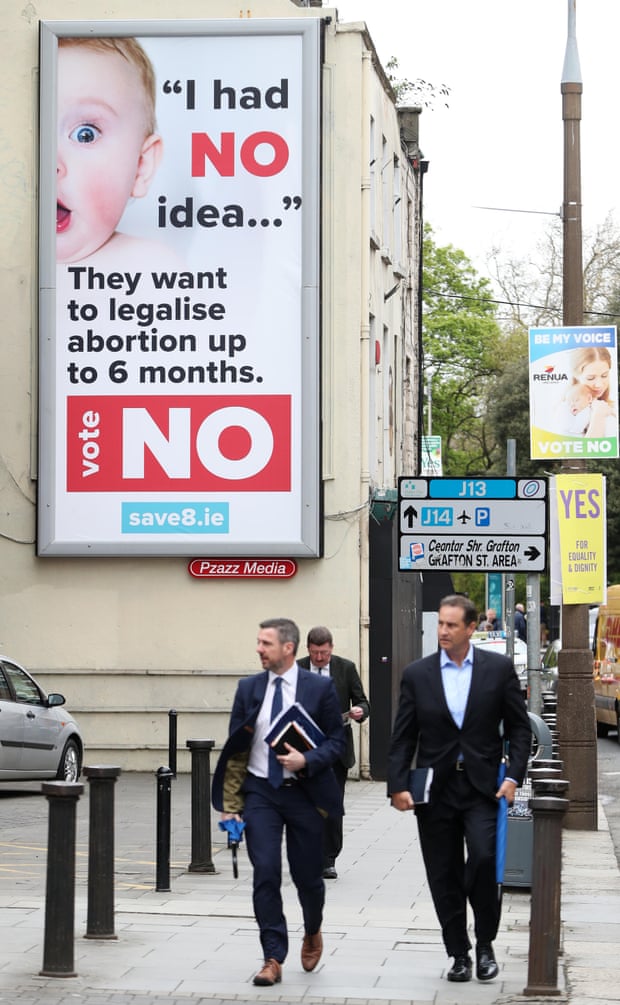
Fintan O’Toole has a glowing account in the Guardian about Ireland’s constitutional referendum. It advertises the allotted chamber process as the antidote to what troubles the establishment with electoral politics.

As O’Toole’s sees things, the trouble with electoral politics is “tribalism and fake ‘facts’”. With some careful management, the public can come to see sense and vote accordingly.

In all the excitement of what happened in Ireland’s referendum on abortion, we should not lose sight of what did not happen. A vote on an emotive subject was not subverted. The tactics that have been so successful for the right and the far right in the UK, the US, Hungary and elsewhere did not work. A democracy navigated its way through some very rough terrain and came home not just alive but more alive than it was before. In the world we inhabit, these things are worth celebrating but also worth learning from. Political circumstances are never quite the same twice, but some of what happened and did not happen in Ireland surely contains more general lessons.

Sortition in Jacobin magazine

Tom Malleson, assistant professor of social justice and peace studies at King’s University College at Western University, Canada, writes in Jacobin magazine that “we need a legislature by lot”.

Some excerpts make the following points. Electoralist regimes are not democratic:

[There is] widespread disillusionment that many of the world’s people feel towards their purportedly democratic systems. [T]he truth, widely known yet rarely acknowledged, is that the American political system is increasingly run not by the people, but by the rich. Plutocracy. Leading scholars of American politics Martin Gilens and Benjamin Page conclude their recent study with the observation that “the majority does not rule — at least not in the causal sense of actually determining policy outcomes. When a majority of citizens disagrees with economic elites or with organized interests, they generally lose.”

The standard reform proposals show little promise to fundamentally improve the situation:

What, then, is to be done? There has long been a conventional answer on the center-left: proportional representation and campaign finance reform — the former to enhance the representativeness of elections and the latter to reduce the distorting effects of money. This intuitive belief that the answer to our democratic problems is enhanced elections runs so deep that it is like an article of faith.

Yet should reformed electoral democracy really be the ultimate aim of our democratic hopes and dreams? Consider some of the places that are much closer to achieving an equitable electoral system, such as Canada, the UK, and particularly Western Europe. Such systems tend to function much more democratically than the US, but they run into the same basic problems with elections.

Money continues to play an important role, biasing elections towards the wealthy. Governments continue to be incredibly unrepresentative of the population — almost always composed of rich, white, middle-aged men. Even in Sweden, the young, the less educated, and the working class continue to be dramatically underrepresented (for instance, blue-collar workers make up about 9 percent of members of parliament despite comprising 41 percent of the electorate).

[T]he electoral process is inherently biased in favor of the rich — thereby undermining the cherished democratic ideal of political equality — because the precondition to winning an election is having the time and resources to communicate with the public and mobilize support, and that will always be done more effectively by those who have more money. This means that electoral democracy, regardless of campaign finance rules, will always be somewhat tilted towards the affluent.

Democracy and elections are incompatible:

If you lived in any previous historical era and told your neighbor that you believed in democracy, they would have understood what you meant. Yet if you had said that you believed in democracy and elections, they would have thought you’d lost your marbles.

For more than two thousand years, it was common knowledge that the only people who wanted elections were the rich and the powerful, since they were the ones who invariably benefitted from them. Those who genuinely believed in democracy, on the other hand, believed that political power must be kept in the hands of regular people and typically advocated the selecting of political positions by lot.

Continue reading

Morena has another round of sortition of congressional candidates

In 2015 the National Regeneration Movement (Spanish: Movimiento Regeneración Nacional, MORENA), a left-wing political party in Mexico, first selected some of its congressional candidates via allotment among activists.

It is now repeating this procedure.

Interestingly, while Morena was a relatively small party in 2015, winning about 8.5% of the votes and 47 seats out of 500 in the Chamber of Deputies, Morena is now very high profile, with its presidential candidate, Andrés Manuel López Obrador (AMLO), being the early front-runner.

Kolokotronis: Citizen jury for a job guarantee program

Alexander Kolokotronis, writing on the progressive website TruthOut, proposes sortition as a tool for managing a job guarantee program:

Projected 2020 presidential candidates are getting behind a job guarantee (JG). […] If we believe everyone has a right to employment with a living wage, the question is how such guaranteed employment should be structured and designed.

One criticism is that a job guarantee would be overly top-down and perilously unmanageable. However, for years JG advocates have called for a relatively decentralized structure, with locally-oriented rollouts and processes. This is not a lip service counter to JG critics. There are real options for a democratically decentralized JG program. In a recent policy paper and proposal, economist Pavlina Tcherneva devoted a subsection to “participatory democracy,” explicitly citing processes like participatory budgeting (PB). Tcherneva went as far as to assert that participatory governance “is a likely a prerequisite” for the “long-term success” of a JG program.

Fortunately, there are existing participatory institutional forms and processes for JG advocates and implementers to draw on — processes and forms that will not only provide a universal right to employment, but a right to employment under democratic means.

The three participatory mechanisms Kolokotronis offers are participatory budgeting, sortition, and cooperatives. Below is the section about sortition. There are some interesting links on the original page.

How it works: There is growing advocacy and experimentation in “sortition” processes. These processes range from “deliberative polling” to “citizens’ assemblies,” “citizens’ juries” and “planning cells.” Common to all these sortition processes is an assembling of randomly selected individuals to design or review a policy. Advocates and theorists point to the use of sortition in Venice and ancient Athens. This has led some to refer to the wording of “random selection” as a slight mischaracterization. A sortition body operating as a “mini-public” is typically constituted according to a “fair cross-section” of demographic representation. Sortition bodies can operate within individual institutions like hospitals or schools. In sortition bodies, ordinary community members have taken on topics as complex as nuclear energy, GMOs and an array of environmental topics. In terms of scale, they can operate at municipal, statewide and national levels. Until recently, however, sortition bodies designed policy without a binding mechanism for legislation or agenda-setting.
Continue reading

Rising Up With Sonali: David Van Reybrouck and Against Elections

David Van Reybrouck was recently interviewed by Sonali Kolhatkar on her show “Rising Up With Sonali” which is broadcast on a couple of public radio stations on the West Coast of the US. The Segment with Van Reybrouck starts about 35 minutes into the recording.

In the course of the interview Van Reybrouck gently points out to the interviewer that her proposals for reforming the electoral system, which are part of the standard reformist list of proposals (from which Ari Berman draws his proposals as well, for example), show no promise in fundamentally fixing the system, since they have been tried over and over worldwide without success.

Reybrouck explains to the New York Times that Against Elections is not really against elections

The crisis of electoralism (more commonly misleadingly referred to as “the crisis of democracy”) has been producing a stream of books warning about its dangers and proposing solutions. Ari Berman, a senior reporter at Mother Jones, a fellow at the Nation Institute and the author of “Give Us the Ballot: The Modern Struggle for Voting Rights in America”, reviews in the New York Times 4 of the books in the genre, with one of those books being David van Reybrouck’s Against Elections.

While the other three books, which according to the review offer no useful actionable remedies, are evaluated in generally appreciative terms (“comprehensive, enlightening and terrifyingly timely new book”, “hard to argue with [the] analysis”, “[the] book provides important insights into the present political moment”), van Reybrouck’s book is rather rudely dismissed:

Democracy is experiencing a “crisis of legitimacy,” writes Van Reybrouck, a Belgian cultural historian, who cites declining voter turnout, higher volatility in voter support and fewer people identifying with political parties. This is the fault not of politicians or the structure of the electoral system, but of elections themselves, Van Reybrouck says. “We have all become electoral fundamentalists, despising those elected but venerating elections.”

Van Reybrouck is a skilled polemicist, but his solutions to remedy “democratic fatigue syndrome” are naïve and unfeasible. Echoing the ancient Greek practice of drawing lots, he suggests replacing the American House of Representatives with a random sample of citizens, like a jury pool. That seems like an utterly impractical way to govern nowadays and reflects the same demonization of political experience that led the country to favor a reality television star over a former secretary of state in 2016.

Van Reybrouck fetishizes direct democracy, like citizens’ councils, but ignores the way existing electoral institutions could be made more responsive to the popular will through reforms like proportional representation or nonpartisan redistricting. The solution to democratic fatigue syndrome is to make elections more democratic, not to get rid of them altogether.

In response, van Reybrouck protests in a letter to the editor that he has been misunderstood:
Continue reading

Stephen Boucher proposes “an EU Collective Intelligence Forum”

Stephen Boucher, managing director of Fondation EURACTIV, writes on Carnegie Europe, the website of Carnegie Endowment for International Peace:

Whatever the analytical debates over Europe’s democratic deficiencies, citizens certainly feel that EU decisionmaking is remote and often impenetrable. Unless some tangible and high-profile initiatives are forthcoming, the EU will remain more remote and complex for the average citizen than public authorities closer to home. Busy citizens will not engage with broader European politics unless they feel that their voices have a good chance of being heard.

The endless aim to “communicate Europe better” is one facet of this predicament. Despite the EU’s focus on glitzy communication gimmicks, dedicated television channels, enticing Facebook pages, and the promise of Citizens’ Dialogues in which EU commissioners meet with citizens around the member states, many Europeans frequently feel that they have little to no influence over this particular level of international governance.

To address this problem, Boucher offers some ideas, one of which is what he calls “an EU Collective Intelligence Forum”.

A yearly Deliberative Poll could be run on a matter of significance, ahead of key EU summits and possibly around the president of the commission’s State of the Union address. On the model of the first EU-wide Deliberative Poll, Tomorrow’s Europe, this event would bring together in Brussels a random sample of citizens from all twenty-seven EU member states, and enable them to discuss various social, economic, and foreign policy issues affecting the EU and its member states. This concept would have a number of advantages in terms of promoting democratic participation in EU affairs. By inviting a truly representative sample of citizens to deliberate on complex EU matters over a weekend, within the premises of the European Parliament, the European Parliament would be the focus of a high-profile event that would draw media attention.

But no need for the elites to be apprehensive. The idea is not to force popular decisions upon them, but rather the other way around – to make citizens see sense.
Continue reading