Gutting: Should Everyone Vote?

An op-ed piece in The New York Times by Gary Gutting, a professor of philosophy at the University of Notre Dame:

At election time we inevitably hear earnest pleas for everyone to vote. Voter participation is a data point often cited in political studies, along with an assumption that the higher the percentage, the better: 100 percent participation is the goal. But we rarely question this belief, or objectively consider whether everyone who can vote ought to vote.

The author then outlines the problems of mass democracy, including ‘trumpery’, plutocracy and rational ignorance, and attempts to justify voting as an act of participatory solidarity. But he goes on to consider sortition as an alternative:

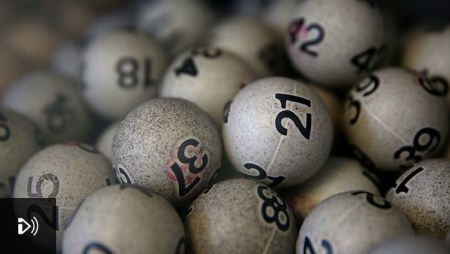
At least one political philosopher has put forward the radical idea that we could ensure informed voters by employing an “enfranchisement lottery.” Such a lottery would restrict voting to a randomly chosen group of citizens who are provided unbiased in-depth information relevant to an election. We can think of this approach as a matter of modeling our voting on our jury system. We would never accept deciding important and highly publicized trials by a vote of the general public. We think only people fully informed of the facts and relevant arguments put forward in a trial should make such important judgments. Shouldn’t we be at least as careful in deciding who should be president?

Notice that answering yes does not imply the elitist view that only a small minority of citizens are capable of making informed votes. The idea is not that voters are too stupid or biased to access the needed information; it’s just that they don’t have the time and resources to do so. Ideally, we would provide everyone with the relevant knowledge, but that would be impractical, time-consuming and expensive.

Continue reading

Why Not Choose Members of Congress by Lottery?

Terrill Bouricius, David Schecter, Campbell Wallace, and John Gastil write on Zócalo on KCRW:

We Already Randomly Select Our Juries. Why Not Choose Members of Congress by Lottery?

Conflicts of interest, corruption, and systemic dysfunction are woven through American legislative history, from Tammany Hall in the 1780s to the Savings & Loan crisis of the 1980s and the recent federal government shutdown. One reason is that the electoral system itself often attracts the wrong kind of candidates and rewards unethical campaigning. Gerrymandered district boundaries, voter suppression efforts, and winner-take-all election laws serve to restrict voter choices. People who choose to run for election are too often driven by ego and personal ambition, qualities at odds with the genuine give and take of deliberation. Donald Trump may seem to stand out in this regard, but his character flaws are less distinctive than his willingness to parade them publicly as a kind of perverse populist brand.

So why not random selection instead? Yes, tossing Congress, en masse, out its own front door and refilling the chamber with everyday citizens might seem like a crazy idea. But when asked about this prospect in surveys conducted in 1999 and 2012, Americans place more trust in a randomly-selected body than in Congress.

So what if we took that idea seriously? Could we replace some of our elections with selection by lot, also known as “sortition?”

Achen and Bartels: Democracy for Realists: Why Elections Do Not Produce Responsive Government

Via Garreth McDaid.

Political scientists Christopher Achen and Larry Bartels have a new book, Democracy for Realists: Why Elections Do Not Produce Responsive Government.

I have not read the book. Chapter 1 is available online, and it certainly makes for some interesting reading. Some comments following reading that first chapter:

(1) It seems that despite their critique of electoralism the authors are not ready to abandon it. At some point they seem to indicate that they cannot imagine something better when they opine that “[n]o existing government comes close to meeting all of Dahl’s criteria [for democracy]; in our view, no possible government could.” The book’s objective seems purely analytical: to produce “a democratic theory worthy of serious social influence [which] must engage with the findings of modern social science.”

(2) The book appears to adopt the conventional electoralist terminology which makes no clear distinction between electoralism and democracy. The authors should have known better.

(3) “Democracy for realists” seems to largely retrace the elitist democratic theories which rose to prominence in political science in the third quarter of the 20th century. Indeed Joseph Schumpeter and Walter Lippmann – leading propounders of those ideas – make a prominent appearance in the first chapter. Those theories fell out of fashion when, after the civil rights struggles, dominant ideology changed and became incompatible with their conclusions. It may be that the main innovation of the book is not in “engaging with the findings of modern social science”, but in being willing to (re)acknowledge the (now-)inconvenient truths that were buried over the last 40 years or so. In that, the book seems to be very much a product of current politics.

Excerpt:

In the conventional view, democracy begins with the voters. Ordinary people have preferences about what their government should do. They choose leaders who will do those things, or they enact their preferences directly in referendums. In either case, what the majority wants becomes government policy — a highly attractive prospect in light of most human experience with governments. Democracy makes the people the rulers, and legitimacy derives from their consent. In Abraham Lincoln’s stirring words from the Gettysburg Address, democratic government is “of the people, by the people, and for the people.” That way of thinking about democracy has passed into everyday wisdom, not just in the United States but in a great many other countries around the globe. It constitutes a kind of “folk theory” of democracy, a set of accessible, appealing ideas assuring people that they live under an ethically defensible form of government that has their interests at heart.
Continue reading

Sortition, Voting, and Democratic Equality

On another note, a paper of mine just appeared in Critical Review of International Social and Political Philosophy CRISPP). The paper, entitled “Sortition, Voting, and Democratic Equality,” appears in a special issue devoted to “Equal Representation: New Perspectives on Democratic Theory” (volume 19, no. 3, June 2016). The paper can be found here:

http://www.tandfonline.com/doi/full/10.1080/13698230.2016.1144858

Here is the abstract:

In recent years, democrats both inside and outside the academy have begun to reconsider the merits of the age-old practice of sortition, the random selection of political officials. Despite this fact, however, the comparative assessment of the merits of voting and sortition remains in its infancy. This paper will advance this project by treating the problem of assigning public responsibilities as a problem of allocative justice. To treat the problem in this manner is to treat public office as a type of good to which citizens might have various claims. Random selection is the appropriate method for distributing public office when all citizens have equal claims to that office and there is not enough to go around. Universal distribution is more appropriate when all claimants have equal claims to the office and there is enough to go around (as with universal suffrage, for example). Election (or possibly other procedures, such as appointment) makes sense when citizens do not enjoy equal claims to the office and that office is in scarce supply. This approach captures a crucial component of democratic equality. Different understandings of democratic equality lay behind sortition and election. Each might be appropriate under different circumstances, but both place rights-based constraints on the design of a democratic political system.

Paul Cartledge: The case for sortition is persuasive

Just read a short piece by Paul Cartledge in which he talks about the history of sortition, a topic treated more extensively in his book Democracy: A Life (Oxford University Press). He even manages to plug my own book, The Luck of the Draw: The Role of Lotteries in Decision Making (also Oxford University Press) along the way. Check it out:

It is quite easy to compile a checklist, perhaps even a decalogue, of differences between their democracy (or rather democracies, as there was no one identikit ancient model) and ours (ditto). And in no respect did they and we differ more than on the issue of sortition, that is, the application of the lottery to the conduct of politics (another Greek invention, both the word and the thing, with – again – the accent to be placed on difference as well as similarity between theirs and ours). We today take the exercise of voting in either general or local elections to be the very quintessence of what it is to do ‘democracy.’ The ancient Greeks took the exact opposite view: elections were elitist and for the nobs, appropriate more for oligarchy (the rule of the few rich) than for democracy (the rule of the masses, most of whom were poor), whereas sortition, the lot, was the peculiarly democratic way of selecting most office-holders and all juror-judges to serve in the People’s jury-courts.
Continue reading

Why Chance Matters

Just saw the following event announced on PHILOS-L. Anyone know the speaker?

*****

Why Chance Matters
with Prof. Mauricio Suárez
(Complutense University of Madrid & UCL)

Tue 12 April, 18.00 (drinks from 17.45)
@The Conservatory, Bloomsbury Publishing
50 Bedford Square, London.

Organised by UH Philosophy & Bloomsbury Philosophy

Free entry- all welcome – no booking required.
Please arrive early to secure a seat and enjoy a drink on us!

Facebook group for the event: https://www.facebook.com/events/463239327215030/

Abstract

Chance has been raising intellectual passions at least since the concept of probability emerged firmly in the 17th century, in connection with both evidence in jurisprudence and regularities in so-called “games of chance”. Probabilistic thinking soon spread everywhere: from actuarial science to population statistics, from the calculus of expectations to decision theory, from measures of experimental error to quantum mechanics. Ideas of pure chance and randomness infected general culture and even the arts. Yet, there have been many attempts to deny the reality of chance. Those in denial have typically tried to explain away chance in terms of something else, something less “fickle”, “elusive” or “ephemeral”. But there is deep disagreement as to what that something else may be. Objectivists aim to analyse chance in terms of proportions in real or virtual populations. Subjectivists aim to analyse it away as a feature of the architecture of cognition – such as information, or partial degree of belief. Yet none of these denials of chance seems to apply across the board and, as I show, they are all subject to important conceptual objections anyway. I conclude that chance matters, not only to many areas of philosophy but also to social policy, and how we conduct our lives in general.
Continue reading

Rousseau’s Mistake

A recent article by Hélène Landemore:

Rousseau’s Mistake: Representation and the Myth of Direct Democracy

Abstract: For Rousseau, democracy was direct or it wasn’t. As he famously put it, “the moment a people allows itself to be represented, it is no longer free: it no longer exists. The day you elect representatives is the day you lose your freedom” (Social Contract, III, 15). In other words, representative democracy is no democracy at all. Rousseau isn’t alone in this belief, and today the disappointed of representative government have turned to celebrating anew the virtues of direct democracy as more true to the ideal of popular sovereignty, self-rule, and genuine political equality. This paper defends the thesis that Rousseau was, in fact, mistaken and that there is no salvation to be found in the ideal of direct democracy. If democracy as a political regime is always, in fact, representative, then the interesting question is not: direct or representative democracy? But instead: What kind of representation should we aim for? The paper argues that beyond the familiar electoral model there are at least two other models of representation that present attractive features: the first is based on sortition and the other on self-selection.

Continue reading

John Keane: Elections are joyous carnivals of equality

John Keane, Professor of Politics at the University of Sydney, writes in The Conversation a response to David van Reybrouck’s “tired democracy” argument, which Keane presents as an argument for “the replacement of periodic elections, the ritual of citizens choosing parliamentary representatives, by government based on random selection and allotted assemblies of citizens considered as equals”. It may be worth noting that this description overstate’s van Reybrouck’s position significantly and contradicts Keane’s own disclaimer later on about “a deep prevarication in [van Reybrouck’s] work about whether or not elected legislatures should be replaced in their entirety by a ‘parliament of allotted citizens’”.

Keane responds to van Reybrouck by enumerating the mystical wonders of elections:

Democratic representation […] defies the distinction between mimicry (mandating, or issuing instructions) and self-sacrifice by delegation. It rather involves freely and fairly choosing others to take decisions for a fixed period of time. Representation means keeping continuous public tabs on politicians, then throwing them from office at the next election, or when their time is up. It’s much too simple to say that voting is equivalent to throwing away votes. Representation by election is a clever way of rotating leaders. It is equally a method of reminding citizens publicly that the body politic contains disagreements, and that those who act as if there’s consensus can turn out to be politically dangerous.

Continue reading

Book Review: Democracy’s Beginning

Greetings, everyone. Please excuse my long absence, due to – of all things – running in an election. I recently had the pleasure of reviewing ‘Democracy’s Beginning: The Athenian Story’ by Thomas N. Mitchell former Provost of Trinity College, Dublin for the Irish Times:

Alien and fascinating

It is common knowledge that democracy was invented in ancient Athens, but Mitchell explodes the myths of what that democracy was like. In Athens, all citizens had an equal say in public affairs (known as isegoria), staffed enormous citizen juries, were chosen for office by lottery, and were paid to participate in politics. In describing this way of life, Mitchell paints a picture of a society both alien and fascinating, underscoring the vibrancy of this long-lost civilization with a collection of maps and photos in the centre of the book.

His close scholarship shines in documenting the transition of Athens from financially and morally bankrupt oligarchy to emancipated democracy 2,500 years ago. It was not an easy or linear process, and the book tracks the many clashes of ideas and personalities with a commendable attention to detail that beautifully captures the essence of ancient Greek culture and politics.

From Solon’s economic balancing act, through the political reorganisation of Cleisthenes, the assassination of Ephialtes and, finally, Pericles, one of the most respected but sober leaders of the early democracy, Democracy’s Beginning explores this innovative and fearless experiment in “people power”.

Full review here. I would highly recommend the book to anyone interested in Athenian democracy. It is extremely comprehensive and highly readable.

A review of Landemore’s Democratic Reason

A review of Landemore’s Democratic Reason by Alfred Moore published in Contemporary Political Theory:

Landemore argues that rule by the many is better than rule by the few or the one because it can harness ‘democratic reason’. Democratic Reason refers to the collective political intelligence of the many, which in turn is a function of individual epistemic competence and the cognitive diversity of the group. [S]he claims that a group containing diverse perspectives, interpretations, heuristics and predictive models, will be better at making decisions than a less diverse group of people, even if they are individually smarter. As the key feature of democracy is that it is an inclusive decision procedure, and inclusion tends to increase cognitive diversity, democracies are likely to outperform rival regime types.