Van Reybrouck: Why elections are bad for democracy

In the wake of the Brexit referendum David Van Reybrouck takes his “tired democracy” message to the readers of the Guardian:

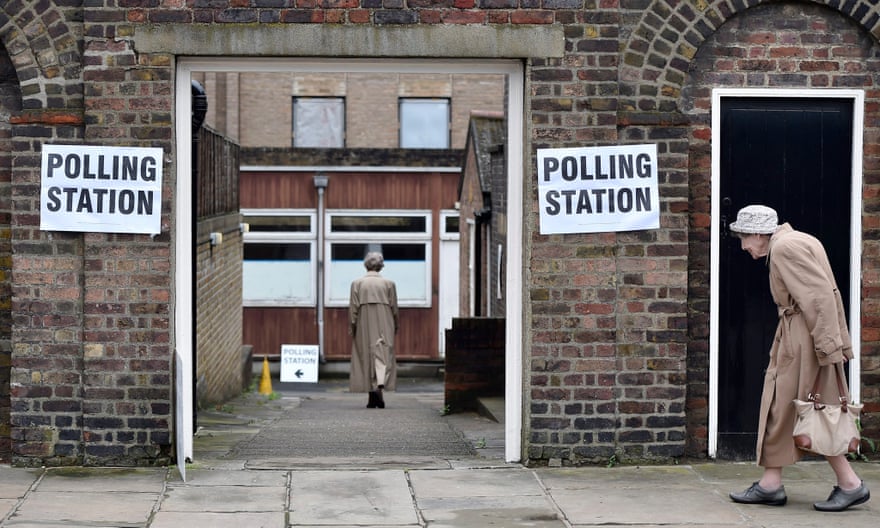
Brexit is a turning point in the history of western democracy. Never before has such a drastic decision been taken through so primitive a procedure – a one-round referendum based on a simple majority. Never before has the fate of a country – of an entire continent, in fact – been changed by the single swing of such a blunt axe, wielded by disenchanted and poorly informed citizens.

Van Reybrouk now recounts the statistics showing low and falling citizen trust in elected institutions and offers a diagnosis of the problem. Avoiding the mention of any substantive complaints about the policies implemented by those institutions, for Van Reybrouk it is purely a matter of procedure. There is considerable vagueness whether the procedural problem was always there or is a new phenomenon. The risk, if things are not repaired, is that voters will continue to make transparently foolish choices.

In a referendum, we ask people directly what they think when they have not been obliged to think – although they have certainly been bombarded by every conceivable form of manipulation in the months leading up to the vote. But the problem is not confined to referendums: in an election, you may cast your vote, but you are also casting it away for the next few years. […]

Referendums and elections are both arcane instruments of public deliberation. If we refuse to update our democratic technology, we may find the system is beyond repair; 2016 already risks becoming the worst year for democracy since 1933. We may find, even after the folly of Brexit, that Donald Trump wins the American presidency later this year. But this may have less to do with Trump himself, or the oddities of the American political system, than with a dangerous road that all western democracies have taken: reducing democracy to voting.
Continue reading

Roslyn Fuller educates Andrew Sullivan

It used to be a mainstream, respectable occupation to theorize about the horrors of popular rule. Socrates and other Athenian aristocrats have been upfront about the fact that the average person should not be trusted with power. This clear-headedness and frankness has been maintained over many centuries. The water began to muddy as the aristocrats were being challenged by the up-and-coming bourgeoisie. Now there had to be some rational criteria explaining why it was not the aristocrats who should be holding power. Talk about natural aristocracy became fashionable, but outright rejection of democracy was still part of the mainstream discourse.

Then, in the 19th century, the term “democracy” was rehabilitated and the ideological water became so thick it was impossible to know where one was heading. In the middle of the 20th century Schumpeter and the elite theorists tried to clear the water by explicitly redefining the term not to refer to popular power after all but simply to a competition between elites for popular vote.

This moment of clarity passed when the 1970’s saw the ideological victory of the Civil Rights movement. At that point popular rule became the only defensible meaning of “democracy”, and since then theorists are in the unpleasant situation of having to reconcile an oligarchical practice with a democratic ideology.

This brief history is presented as an introduction to a recent exchange between Andrew Sullivan, a British author, editor, blogger, conservative political commentator, former editor of The New Republic, and the author or editor of six books, and prof. Roslyn Fuller, an Irish academic, legal expert, columnist, electoral candidate, author of the book Beasts and Gods, and an Equality-by-Lot contributor.
Continue reading

Griffiths: Seven potential problems with sortition

Edmund Griffiths has a post about concerns he has regarding sortition. The post is quite interesting in its originality and in avoiding most of the standard anti-sortition talking points.

Griffiths is generally sympathetic to sortition and starts out with a long list of “well known” advantages of the system. The first few of these are:

it is likelier than any other system to produce representative bodies that are sociologically representative of the people;

• it removes the need for any specific positive discrimination;

• it forces political parties, campaign groups, etc., to address themselves to the public as a whole if they want to have any consistent influence on policy;

• it transforms political representation into a genuine public service, carried out by people who would often not have chosen it: a matter of duty, not ambition[.]

In terms of potential problems, Griffiths is much concerned about the validity of the sampling procedure and raises the questions of both deliberate tampering and non-intentional error as well as the question of whether the public will have faith in the procedure.

Griffiths lists four additional potential problems:
Continue reading

Somin: Sortition won’t solve political ignorance

jpeg-of-cover-final-version-e1464367107681

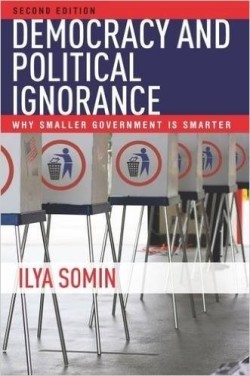
Ilya Somin, Professor of Law at George Mason University, is the author of the book Democracy and Political Ignorance: Why Smaller Government is Smarter. Somin opens an opinion piece in the Washington Post thus:

Widespread political ignorance is a serious problem for modern democracy. In recent years, many scholars have argued that we can overcome it by relying on “sortition”: delegating various political decisions to jury-like bodies selected at random from the general population. In this post, I explain why such proposals are unlikely to succeed.

Before going into the substance of Somin’s arguments about sortition, it is important to realize that ignorance is actually only the second most important problem with the current system, the first being the difficulty of mass scale agenda setting. More details here. The emphasis on ignorance rather than agenda setting is typical of the “rational choice” line of political argument which ignores the complexity of organization largely for ideological reasons. That said, the ability of decision makers to become informed about their subject matters is important and worth discussing. Some of the considerations that are discussed below apply also to the matter of agenda setting.

Continue reading

Cartledge: Crypto-oligarchy

Paul Cartledge is continuing his assault on the modern conventions about democracy:

To an ancient Greek democrat (of any stripe), all our modern democratic systems would count as “oligarchy”. By that I mean the rule of and by – if not necessarily or expressly for – the few, as opposed to the power or control of the people, or the many (demo-kratia).

That is the case even if – and indeed because – the few happen to be elected to serve by (all) the people. For in ancient Greece elections were considered to be in themselves oligarchic. They systematically favoured the few and, more particularly, the few extremely rich citizens – or “oligarchs”

[…T]here are a number of ancient democratic notions and techniques that do seem highly attractive: the use of sortition, for instance – a random method of polling by lottery that aimed to produce a representative sample of elected officials. Or the practice of ostracism – which allowed the population to nominate a candidate who had to go into exile for 10 years, thus ending their political career.

And comparison, or rather contrast, of our democracies with those of ancient Greece does serve to highlight what’s been called creeping crypto-oligarchy in our own very different (representative, not direct) democratic systems.
Continue reading

Frijters: Against sortition

Paul Frijters is a Professor of Economics at the University of Queensland and an Adjunct Professor at the Australian National University’s Research School of Social Sciences.

Frijters has written a post titled “Would sortition help against corruption?” in which he lays out his thinking about “what is likely to happen to the problem of special interests in Australia in two different scenarios: if we’d select our MPs randomly, or if we’d decide on mayor policies via citizen juries.”

Frijters’s concluding paragraphs:

I used to be quite charmed of the idea of citizen juries for policies and even for deciding on who would be in parliament. It sounded so democratic, such an elegant solution to the problem of special interest groups worming their way into our democratic institutions. It seemed like a magic solution for hard problems.

On reflection though, I find myself on the side of Edmund Burke and Socrates, who both denounced the idea as silly and unworkable. I agree with them: it is hard to see what use small random groups of citizens would be for policy-making in modern Western institutions.

An interesting discussion follows the post, with several discussants who seem to be aware of the idea and who seem to have given it some thought.

Book Review: Democracy: A Life

I seem to be reviewing a lot of books lately, including this review of Paul Cartledge’s Democracy: A Life in the Los Angeles Review of Books (cited in a previous post by Peter Stone). While the book covers what will be familiar ground for many here, the author also charts how the idea of ‘people power’ has been treated over the centuries that have elapsed since Athenian democracy. As such, I feel that he (intentionally or unintentionally) made an important contribution to challenging the negative perception that we have of citizen participation by explaining how this view developed over time. Another one to order for the library!

Cartledge goes to some effort to show how later [post-Athens] historians and statesmen were anxious to portray Greek democracy as a horrible mistake, the unworkable aspiration of starry-eyed dreamers that was preprogrammed to end in chaos. Under the onslaught of these propagandists, the vast majority of whom never experienced Athenian democracy — and indeed were often born several hundred years after it ceased to exist — the idea of political equality came to be regarded as a myth, the notion of the collective people holding power a danger to be shunned, suppressed, and preferably forgotten.

The truth was that democracy was a dangerous idea — to the kings, emperors, and high clergy who controlled information in the centuries after it ceased to be a living form of government. As the author puts it, while these autocrats held sway throughout the Middle Ages, the very idea of democracy was “on life-support.” And while things may have improved since, modern democracy is, in Cartledge’s view, not in much better shape — off the machine perhaps, but still staggering around the hospital ward, clutching at bits of furniture, and trying to remember what had happened to bring it there in the first place.

Allotted bodies better than referenda

Two new articles argue that allotted bodes are a better democratic tool than referenda. Both criticize the referenda system for asking the public to make uninformed decisions and both invoke the Athenian precedent. There are also some differences for the sharp-eyed reader to pick out.

Simon Threlkeld writes in Truthout:

Let Juries Legislate: Why Citizen Juries Are Better Than the Ballot Initiative for Citizen Lawmaking

Twenty-four US states have the ballot initiative. Unfortunately, the process is heavily skewed in favor of rich interests and unsuitable for making informed decisions. A much better method of citizen lawmaking is needed.

[…]

Classical Athens, often called the birthplace of democracy, sheds light on how citizen lawmaking can be done in an informed, fair and highly democratic way. In Athens, much of the decision-making was done by various juries chosen from the citizens by lottery. This kept a wide range of decisions in the hands of the citizens, prevented elite rule and provided a more informed version of citizen rule than popular vote.

Keith Sutherland writes in openDemocracy:

The Brexit lottery

On June 23, Britain will go to the polls to decide whether or not the country should remain a member of the European Union. David Cameron’s in–out referendum on EU membership is, ostensibly, about finding out what the people want. But there is a better, and more democratic, way.

[…]

Referendums are swayed by irrelevant issues, are “very blunt instruments” and the outcome would be “a lottery”, [Peter Mandelson] said. In a sense, Lord Mandelson is right – the experience of countries like Ireland, where referendums are commonplace, suggests that they are often used to give the government of the day a kicking, rather than deal with the issue at hand. And yet a different kind of lottery could be more representative of public opinion than a referendum vote.
Continue reading

Paul Cartledge: The case for sortition is persuasive

Just read a short piece by Paul Cartledge in which he talks about the history of sortition, a topic treated more extensively in his book Democracy: A Life (Oxford University Press). He even manages to plug my own book, The Luck of the Draw: The Role of Lotteries in Decision Making (also Oxford University Press) along the way. Check it out:

It is quite easy to compile a checklist, perhaps even a decalogue, of differences between their democracy (or rather democracies, as there was no one identikit ancient model) and ours (ditto). And in no respect did they and we differ more than on the issue of sortition, that is, the application of the lottery to the conduct of politics (another Greek invention, both the word and the thing, with – again – the accent to be placed on difference as well as similarity between theirs and ours). We today take the exercise of voting in either general or local elections to be the very quintessence of what it is to do ‘democracy.’ The ancient Greeks took the exact opposite view: elections were elitist and for the nobs, appropriate more for oligarchy (the rule of the few rich) than for democracy (the rule of the masses, most of whom were poor), whereas sortition, the lot, was the peculiarly democratic way of selecting most office-holders and all juror-judges to serve in the People’s jury-courts.
Continue reading

Rousseau’s Mistake

A recent article by Hélène Landemore:

Rousseau’s Mistake: Representation and the Myth of Direct Democracy

Abstract: For Rousseau, democracy was direct or it wasn’t. As he famously put it, “the moment a people allows itself to be represented, it is no longer free: it no longer exists. The day you elect representatives is the day you lose your freedom” (Social Contract, III, 15). In other words, representative democracy is no democracy at all. Rousseau isn’t alone in this belief, and today the disappointed of representative government have turned to celebrating anew the virtues of direct democracy as more true to the ideal of popular sovereignty, self-rule, and genuine political equality. This paper defends the thesis that Rousseau was, in fact, mistaken and that there is no salvation to be found in the ideal of direct democracy. If democracy as a political regime is always, in fact, representative, then the interesting question is not: direct or representative democracy? But instead: What kind of representation should we aim for? The paper argues that beyond the familiar electoral model there are at least two other models of representation that present attractive features: the first is based on sortition and the other on self-selection.

Continue reading