Demiocracy, Chapter 21: “Wide” mass electorates attract and empower Propaganda

Already weakened by the vast impersonal forces at work in the modern world, democratic institutions are now being undermined from within by politicians and their propagandists. The methods now being used to merchandise the political candidate as if he were a deodorant positively guarantee the electorate against ever learning the truth about anything. —Aldous Huxley, Brave New World Revisited, 1958, VI.

We vote, indeed we perceive political reality, through the people with whom we are in contact. Most of us are reached by the mass media only in a two-step process, by way of other people’s perceptions and reactions to them. —Hanna F. Pitkin, The Concept of Representation, 1967, p. 223.

… it has also become evident that if one acts ruthlessly …, cleverly organized propaganda can accomplish swift and drastic changes in opinions and attitudes, especially in difficult and critical situations; it can … also instill patently false ideas about actual conditions. — Daniel Boorstin, The Image, 1961.

Regarding one of those Pernicious P’s, Wikipedia says the following [2024-07-01] about the influential author Edward Bernays and his book, Propaganda (1928):

[Bernays] outlined how skilled practitioners could use crowd psychology and psychoanalysis to control them [the masses] in desired ways. Bernays later synthesized many of these ideas in his postwar book, Public Relations (1945), which outlines the science of managing information released to the public by an organization, in a manner most advantageous to the organization.

Continue reading

Democracy Without Shortcuts, A Critique. #1: A false equivalency is drawn between electoral misanthropy and electoral misogyny 

Among the major handicaps a reformer can encounter is the opposition of the indignant virtuous …. —E.S. Turner, Roads to Ruin: The shocking history of social reform, 1960.

Cristina Lafont’s 2020 book, Democracy Without Shortcuts, unfairly attacks lottocracy as invidiously exclusionary. A false equivalence is asserted between lottocrats’ current “existential” criticism of the political capability of mass publics and misogynists’ past “essentialist” criticism of the political capability of women (and sometimes of other marginalized groups). Lafont writes, for instance:

… The empirical evidence provided to supposedly ‘prove’ women’s ignorance, irrationality, apathy, and irresponsibility, and the arguments put forth to perpetuate their subjection to others in the not too distant past, are remarkably similar to the arguments and evidence currently provided by the ‘voter ignorance’ literature.
Continue reading

Ned Crosby (1936-2022)

Saddened to learn of the death of Ned Crosby, founder of the Jefferson Center and creator of Citizens’ Juries. Crosby was one of the first to envision selection by lot playing an important role in modern democratic politics. I only saw him speak once, and I’m sorry never to have met him.
Further details can be found here: https://www.cndp.us/announcement-on-the-death-of-our-founder-ned-crosby/.

The Minnesota Star Tribune has a full obituary.

RIP, Ned.

First Municipal Citizens Assembly in California

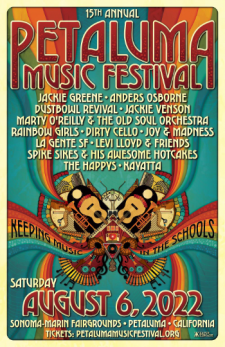
The northern California city of Petaluma (pop. 60,000) recently budgeted $450,000 for a Citizens’ Assembly chosen by lot to recommend a plan for the future use of its municipal fairground–a contentious issue that had been plaguing the city for several years. The Petaluma CA is the first municipal citizens assembly in California. The plan passed the city council unanimously.

The panel runs from mid-May to mid-July 2022, will deliberate over 90 hours, and is tasked with providing three policy reports on the question, “How might we use the City’s fairgrounds property to create the experiences, activities, resources, and places that our community needs and desires now and for the foreseeable future?”

The panelists will develop, write, and edit the reports themselves, and will deliver them to the Fair Board and City Council. The reports are advisory, though the council and board are expected to thoroughly consider and publicly respond to them.  

Healthy Democracy, best known for their work on the Oregon Citizens’ Initiative Review, has been designated moderator for the CA. Their work involves design and implementation of the CA process, and facilitating deliberation.

Continue reading

Mock Citizens’ Assembly

Want to experience a Citizens’ Assembly from the inside? Democracy Without Elections has teamed with Healthy Democracy and the Building a New Reality Foundation to put you in the middle of one!

Healthy Democracy will run a Mock Citizens’ Assembly that will be very close to the real thing. You can experience every part of a Citizens’ Assembly except that there would be no democratic lottery (sortition) to choose participants, a final report would not be written and the experience will be more compressed. There is no lottery as folks are self-selected because they want to experience a Citizens’ Assembly from the inside.

A Citizens’ Assembly must have an issue to settle, and ours will identify the best direction for our movement. Assuming only one direction could be supported at this time, should we focus on

  • using citizens’ assemblies to make recommendations to elected bodies, or
  • replacing legislators with citizens chosen by lottery

The cost for this experience is set at 3 self-selected levels: US$49, $89, $119. Pay what you can afford. If $49 is too much, contact us and we will work something out. Precocious 13 – 18 year olds are free with a paying adult.

Wonder what it would be like to be a facilitator at a Citizens’ Assembly (CA)? You can try it out as well! While it does not prepare you to be a professional facilitator, a special training session will happen prior to the Mock CA. A facilitator focuses on the meeting process and how the group is working, but does not contribute to the actual discussion. Participants in that training session will serve as novice facilitators during the Mock CA. Depending on the numbers, you would be a facilitator at times and a participant in the Mock CA. The cost for both the facilitator training and the Mock CA is, again, at 3 self-selected levels: US$99, $179, $229.

It all starts in February, and will be on Zoom on these dates:

  • February 19 (facilitator ‘training’)
  • February 26 and March 5 (Mock CA)

The times for each Saturday session are are set to include interested people in Europe, Africa, and across North and South America. All times are pegged to the United States Pacific Standard Time, so please verify the time in your own area.

  • Hawaii time: 7 – 9am, 10 – 12pm
  • Pacific US time: 9 – 11am, 12 – 2pm
  • Eastern US time: 12 – 2pm, 3 – 5pm
  • United Kingdom, Portugal, Ghana: 5 – 7pm, 8 – 10pm
  • Central Europe, Tunisia: 6 – 8pm, 9 – 11pm

There are limited spaces; click here to sign up! Contact me if you have questions.

Owen Shaffer

01shaffer@gmail.com

Democracy Without Elections

Democracy Without Elections is a U.S. 501(c)3 registered nonprofit organization.

Democracy Should Just Work

In my new post, I argue that parliamentary procedures can be eliminated with the adoption of the superminority method. The advantages of this are enormous, since legislatures are widely ridiculed for the way rules can be manipulated to advantage. Instead, the superminority rule reinforces two main principles:

  1. Procedural inevitability – Agenda items are guaranteed to reach a conclusion.
  2. Substantive uncertainty – The outcome of all agenda items is genuinely unknown when proposals are written.

Once these principles are followed, legislative politics becomes painless to the general public. Democracy just works.

Start with the State

In a new post, I argue that traditional political philosophy has been too concerned with building notions of justice and government from the individual up, and not focused enough on accepting the state as a fact and working down from there. While starting with the individual and trying to re-imagine the state has an intuitive appeal, it actually causes political philosophers to avoid applying real controls over the state in all of its contingent glory. Because of this, starting with the state as the first premise actually increases the protection afforded to individuals, by more carefully avoiding things that can go wrong with state intrusion into those freedoms.

Voting is a Community Right

In an election day post, I discuss how traditional voting and sortition can be viewed as aspects of the same right. Unifying both is the need to reverse the burden of action: while voting requires citizens to decide to vote, sortition requires proper authorities to find participants. Instead, voting in democracies now should require electoral authorities to obtain a valid vote from everyone who is eligible. At that point, calling random juries and assemblies will be a breeze.

What is a Majority?

My latest post discusses citizen juries from the perspective cognitive science. Starting with the argumentative theory of reason, I argue that final decision makers must be insulated from any requirement of justifying their decisions. This is precisely what juries do in trials: they apply a community standard, one that is inscrutable to advocates within the system, who operate on the basis of rules. The lack of such a function in democratic systems is an existential flaw that sortition must aim to correct.

The Blind Break is the Heart of Democracy

In part 4 of my legislative series, I propose a new definition of democracy, one that revolves around the blind break. The blind break is, of course, an information control mechanism, and has not usually been treated as so essential to the political project. While concepts like representation and delegation have historically been treated as essential to political theory, information flow has been treated as secondary.

In this post, I aim to correct this mistake. Political systems are information flows at their very core. We must treat constraints on those flows as central to the entire political project, right up there with separation of powers, equality under the law, and other traditional notions of political theory.