Elections and Sortition: two systems, two destinies, two ways to do politics

In the pretty likely event of a hung parliament after the next Australian election, the cross-bench becomes kingmaker. I’m hoping — and expecting — the crossbench to seek greater use of citizen assemblies in governing Australia. But what comes next is crucial.

Some think it would be great if a citizen assembly was held on an important issue — or two or three. Allegra Spender proposes one on tax. Others want one on housing. It would be nice to see them go ahead. But I’m sceptical they can achieve a lot.

First, on their own, citizen assemblies can be useful in lots of circumstances, but I’d say they’re most successful where they solve problems for politicians.

Ireland has become the pin-up boy for citizen assemblies

They’ve probably acquired a higher visibility in Ireland than anywhere else. And two of them have gone very well — allowing same-sex marriage and the repeal of anti-abortion provisions of the constitution. That’s because both solved problems for the politicians.

Irish citizen assemblies haven’t done noticeably better than elsewhere on the other occasions where they typically created problems for the politicians. In these circumstances, if politicians can’t ignore the citizen assembly on account of the profile it’s acquired, they cherry-pick its recommendations.

More importantly, whether or not the politicians accept their recommendations, the citizen assemblies usually contemplated are temporary and, as such, don’t aspire to leave any institutional trace. They also rehearse existing relationships in which we the people propose and the Government disposes.

I’ve gone to some lengths to propose an alternative, A standing citizen assembly effectively operating as a third house. (There’s something similar in the German-speaking part of Belgium). It is not more ‘radical’ than existing suggestions. It establishes an institution with exactly as much formal power as the other citizen assemblies just discussed. None.

The idea that it is more radical comes from what I call its greater ‘imaginative vigour’. Without proposing any change in formal power structures, it follows through on the idea that a different logic needs to enter the system.

I don’t see a citizen assembly as a tricky new ‘hack’. Nor is it that important to me that it seems more democratic. That’s a good thing, but, as we’ve seen in Iraq and Afghanistan and as the ancient Athenians discovered during the Peloponnesian War, more democratic structures don’t always arrive at better decisions.

The more I’ve thought about representation by sampling as opposed to representation by election, the more deeply I’ve appreciated their differences.

By their nature, elections separate the governed from those who govern. That’s why Aristotle called selection by lot ‘democratic’ and elections aristocratic or oligarchic. Montesquieu and America’s founding fathers agreed.

Electoral systems are also intrinsically competitive. And the competition for votes rewards performativity, manipulation and dissimulation.

That plunges electoral democracy into deep pathologies.

Continue reading

Demiocracy, Chapter 21: “Wide” mass electorates attract and empower Propaganda

Already weakened by the vast impersonal forces at work in the modern world, democratic institutions are now being undermined from within by politicians and their propagandists. The methods now being used to merchandise the political candidate as if he were a deodorant positively guarantee the electorate against ever learning the truth about anything. —Aldous Huxley, Brave New World Revisited, 1958, VI.

We vote, indeed we perceive political reality, through the people with whom we are in contact. Most of us are reached by the mass media only in a two-step process, by way of other people’s perceptions and reactions to them. —Hanna F. Pitkin, The Concept of Representation, 1967, p. 223.

… it has also become evident that if one acts ruthlessly …, cleverly organized propaganda can accomplish swift and drastic changes in opinions and attitudes, especially in difficult and critical situations; it can … also instill patently false ideas about actual conditions. — Daniel Boorstin, The Image, 1961.

Regarding one of those Pernicious P’s, Wikipedia says the following [2024-07-01] about the influential author Edward Bernays and his book, Propaganda (1928):

[Bernays] outlined how skilled practitioners could use crowd psychology and psychoanalysis to control them [the masses] in desired ways. Bernays later synthesized many of these ideas in his postwar book, Public Relations (1945), which outlines the science of managing information released to the public by an organization, in a manner most advantageous to the organization.

Continue reading

“A Random Group of People” editorial in Seattle and town hall on Citizens’ Assemblies

the Stranger, perhaps Seattle’s most widely read newspaper, has recently published an editorial by Ansel Herz, a former Congressional staffer in DC, now serving as communications director for Democracy Next, recently founded by Claudia Chwalisz (of OECD & Parisian Citizens’ Assembly fame).
In fact, this is what “democracy” actually is. In the 5th century B.C., the Greeks of ancient Athens coined demokratia to describe their carefully designed lottery system, under which any citizen was able to serve in parliamentary, administrative, and judicial bodies. Demokratia is not politicians, elections, and parties; the Greeks would have abhorred those, as many ordinary people—perhaps even you—do to this day.

“Their greatest gift was their passion for democracy,” observed the Trinidadian writer C.L.R. James in his 1956 essay, “Every Cook Can Govern”. The Athenians believed that elections were undemocratic; Aristotle called them “oligarchic.” It’s common sense that when only a handful of people can hold power, corruption is likely.

The Greeks recognized that whoever runs for elected office in the first place usually projects a peculiar power-seeking personality type. Having spent a lot of time around candidates who’ve won and lost, let me tell you: the Greeks were right.

After introducing sortition, Herz mentioned America in One Room, the Irish Citizens’ Assembly, and Brussels’s recent introduction of its own permanent CA.

In 2019’s “America In One Room”, for example, Stanford researchers organized an assembly of 526 Americans to deliberate for a long weekend. The group did not combust from anger and tension, nor did the participants retreat to their bubbles and cling to their beliefs. They found common ground around issues of trade, wages, immigration, and more. Democrats reported a 13-point increase in positive feelings toward Republicans; Republicans felt 14 points more favorably toward Democrats. Ninety-five percent of participants said they “learned a lot about people very different from me,” and 98 percent said they found the experience “valuable.”

Continue reading

The Trans-Atlanticist Podcast Features Sortition

Antoine Vergne (of Mission Publique) and I were invited guests on the American cultural center Hamburg’s podcast for two episodes over the last two weeks.

The discussion was much too short to be anything new to regular readers of EbL, but I wanted to post it as another sign of the mainstream acceptance of the idea of sortition. Another disclaimer, the Amerikazentrum is a propaganda outfit for the US & German foreign ministries. So, as expected, the framing of the show starts with cliched talking points about Brexit, Ukraine, autocracy v. democracy, etc…

I think the discussion went slightly beyond the “representation” argument. In particular, Antoine made some interesting points about the non-adversarial nature of assemblies as compared to referenda. Quite interesting for me was his story about how he happened upon “Stochacracy.” As an undergraduate, I believe, he wrote a research paper that ended with the line: “Stochocrats of the world unite!”

My own intervention was not particularly interesting but I tried to reference a variety of literature including democratic critiques of allotted minipulbics in the show notes.

Part 1: https://thetrans-atlanticist.podigee.io/s4e2-a-better-democracy-is-possible-part-1-an-introduction-to-sortition-and-deliberation

Part 2: https://thetrans-atlanticist.podigee.io/s4e3-a-better-democracy-is-possible-part-2-from-theory-to-real-world-application

Let me know your thoughts, and perhaps we could crowd source a list of recent podcasts & videos on sortition.

Martin Wolf on Democratic Capitalism (and me as it turns out!)

Martin Wolf is talking up a storm on the crisis of democratic capitalism, and he’s supporting sortition as you can hear from around 11 minutes in where I’ve set it up to begin.

In case you’re interested, here’s the presentation he gave before the panel session recorded above.

The Case for Abolishing Elections

Just in advance of Election Day here in the USA, Boston Review has published my article on why getting a real democracy requires that we replace elections with lotteries, career politicians with everyday citizens. Grateful to Terry Bouricius, Brett Hennig, and Adam Cronkright for allowing me to interview them for this piece.

In the ancient world, lot meant “destiny.” The Athenians believed that it was the fate of selected citizens to serve. Views on providence have changed, but whether we channel the will of the gods or merely our own earthly dreams, democracy by lottery would empower us to combat oligarchy, give voice to the multitude, and put ordinary citizens in the room where decisions are made. The question is not whether American democracy will die, but whether it will be instituted for the first time.

Invitation to The Similitude

Hello, Kleroterians! Nick Coccoma here from Boston, USA. I’ve been a follower of the blog and member of the sortition movement for several years now, after I discovered the theory and practice in the wake of the 2016 Presidential Election. In the years since, I’ve been a part of The Sortition Foundation and Democracy Without Elections, and published an article on sortition a couple of years ago for the journal New Politics.

Last February I launched my own Substack newsletter, The Similitude, where I cover politics, culture, and religion. I’ve written several posts on sortition, including a recent one entitled “Real Democracy Now: How Americans Can Win Self-Government.” It makes the case for sortition and features original interviews with our own Brett Hennig, Terry Bouricius, and Adam Cronkright. In your kindness, consider subscribing to the newsletter and sharing it in your circles as I seek more readers. I’d love to have the Kleroterians join the conversation. Many thanks for your ongoing work to bring about real democracy in our time!

Finding Genius Podcast

I’ve been meaning to post about this, but sadly the end of term proved rather hectic for me. I was interviewed in April about sortition for the Finding Genius podcast. It was a good interview–wish I’d seen the interview with Simon Pek beforehand, as the topic of sortition inside of firms came up. The picture they found of me is ten years old, but I’m not going to complain about that! The podcast can be accessed here: Revolutionizing Democracy – The Benefits Of Sortition and Selected Citizens Councils with Dr. Peter Stone.
First Municipal Citizens Assembly in California

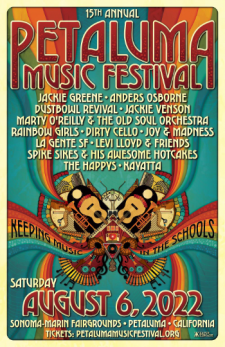
The northern California city of Petaluma (pop. 60,000) recently budgeted $450,000 for a Citizens’ Assembly chosen by lot to recommend a plan for the future use of its municipal fairground–a contentious issue that had been plaguing the city for several years. The Petaluma CA is the first municipal citizens assembly in California. The plan passed the city council unanimously.

The panel runs from mid-May to mid-July 2022, will deliberate over 90 hours, and is tasked with providing three policy reports on the question, “How might we use the City’s fairgrounds property to create the experiences, activities, resources, and places that our community needs and desires now and for the foreseeable future?”

The panelists will develop, write, and edit the reports themselves, and will deliver them to the Fair Board and City Council. The reports are advisory, though the council and board are expected to thoroughly consider and publicly respond to them.  

Healthy Democracy, best known for their work on the Oregon Citizens’ Initiative Review, has been designated moderator for the CA. Their work involves design and implementation of the CA process, and facilitating deliberation.

Continue reading

Mock Citizens’ Assembly

Want to experience a Citizens’ Assembly from the inside? Democracy Without Elections has teamed with Healthy Democracy and the Building a New Reality Foundation to put you in the middle of one!

Healthy Democracy will run a Mock Citizens’ Assembly that will be very close to the real thing. You can experience every part of a Citizens’ Assembly except that there would be no democratic lottery (sortition) to choose participants, a final report would not be written and the experience will be more compressed. There is no lottery as folks are self-selected because they want to experience a Citizens’ Assembly from the inside.

A Citizens’ Assembly must have an issue to settle, and ours will identify the best direction for our movement. Assuming only one direction could be supported at this time, should we focus on

  • using citizens’ assemblies to make recommendations to elected bodies, or
  • replacing legislators with citizens chosen by lottery

The cost for this experience is set at 3 self-selected levels: US$49, $89, $119. Pay what you can afford. If $49 is too much, contact us and we will work something out. Precocious 13 – 18 year olds are free with a paying adult.

Wonder what it would be like to be a facilitator at a Citizens’ Assembly (CA)? You can try it out as well! While it does not prepare you to be a professional facilitator, a special training session will happen prior to the Mock CA. A facilitator focuses on the meeting process and how the group is working, but does not contribute to the actual discussion. Participants in that training session will serve as novice facilitators during the Mock CA. Depending on the numbers, you would be a facilitator at times and a participant in the Mock CA. The cost for both the facilitator training and the Mock CA is, again, at 3 self-selected levels: US$99, $179, $229.

It all starts in February, and will be on Zoom on these dates:

  • February 19 (facilitator ‘training’)
  • February 26 and March 5 (Mock CA)

The times for each Saturday session are are set to include interested people in Europe, Africa, and across North and South America. All times are pegged to the United States Pacific Standard Time, so please verify the time in your own area.

  • Hawaii time: 7 – 9am, 10 – 12pm
  • Pacific US time: 9 – 11am, 12 – 2pm
  • Eastern US time: 12 – 2pm, 3 – 5pm
  • United Kingdom, Portugal, Ghana: 5 – 7pm, 8 – 10pm
  • Central Europe, Tunisia: 6 – 8pm, 9 – 11pm

There are limited spaces; click here to sign up! Contact me if you have questions.

Owen Shaffer

01shaffer@gmail.com

Democracy Without Elections

Democracy Without Elections is a U.S. 501(c)3 registered nonprofit organization.