“Limiting who can vote”

Ripples from Van Reybrouck’s book made it across the Atlantic and into the Washington Post where Dutch professors of political science Eric Schliesser and Tom Van Der Meer see fit to discuss his proposals for using sortition together with a proposal to “disenfranchise the ignorant to slant political rule toward experts”. They write:

Both [proposals] limit who can vote and seek to stimulate apolitical and rational decision-making:

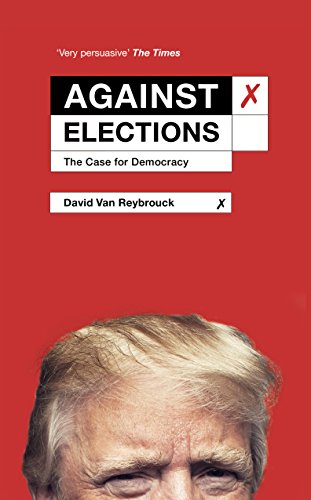
1) Representatives by lottery. Belgian author and cultural historian David Van Reybrouck suggests abolishing elections and appointing representatives by lottery instead. Van Reybrouck’s proposal extends the principle of sortition — how juries are appointed — to the legislature: Randomly selected citizens would reach the optimal decision via deliberation, supposedly without a need to be bothered with politicking. When their term is up, they go home.

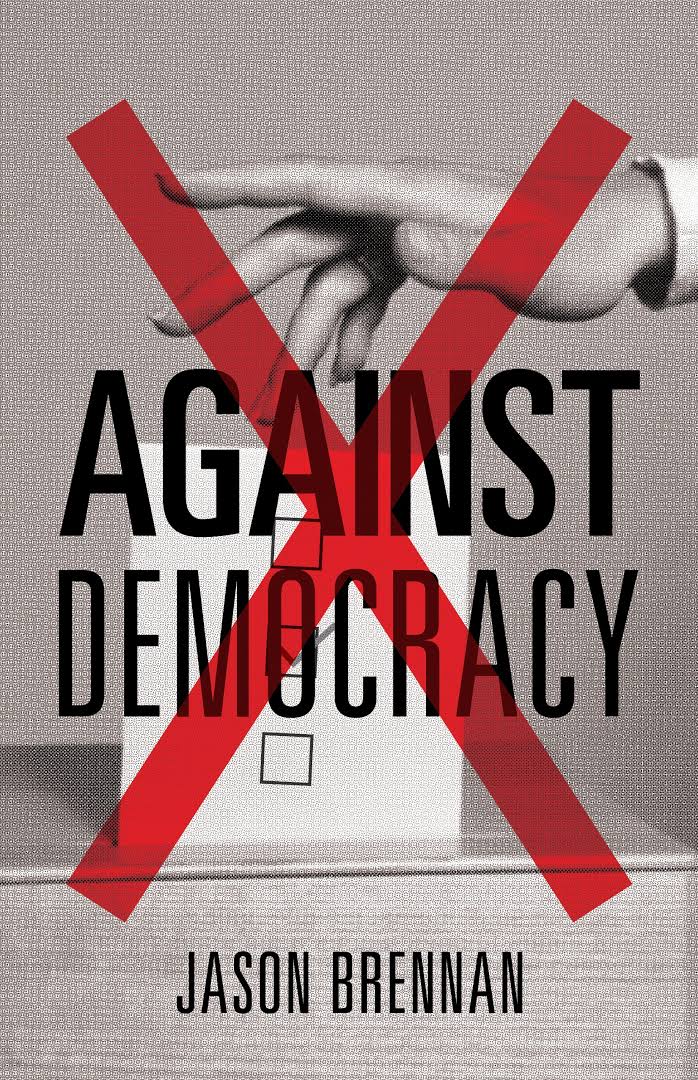
2) Experts as representatives. Philosopher Jason Brennan at Georgetown University suggests disenfranchising the ignorant to slant political rule toward experts. His proposal recently received favorable discussion in The Washington Post. Inspired by Plato, the rule by properly trained experts, or epistocracy, would prevent politicians from being easily swayed by moneyed interests and demagogues.

Continue reading

Van Reybrouck’s Against Elections, in English

An English translation of David Van Reybrouck’s book Against Elections was recently published. The book is blurbed by, among others, J. M. Coetzee, the South African novelist who was the recipient of the 2003 Nobel Prize in Literature:

Choosing our rulers by popular vote has failed to deliver true democratic government: that seems to be the verdict of history unfolding before our eyes. Cogently and persuasively, David Van Reybrouck pleads for a return to selection by lot, and outlines a range of well thought out plans for how sortitive democracy might be implemented. With the popular media and the political parties fiercely opposed to it, sortitive democracy will not find it easy to win acceptance. Nonetheless, it may well be an idea whose time has come.

With attention from such a luminary it is not surprising that the book was reviewed in several elite media outlets. As Coetzee predicts, the reception is quite cold. The warmest one is Andrew Anthony’s lukewarm response in The Guardian. Anthony concludes:

[W]hen, say, a sortition of the public recommends an expensive transport system that doesn’t work out or cuts a defence system that is later needed, […] where and how is that frustration registered? You can’t vote out the public. One job that elected politicians fulfil is as democratic punchbags. It’s not edifying or necessarily productive, but it may be essential.

Perhaps sortition or partial sortition could be applied in very specific cases. But we also need to look at reviving elections and renewing our belief in them. They remain a vital part of the democratic process. Not its only part, to be sure, but they are an all too rare example of mass engagement. Let’s not vote them out just yet.

Continue reading

Roslyn Fuller educates Andrew Sullivan

It used to be a mainstream, respectable occupation to theorize about the horrors of popular rule. Socrates and other Athenian aristocrats have been upfront about the fact that the average person should not be trusted with power. This clear-headedness and frankness has been maintained over many centuries. The water began to muddy as the aristocrats were being challenged by the up-and-coming bourgeoisie. Now there had to be some rational criteria explaining why it was not the aristocrats who should be holding power. Talk about natural aristocracy became fashionable, but outright rejection of democracy was still part of the mainstream discourse.

Then, in the 19th century, the term “democracy” was rehabilitated and the ideological water became so thick it was impossible to know where one was heading. In the middle of the 20th century Schumpeter and the elite theorists tried to clear the water by explicitly redefining the term not to refer to popular power after all but simply to a competition between elites for popular vote.

This moment of clarity passed when the 1970’s saw the ideological victory of the Civil Rights movement. At that point popular rule became the only defensible meaning of “democracy”, and since then theorists are in the unpleasant situation of having to reconcile an oligarchical practice with a democratic ideology.

This brief history is presented as an introduction to a recent exchange between Andrew Sullivan, a British author, editor, blogger, conservative political commentator, former editor of The New Republic, and the author or editor of six books, and prof. Roslyn Fuller, an Irish academic, legal expert, columnist, electoral candidate, author of the book Beasts and Gods, and an Equality-by-Lot contributor.
Continue reading

Somin: Sortition won’t solve political ignorance

jpeg-of-cover-final-version-e1464367107681

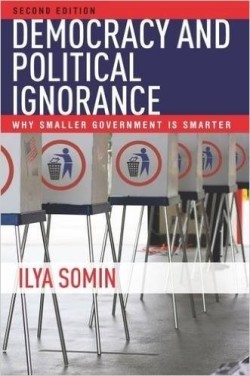
Ilya Somin, Professor of Law at George Mason University, is the author of the book Democracy and Political Ignorance: Why Smaller Government is Smarter. Somin opens an opinion piece in the Washington Post thus:

Widespread political ignorance is a serious problem for modern democracy. In recent years, many scholars have argued that we can overcome it by relying on “sortition”: delegating various political decisions to jury-like bodies selected at random from the general population. In this post, I explain why such proposals are unlikely to succeed.

Before going into the substance of Somin’s arguments about sortition, it is important to realize that ignorance is actually only the second most important problem with the current system, the first being the difficulty of mass scale agenda setting. More details here. The emphasis on ignorance rather than agenda setting is typical of the “rational choice” line of political argument which ignores the complexity of organization largely for ideological reasons. That said, the ability of decision makers to become informed about their subject matters is important and worth discussing. Some of the considerations that are discussed below apply also to the matter of agenda setting.

Continue reading

Democracy Talk, Episode 2

In this episode Patrick Chalmers and Yoram Gat talk about Patrick’s inside view of establishment journalism. Patrick presents his analysis of the roots of the problems with journalism and their connection to the problems of our systems of government.

Patrick’s book – Fraudcast News – How Bad Journalism Supports Our Bogus Democracies – can be found online here: http://fraudcastnews.net.

Literature-related question

Hi everyone,

I’m wondering whether any readers have insights about books and/or articles which build on/critique John Burheim’s path-breaking and overarching model of demarchy, and/or apply demarchy to non-government organizations such as corporations or unions. I’m conducting some research in this space and haven’t been able to find too much work specifically on demarchy in published work (but have found a lot about specific uses of random selection). Any and all suggestions would be much appreciated. Thanks!

Book Review: Democracy: A Life

I seem to be reviewing a lot of books lately, including this review of Paul Cartledge’s Democracy: A Life in the Los Angeles Review of Books (cited in a previous post by Peter Stone). While the book covers what will be familiar ground for many here, the author also charts how the idea of ‘people power’ has been treated over the centuries that have elapsed since Athenian democracy. As such, I feel that he (intentionally or unintentionally) made an important contribution to challenging the negative perception that we have of citizen participation by explaining how this view developed over time. Another one to order for the library!

Cartledge goes to some effort to show how later [post-Athens] historians and statesmen were anxious to portray Greek democracy as a horrible mistake, the unworkable aspiration of starry-eyed dreamers that was preprogrammed to end in chaos. Under the onslaught of these propagandists, the vast majority of whom never experienced Athenian democracy — and indeed were often born several hundred years after it ceased to exist — the idea of political equality came to be regarded as a myth, the notion of the collective people holding power a danger to be shunned, suppressed, and preferably forgotten.

The truth was that democracy was a dangerous idea — to the kings, emperors, and high clergy who controlled information in the centuries after it ceased to be a living form of government. As the author puts it, while these autocrats held sway throughout the Middle Ages, the very idea of democracy was “on life-support.” And while things may have improved since, modern democracy is, in Cartledge’s view, not in much better shape — off the machine perhaps, but still staggering around the hospital ward, clutching at bits of furniture, and trying to remember what had happened to bring it there in the first place.

Democracy Talk, Episode 1

Patrick Chalmers and I are aiming to turn this into an ongoing video series. Any comments are welcome.

Sortition theory and practice: the G1000 comes to the UK

The End of Politicians screeenshotThe “short, powerfully argued and carefully researched” book The End of Politicians, by Sortition Foundation co-founder Brett Hennig, is now 75% funded and well on the way to being published by the crowdfunding publisher, Unbound. You can help get this book to 100% and get published by pledging and pre-ordering it here: https://unbound.co.uk/books/the-end-of-politicians

And the ideas in the book are on the way to becoming a reality – on the 10th and 11th of June Harm van Dijk and Jerphaas Donner, the founders of the G1000 in the Netherlands, are coming to the UK to help launch the G1000 in the UK. The aim of the G1000 is to bring a representative, random selection of people from a community together to deliberate about what they think is most important for their community.

Continue reading

Achen and Bartels: Democracy for Realists: Why Elections Do Not Produce Responsive Government

Via Garreth McDaid.

Political scientists Christopher Achen and Larry Bartels have a new book, Democracy for Realists: Why Elections Do Not Produce Responsive Government.

I have not read the book. Chapter 1 is available online, and it certainly makes for some interesting reading. Some comments following reading that first chapter:

(1) It seems that despite their critique of electoralism the authors are not ready to abandon it. At some point they seem to indicate that they cannot imagine something better when they opine that “[n]o existing government comes close to meeting all of Dahl’s criteria [for democracy]; in our view, no possible government could.” The book’s objective seems purely analytical: to produce “a democratic theory worthy of serious social influence [which] must engage with the findings of modern social science.”

(2) The book appears to adopt the conventional electoralist terminology which makes no clear distinction between electoralism and democracy. The authors should have known better.

(3) “Democracy for realists” seems to largely retrace the elitist democratic theories which rose to prominence in political science in the third quarter of the 20th century. Indeed Joseph Schumpeter and Walter Lippmann – leading propounders of those ideas – make a prominent appearance in the first chapter. Those theories fell out of fashion when, after the civil rights struggles, dominant ideology changed and became incompatible with their conclusions. It may be that the main innovation of the book is not in “engaging with the findings of modern social science”, but in being willing to (re)acknowledge the (now-)inconvenient truths that were buried over the last 40 years or so. In that, the book seems to be very much a product of current politics.

Excerpt:

In the conventional view, democracy begins with the voters. Ordinary people have preferences about what their government should do. They choose leaders who will do those things, or they enact their preferences directly in referendums. In either case, what the majority wants becomes government policy — a highly attractive prospect in light of most human experience with governments. Democracy makes the people the rulers, and legitimacy derives from their consent. In Abraham Lincoln’s stirring words from the Gettysburg Address, democratic government is “of the people, by the people, and for the people.” That way of thinking about democracy has passed into everyday wisdom, not just in the United States but in a great many other countries around the globe. It constitutes a kind of “folk theory” of democracy, a set of accessible, appealing ideas assuring people that they live under an ethically defensible form of government that has their interests at heart.
Continue reading