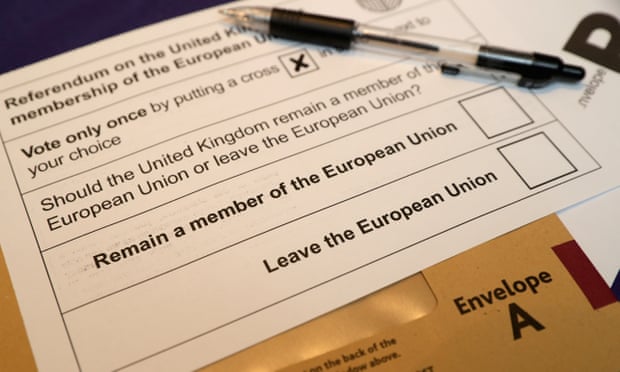
Reybrouck explains to the New York Times that Against Elections is not really against elections

The crisis of electoralism (more commonly misleadingly referred to as “the crisis of democracy”) has been producing a stream of books warning about its dangers and proposing solutions. Ari Berman, a senior reporter at Mother Jones, a fellow at the Nation Institute and the author of “Give Us the Ballot: The Modern Struggle for Voting Rights in America”, reviews in the New York Times 4 of the books in the genre, with one of those books being David van Reybrouck’s Against Elections.

While the other three books, which according to the review offer no useful actionable remedies, are evaluated in generally appreciative terms (“comprehensive, enlightening and terrifyingly timely new book”, “hard to argue with [the] analysis”, “[the] book provides important insights into the present political moment”), van Reybrouck’s book is rather rudely dismissed:

Democracy is experiencing a “crisis of legitimacy,” writes Van Reybrouck, a Belgian cultural historian, who cites declining voter turnout, higher volatility in voter support and fewer people identifying with political parties. This is the fault not of politicians or the structure of the electoral system, but of elections themselves, Van Reybrouck says. “We have all become electoral fundamentalists, despising those elected but venerating elections.”

Van Reybrouck is a skilled polemicist, but his solutions to remedy “democratic fatigue syndrome” are naïve and unfeasible. Echoing the ancient Greek practice of drawing lots, he suggests replacing the American House of Representatives with a random sample of citizens, like a jury pool. That seems like an utterly impractical way to govern nowadays and reflects the same demonization of political experience that led the country to favor a reality television star over a former secretary of state in 2016.

Van Reybrouck fetishizes direct democracy, like citizens’ councils, but ignores the way existing electoral institutions could be made more responsive to the popular will through reforms like proportional representation or nonpartisan redistricting. The solution to democratic fatigue syndrome is to make elections more democratic, not to get rid of them altogether.

In response, van Reybrouck protests in a letter to the editor that he has been misunderstood:
Continue reading

Suzuki: The solution we need is a system where politicians are drawn from a hat

Canadian scientist and environmentalist David Suzuki has given up on the electoral system and proposes to replace it with a sortition-based system. Some excerpts from an interview with the National Observer:

Q: Trudeau’s called the pipelines a “trade off” for the national carbon plan. Earlier this month, he was in Nanaimo saying we can both build Kinder Morgan and hit the Paris targets.

DS: That’s such a lot of bullshit! this is just political doublespeak: ‘We’ve got to keep burning more oil, more fossil fuels, in order to meet our reduction targets.’ What are you talking about? That’s such a crock of shit!

Q: So how can citizens hold our democratic leaders accountable?

DS: I was asked to give a talk to the Senate last year on the 150th anniversary of Canada. What I said is, ‘We elect people to run government, but their problem is they only look to the next election.’ They can’t look down and say, ‘Jesus, we have to spend $50 billion a year for the next fifteen years to deal with climate change,’ because they know someone else will take credit for it. They won’t be in office then. So that kind of view is not in their thinking.

So I said, ‘You guys are the Senate. You’re not elected. You’re appointed for life! You’re the ones to think of sober second thought, and think in terms of one generation, two generations from now. You’re the guys who should be doing that.’

They didn’t do a goddamn thing. But I really think that would be a huge opportunity, if we’ve got that bicameral system.
Continue reading

The programmable voter, or, elections are not what they used to be

Mark Zuckerberg was hauled in front of Congress to answer for the “Cambridge Analytica scandal”. In the hearing he remorsefully promised that his top priority is now “making sure no one interferes in the various 2018 elections around the world”.
At face value this is a meaningless (and somewhat self-important) promise – there is nothing to distinguish “interference” from plain old campaign propaganda. And indeed at some level the whole spectacle was nothing more than a show – nothing concrete can be expected to be gained or lost. Presumably Facebook will make some changes to the way information (or misinformation) flows through its servers and the result will be that some pieces information (or misinformation) will be amplified and others suppressed. But, of course, Facebook already processes information in some way and this existing way also inevitably discriminates between pieces of information. What Facebook does or will do with the information it handles is completely up this private, unaccountable, opaque organization, motivated by its business and political interests, and there is thus little reason to expect any fairness or equality in the way it handles information. Thus no substantive change can be expected.
Continue reading

Saillans

Let’s do some sightseeing and go to Saillans. A small village in a South of France tried something unusual, and I belong to a collective in Paris wanting to reproduce their experiment. A member sent a bunch of links to videos about Saillans.

Two images to help locating Saillans. Romain Cazé CC-BY

Saillans’ town hall uses sortition massively. 12 randomly selected citizen control the elected official (check 5:00 of this video). They also use random selection to build action groups on specific topics, like designing the city’s urban plan. The experiment demonstrates how we can use chance to enhance citizen involvement. They demonstrate at least two points: (1) Citizens can perform executive functions, and (2) Citizens can be used to control the executive power.

Of course, some locals speak against this method and for them things were better before. And some mayors around look on Saillans with a judgemental eye. They argue that people should not decide on topics unknown to them. We can answer this argument in two ways: people can become experts through action, and certain mayors didn’t have any prior training before their elections.

But the easiest criticism of this experiment is about its scale (Saillans’ population is around 1,200 inhabitants). Hey, we need to start somewhere and better start at the smallest scale possible. I like the bottom-up approach and believe that a revolution should be done one step at a time. The town hall has worked this way for four years now. A story to be continued…

Thank you for reading! Write below, if you want to add information about Saillans or why you agree or disagree.

This post was originally published on http://www.stochocratie.org.

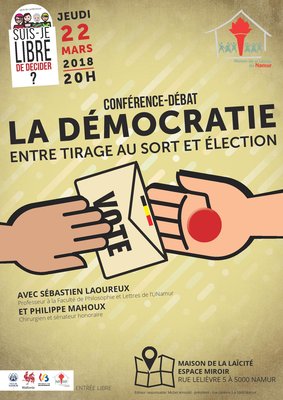
Democracy between sortition and elections

A debate titled “Democracy between sortition and elections” is planned to take place in Namur, Belgium later this month.

In a context where dissatisfaction with the political system is widely shared, the selection of members of legislative assemblies via sortition seems promising in the sense that it allows exchange of citizens’ opinions outside of any framework of careerist political interest. Presentations by Sébastien Laoureux (professor at the Philosophy and Letters department of the University of Namur) and by Philippe Mahoux (surgeon and honorary senator) will be the opportunity to evaluate the link between democracy and elections before exploring new avenues which current democracy can take.

Sortition in the Bulletin of the Institute of Mathematical Statistics

The Bulletin of the Institute of Mathematical Statistics has published a column of mine that deals with the historical and theoretical connections between democracy and statistical sampling:

Democracy and statistical sampling

For about 2,500 years, statistical sampling was closely linked with democracy. “Selection by lot is natural to democracy, as that by choice [i.e., elections] is to aristocracy,” asserted Aristotle in the 4th century BC, following his own first-hand experience at Athens and the conventional wisdom of his time. Montesquieu concurred in the first half of the 18th century. It was only in the last 200 years, as democracy displaced aristocracy as the legitimate organizing principle of politics, that sortition—the delegation of power by statistical sampling—had to be air-brushed out of history and political science. […]

As part of the attempt to dismiss sampling as a political device it is sometimes claimed today that its use in Athens was motivated by the superstition that randomization allowed the gods to make the selection. However, the historical record indicates that the main motivation behind the practice was the law of large numbers. It was expected that sortition would produce a group that would mirror the population in important respects. This was often stated as an expectation of resemblance between the population and the sample in terms of wealth and social status (i.e., that most members would be poor commoners) but it was taken for granted that these characteristics would be correlated with certain interests and beliefs.

Continue reading

Top ten best sortition videos

[This is a repost from http://www.bretthennig.com/ten_best_sortition_videos – it is meant to be provocative – and of course includes all my own videos! – suggestions for additions most welcome!]

Here’s my selection of the top ten best short videos that showcase sortition: what it’s about, how it could work, and why we should transform democracy and replace elections with stratified, random selection.

Of course I’m biased, but I have to get my own TEDx video out of the way first:

The TED-Ed video by Melissa Schwartzberg, What did democracy really mean in Athens? wins the view count award – it’s a great video as well!

Continue reading

Where to for Frome’s politics?

It’s interesting to see that councillors in charge of local government in the English market town of Frome are mulling over sortition. They face a byelection one year before the end of the council’s current, four-year term. Peter Macfadyen* and his fellow members of Independents for Frome (IfF) will be defending their record as part of the campaign.

No surprises there, it’s what any political party has to do mid term, even if IfF members see themselves as a “non-party party“.  It does raise the intriguing point of manufactured conflict, though. Elections, as readers of Equality by lot know only too well, create divisions among competing candidates and their would-be voters.

Opposing candidates must somehow differentiate themselves from their opponents. That generally means over-blowing your own qualities while demeaning the opposition’s. Exchanges do little to illuminate or advance public understanding or people’s engagement in political issues.

Yes, yes, you know all that too.

The Frome election won’t change the balance of power on the council as IfF control all the other 16 seats. It will also cost money to stage and for candidates to contest.
Continue reading

Words, words…

A pretty informative (and visually attractive) short video in French about how the word “democracy” came to refer to an oligarchical system.

The French and American revolutions overthrew monarchical and absolutist regimes in order to give power to the people to institute “democratic” regimes. The story was beautiful… But digging a little into the subject, we find that the historical reality is very different. While the French and American revolutions rejected monarchy, they rejected democracy at the same time. They are not the point of departure for the power of the people, by the people, for the people but rather for the constitutionalization of a representative regime. “Democracy”, which our representatives like so very much to talk about today, was not part of the design.

The transcript is here.

When Citizens Assemble

What happens when Irish citizens get to deliberate on abortion law?

Ireland’s efforts to break a political deadlock over its de facto ban on abortion inspired a bold response – the creation of a Citizens’ Assembly to tackle on the issue.

During five weekends spread over five months, a random selection of Irish people deliberated on the highly divisive and controversial issue. Their conclusion, in April 2017, recommended a radical liberalisation of existing laws, including a change to the Constitution.

Their work helped prompt Irish Taoiseach Leo Varadkar to pledge a national referendum on abortion. In 2018, Irish voters will have a chance to make new laws.

Breakthrough moment

The Assembly represents a breakthrough moment not just for Ireland but also for ways of doing politics in the rest of the world. Ireland used random selection and deliberation on a highly contentious issue, rather than leaving it to elected politicians. The effect is to gift us all a real-life lesson in doing democracy differently.

At a time of deep dysfunction in our electorally driven political models – what issue wouldn’t lend itself to a citizens’ assembly approach?

When Citizens Assemble is the first in a global, nine-film series on the state of democracy and efforts to radically improve the way it works. Please feel free to sign up for project updates, to offer funds for its completion or other support in kind.


When Citizens Assemble from Patrick Chalmers on Vimeo.