Posted on August 10, 2016 by Simon Threlkeld

Simon Threlkeld has a new article in Dissident Voice, proposing that America’s judges be chosen by randomly sampled judicial selection juries.
Judges should not be chosen by popular vote, nor by politicians. Both approaches are undemocratic and deeply flawed, perhaps even absurd … A far better option is for judges to be chosen by juries drawn from the public by random selection.
[…]
The problem with choosing judges by popular election is not that it puts the choice in the hands of the people, but rather that it fails to do so, or does so very badly and inadequately. Fortunately, judicial selection juries provide a remarkably good and informed way for the people to choose judges.
In a democracy the people are the rulers, and are the highest and most legitimate authority, not politicians and political parties, nor the rich interests that fund their electoral victories. For this reason, the judiciary should be chosen by the people, not by politicians. All that is needed is a good informed way for the people to choose judges, something judicial selection juries can provide.
Filed under: Elections, Juries, Press, Sortition | 5 Comments »
Posted on August 4, 2016 by keithsutherland

Andreas Whittam Smith, founding editor of the Independent, argued recently that ‘a cross-section of society that is informed can act more coherently than an entire society that is uninformed’:
In fact, the jury system, with its random selection of jurors from the local community and their thorough briefing as result of the hearing and challenging of evidence, has often been examined as providing a model for democracy. David Van Reybrouck has just written a book, Against Elections: the Case for Democracy. He argues against what he calls “electoral fundamentalism”, an unshakeable belief in the idea that democracy is inconceivable without elections, and elections are a necessary and fundamental precondition when speaking of democracy.
Whittam Smith read my book A People’s Parliament when it was published in 2008 and wrote to me saying that he agreed with the general thrust of the argument, but he clearly disagrees with the title of Van Reybrouck’s book, as he describes himself as an ‘electoral fundamentalist’. David, of course, does not wish to replace elections with sortition, and this would suggest to me that Kleroterians would be well advised to avoid rhetorical language that might lead to such a conclusion.
Filed under: Elections, Juries, Proposals, Sortition | 20 Comments »
Posted on July 18, 2016 by Yoram Gat
The newDemocracy foundation has recently been managing the citizen jury process in regards to the South Australia nuclear waste dump proposal. Now it has been hired to manage another citizen jury process – this time in Victoria:
Jay Weatherill has issued an “I told you so” over his oft-criticised Citizens’ Jury model, after it was adopted by the Victorian Government as it seeks to mop up in the wake of its dramatic sacking of the Geelong Council.

Sacked Geelong Mayor Darryn Lyons outside the Victorian Parliament.
The Government in April moved to dismiss the entire council – including colourful mayor and notorious former paparazzo Darryn Lyons and his deputy Bruce Harwood, the father-in-law of former Adelaide star Patrick Dangerfield – after an inquiry found it had become so dysfunctional and riven with internal conflict and a bullying culture that it could no longer govern properly.
Fresh elections won’t take place till October next year, with an administrator overseeing the region in the interim.
But Premier Daniel Andrews has announced the formation of a Citizens’ Jury to help set the parameters of an overhaul of the next council’s governance structure – to be overseen by Sydney-based newDemocracy Foundation, which selected the 50 jurors involved in this month’s Adelaide forum on the merits of a high-level nuclear waste dump.
Continue reading →
Filed under: Applications, Juries, Press, Sortition | Tagged: Australia, newDemocracy | 15 Comments »
Posted on July 2, 2016 by Yoram Gat
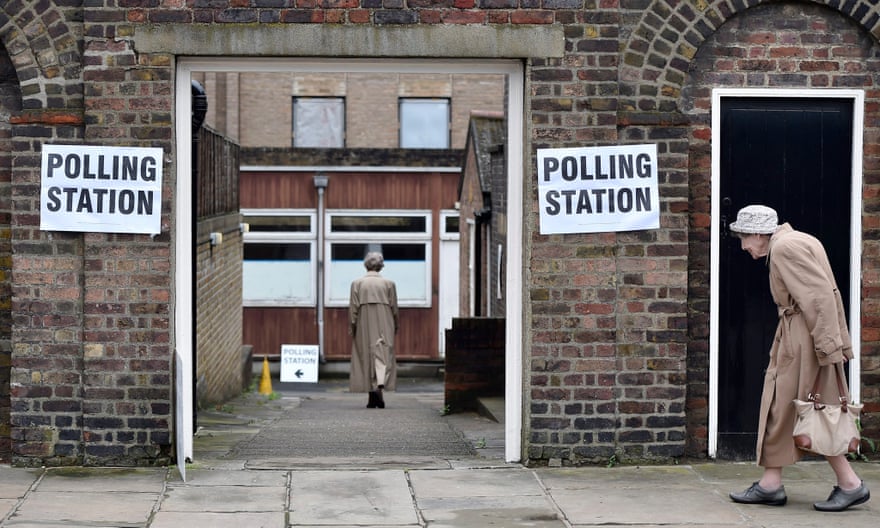
In the wake of the Brexit referendum David Van Reybrouck takes his “tired democracy” message to the readers of the Guardian:
Brexit is a turning point in the history of western democracy. Never before has such a drastic decision been taken through so primitive a procedure – a one-round referendum based on a simple majority. Never before has the fate of a country – of an entire continent, in fact – been changed by the single swing of such a blunt axe, wielded by disenchanted and poorly informed citizens.
Van Reybrouk now recounts the statistics showing low and falling citizen trust in elected institutions and offers a diagnosis of the problem. Avoiding the mention of any substantive complaints about the policies implemented by those institutions, for Van Reybrouk it is purely a matter of procedure. There is considerable vagueness whether the procedural problem was always there or is a new phenomenon. The risk, if things are not repaired, is that voters will continue to make transparently foolish choices.
In a referendum, we ask people directly what they think when they have not been obliged to think – although they have certainly been bombarded by every conceivable form of manipulation in the months leading up to the vote. But the problem is not confined to referendums: in an election, you may cast your vote, but you are also casting it away for the next few years. […]
Referendums and elections are both arcane instruments of public deliberation. If we refuse to update our democratic technology, we may find the system is beyond repair; 2016 already risks becoming the worst year for democracy since 1933. We may find, even after the folly of Brexit, that Donald Trump wins the American presidency later this year. But this may have less to do with Trump himself, or the oddities of the American political system, than with a dangerous road that all western democracies have taken: reducing democracy to voting.
Continue reading →
Filed under: Athens, Elections, Juries, Press, Sortition | 17 Comments »
Posted on June 17, 2016 by Yoram Gat
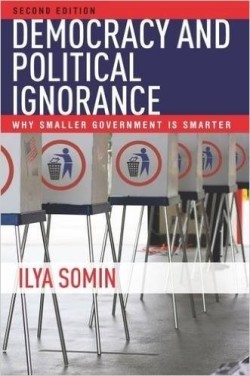
Ilya Somin, Professor of Law at George Mason University, is the author of the book Democracy and Political Ignorance: Why Smaller Government is Smarter. Somin opens an opinion piece in the Washington Post thus:
Widespread political ignorance is a serious problem for modern democracy. In recent years, many scholars have argued that we can overcome it by relying on “sortition”: delegating various political decisions to jury-like bodies selected at random from the general population. In this post, I explain why such proposals are unlikely to succeed.
Before going into the substance of Somin’s arguments about sortition, it is important to realize that ignorance is actually only the second most important problem with the current system, the first being the difficulty of mass scale agenda setting. More details here. The emphasis on ignorance rather than agenda setting is typical of the “rational choice” line of political argument which ignores the complexity of organization largely for ideological reasons. That said, the ability of decision makers to become informed about their subject matters is important and worth discussing. Some of the considerations that are discussed below apply also to the matter of agenda setting.
Continue reading →
Filed under: Academia, Athens, Books, Elections, Juries, Press, Sortition | 9 Comments »
Posted on June 10, 2016 by Yoram Gat
Simon Threlkeld has a new article in the Canadian National Observer advocating against having electoral reform decided by referendum. An excerpt:
Electoral system should be decided by jury, not politicians or referendum
Politicians should not decide the rules under which they are elected, because fair and democratic decision-making requires that those who decide do not have a conflict of interest. All of Canada’s political parties should accept this.
The Conservatives say that whatever electoral system parliament decides on, it needs to be ratified in a national referendum. Rather transparently, what concerns them is not giving the public a say, but rather preserving the status quo which in the 2011 election gave them a majority of the seats with just under 40 per cent of the popular vote.
Rule by the people needs to be well-informed, because only informed views provide a good basis for a decision.
A referendum is highly unsuitable for ensuring an informed decision about Canada’s electoral system. The public would only learn about the option(s) on the ballot voluntarily in their spare time, and most people are not especially interested in learning about electoral systems. In B.C.’s 2005 referendum on a proposed new electoral system, shortly before voting day 66 per cent of those surveyed by Ipsos-Reid said they knew “nothing” or “very little” about the proposal on the ballot. In another survey, over half of those who voted “no” said they did so because they did not feel “knowledgeable.”
Filed under: Elections, Juries, Press, Sortition | 3 Comments »
Posted on June 8, 2016 by Yoram Gat
In Australia, sortition is a business opportunity:
Combining a shrewd business acumen with a philanthropic social conscience, the SA-based start-up – which formally launched last week – aims to work with governments, business, not-for profits and communities to broaden democratic engagement.
[…]
“It’s really nice to be able to set the boundaries of what’s authentic and inclusive, and what’s not … we’re really only interested in those (clients) that are actually sharing decision-making.”
Even before its official launch, the fledgling company has already made a splash; it managed the recent Citizens’ Jury process that reviewed policy prescriptions for the management of unwanted dogs and cats, and is now engaged with the Premier’s Taskforce on Healthy Kids’ Menus.
But both Lawson and Jenke are confident the long-term success of their venture isn’t predicated on political whim.
Continue reading →
Filed under: Applications, Juries, Press, Sortition | 2 Comments »
Posted on May 21, 2016 by keithsutherland
Naomi has just flagged up an interesting article from Village Magazine on the Irish experiments with constitutional conventions in 2011 and 2016 by Eoin O’Malley, one of the participants. The article adds to my concerns that ‘full mandate’ allotted bodies are open to manipulation:
Some research shows that the act of deliberating with others has an impact beyond exposure to arguments or evidence. That is people given the evidence and arguments don’t move as much as those who are asked to discuss that evidence and arguments with others. This sounds like something positive for deliberative mini-publics. But it might not be.
The reason for this is because (as Condorcet demonstrated), independence is the key to getting the ‘right’ answer and this suggests that communication between jurors should not be encouraged — all that is needed is exposure to balanced arguments and evidence (as Goodin and Niemeyer discovered in their study of the Bloomfield Track citizens’ jury). This is distorted by the need to come to collaborative conclusions:
Because they are not independent the same flawed thinking or arguments can be magnified. For instance we could see the citizens in the mini-publics engage in groupthink. Some opinions might be aired, but can be effectively suppressed by the atmosphere in the room. There is significant evidence in social psychology that groups can push opinion to extremes and silence minority opinion. To prevent this great care has to be taken that all views are respected.
Continue reading →
Filed under: Applications, Deliberation, Experiments, Juries, Sortition | 28 Comments »
Posted on May 13, 2016 by Yoram Gat
Paul Frijters is a Professor of Economics at the University of Queensland and an Adjunct Professor at the Australian National University’s Research School of Social Sciences.
Frijters has written a post titled “Would sortition help against corruption?” in which he lays out his thinking about “what is likely to happen to the problem of special interests in Australia in two different scenarios: if we’d select our MPs randomly, or if we’d decide on mayor policies via citizen juries.”
Frijters’s concluding paragraphs:
I used to be quite charmed of the idea of citizen juries for policies and even for deciding on who would be in parliament. It sounded so democratic, such an elegant solution to the problem of special interest groups worming their way into our democratic institutions. It seemed like a magic solution for hard problems.
On reflection though, I find myself on the side of Edmund Burke and Socrates, who both denounced the idea as silly and unworkable. I agree with them: it is hard to see what use small random groups of citizens would be for policy-making in modern Western institutions.
An interesting discussion follows the post, with several discussants who seem to be aware of the idea and who seem to have given it some thought.
Filed under: Academia, Athens, Juries, Sortition | 10 Comments »
Posted on April 26, 2016 by keithsutherland

An op-ed piece in The New York Times by Gary Gutting, a professor of philosophy at the University of Notre Dame:
At election time we inevitably hear earnest pleas for everyone to vote. Voter participation is a data point often cited in political studies, along with an assumption that the higher the percentage, the better: 100 percent participation is the goal. But we rarely question this belief, or objectively consider whether everyone who can vote ought to vote.
The author then outlines the problems of mass democracy, including ‘trumpery’, plutocracy and rational ignorance, and attempts to justify voting as an act of participatory solidarity. But he goes on to consider sortition as an alternative:
At least one political philosopher has put forward the radical idea that we could ensure informed voters by employing an “enfranchisement lottery.” Such a lottery would restrict voting to a randomly chosen group of citizens who are provided unbiased in-depth information relevant to an election. We can think of this approach as a matter of modeling our voting on our jury system. We would never accept deciding important and highly publicized trials by a vote of the general public. We think only people fully informed of the facts and relevant arguments put forward in a trial should make such important judgments. Shouldn’t we be at least as careful in deciding who should be president?
Notice that answering yes does not imply the elitist view that only a small minority of citizens are capable of making informed votes. The idea is not that voters are too stupid or biased to access the needed information; it’s just that they don’t have the time and resources to do so. Ideally, we would provide everyone with the relevant knowledge, but that would be impractical, time-consuming and expensive.
Continue reading →
Filed under: Academia, Elections, Juries, Participation, Proposals, Sortition | 21 Comments »


 Adam Cronkright
 Ali
Ali Ahmed R. Teleb
 avanderven
 avergne
 Alex Kovner
 azakaras
 Brett Hennig
 campbellwallace
 Simon Threlkeld
 Nick Coccoma
 codyhipskind
 Common Lot Sortitionist
 Conall Boyle
 constitutionalism
 davidschecter
 graytmatter
 gtridimas
 H.J. Hofkirchner
 Hanspeter Rosenlechner
 John Burnheim
 jgarry20151
 Jochen Krattenmacher
 johnedwardtaylor
 johnhuang865
 Jonathan Crock
 keithsutherland
 Jacob Richter
 kkoreilly
 lukewhito
 SimonPek
 Nathan El
 Nicholas Gruen
 Owen Shaffer
 Patrick Chalmers
 Paul Gölz
 peterstone
 Pierre-Etienne Vandamme
 pronfeld
 Emil
Emil rcaze
rcaze richwbrown
 Roger Knights
 roslynfuller
 Pierre-Etienne Vandamme
 shaharavin
 tbouricius
 Ted Wachtel
 Joshua Laferriere
 theodorestathis
 towardsautonomyblog
 Wayne Liebman
 Yoram Gat
 Oliver Milne
 Equality by lot