Equal Participation in the Post-Democratic Age

Forthcoming book chapter by Dirk Jörke and Anthoula Malkopoulou

Equal participation is a sine qua non of democracy. Yet, today equal voting rights are insufficient for embodying this principle. On one hand, the use of voting rights is not equal among the population. On the other, elections have increasingly become a post-democratic facade, because decision-making has shifted to unelected bodies or non-transparent network meetings. Are more direct democratic procedures the solution to this predicament? This chapter argues that they are not. For once, deliberative citizen assemblies bring inequalities in from the backdoor, as they permit knowledge, skills and other resources more available to advantaged citizens to weigh in positively. Likewise, introducing random selection as a way of distributing public office may allow advantaged citizens to dominate, if the pool of candidates is voluntary and thus self-selected. We argue that reforms should generally focus not on introducing more direct participation, but on reducing the inequalities of participation in representative systems.

The other alternative being large non-deliberative juries with mandatory participation.

Full text

Monbiot: Sortition is “a formula for disaster”

George Monbiot, a Guardian columnist and a regular critic of the status quo, has finally opined about the potential of the use of sortition to address the ills of the established system. He is not too enthusiastic:

There are plenty of proposals to replace representative democracy with either sortition (randomly selecting delegates) or direct democracy (referendums and citizens’ initiatives). Such systems might have worked well in small city states with a limited franchise (sortition was used in ancient Athens and medieval Venice and Florence). But in populations as large and complex as ours, these proposals are a formula for disaster. It’s hard to see how we can escape the need for professional, full-time politicians. (Perhaps, in a fair and accountable system, we could learn to love them.)

Continue reading →

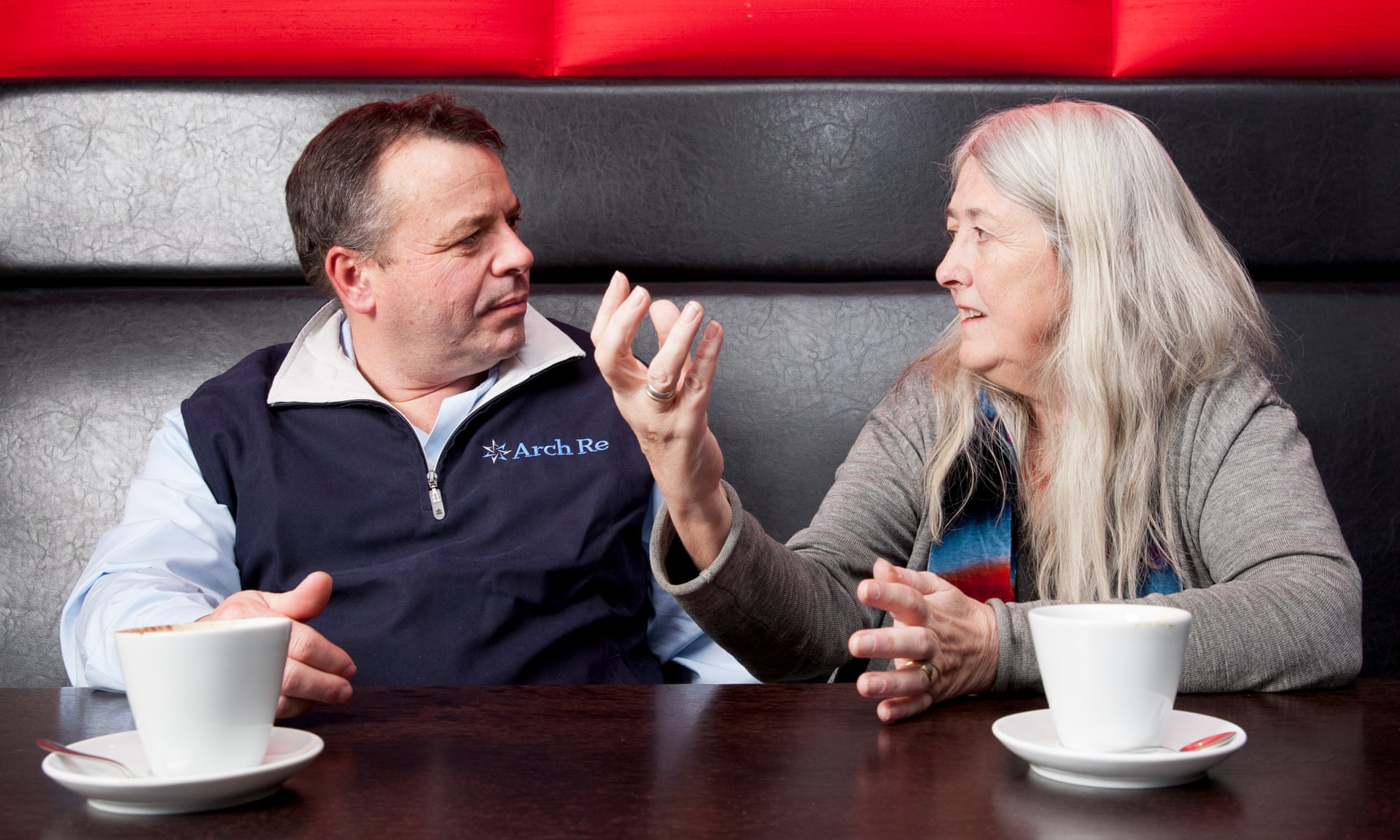
Mary Beard and UKIP’s Arron Banks agree over sortition for the House of Lords

SPQR author Mary Beard and UKIP eminence grise Arron Banks occupy the opposite poles of the political spectrum — the former being a self-acknowledged liberal leftie and the latter a Trump-supporting right-wing populist. After their Twitter war over the role of immigration in the downfall of the Roman Empire they agreed to meet over lunch to discuss their differences and were surprised to find that they had more in common than either of them anticipated:

After they have warmly agreed to renationalise the railways and the energy companies, draw the House of Lords by lot because it works perfectly well for juries, scrap Trident, and counter the mania for solving every problem with legislation, Mary concedes that the philosophical borders of Banksland “lie in a slightly different place to where I’d previously thought”.

Full article

Belgiorno-Nettis: “[The government] has stopped listening”

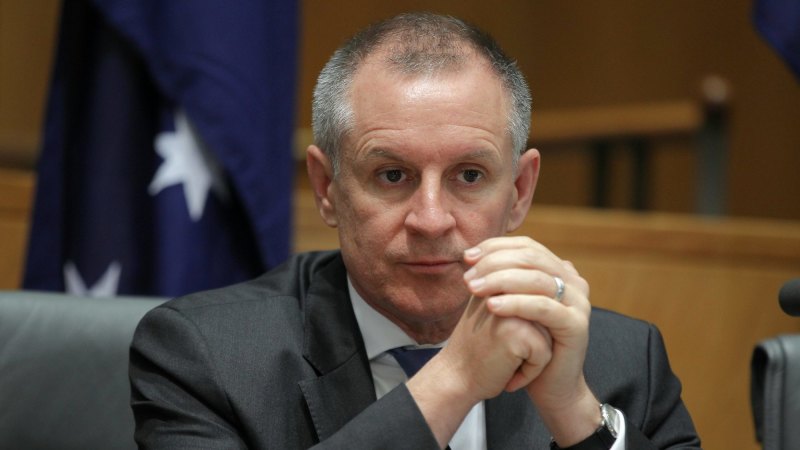
Luca Belgiorno-Nettis, the founder of newDemocracy Foundation, which designed and oversaw the nuclear dump citizen jury process for the South Australian government, has an article in the Sydney Morning Herald in the aftermath of the jury’s decision to reject the proposed dump. Belgiorno-Nettis softly criticizes SA Premier Jay Weatherill’s newly-announced intention to have a referendum on the dump:

From the time the royal commission report was handed down earlier this year, the South Australian government has been trying to listen, very carefully, to its community.

But now it has stopped listening, even after the citizen jury concluded their deliberations. A referendum has now been floated as a way to finally determine the question; never mind the most recent lessons from the Brexit experience. The jury tried to find common ground. A referendum won’t.

Continue reading →

Let’s reimagine democracy: replace elections with lotteries

An article by Joe Humphreys, in the The Irish Times, November 19th, 2016:

What’s happening to our democracies? Donald Trump’s presidential-election victory in the United States, after a bitter campaign characterised by deceitful and incendiary rhetoric, is not an isolated episode. It’s the natural outcome of what David Van Reybrouck calls democratic-fatigue syndrome.

One of the most worrying facets of electoral democracy is what political scientists call rational ignorance. Citizens have negligible chances of influencing which candidates get elected and of influencing those candidates once elected. “Citizens thus have no incentive to become well-informed regarding political affairs,” says Dr Peter Stone of Trinity College Dublin.

The answer, says Stone, is to find new ways of invigorating democracy, suggesting a much greater role for “citizen juries” randomly selected to serve public roles. This notion of governing by lottery rather than election is at the heart of Van Reybrouck’s book, which has sought to popularise a concept that stretches back to ancient Greece, the birthplace of democracy. In Athens, in the fifth and fourth centuries BC, the most important governmental offices were appointed by sortition, or the drawing of lots.

Will the Australian citizen jury process survive the nuclear dump decision?

The SA jury on the nuclear dump proposal has handed out its report eliciting significant press coverage and a flurry of reactions. The Online Opinion reports:

Where to now, for Premier Weatherill’s nuclear dream?

On November 6th, to the surprise of all, South Australia’s Nuclear Citizens Jury came up with a report that overwhelmingly rejected the government’s plan for importing and storing high level nuclear waste. Over four days of witness hearings, and deliberations, the 350 members of the jury were tasked with producing an answer to this question:

Under what circumstances, if any, could South Australia pursue the opportunity to store and dispose of nuclear waste from other countries?

The jury’s answer:

Under no circumstances should South Australia pursue opportunity to store and dispose of nuclear waste from other countries for reasons of consent, economics, trust and safety.

But while the Online Opinion is worried about nuclear dreams, another dream is just as much in jeopardy: the dream of Citizen Juries. It seems very likely that Weatherill has promoted the CJ idea because he believed it would be useful for his political agenda, of which the nuclear dump was a part. It seems very likely that those who offered Weatherill the idea, some of whom got to run the process, implied that this would indeed be the case. It also seems likely that other elected politicians have been watching this process with some interest in order to determine to what extent CJs could be used as a tool in their own political box.

In the wake of this outcome, the academics and the political operatives and entrepreneurs would have to go back to the drawing board. They will have to work hard to explain to the politicians how they will re-engineer CJs to guarantee that such unwelcome outcomes will not re-occur.

Antoine Bevort: Chouard and democracy: an intellectual and political fraud

The following is my translation of a recent article Antoine Bevort in the online French publication Mediapart. Like Tommy Lasserre’s Sortition in politics – the false good idea, which appeared in Mediapart two years ago, the article is a critique of Chouard and his proposals. Bevort makes some similar points, but, unlike Lasserre, doesn’t focus solely on sortition, and when he does discuss sortition he often deals with implementation details rather than with the principle itself to which he is not wholly hostile. Bevort also relies much less than Lasserre on canned Leftist rhetoric. As a result of those differences more of his punches land on target.

Chouard and democracy: an intellectual and political fraud
29 June 2016 Antoine Bevort

Étienne Chouard presents himself as the scholar of “real” democracy. His proposal of allotting of a constitutional assembly is however a fraud. It incorporates general principles which can be embraced, at least in part, but rests on largely specious argumentation, eventually leading to a strange and dogmatic conception of democracy.

Chouard considers himself the guru of “real” democracy. He feels he has found the “cause of causes” of the political crisis (“the political disempowerment of the citizens”) and proposes as a solution the allotment of a constitutional assembly. In his analyses, Chouard invokes general principles which can be embraced at least in part, but advances mainly through theoretical and historical shortcuts, simplifications or even misinterpretations, and through blunt claims and assertions. His dogmatic propositions are based on largely specious argumentation and lead eventually to a strange philosophy of democracy.

In order to deconstruct this rhetoric of mystification, we use a conference video available online[i], a text on the Gentils Virus website whose contents are very similar to those of the conference, as well as on the wiki of this organization, and particularly on the constitution drafted by Chouard. We first discuss his analysis of the existing political system, his claims that “we are not living in a democracy yet” and that “an electoral system is not a democracy”. Then we examine his conception of the “true democracy”, and his proposal of drawing by lot a constitutional assembly. We conclude with the mode of action which Chouard, the Gentils Virus (GV) and Les Citoyens Constituants (LCC), two organizations which promote his ideas, are pursuing.
Continue reading →

“A little bit manipulated”

The Adelaide news website InDaily has a report by Bension Siebert about discontent in the ranks of South Australia’s citizens’ jury on nuclear waste storage:

Some members of the 350-person jury have told InDaily they voted for a group of witnesses to present information about nuclear waste storage but the facilitator of the process, DemocracyCo, subsequently invited additional witnesses without explicit jury consent.

DemocracyCo concedes it did add further witnesses after a voting process, but says that is “standard practise” in citizens’ juries.

Juror Brett Aylen, an architect, told InDaily: “I do feel like I’m being a little bit manipulated by the process.” He said DemocracyCo facilitators were surprised by the jury’s witness selections and wanted to “balance it up by adding in some of the more pro-nuclear witnesses”. “They seemed a bit surprised at our selections,” he said. “If they had have declared that position in advance [that more witnesses may be added] it would have been more acceptable.”

Continue reading →

Crowdfunding Anthony Barnett’s WHAT NEXT: Britain after Brexit

unboundAnthony Barnett’s new book WHAT NEXT: Britain after Brexit is available for pre-order on Unbound. He writes:

Dear Fellow Kleroterians!

Thank you for permitting me to join you on this blog. I’m writing with a shameless request, but in this post-Brexit world being polite and submissive and deferential in a British way seems to be for the birds. Towards the end of the last century I wrote a paper suggesting that a section of the upper chamber should be selected by lot. Peter Carty got in touch with me, as he had been writing a paper on similar lines. We developed it into a publication for Demos, then directed by Ian Christie, published in 1998. Ten years later we turned it into a book, The Athenian Option: radical reform of the House of Lords, published by Imprint.

There was a moment I’ll never forget – which we write about in the book. In order to put replacing the Lords into the long grass, Tony Blair created a Royal Commission in 1999 to take evidence across the country. Because our Demos paper had caused a stir we were invited to give evidence. On the way into the session I found myself in a small lift with one of its senior members, Douglas Hurd, at that point Baron Hurd of Westwell. He had been close to Edward Heath, had been Foreign Secretary under John Major, who he had failed to beat for the Tory leadership. A grandee, I think, was the term at the time. the very opposite of the kind of regular person who would have been chosen had the Commission been selected by lot.
Continue reading →

The Irish Citizens’ Assembly on abortion: democratisation or dodging responsibility?

screen20shot202016-09-0520at2011-19-34_0

This was published on Open Democracy last week: The Irish Citizens’ Assembly on abortion: democratisation or dodging responsibility?

I find it very exciting, that the Irish government is returning for their second assembly using sortition – this time without politicians. Although we’ll have to wait and see what they do with the results.

It’s due to start next month.