Dr. Anjum Altaf is an economist and Dean of Social Sciences at the Lahore University of Management Sciences. The following are excerpts from an article Altaf recently published in the Pakistani newspaper Dawn.
THE big question Pakistanis must ask is how to get out of this disarray. By now, no one can deny that the country is in a huge mess, which is getting worse by the day. And it is getting worse because of the quality of its rulers. They are interested in nothing beyond their own interests; their only concern, while the country drowns and burns, is who will get to appoint the most important man who, they will then complain, does not allow them to do what needs to be done.
At this stage of terminal decline, there is no possibility of a normal recovery because of the state of the rot and the capability deficit to address it. Only radical solutions offer hope. Ideally, one would hope that the quarrelling rulers would realise the gravity of the catastrophe that threatens everyone and arrive at a consensual response, but that is extremely unlikely. In its absence, only popular demand can force their hand and save the country.
It is no longer possible to revert back to monarchy (though note how intelligently that has been employed in Malaysia) and dictatorship has time and again made things much worse. There is no alternative to popular rule, but we can certainly have a system where governance is truly by the people. There is a model for such an alternative called ‘sortition’, in which legislators are selected by lottery from the larger pool of adult citizens.
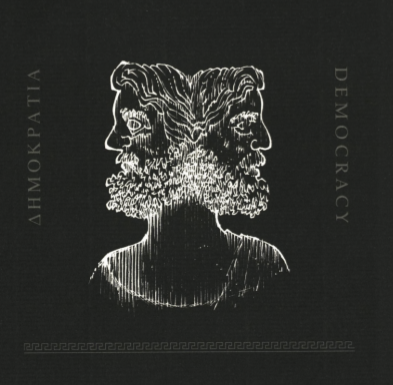
In ancient Athens, sortition was the method for appointing political officials and was deemed the principal characteristic of democracy by ensuring that all eligible citizens had an equal chance of holding public office. Unhealthy factionalism, the buying and selling of electables, and populist posturing is eliminated when assemblies are chosen by lottery. These representatives can then engage the experts they need for formulating policies.
This proposal is bound to be met with incredulity and scepticism. I can only point out that even today, in common-law systems, sortition is used to select prospective jurors who have a say over life-and-death decisions. Today, it is a life and death instance for Pakistan, and citizens need to take their governance in their own hands. There is no way they can do a worse job than the motley bunch of uncaring electables and strongmen to whom they have handed over their destiny.
Any extension of the status quo will reduce Pakistan to rubble. By the time the music stops, the lights will be out and there will be nothing to eat next year.
According to the article “Mastering the art of persuasion during a pandemic” in the journal Nature (OUTLOOK, 26 October 2022):
After the first COVID-19 vaccines were rolled out in the United States, local and state officials invested millions in the idea that waving money at people would convince them to get the jabs. Leaders tried straight cash incentives, whereby people collected a set sum for getting vaccinated, as well as lotteries, in which vaccinated people were entered into a draw to win a cash prize.
But the concept often flopped. One study (3) that gauged the effectiveness of vaccine lotteries found that vaccination rates were not significantly higher in lottery states than in non-lottery ones. Guaranteed cash payouts were somewhat more likely to encourage vaccination, a meta-analysis showed (4). Still, the evidence on incentive-based persuasion “is pretty disheartening in general”, Milkman says.
She is now studying a twist on the lottery strategy that might deliver more value for money — a regret lottery. This involves telling people that their name has been entered into a draw to win a large amount of money, but if their name is pulled from the hat and they have not been vaccinated then they will have to decline the reward. When Milkman and her team tried this in Philadelphia (5), vaccine rates in the area increased slightly compared with those in other, similar areas that did not have a regret lottery. “The one data point we have looks promising,” Milkman says, but further research is needed to confirm the finding.
References from the original:
(3) Law, A. C. et al. JAMA Intern Med. 182, 235–237 (2022).
(4) Brewer, N. T. et al. Lancet Reg. Health Am. 8, 100205 (2022).
In a paper in The Yale Law Journal, Bernadette Meyler, professor of law at Stanford, makes the case for having sortition as part of the American democratic (sic) system. In the abstract she writes that she aims at
highlighting the ways in which the Constitution celebrates aspects of democracy that do not fit neatly within the model of majoritarian elections. Focusing in particular on the jury system, the protections for petition and assembly, and the references to the general welfare, this Response opens space for nonelectoral democratic defenses of the administrative state, including agonism.
In the article itself Meyler writes:
While democracy today is often seen as synonymous with majoritarian elections, that was not always the case. Another form of democracy, practiced in ancient Athens and elsewhere, entailed selecting officials by lot, or sortition.32 Although the U.S. Constitution never explicitly mentions this procedure, it was not foreign to the Founders, who arguably incorporated it into our constitutional scheme through the jury. Sortition represents a significant democratic alternative to the mechanism of election, and systems that rely on sortition tend to emphasize different aspects of democracy than those implementing majoritarianism.
[S]election by lot could permit an equal distribution of the “probability of achieving power” and “could promote equality in the distribution of offices.”
Meyler wonders why the U.S. revolutionaries did not consider introducing sortition into the system they were designing, and with Bernard Manin suggests that this has to do with their reliance on the idea of consent. (See here for why this idea is not convincing.) Continue reading →
Tyler Brown from Reading, Pennsylvania, writes the following in a letter to The Reading Eagle:
Your Oct. 23 editorial (“Be prepared when casting votes this fall”) claims that it’s time to get ready to make an informed vote. But being informed makes no difference. A candidate’s decision to run for office is disqualifying in itself.
People do not run for office for altruistic reasons, they run because they are power hungry ne’er-do-wells seeking to leech off productive members of society. Even the most blameless person would be corrupted by our dirty, money-laden election process.
The simplest fix would be to make a non-vote count as a vote for sortition. Consider that in 2020 there were about 255 million U.S. citizens. Roughly 81 million voted for Joe Biden and 74 million for Donald Trump. Another 5 million voted for someone else, bringing the total to about 160 million.
Therefore about 95 million citizens did not vote at all. Why should their voice not count? They all saw the candidates, considered all options and decided not to vote. Biden was about 14 million votes short. In such a case the office should be filled by random draw much like jury duty.
If a candidate cannot even win a plurality of their constituents, then what real claim can they possibly have to hold office? The very inventors of democracy, the Athenians, considered sortition to be the test of a democracy. They considered voting to be oligarchic.
I’d much rather entrust the future of our country to randomly chosen citizens rather than partisan politicians.
In a response, Daniel Jamar writes:
How could sortition ever happen when the only people that would benefit is the general population? Lawyers and politicians make the rules and it would largely put them out of business.
Just in advance of Election Day here in the USA, Boston Review has published my article on why getting a real democracy requires that we replace elections with lotteries, career politicians with everyday citizens. Grateful to Terry Bouricius, Brett Hennig, and Adam Cronkright for allowing me to interview them for this piece.
In the ancient world, lot meant “destiny.” The Athenians believed that it was the fate of selected citizens to serve. Views on providence have changed, but whether we channel the will of the gods or merely our own earthly dreams, democracy by lottery would empower us to combat oligarchy, give voice to the multitude, and put ordinary citizens in the room where decisions are made. The question is not whether American democracy will die, but whether it will be instituted for the first time.
Kline has just published an article calling for replacing elections with sortition.
Winston Churchill said: “Democracy is the worst form of government — except for all the others that have been tried.”
For many of us, this “least worst” argument is getting pretty threadbare, particularly as we watch our democracy sliding further from its defining principles every year.
We know this is due to the rise of the professional politician, whose aim is to promote their own advancement to the exclusion of all else. And to achieve that personal advancement, they have to promote the interests of, essentially, a cadre of multinationals plus Rupert Murdoch. And a few other second-division players like big oil, the unions, lesser Murdoch “lookalikes” and a handful of assorted billionaires. Continue reading →
The Bunker is a podcast billing itself as “fearless, independent politics talk for Britain and beyond. We examine the big issues with humour and expertise, cutting through the claptrap to make sense of what’s really going on – and give you the fighting spirit to keep on keeping on.”
We’re not on a great run of political leaders at the moment – is the problem how we pick them? And what if we simply… didn’t? Rather than choosing between a bunch of self-serving, pound-crashing Westminster drones – could democratic lotteries be the answer? Brett Hennig, author of The End of Politicians: Time for a Real Democracy and director of the Sortition Foundation discusses how we pick our representatives, and how we could change it, with Jacob Jarvis.
Hello, Kleroterians! Nick Coccoma here from Boston, USA. I’ve been a follower of the blog and member of the sortition movement for several years now, after I discovered the theory and practice in the wake of the 2016 Presidential Election. In the years since, I’ve been a part of The Sortition Foundation and Democracy Without Elections, and published an article on sortition a couple of years ago for the journal New Politics.
Last February I launched my own Substack newsletter, The Similitude, where I cover politics, culture, and religion. I’ve written several posts on sortition, including a recent one entitled “Real Democracy Now: How Americans Can Win Self-Government.” It makes the case for sortition and features original interviews with our own Brett Hennig, Terry Bouricius, and Adam Cronkright. In your kindness, consider subscribing to the newsletter and sharing it in your circles as I seek more readers. I’d love to have the Kleroterians join the conversation. Many thanks for your ongoing work to bring about real democracy in our time!
[Podcat co-host Will] Menaker has said that Chapo is meant to be in “marked contrast to the utterly humorless and bloodless path that leads many people with liberal or leftist proclivities into the trap of living in constant fear of offending some group that you’re not a part of, up to and including the ruling class.”
Sortition (mispronounced as “sortion”) made a brief appearance in episode #662 of the podcast, “The Queen” (about 46 minutes and 30 seconds into the show). Sortition is offered as part of a reform of the U.S. political system in which voting is used to select limited-tenure monarchs among celebrities, while “governing is actually carried out by permanent bureaucracies overseen by a rotating cast of essentially jury duty citizens”. The proposer did not indicate the rotation period of the “national service” but noted that, for that period, service would be considered as a full time job and would be paid accordingly.
In a recent article Dr. Polyvia Parara made reference to a 2005 book by Mogens Herman Hansen, The Tradition of Ancient Greek Democracy and its Importance for Modern Democracy. It turns out this book is available online.
As always, Hansen is a very useful source of information about democracy in the ancient Greek world. In this book, Hansen focuses less on ancient Greece and more on the connections between ancient Greek democracy and “modern democracy”. Hansen rightly points out that, contrary to what some would have us believe (he cites and quotes Hannah Arendt), there is very little evidence for either institutional or ideological continuity between the two periods.
Hansen focuses first on the ideology.
The classical example that inspired the American and French revolutionaries as well as the English radicals was Rome rather than Greece. Thus, the Founding Fathers who met in Philadelphia in 1787, did not set up a Council of the Areopagos, but a Senate, that, eventually, met on the Capitol. And the French constitution of 1799, designed by Sieyès, had no board of strategoi but a triumvirate of consuls.


 Dr. Anjum Altaf is an economist and Dean of Social Sciences at the Lahore University of Management Sciences. The following are excerpts from an article Altaf recently published in the Pakistani newspaper Dawn.
 According to
  In
In  Just in advance of Election Day here in the USA,


 Adam Cronkright
 Ali
Ali Ahmed R. Teleb
 avanderven
 avergne
 Alex Kovner
 azakaras
 Brett Hennig
 campbellwallace
 Simon Threlkeld
 Nick Coccoma
 codyhipskind
 Common Lot Sortitionist
 Conall Boyle
 constitutionalism
 davidschecter
 graytmatter
 gtridimas
 H.J. Hofkirchner
 Hanspeter Rosenlechner
 James Kierstead
 John Burnheim
 jgarry20151
 Jochen Krattenmacher
 johnedwardtaylor
 johnhuang865
 Jonathan Crock
 keithsutherland
 Jacob Richter
 kkoreilly
 lukewhito
 SimonPek
 Nathan El
 Nicholas Gruen
 Owen Shaffer
 Patrick Chalmers
 Paul Gölz
 peterstone
 Pierre-Etienne Vandamme
 pronfeld
 Emil
Emil rcaze
rcaze richwbrown
 Roger Knights
 roslynfuller
 Pierre-Etienne Vandamme
 shaharavin
 tbouricius
 Ted Wachtel
 Joshua Laferriere
 theodorestathis
 towardsautonomyblog
 Wayne Liebman
 Yoram Gat
 Oliver Milne
 Equality by lot