Rothchild: “Ancient wisdom” in MI’s new redistricting process

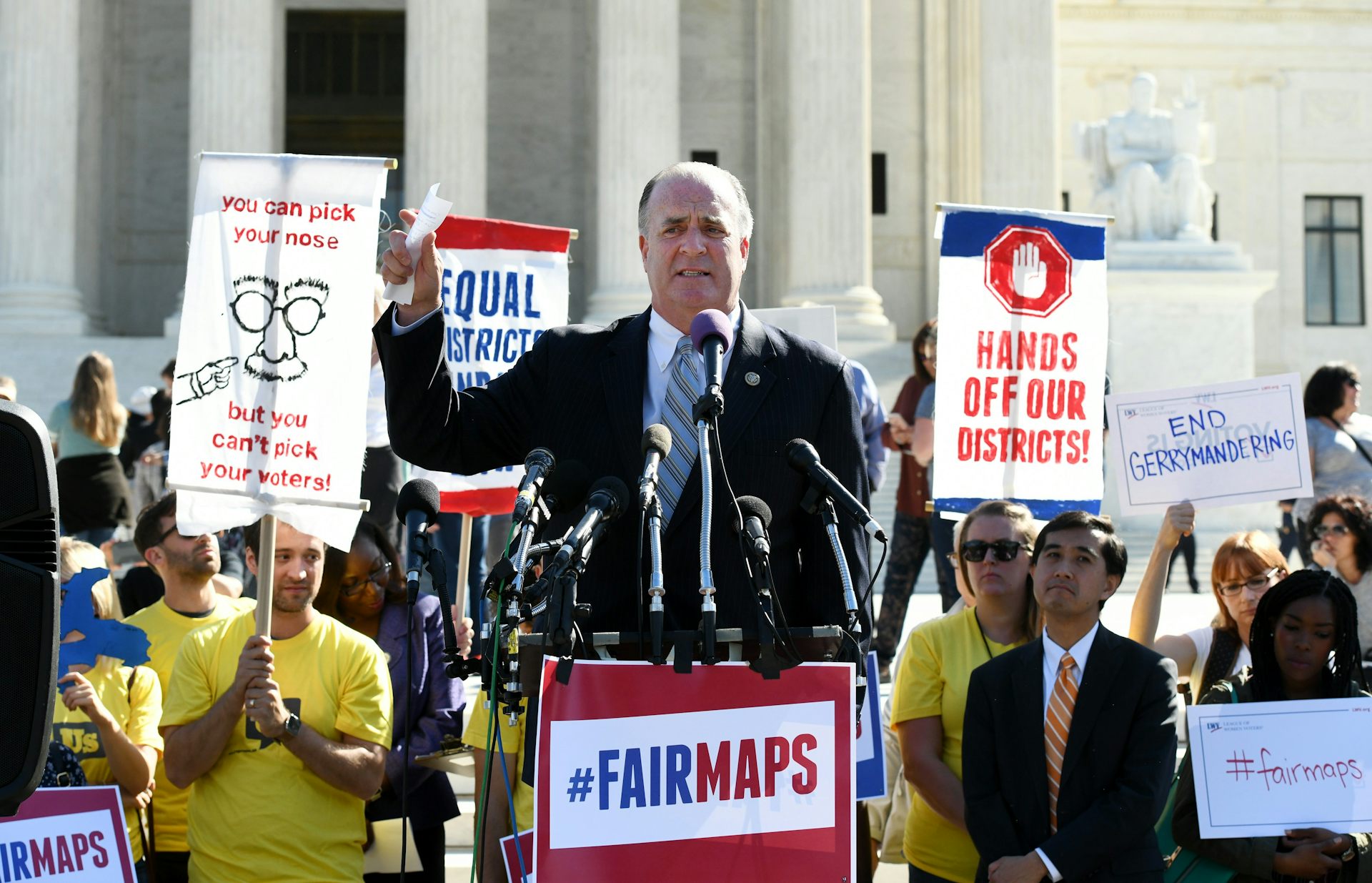
John Rothchild, Professor of Law at Wayne State University, writes approvingly in The Conversation about Michigan’s new allotted electoral redistricting commission. Rather naively, Rothchild seems to believe that democratic redistricting could result in the selection of “representatives who truly reflect [citizens’] political preferences”. Alas, this is more than mere redistricting can deliver, however well done.

How, then, should Michigan’s decision to assign unskilled members of the public the job of drawing nonpartisan election districts be evaluated?

Redistricting is a complex task. Michigan’s Constitution says that the districts must be drawn in compliance with federal law. That includes a requirement that voting districts have roughly the same population. It also requires that the districts “reflect the state’s diverse population and communities of interest,” and “not provide a disproportionate advantage to any political party.”

Dividing the map to meet all of these criteria is not likely to be within the capabilities of a group of randomly selected citizens.

There are several reasons to think that the redistricting commission will nevertheless prove adequate to the task.
Continue reading

Ferey: Populism against science: a new political cleavage?, Part 1

Camille Ferey is a doctoral student at the Université de Paris-Nanterre where she is writing a thesis about theories of participative democracy and democratic social movements. She wrote the following op-ed in BibliObs back in July.

Populism against science: a new political cleavage?

Rarely does science provoke as many hopes and controversies as it has been doing over the last few months.

It is a matter of great importance: upon the progress of science depends the neutralization of a disease that has confined half of humanity, upon its instructions and warnings depend our rights to travel, to meet and to kiss. However, many commentators talk about the threat of “distrust” that undermines the authority of science, if not of the authority of Truth itself, in our democracies. Furthermore, this dominant narrative confounds this phenomenon of skepticism (which is very real) with a different phenomenon, a political one: populism. The political cleavage is then reduced to a binary opposition between reason and populism, and consequently all criticism of scientific and political institutions is ruled out.

Mistrust of science and political non-conformism: a problematic confounding

It is a widely circulated narrative, with its opinion polls, its statistical studies, its indicators and its media talking points: democracies are suffering because of the irrational acceptance by a growing number of citizens of a mass of fake news, alternative truths and conspiracy theories (vaccines are bad for your health, the theory of evolution is a lie, climate change is a hoax). Yet, this narrative never asks whether what is taking place is a rejection of scientific theories, of scientific protocols, of scientists, of institutions of research, of technical applications of science or of its political uses. This vagueness allows to systematically associate this distrust with a specific phenomenon: populism, which is designated willy-nilly as both a cause and an effect of the regime of errors and lies.

The latest CEVIPOF poll on the relations between science and society establishes a correlation between, on the one hand, “an indicator” of mistrust calculated based on questions such as “Do you think that science brings more good than bad, as much good as bad, or more bad than good?”, and, on the other hand, “and indicator of populism”, based on the following questions: “Politicians are generally corrupt? A good political system is one where citizens rather than a government decide what they think is better for the country? Democracy functions best if the representatives are allotted citizens?”. A surprising definition of “populism”, which rather resembles the definition of democracy, or maybe of common sense.
Continue reading

Chumbley: Abolish student government elections now

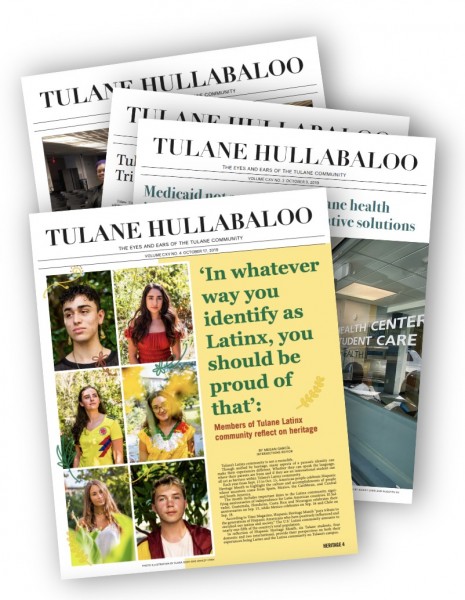
Robert Chumbley writes in the Tulane Hullabaloo:

Elections are detrimental to the establishment of diversity of thought in any given student government. Cognitive diversity is more important to the success of political leadership than relying solely on demographic diversity, which can potentially foster differences in thinking but does not guarantee it.

When individuals with varying opinions interact, these relationships are more conducive to innovation and the development of problem solving abilities. Given that cognitive diversity and the ensuing boon to collective problem solving should be a higher priority than the maintenance of elections for traditional-ideological purposes, Tulane ought to replace USG elections with sortition, the random selection of individuals for offices.

The reason for that logical jump may not be intuitively obvious, but the fact is that random allotment of political offices promotes cognitive diversity and improves problem solving ability.

Random selection does not produce a mob of unqualified commoners. In truth, those who object to sortition on the basis of “lack of qualification” are effectively dividing the population into commoners and elites, the former of whom deserve to be managed and the latter of whom deserve to manage by virtue of their special “qualifications,” whatever those are alleged to be.
Continue reading

Citizen initiative review in Switzerland

Grégoire Baur reports in Le Temps about “Demoscan” – a Swiss experiment with citizen initiative review initiated by Nenad Stojanovic, a University of Geneva political science professor:

The concept of the Demoscan project is simple: “ordinary citizens” inform their peers during a referendum campaign. An allotted panel representing the population, having had the opportunity to hear the experts as well those pro and against the proposal put up for a referendum, write a report which is sent to the citizens together with the voting materials.

“Very encouraging” results

At Sion [the capital of the Swiss canton of Valais], 20 people took part in the experience as part of the campaign regarding the popular initiative proposition “More affordable housing” last February. “The objective of the pilot project was to see to what extent could information provided by citizens encourage people to vote, what level of confidence the citizens would have in an allotted panel. The result are very encouraging”, says Nenad Stojanovic.

Whereas usually the turnout in Sion is low, in this case the turnout was somewhat higher than the average in the canton. The confidence accorded to the panel by voters was higher than they have in the federal parliament. In addition, the citizen report was the second most consulted source of information, behind the official brochure of the Federal Council, but ahead of the media and the campaign party slogans. “The citizen panel will not replace the democratically elected authorities, but it can complement them”, emphasized the political scientist.

Stojanovic is already engaged in another experiment in Geneva and hopes to launch others.

The French Assembly votes to allow the CESE to convene allotted citizen bodies

Following up on Macron’s commitment to reform the CESE (Conseil économique, social et environnemental) as part of a drive toward “participative democracy”, the Assembly has voted for a law making several changes to the CESE. One of the changes is allowing the CESE to convene allotted consultative citizen bodies, modeled after the recent Citizen Climate Convention.

The conservative Républicains party voted for the reform but was displeased by the idea of using allotted bodies: “Sortition does not guarantee competence” and does not guarantee representativity either, said Julien Aubert, one of their MPs.

Mark Rice-Oxley: Should citizens assemblies be mandatory?

Mark Rice-Oxley, acting membership editor of The Guardian, wrote a short piece entitled “Should citizens assemblies be mandatory?” He is supportive of the idea, writing: “Last year, I went to a citizens’ assembly. It was one of the most optimistic moments of 2019 for me.” “Perhaps a stint or two on a citizens’ assembly should be mandatory, like jury service or driving tests.”

Martin: convert the Upper House to one based on sortition

Peter Martin, a reader of the Adelaide, SA, Australia newspaper InDaily, wrote to share his thoughts after reading an article complaining about the going-ons in the SA Upper House:

Commenting on the opinion piece: Richardson: The House where democracy goes to sleep

An interesting account, but not really surprising.

Why doesn’t SA lead the nation (again) in social and political reform and convert the Upper House to one based on sortition – ie members are selected for short terms via random ballot from the electoral list, just as juries are chosen for our legal system.

We know juries work well, and that the task is taken very seriously by all citizens. People would be paid for their time, and could receive ample expert support in their deliberations.

Such a change would end the need for politicians in the Upper House, make political parties and lobbying redundant. – Peter Martin

Jacquet, Niessen and Reuchamps: Sortition, its advocates and its critics

A new paper (full text) in International Political Science Review by Belgian academics Vincent Jacquet, Christoph Niessen and Min Reuchamps titled “Sortition, its advocates and its critics: An empirical analysis of citizens’ and MPs’ support for random selection as a democratic reform proposal” is a useful survey-based study comparing the attitudes of Belgian citizens towards sortition to those of Belgian MPs. As may be expected, and as can be seen in the figure above, MPs are much more reluctant than citizens to hand off power to allotted bodies.

Abstract: This article explores the prospects of an increasingly debated democratic reform: assigning political offices by lot. While this idea is advocated by political theorists and politicians in favour of participatory and deliberative democracy, the article investigates the extent to which citizens and MPs actually endorse different variants of ‘sortition’. We test for differences among respondents’ social status, disaffection with elections and political ideology. Our findings suggest that MPs are largely opposed to sortitioning political offices when their decision-making power is more than consultative, although leftist MPs tend to be in favour of mixed assemblies (involving elected and sortitioned members). Among citizens, random selection seems to appeal above all to disaffected individuals with a lower social status. The article ends with a discussion of the political prospects of sortition being introduced as a democratic reform.

A lottery for top jobs is not such a crazy idea

So says Amanda Goodall in an article in the Financial Times 9 Sept 2020.  You can read the article in full here (dodging the FT paywall!).

http://www.amandagoodall.com/FTRandom2020-09-07_101201.pdf

Dr Goodall of the Cass Business School, London has produced many papers on management and HR. She has tried to promote the idea of Lotteries for Jobs with Margit Osterloh, a Swiss academic.

Amanda tells me “It is a hard one [the idea of lotteries for jobs] to get off the ground. It has been hard to publish our article.”

It is very rewarding to find others in the field working on this form of ‘Local Democracy’ as Elster calls it. There are further developments which I will post here shortly.

Cirone: Lotteries in Political Selection

A 2019 paper by Alexandra Cirone, Assistant Professor of Government at Cornell University, is titled “When democracy is broken roll the dice: Lotteries in political selection”.

There is a long tradition in political science and law that analyzes the benefits of lotteries in political selection (Manin 1997; Elster 1989; Engelstad 1989; Dowlen 2009; Duxbury 1999; Ober 1993 among many others). Most readers will be familiar with selection by lottery – also called sortition – where individuals are randomly chosen for political office.

The element of chance in a lottery has always captured our imaginations. Yet from a policy perspective, lotteries are now being proposed in various forms to address democratic deficits. Lottery-based selection of high-ranking politicians have been suggested for the national parliaments of the UK and France, as well as for the supranational institutions of the European Union. Citizens assemblies have been implemented in a wide range of countries, at both the local and national levels (Fishkin 2011).

However, lottery-based political selection is no panacea. There are a number of shortcomings to these processes. First, no matter which selection rule, it is likely that elites can still be disproportionately involved in politics, and lotteries don’t insulate all democratic institutions from partisan or corrupt pressures. Second, politics benefits from investment in expertise and career politicians; the uncertainty inherent in random selection of permanent institutions could disincentivize potential candidates from acquiring skills or experience. Alternatively, problems with recruitment and attrition from selected citizens will always be an issue with lottery-based selection; and randomly chosen officials might lack democratic legitimacy, which could impair their ability to do their job well. Third, even implementing lotteries in the form of temporary citizens assemblies require time, resources, and careful design of the process. Lotteries are also difficult to endogenously implement, particularly at top levels of governance — political parties and other groups are too invested in current systems of selection, so it is unlikely we will see a return to the pure sortition of ancient times.

Still, there is distinct promise to the use of lotteries in political selection, to help include more citizens in the democratic process. By examining unique institutional experimentation in the past, and by adapting democratic initiatives based on more recent instances of lottery-based selection, it may be possible to alleviate current democratic shortcomings.