Quatrevalet: Sham participatory democracy in the energy domain

The following essay, dated June 14, was published in the online publication Contrepoints, which is published by the Liberaux organization.

The essay was written by Michel Quatrevalet, who is described thus:

Holding a B.Sc. in electrical engineering, Michel Quatrevalet spent 25 years in various operational positions in the industry. Over the last twenty years he has held various management and expert positions in multinational companies and in professional organizations in the areas of the environment and energy.

Original in French, my translation, corrections welcome.

PPE: Sham participatory democracy in the energy domain

Ms. Jouanneau [sic, this probably refers to Chantal Jouanno, president of the CNDP, -YG] allotted 400 participants for a one day workshop on the multi-year energy plan (PPE). Have the conditions been met for this experiment in participatory democracy to work?

The debate around the PPE was “enriched” by an experiment in participatory democracy. Ms. Jouanneau allotted 400 participants for a one day workshop on the multi-year energy plan.

We don’t know much about the procedure, we don’t know the names of the 10 moderators, nor which documents were provided to the participants. During the written debates on the site of the Commision for Public Debate, several participants complained that some essential points of view were missing, such as the conclusions of the 2012 Percebois‑Grandil taskforce or the opinions of the Academy of Sciences and Technology.

The conclusions will be presented on June 29th, that is at the end of the consultation period, at which point it would be no longer possible to dispute them.

A sham process

Such activities of “allotted citizen panels” could be productive but only if three necessary conditions are met:

  • An in-depth preparation of the participants that would make them sufficiently knowledgeable on the subject (energy is a highly technical subject),
  • A detailed verification by an organization independent of the parties involved (including independence of the government) that the information provided is factual, complete and objective,
  • A transparent process of nomination of the moderators and of the drawing up of the synthesis of the debates.

In reality, none of these conditions seems to have been observed. We can even fear the worst, reading the shamelessly biased report of the project’s management. The comments posted on the site of the debate were not heeded. Here are a few of them.
Continue reading

Beppe Grillo proposes sortition

Beppe Grillo, the co-founder of the Italian Five Star Movement, the party that won the second largest share of the votes in the 2018 parliamentary elections, has published a post in his blog where he proposes replacing elections with sortition [Google translation]:

The idea is very simple: we select people by lot and put them in parliament.

It seems absurd, but think about it for a moment. The selections should be fair and representative of the country. 50% would be women. Many would be young, some old, some rich, but most of them would be ordinary people. It would be a microcosm of society.

However, there would be an important side effect: if we replaced the elections with the draw and made our parliament truly representative of society, it would mean the end of politicians and politics as we have always thought about it.

Naturally the proposal drew some media attention.

It seems, by the way, that Grillo learned about sortition through Brett Hennig (presumably his TED talk). Grillo also mentions Democracy in Practice and newDemocracy as examples of ongoing experimentation with sortition.

A fact emerges from all modern examples: if you give people responsibility, they act responsibly. Do not get me wrong, I do not say it’s perfect.

The right question is: does it work better? As far as I’m concerned, it’s YES.

Thanks to Tomas Mancebo for drawing attention to this rather dramatic development.

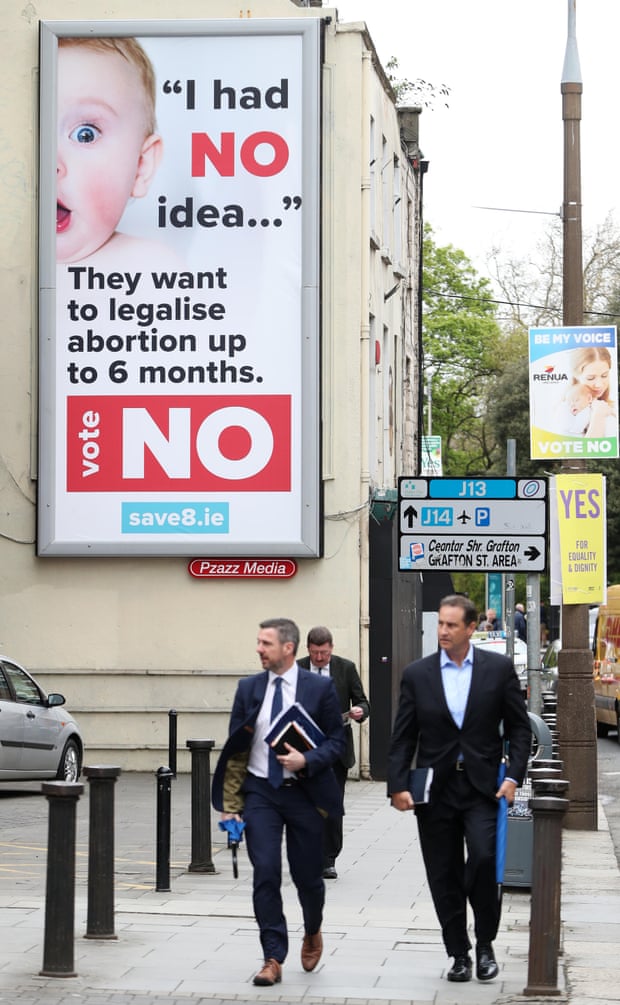
Fintan O’Toole: If only Brexit had been run like Ireland’s referendum

Fintan O’Toole has a glowing account in the Guardian about Ireland’s constitutional referendum. It advertises the allotted chamber process as the antidote to what troubles the establishment with electoral politics.

As O’Toole’s sees things, the trouble with electoral politics is “tribalism and fake ‘facts’”. With some careful management, the public can come to see sense and vote accordingly.

In all the excitement of what happened in Ireland’s referendum on abortion, we should not lose sight of what did not happen. A vote on an emotive subject was not subverted. The tactics that have been so successful for the right and the far right in the UK, the US, Hungary and elsewhere did not work. A democracy navigated its way through some very rough terrain and came home not just alive but more alive than it was before. In the world we inhabit, these things are worth celebrating but also worth learning from. Political circumstances are never quite the same twice, but some of what happened and did not happen in Ireland surely contains more general lessons.

Sortition in Jacobin magazine

Tom Malleson, assistant professor of social justice and peace studies at King’s University College at Western University, Canada, writes in Jacobin magazine that “we need a legislature by lot”.

Some excerpts make the following points. Electoralist regimes are not democratic:

[There is] widespread disillusionment that many of the world’s people feel towards their purportedly democratic systems. [T]he truth, widely known yet rarely acknowledged, is that the American political system is increasingly run not by the people, but by the rich. Plutocracy. Leading scholars of American politics Martin Gilens and Benjamin Page conclude their recent study with the observation that “the majority does not rule — at least not in the causal sense of actually determining policy outcomes. When a majority of citizens disagrees with economic elites or with organized interests, they generally lose.”

The standard reform proposals show little promise to fundamentally improve the situation:

What, then, is to be done? There has long been a conventional answer on the center-left: proportional representation and campaign finance reform — the former to enhance the representativeness of elections and the latter to reduce the distorting effects of money. This intuitive belief that the answer to our democratic problems is enhanced elections runs so deep that it is like an article of faith.

Yet should reformed electoral democracy really be the ultimate aim of our democratic hopes and dreams? Consider some of the places that are much closer to achieving an equitable electoral system, such as Canada, the UK, and particularly Western Europe. Such systems tend to function much more democratically than the US, but they run into the same basic problems with elections.

Money continues to play an important role, biasing elections towards the wealthy. Governments continue to be incredibly unrepresentative of the population — almost always composed of rich, white, middle-aged men. Even in Sweden, the young, the less educated, and the working class continue to be dramatically underrepresented (for instance, blue-collar workers make up about 9 percent of members of parliament despite comprising 41 percent of the electorate).

[T]he electoral process is inherently biased in favor of the rich — thereby undermining the cherished democratic ideal of political equality — because the precondition to winning an election is having the time and resources to communicate with the public and mobilize support, and that will always be done more effectively by those who have more money. This means that electoral democracy, regardless of campaign finance rules, will always be somewhat tilted towards the affluent.

Democracy and elections are incompatible:

If you lived in any previous historical era and told your neighbor that you believed in democracy, they would have understood what you meant. Yet if you had said that you believed in democracy and elections, they would have thought you’d lost your marbles.

For more than two thousand years, it was common knowledge that the only people who wanted elections were the rich and the powerful, since they were the ones who invariably benefitted from them. Those who genuinely believed in democracy, on the other hand, believed that political power must be kept in the hands of regular people and typically advocated the selecting of political positions by lot.

Continue reading

Morena has another round of sortition of congressional candidates

In 2015 the National Regeneration Movement (Spanish: Movimiento Regeneración Nacional, MORENA), a left-wing political party in Mexico, first selected some of its congressional candidates via allotment among activists.

It is now repeating this procedure.

Interestingly, while Morena was a relatively small party in 2015, winning about 8.5% of the votes and 47 seats out of 500 in the Chamber of Deputies, Morena is now very high profile, with its presidential candidate, Andrés Manuel López Obrador (AMLO), being the early front-runner.

Kolokotronis: Citizen jury for a job guarantee program

Alexander Kolokotronis, writing on the progressive website TruthOut, proposes sortition as a tool for managing a job guarantee program:

Projected 2020 presidential candidates are getting behind a job guarantee (JG). […] If we believe everyone has a right to employment with a living wage, the question is how such guaranteed employment should be structured and designed.

One criticism is that a job guarantee would be overly top-down and perilously unmanageable. However, for years JG advocates have called for a relatively decentralized structure, with locally-oriented rollouts and processes. This is not a lip service counter to JG critics. There are real options for a democratically decentralized JG program. In a recent policy paper and proposal, economist Pavlina Tcherneva devoted a subsection to “participatory democracy,” explicitly citing processes like participatory budgeting (PB). Tcherneva went as far as to assert that participatory governance “is a likely a prerequisite” for the “long-term success” of a JG program.

Fortunately, there are existing participatory institutional forms and processes for JG advocates and implementers to draw on — processes and forms that will not only provide a universal right to employment, but a right to employment under democratic means.

The three participatory mechanisms Kolokotronis offers are participatory budgeting, sortition, and cooperatives. Below is the section about sortition. There are some interesting links on the original page.

How it works: There is growing advocacy and experimentation in “sortition” processes. These processes range from “deliberative polling” to “citizens’ assemblies,” “citizens’ juries” and “planning cells.” Common to all these sortition processes is an assembling of randomly selected individuals to design or review a policy. Advocates and theorists point to the use of sortition in Venice and ancient Athens. This has led some to refer to the wording of “random selection” as a slight mischaracterization. A sortition body operating as a “mini-public” is typically constituted according to a “fair cross-section” of demographic representation. Sortition bodies can operate within individual institutions like hospitals or schools. In sortition bodies, ordinary community members have taken on topics as complex as nuclear energy, GMOs and an array of environmental topics. In terms of scale, they can operate at municipal, statewide and national levels. Until recently, however, sortition bodies designed policy without a binding mechanism for legislation or agenda-setting.
Continue reading

Rising Up With Sonali: David Van Reybrouck and Against Elections

David Van Reybrouck was recently interviewed by Sonali Kolhatkar on her show “Rising Up With Sonali” which is broadcast on a couple of public radio stations on the West Coast of the US. The Segment with Van Reybrouck starts about 35 minutes into the recording.

In the course of the interview Van Reybrouck gently points out to the interviewer that her proposals for reforming the electoral system, which are part of the standard reformist list of proposals (from which Ari Berman draws his proposals as well, for example), show no promise in fundamentally fixing the system, since they have been tried over and over worldwide without success.

Reybrouck explains to the New York Times that Against Elections is not really against elections

The crisis of electoralism (more commonly misleadingly referred to as “the crisis of democracy”) has been producing a stream of books warning about its dangers and proposing solutions. Ari Berman, a senior reporter at Mother Jones, a fellow at the Nation Institute and the author of “Give Us the Ballot: The Modern Struggle for Voting Rights in America”, reviews in the New York Times 4 of the books in the genre, with one of those books being David van Reybrouck’s Against Elections.

While the other three books, which according to the review offer no useful actionable remedies, are evaluated in generally appreciative terms (“comprehensive, enlightening and terrifyingly timely new book”, “hard to argue with [the] analysis”, “[the] book provides important insights into the present political moment”), van Reybrouck’s book is rather rudely dismissed:

Democracy is experiencing a “crisis of legitimacy,” writes Van Reybrouck, a Belgian cultural historian, who cites declining voter turnout, higher volatility in voter support and fewer people identifying with political parties. This is the fault not of politicians or the structure of the electoral system, but of elections themselves, Van Reybrouck says. “We have all become electoral fundamentalists, despising those elected but venerating elections.”

Van Reybrouck is a skilled polemicist, but his solutions to remedy “democratic fatigue syndrome” are naïve and unfeasible. Echoing the ancient Greek practice of drawing lots, he suggests replacing the American House of Representatives with a random sample of citizens, like a jury pool. That seems like an utterly impractical way to govern nowadays and reflects the same demonization of political experience that led the country to favor a reality television star over a former secretary of state in 2016.

Van Reybrouck fetishizes direct democracy, like citizens’ councils, but ignores the way existing electoral institutions could be made more responsive to the popular will through reforms like proportional representation or nonpartisan redistricting. The solution to democratic fatigue syndrome is to make elections more democratic, not to get rid of them altogether.

In response, van Reybrouck protests in a letter to the editor that he has been misunderstood:
Continue reading

Suzuki: The solution we need is a system where politicians are drawn from a hat

Canadian scientist and environmentalist David Suzuki has given up on the electoral system and proposes to replace it with a sortition-based system. Some excerpts from an interview with the National Observer:

Q: Trudeau’s called the pipelines a “trade off” for the national carbon plan. Earlier this month, he was in Nanaimo saying we can both build Kinder Morgan and hit the Paris targets.

DS: That’s such a lot of bullshit! this is just political doublespeak: ‘We’ve got to keep burning more oil, more fossil fuels, in order to meet our reduction targets.’ What are you talking about? That’s such a crock of shit!

Q: So how can citizens hold our democratic leaders accountable?

DS: I was asked to give a talk to the Senate last year on the 150th anniversary of Canada. What I said is, ‘We elect people to run government, but their problem is they only look to the next election.’ They can’t look down and say, ‘Jesus, we have to spend $50 billion a year for the next fifteen years to deal with climate change,’ because they know someone else will take credit for it. They won’t be in office then. So that kind of view is not in their thinking.

So I said, ‘You guys are the Senate. You’re not elected. You’re appointed for life! You’re the ones to think of sober second thought, and think in terms of one generation, two generations from now. You’re the guys who should be doing that.’

They didn’t do a goddamn thing. But I really think that would be a huge opportunity, if we’ve got that bicameral system.
Continue reading

Jury citoyen

The original post comes from: www.stochocratie.org. The post below is in French (for Yoram to practise :) but there is an English version here: http://www.stochocratie.org/2018/04/17/jury-citoyen.

La démocratie prend trop de temps au citoyen ordinaire et devrait être laissée à un petit nombre de personnes soigneusement sélectionnées. Telles étaient les pensées des fondateurs de nos démocraties modernes. Ils ont décidé que nous devrions élire les personnes qui détiennent le pouvoir entre leurs mains. La sélection aléatoire permettrait aux gens de décider pour eux-mêmes – beaucoup trop dangereux selon eux. Les fondateurs savaient que la sortition permettait la démocratie et que les élections favorisent l’aristocratie. C’est pour cette raison qu’ils ont choisi les élections. Mais décider en utilisant le hasard semble …. mmh…. aléatoire… Jury Citoyen ou Citizen Jury également appelé Minipublics se penche sur cette question.

Deux personnes qui ont proposé ou proposent d’utiliser plus souvent le Jury Populaire en politique. Segolène Royal et Loïc Blondiaux (source : Wikimedia).

Utiliser un dé pour décider serait stupide. Choisir au hasard une seule personne pour décider serait également stupide. Choisir quelques personnes – aussi peu que quinze personnes – pour donner un avis sur un sujet précis est une excellente idée. Les politologues et le grand public se penchent sur cette question dans de nombreux pays comme l’Irlande, le Canada, l’Australie, l’Islande ou la France. Partout les effets sont similaires : les personnes sélectionnées changent souvent d’avis après les longues discussions pendant les quelques week-ends où le rassemblement a lieu ; elles s’impliquent davantage dans la politique et prennent davantage conscience de l’intérêt publics. Partout, ils fournissent de nouvelles orientations qui peuvent être suivies ou non par les politiciens. Mais pourquoi ne peuvent-ils pas prendre des décisions exécutives ?

Les mini-publics sont trop souvent des boîtes noires. La sélection aléatoire se fait souvent derrière d’épais rideaux. De plus, il est facile de faire pression sur quinze personnes. Ces deux arguments réduisent de beaucoup la légitimité d’un Minipublic. Je plaide dans ce blog pour la transparence et propose des moyens de rendre la sélection aléatoire plus fluide. Il faut consulter des experts, le Minipublic a besoin de demander leurs avis, mais pas de les laisser décider quoi que ce soit. Les modérateurs/animateurs/facilitateurs jouent un rôle clé et devraient être sélectionnés en utilisant la sortition ;) Les politiciens professionnels et les journalistes affiliés adorent critiquer les membres du Jury populaire. Le Figaro a montré une photo des gens du Jury Populaire pour démontrer à quel point Nuit Debout était devenue farfelue.

Pourtant, ces jurys fournissent d’excellents avis et certains proposent que nous utilisions les Minipublics pour nommer nos dirigeants exécutifs. J’irai ici encore un peu plus loin, peut-être pourrions-nous utiliser les Minipublics pour prendre des décisions exécutives ?