Selecting Police (partly) by Lottery

The Long Island Exchange reports that Suffolk County, Long Island, NY (Pop.1.5 mn) Police Department is holding a lottery for the order in which qualified candidates are assessed:

Gregory Hosts Lottery to Rank New Suffolk Police Candidates

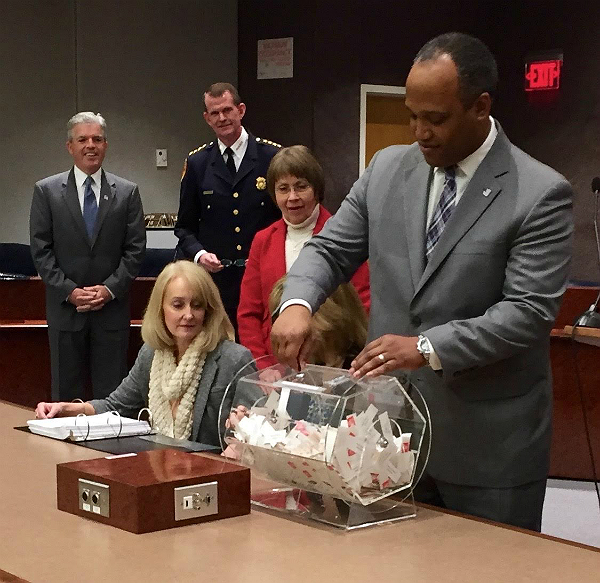
(Long Island, NY) Suffolk County Legislature Presiding Officer DuWayne Gregory on March 4 hosted a lottery in which the 3,739 individuals attaining a score of 95 on the written exam to become a Suffolk County Police Officer were ranked in priority order to advance to the next stages of the selection process. The lottery was live-streamed from the William H. Rogers Legislature Building in Hauppauge.

The additional phases of the selection process include a personality and psychological assessment, physical fitness test, medical examination, a polygraph examination and a background investigation.  After the testing and background review are completed, candidates who successfully complete all parts of the selection process will be considered for appointment in the same sequence in which their names were drawn in the lottery.

Suffolk County Legislature Presiding Officer DuWayne Gregory pulls a name at the March 4 lottery in which the 3,739 individuals attaining a score of 95 on the test to become a Suffolk County Police Officer were ranked in priority order to advance in the next stages of the selection process. Gregory hosted the lottery at the William H. Rogers Legislature Building in Hauppauge, from which it was live-streamed. Photo Credit: Suffolk County.
Continue reading →
Why Not Choose Members of Congress by Lottery?

Terrill Bouricius, David Schecter, Campbell Wallace, and John Gastil write on Zócalo on KCRW:

We Already Randomly Select Our Juries. Why Not Choose Members of Congress by Lottery?

Conflicts of interest, corruption, and systemic dysfunction are woven through American legislative history, from Tammany Hall in the 1780s to the Savings & Loan crisis of the 1980s and the recent federal government shutdown. One reason is that the electoral system itself often attracts the wrong kind of candidates and rewards unethical campaigning. Gerrymandered district boundaries, voter suppression efforts, and winner-take-all election laws serve to restrict voter choices. People who choose to run for election are too often driven by ego and personal ambition, qualities at odds with the genuine give and take of deliberation. Donald Trump may seem to stand out in this regard, but his character flaws are less distinctive than his willingness to parade them publicly as a kind of perverse populist brand.

So why not random selection instead? Yes, tossing Congress, en masse, out its own front door and refilling the chamber with everyday citizens might seem like a crazy idea. But when asked about this prospect in surveys conducted in 1999 and 2012, Americans place more trust in a randomly-selected body than in Congress.

So what if we took that idea seriously? Could we replace some of our elections with selection by lot, also known as “sortition?”

Manipulation of Elections by Hacking

As if we needed more proof that elections are hopelessly vulnerable to manipulation, here are some excerpts from an article in Bloomberg Business Week on how a gifted hacker made use of social media to rig elections in Latin America. The article is well worth reading in full. We can expect much more of this in the future.

For eight years, Sepúlveda, now 31, says he traveled the continent rigging major political campaigns. … He led a team of hackers that stole campaign strategies, manipulated social media to create false waves of enthusiasm and derision, and installed spyware in opposition offices…

On the question of whether the U.S. presidential campaign is being tampered with, he is unequivocal. “I’m 100 percent sure it is,” he says.(…)

For decades, Latin American elections were rigged, not won, and the methods were pretty straightforward. Local fixers would hand out everything from small appliances to cash in exchange for votes. But in the 1990s, electoral reforms swept the region. Voters were issued tamper-proof ID cards, and nonpartisan institutes ran the elections in several countries.(…)  [so other methods became necessary]
Continue reading →

Clarification after a week in the desert

1. There are very good grounds for believing that strong public debate over a short period of time, say five years, is extremely effective in changing public opinion and consequently political decisions to the extent that they are responsive to thoroughly well-considered public opinion.

I list a few triumphs for critical moral discussion in more or less random sequence in my experience:

  • The abolition of the White Australia mentality and the laws that implemented it.
  • The recognition of the rights of Indigenous people as the original owners of this land.
  • The recognition that women should be able to take full part as equals with men in every public activity.
  • The abolition of the assumption that women should be paid less than men.
  • The recognition of unions that are not formalised by marriage, and of the rights of people to premarital sex.
  • The recognition of the right to equal respect for same-sex couples as different-sex couples.
  • The rights of colonies to complete independence.
  • The rights of individuals and groups to cultural freedom within nation-states.
  • The abolition of racism as a basis for inferior treatment, socially, economically and politically.
  • The recognition of the need of the disabled to be able to participate fully in community activities.

All of these changes were brought about primarily by critical moral thinking coming to very generally accepted by people who had been educated in the contrary view. In hardly any respect were those who embraced those changes people who themselves benefited from them. The only sense in which they benefited was in their self-esteem and, as agreement grew, in the esteem of others. In almost every case, explicit political recognition of these changes followed enlightened, critical opinion. That is the core meaning of democracy, in my view, and my concern is to extend it.
Continue reading →

Achen and Bartels: Democracy for Realists: Why Elections Do Not Produce Responsive Government

Via Garreth McDaid.

Political scientists Christopher Achen and Larry Bartels have a new book, Democracy for Realists: Why Elections Do Not Produce Responsive Government.

I have not read the book. Chapter 1 is available online, and it certainly makes for some interesting reading. Some comments following reading that first chapter:

(1) It seems that despite their critique of electoralism the authors are not ready to abandon it. At some point they seem to indicate that they cannot imagine something better when they opine that “[n]o existing government comes close to meeting all of Dahl’s criteria [for democracy]; in our view, no possible government could.” The book’s objective seems purely analytical: to produce “a democratic theory worthy of serious social influence [which] must engage with the findings of modern social science.”

(2) The book appears to adopt the conventional electoralist terminology which makes no clear distinction between electoralism and democracy. The authors should have known better.

(3) “Democracy for realists” seems to largely retrace the elitist democratic theories which rose to prominence in political science in the third quarter of the 20th century. Indeed Joseph Schumpeter and Walter Lippmann – leading propounders of those ideas – make a prominent appearance in the first chapter. Those theories fell out of fashion when, after the civil rights struggles, dominant ideology changed and became incompatible with their conclusions. It may be that the main innovation of the book is not in “engaging with the findings of modern social science”, but in being willing to (re)acknowledge the (now-)inconvenient truths that were buried over the last 40 years or so. In that, the book seems to be very much a product of current politics.

Excerpt:

In the conventional view, democracy begins with the voters. Ordinary people have preferences about what their government should do. They choose leaders who will do those things, or they enact their preferences directly in referendums. In either case, what the majority wants becomes government policy — a highly attractive prospect in light of most human experience with governments. Democracy makes the people the rulers, and legitimacy derives from their consent. In Abraham Lincoln’s stirring words from the Gettysburg Address, democratic government is “of the people, by the people, and for the people.” That way of thinking about democracy has passed into everyday wisdom, not just in the United States but in a great many other countries around the globe. It constitutes a kind of “folk theory” of democracy, a set of accessible, appealing ideas assuring people that they live under an ethically defensible form of government that has their interests at heart.
Continue reading →

Sortition, Voting, and Democratic Equality

On another note, a paper of mine just appeared in Critical Review of International Social and Political Philosophy CRISPP). The paper, entitled “Sortition, Voting, and Democratic Equality,” appears in a special issue devoted to “Equal Representation: New Perspectives on Democratic Theory” (volume 19, no. 3, June 2016). The paper can be found here:

http://www.tandfonline.com/doi/full/10.1080/13698230.2016.1144858

Here is the abstract:

In recent years, democrats both inside and outside the academy have begun to reconsider the merits of the age-old practice of sortition, the random selection of political officials. Despite this fact, however, the comparative assessment of the merits of voting and sortition remains in its infancy. This paper will advance this project by treating the problem of assigning public responsibilities as a problem of allocative justice. To treat the problem in this manner is to treat public office as a type of good to which citizens might have various claims. Random selection is the appropriate method for distributing public office when all citizens have equal claims to that office and there is not enough to go around. Universal distribution is more appropriate when all claimants have equal claims to the office and there is enough to go around (as with universal suffrage, for example). Election (or possibly other procedures, such as appointment) makes sense when citizens do not enjoy equal claims to the office and that office is in scarce supply. This approach captures a crucial component of democratic equality. Different understandings of democratic equality lay behind sortition and election. Each might be appropriate under different circumstances, but both place rights-based constraints on the design of a democratic political system.

Paul Cartledge: The case for sortition is persuasive

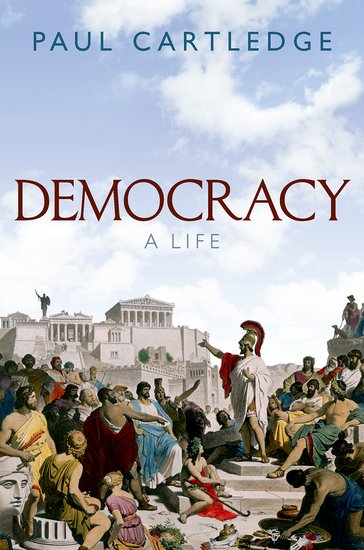
Just read a short piece by Paul Cartledge in which he talks about the history of sortition, a topic treated more extensively in his book Democracy: A Life (Oxford University Press). He even manages to plug my own book, The Luck of the Draw: The Role of Lotteries in Decision Making (also Oxford University Press) along the way. Check it out:

It is quite easy to compile a checklist, perhaps even a decalogue, of differences between their democracy (or rather democracies, as there was no one identikit ancient model) and ours (ditto). And in no respect did they and we differ more than on the issue of sortition, that is, the application of the lottery to the conduct of politics (another Greek invention, both the word and the thing, with – again – the accent to be placed on difference as well as similarity between theirs and ours). We today take the exercise of voting in either general or local elections to be the very quintessence of what it is to do ‘democracy.’ The ancient Greeks took the exact opposite view: elections were elitist and for the nobs, appropriate more for oligarchy (the rule of the few rich) than for democracy (the rule of the masses, most of whom were poor), whereas sortition, the lot, was the peculiarly democratic way of selecting most office-holders and all juror-judges to serve in the People’s jury-courts.
Continue reading →

Sortition – Part 2: the book, the AGM, and a strategy

The End of Politicians screeenshotHere’s the latest on the new book on sortition, and two events in London next week: the Citizens’ Parliament strategy meeting, and the Sortition Foundation’s first Annual General Meeting.

Read on for more details on all of the above.

Continue reading →

Why do we need common goods? (with some concessions)

Deliberately constructed public or common goods differ in what they require of participants in several different ways. The following are typical of their diversity:

1. To solve conflicts of interests that tend to produce disadvantageous results for all the participants if they fail to cooperate, but positive goods if the do.

2. To produce positive goods that benefit almost everybody, but which private enterprise cannot as easily produce.

3. To provide coordinated action to avert evils that are the result from unregulated action.

Examples and discussion:

1. A simple example: Jack and Jill from Leeds want to go on holiday together and enjoy each other’s company. But when it comes to making arrangements Jack says he wants to go to Prague, while Jill wants to go to the Costa Brava. Being sensible people the do not adopt the facile solution of tossing a coin to see who wins this year, with the promise that he or she will be given first choice next year. That simply equalises the misery of being dragged to a place one doesn’t want to go to.
Continue reading →

Aftermath of the Irish Election

I recently ran in the Irish general election that was held on Feb. 26th as an Independent (Non-Party) candidate, campaigning on a platform of direct digital democracy.

As some of you may know, this election did not deliver a clear winner or even a clear coalition. A month on, a government has yet to be formed. While some prefer to see this as an argument in favour of the need for stronger government and an end to Independents like me, my view is that it is but one further indictment of the party system. The major parties did badly because they refused (for years) to listen to the people who voted for them, and utterly failed during their campaigns to credibly address any of the mistakes they had made or even to present reasonable solutions for the future. Despite these failures, rather than getting on with the business of governing the country, we are left in limbo waiting to see whether any of them (Fianna Fail, Fine Gael and Sinn Fein) will condescend to form a government with each other. This is a distinct possibility for Fianna Fail and Fine Gael, who between them received nearly 60% of all seats with less than 50% of first-preference votes. The constantly trumpeted line that the public voted for the establishment parties is thus wildly over-stated, and there has definitely been a serious push towards alternative politics.

I definitely noticed this while out canvassing, with most people at least open to the idea of more participatory politics and a surprising number already fairly well-informed about participatory initiatives at home and abroad. Most surprisingly of all, I could knock on people’s doors out of the blue and they would not only answer the door, but read through my literature there and then and really engage with the issues.
Continue reading →